AR adds digital overlays to the real world, while VR immerses you fully in a virtual environment. MR seamlessly blends virtual objects with physical surroundings, allowing interaction with both. XR is the umbrella term encompassing AR, VR, and MR, representing a spectrum of immersive experiences. Knowing these differences helps you choose the right technology for your needs. If you want to explore these distinctions further, there’s more to uncover below.
Key Takeaways
- AR overlays digital content onto the real world, enhancing physical environments without replacing them.
- VR immerses users entirely in a virtual environment, blocking out the real world for full digital engagement.
- MR seamlessly integrates virtual objects into the real world, allowing interaction with both simultaneously.
- XR is an umbrella term that encompasses AR, VR, and MR, enabling fluid movement across different immersive experiences.
- Differentiating these technologies ensures appropriate application use, user experience, and hardware requirements.
Defining Augmented Reality (AR)

Augmented Reality (AR) enhances your real-world environment by overlaying digital information onto physical objects and scenes. When you use AR, you see the real world through a device like a smartphone, tablet, or AR glasses, with extra digital elements added in real time. These overlays can include text, images, 3D models, or animations that complement what you’re already looking at. Unlike virtual reality, AR doesn’t replace your surroundings but adds to them, making information more accessible and interactive. You might use AR to get directions, view product details, or experience immersive games that blend seamlessly with your environment. This technology improves how you interact with the world by providing context-aware digital enhancements without removing you from reality. Additionally, understanding the technologies behind AR helps in appreciating how it integrates with other visual display systems like projectors and screens. Recognizing the limitations of AR is also important in understanding its current capabilities and future potential.
Understanding Virtual Reality (VR)

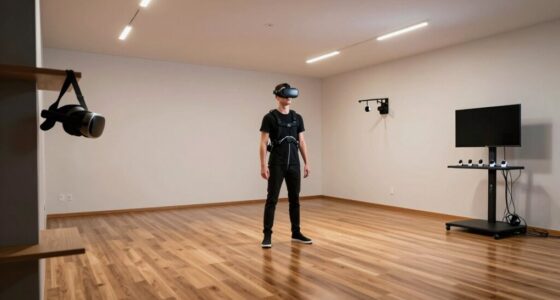
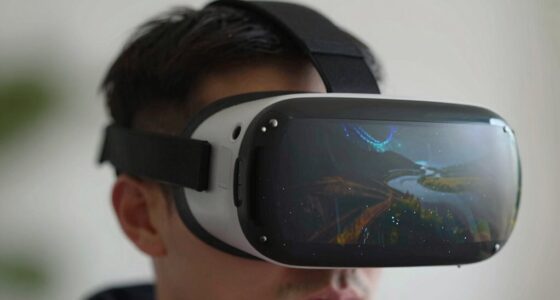
Have you ever wondered what it’s like to be completely immersed in a digital world? Virtual Reality (VR) creates this experience by using a headset that covers your eyes and sometimes your ears. When you put on a VR headset, you’re transported into a computer-generated environment that reacts to your movements. It blocks out the real world, so you focus entirely on the virtual scene. VR can simulate anything from a game world to a virtual tour of a distant city. The technology tracks your head and hand movements, allowing you to interact naturally with the environment. This immersive experience makes you feel as if you’re really there, whether exploring new places or practicing complex skills. VR offers a powerful way to learn, entertain, and connect, especially when combined with precise tracking technology that enhances realism. Additionally, understanding the differences between VR, AR, MR, and XR can help users select the most suitable type of digital experience for their needs. An important factor in this immersion is visual fidelity, which determines how realistic and convincing the virtual environment appears to you. To enhance user engagement, developers often incorporate haptic feedback, which provides tactile sensations that mimic real-world interactions. Moreover, advancements in cloud computing infrastructure are enabling more complex and higher-quality VR experiences by providing the necessary processing power remotely.
Exploring Mixed Reality (MR)

Mixed Reality combines virtual objects with your real environment seamlessly, creating an interactive experience. You can see and interact with digital content as if it’s part of your actual surroundings. This technology has practical uses in fields like education, healthcare, and industrial design, where blending real and virtual worlds enhances productivity. Developing a relationship with that inner guidance can also support better decision-making and personal growth. Additionally, immersive environments enable users to explore and manipulate digital elements within their physical space more intuitively. For example, navigation and mapping explainers can help users understand how digital content is integrated with real-world settings.
Merging Virtual & Real
Because it seamlessly blends real and virtual elements, mixed reality (MR) offers a unique way to interact with both worlds at once. You can see and manipulate virtual objects as if they exist in your physical space. This merging creates immersive experiences where digital elements respond to your real-world environment. Imagine a table where virtual tools sit atop a real desk, or virtual characters move naturally around your room.
| Real Environment | Virtual Elements |
|---|---|
| Physical objects | Digital overlays |
| Real-world furniture | Virtual assistants |
| Your hand movements | Virtual controls |
| Ambient sounds | Interactive holograms |
| Natural lighting | Dynamic virtual backgrounds |
This blending enhances your perception, making interactions more intuitive and realistic. MR pulls the best of both worlds into a cohesive, immersive experience.
Practical Applications of MR
The seamless integration of virtual and real elements in MR opens up a wide range of practical applications across various industries. In healthcare, you can use MR for immersive surgical training, allowing you to practice procedures with real-time guidance and enhanced visualization. Architects and designers benefit from MR by visualizing building models within actual spaces, making modifications before construction begins. In manufacturing, MR helps you assemble complex machinery with step-by-step overlays, reducing errors and training time. Retailers use MR to create interactive shopping experiences, letting customers see products in their homes before buying. Education also gains from MR, offering immersive lessons that engage students in complex topics. Overall, MR transforms how you learn, design, train, and shop by merging digital content with the physical world seamlessly. Home Safety & Accessibility features can be integrated into MR applications to improve accessibility and ensure safer environments. Additionally, user engagement is significantly enhanced through interactive and customizable experiences that make learning and retail more effective and enjoyable. Moreover, understanding the technologies behind MR helps you better appreciate its potential and limitations in various fields. Recognizing the importance of mixed reality hardware can also guide you in choosing the right devices for specific applications, enhancing overall user experience.
The Concept of Extended Reality (XR)
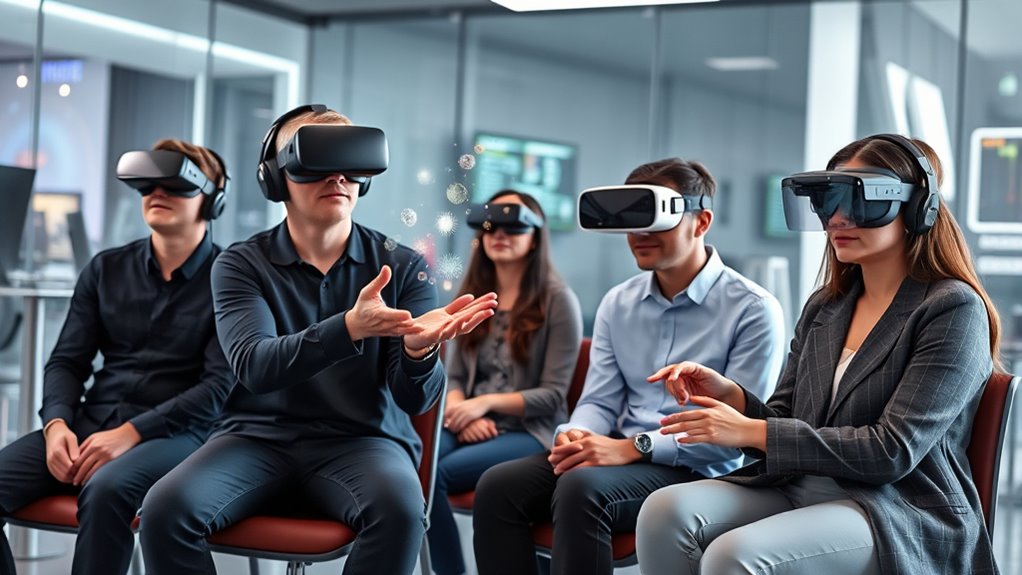
Have you wondered how different immersive technologies come together? Extended Reality, or XR, is the umbrella term that encompasses AR, VR, and MR. It blends these experiences into a seamless spectrum, allowing you to move between virtual, real, and mixed environments effortlessly. XR isn’t just about isolated tech; it’s about creating a unified platform for immersion, interaction, and real-world integration. This combined approach enables developers and users to explore new possibilities in entertainment, training, design, and more. By using XR, you get a versatile experience that adapts to your needs—whether it’s fully virtual worlds or augmented overlays on your physical surroundings. Fundamentally, XR is the future of immersive technology, making different realities feel interconnected and accessible through a single, flexible framework. Incorporating tanning trends knowledge, XR also emphasizes the importance of maintaining skin health and safety during extended exposure to immersive environments, especially when physical activity is involved.
Key Differences in User Experience

Each immersive technology within XR offers a distinct user experience shaped by how you interact with the environment. With AR, you see digital objects overlaid onto the real world, allowing for seamless blending of virtual and physical. VR immerses you fully in a digital environment, blocking out reality and focusing your attention entirely on the virtual space. MR combines elements of both, enabling you to manipulate digital objects that interact with your real environment. An understanding of user experience in each technology helps you choose the right one for your needs. Additionally, interaction methods vary significantly across these platforms, affecting how intuitive and natural the experience feels. XR encompasses all these experiences, offering versatile interaction modes. Research into sensory engagement reveals how different input methods can enhance immersion and user satisfaction across these technologies. Exploring user engagement strategies can further optimize how users connect with virtual environments. Moreover, understanding environmental context can improve how effectively each technology adapts to different settings and applications.
Typical Applications and Use Cases
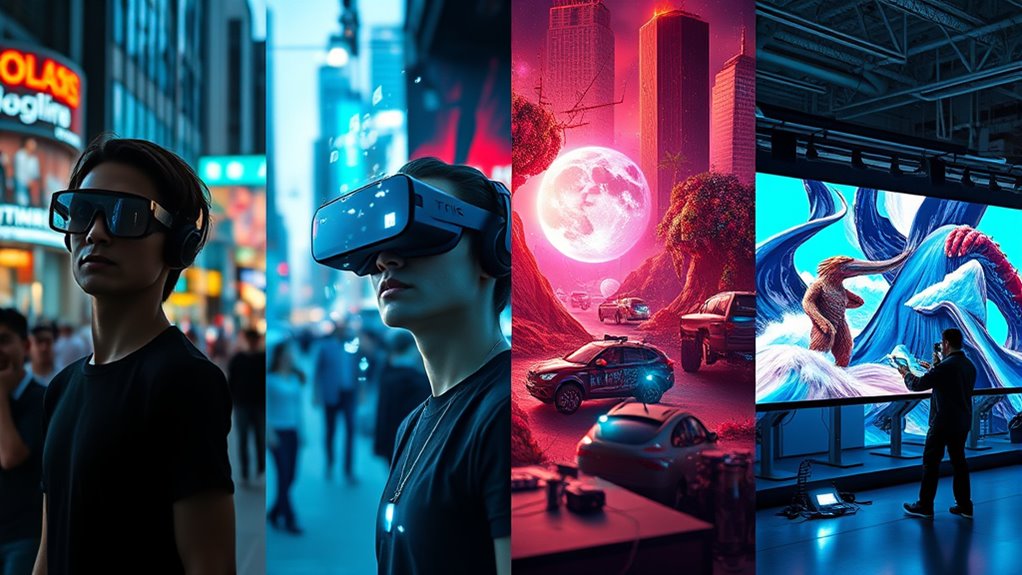
You’ll find AR, VR, MR, and XR transforming various industries through real-world applications. Healthcare professionals use these technologies for medical training, while gamers enjoy immersive entertainment experiences. Additionally, industries rely on them for workforce training and complex industrial simulations. For example, leasing a car can be integrated into virtual environments for training dealership staff or customers on lease agreements and vehicle features. These applications demonstrate the versatility of extended reality in simulating real-world scenarios, enhancing learning and operational efficiency across sectors. Furthermore, as these technologies advance, their adoption across diverse fields continues to expand, opening new possibilities for innovation and problem-solving. This growth is supported by the increasing importance of cybersecurity in protecting sensitive data within these immersive platforms.
Healthcare and Medical Training
Healthcare and medical training increasingly leverage AR, VR, MR, and XR to enhance learning experiences and improve patient outcomes. These technologies offer immersive simulations that help you practice complex procedures safely and repetitively. For example, you can:
- Visualize detailed anatomy models for better understanding.
- Perform virtual surgeries to refine skills without risk.
- Train in emergency scenarios to improve response times.
- Collaborate with remote experts through shared virtual environments.
This approach minimizes errors, shortens training time, and boosts confidence. By immersing yourself in realistic simulations, you gain practical experience that translates directly to improved clinical performance. These tools are transforming how you learn, diagnose, and treat patients, making healthcare more effective and accessible.
Gaming and Entertainment Experiences
Gaming and entertainment experiences are revolutionized by AR, VR, MR, and XR technologies, creating immersive worlds that captivate players and viewers alike. With VR headsets, you can step into entirely new environments, from fantasy landscapes to realistic sports arenas, feeling like you’re really there. AR enhances real-world surroundings with interactive digital elements, making games like Pokémon GO or AR treasure hunts more engaging. MR merges virtual objects with your real environment, allowing for interactive multiplayer experiences or immersive storytelling. XR combines these technologies to offer seamless, versatile entertainment options. You can enjoy immersive gaming, interactive concerts, or virtual theme parks from the comfort of your home. These innovations transform passive watching into active participation, redefining how you experience entertainment on a fundamental level.
Industrial and Workforce Training
AR, VR, MR, and XR technologies are transforming how industries approach workforce training. They provide immersive, safe environments where you can practice skills without real-world risks. These tools enable you to simulate complex scenarios, improving proficiency and confidence.
Here are key applications:
- Simulated machinery operation for safer, cost-effective training.
- Virtual maintenance and repair procedures to reduce errors.
- Hazardous environment training without exposure to danger.
- Onboarding programs that familiarize new employees with workflows quickly.
Hardware and Devices Involved
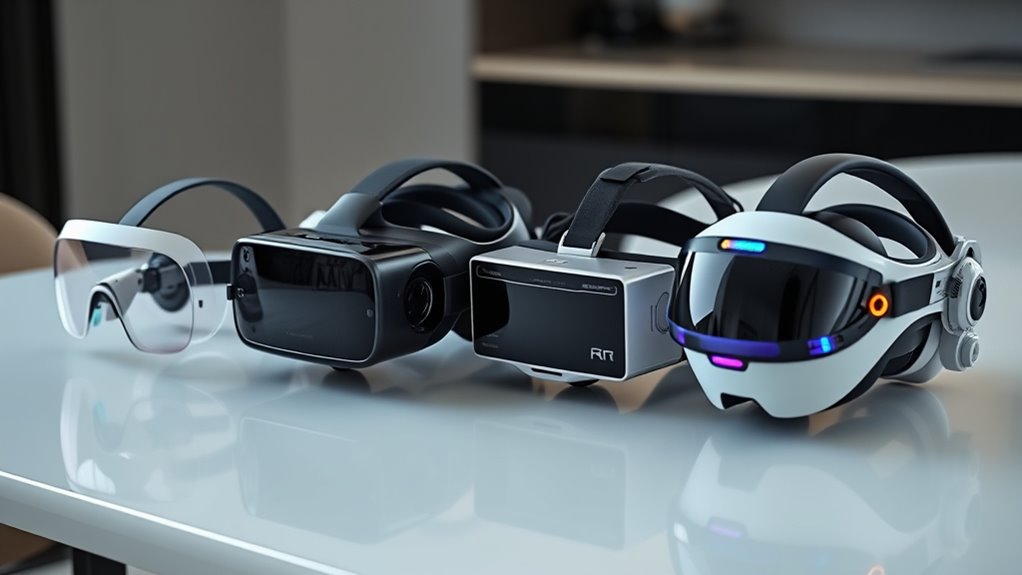
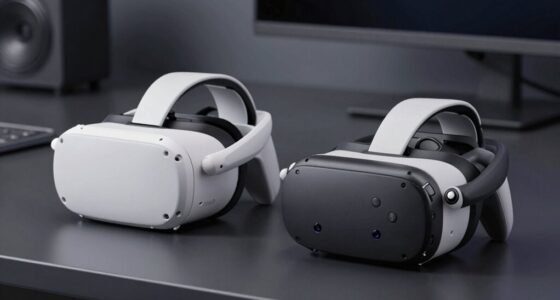
To experience AR, VR, MR, or XR, you need specific hardware designed to create immersive environments and overlay digital content onto the real world. For AR, you typically use smartphones or tablets with cameras and AR apps that project digital images onto the real scene. VR requires headsets with built-in displays, motion sensors, and controllers to track your movements and deliver a fully immersive experience. MR devices often combine elements of both, using headsets like Microsoft HoloLens that blend virtual objects with real surroundings through transparent lenses. XR, being an umbrella term, can involve any of these devices depending on the application. All these hardware types are essential to deliver precise tracking, high-quality visuals, and seamless interaction, making each technology unique in its hardware requirements.
Advantages and Limitations of Each Technology

Each of these technologies offers distinct advantages and faces specific limitations that can influence your experience. AR enhances real-world interactions, but its limited immersion can reduce engagement. VR provides full immersion, yet it often requires powerful hardware and can cause motion sickness. MR bridges digital and physical worlds seamlessly, though it demands advanced sensors and can be costly. XR offers flexible experiences, though its broad scope can lead to inconsistent quality.
AR enhances real-world interactions but offers limited immersion, reducing engagement.
- AR: Easy to access and enhances real-world tasks, but limited immersion reduces depth.
- VR: Immersive and engaging, yet hardware requirements and discomfort are concerns.
- MR: Combines real and virtual effectively but is expensive and complex to set up.
- XR: Versatile for various applications but struggles with standardization and performance.
Future Trends and Developments

Are emerging technological advances set to redefine the landscape of extended reality? You can expect faster, more immersive experiences as hardware becomes more lightweight and affordable. AI integration will enhance realism and personalization in AR, VR, MR, and XR environments, making interactions more natural and intuitive. Expect better spatial mapping, allowing for seamless blending of digital and physical worlds. Cloud computing will support real-time processing, reducing latency and improving performance. Developers will prioritize cross-platform compatibility, making XR tools accessible across devices. Additionally, advances in haptic feedback will heighten sensory immersion. As these trends evolve, extended reality will become more integrated into daily life, transforming industries like education, healthcare, entertainment, and remote work. Staying informed about these developments will help you leverage XR’s full potential.
Frequently Asked Questions
How Do AR, VR, MR, and XR Impact Different Industries?
You see AR, VR, MR, and XR transforming industries by enhancing training, marketing, design, and collaboration. AR overlays useful info in real-world settings, improving retail and maintenance. VR provides immersive experiences for education and simulations. MR blends real and virtual worlds, aiding complex tasks like surgery planning. XR combines these techs, offering versatile solutions across healthcare, manufacturing, gaming, and education. Embracing these tools boosts efficiency, creativity, and customer engagement in your industry.
What Are the Cost Differences Among These Technologies?
You’ll find that AR is usually the most affordable, since it often uses smartphones or tablets, with costs around a few hundred dollars. VR requires specialized headsets, which can range from $300 to over $1,000. MR and XR tend to be pricier due to their advanced hardware, often exceeding $1,000. Your exact costs depend on the hardware quality and software development, but generally, expect VR, MR, and XR to be more expensive than AR.
Can Users Switch Seamlessly Between AR, VR, MR, and XR?
You can often switch seamlessly between AR, VR, MR, and XR if your device supports multiple modes. Many modern headsets and apps are designed for quick changeovers, but it depends on hardware capabilities and software integration. Some systems require you to pause or recalibrate when changing experiences. So, while smooth switching is possible, it’s not universally flawless and may need some adjustments or updates for peak performance.
How Do These Technologies Affect User Safety and Health?
These technologies can impact your safety and health by causing eye strain, headaches, or discomfort if used excessively or improperly. Extended use might lead to dizziness or nausea, especially with VR. To stay safe, take regular breaks, ensure proper fit, and use devices in well-lit environments. Always listen to your body and stop if you experience any pain or disorientation to prevent longer-term health issues.
What Skills ARe Needed to Develop AR, VR, MR, and XR Content?
You’ll need a blend of creative and technical skills to craft immersive AR, VR, MR, and XR content. Think of yourself as a digital storyteller, wielding programming languages like C# or Unity, and designing engaging visuals with 3D modeling. You must also understand user experience principles, ensuring comfort and safety. Curiosity and adaptability are your compass, guiding you through evolving tech landscapes to build engaging, safe environments that captivate and inspire.
Conclusion
By understanding the differences between AR, VR, MR, and XR, you can choose the right technology for your needs. While AR and VR immerse you in entirely different worlds, MR and XR blend reality with imagination, opening endless possibilities. Don’t let the confusion hold you back—embrace each one’s unique potential. Whether for work or play, recognizing their distinctions empowers you to explore the future confidently and creatively.