
TL;DR

Play games on Amazon Luna for your next adventure, included with Prime
- A rotating selection of games, no download needed
- Play on TV, laptop or phone
- Fast, free delivery for your gear, too
A headline reports a virtual reality mindfulness study testing whether children can use Operation Calm. No study details, methods, participant information or findings were available, so the development should not be read as evidence that the program works.
A reported virtual reality mindfulness study is testing whether children can use Operation Calm, a program identified in the headline. No article details were available to establish the study’s methods, timing, or results, so it is not clear whether the work is underway or has concluded.
The headline identifies the development as a study of Operation Calm and frames its central question around children’s ability to use it. It does not say how many children are involved, what ages they are, or what tasks they are asked to complete. There is also no information about where the study is being conducted or who is responsible for it.
Nothing available specifies whether researchers are evaluating ease of use, children’s engagement with the program, mindfulness outcomes, or a combination of those measures. No findings, safety observations, or comparisons with non-VR mindfulness activities are reported. Accordingly, the headline supports saying that the study is testing use by children, but not that the program has been shown to improve wellbeing or attention.
The report also does not identify a publication, study protocol, institution, or date. Those omissions leave basic details about the research unverified here. The name Operation Calm is presented as the program being tested, but no further description of its content or technical requirements is provided.
VR mindfulness · research watch
Can Children Use Operation Calm?
A reported study is testing children’s ability to use the virtual reality mindfulness program. The available account offers no methods or findings, so this remains a research question—not evidence that the program works.
01 / What is known
A narrow report, with open questions
The supplied account says a study is testing whether children can use Operation Calm in a virtual reality mindfulness setting. It does not establish when or where the work is happening, whether it has concluded, or who is conducting it.
Program
Operation Calm is identified as the program being tested. Its activities, developer, and technical requirements are not described.
Children
No participant count, age range, location, or description of the children taking part is available.
Study details
No protocol, institution, timeline, publication, or supporting study record is identified in the report.
02 / Two different questions
Usability is not effectiveness
Whether a child can operate an experience and whether it improves wellbeing are distinct research questions. The headline does not clarify which measures the study uses.
Can children use it?
A usability study might examine whether children can follow instructions, navigate the experience, or take part in its activities. The available account does not say whether these are being measured.
Does it help?
Claims about stress, emotional regulation, attention, or wellbeing would require reported outcomes. None are provided, and no comparison with non-VR activities is described.
03 / Evidence check
Key information is unavailable
These are unanswered points in the supplied account, not negative findings from the study.
04 / How to read the report
From headline to evidence
A simple evidence path keeps the reported question separate from conclusions the available information cannot support.
Headline
Reports a study testing whether children can use Operation Calm.
ReportedStudy details
Methods, participants, setting, measures, and timing are not supplied.
Unverified herePublished results
No findings or attributed researcher comments are available.
Not providedPractical judgment
Effectiveness, safety, and suitability cannot yet be assessed from this account.
Await evidenceTakeaway
A research question, not a recommendation
The confirmed point is narrow: a headline reports that a study is testing whether children can use Operation Calm in a VR mindfulness setting. Without methods and results, readers cannot judge whether it improves wellbeing, how safe or comfortable it is, or whether it suits children broadly. A full report or study record would be needed to assess those questions.
05 / Quick answers
What readers still want to know
What is Operation Calm?
The headline names it as the program in a VR mindfulness study. Its activities, developer, and technical requirements are not described.
What is the study testing?
Whether children can use the program. The account does not specify whether that means usability, engagement, mindfulness outcomes, or another measure.
Has it been shown to work?
No findings are provided. The available information does not establish an effect on mindfulness, wellbeing, or any other outcome.
How many children are involved?
The number of participants and their age range are not given. Researchers, setting, and study timeline are also unavailable.
What Child Usability Could Show
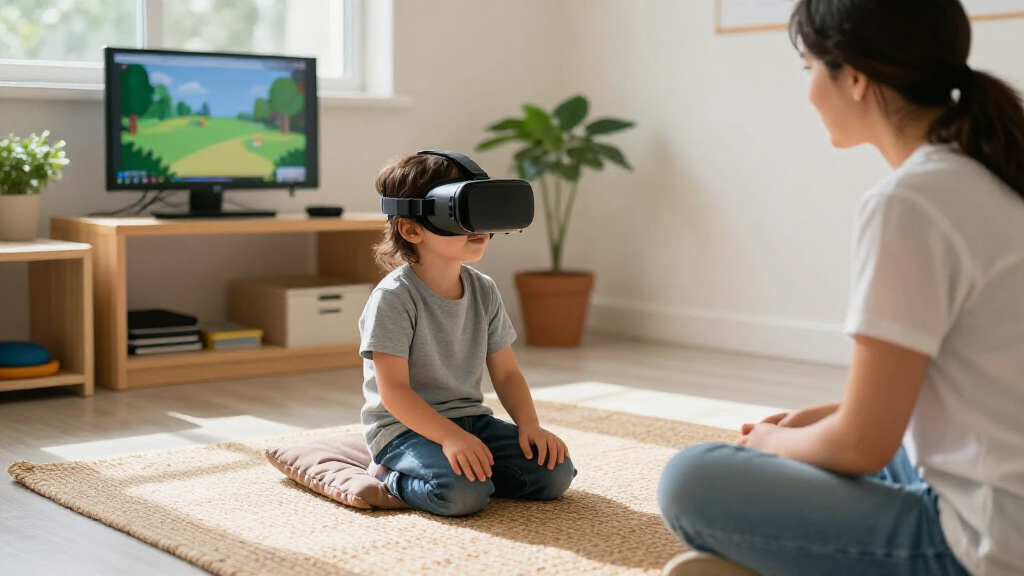
The question of whether children can use a VR mindfulness program matters separately from whether it produces a health benefit. A study of usability could help clarify whether children can follow instructions and interact with the experience, while research on outcomes would need to establish whether it affects measures such as stress or emotional regulation. The headline does not indicate which of these questions is the study’s primary focus.
For families, educators and clinicians, that distinction matters: a child being able to use an app is not proof that it is effective or appropriate for every child. Virtual reality also involves wearing a headset and interacting with a digital environment, but the available information gives no details about supervision, accessibility, possible discomfort, or age suitability. Those points cannot be treated as findings from this study.
The development is therefore a research question, not a recommendation. Until more information is available, readers cannot assess how Operation Calm compares with other mindfulness approaches or whether any results would apply beyond the children who take part.
Products Worth Considering

DJI Osmo Pocket 3 Vlogging Camera with 1-Inch CMOS Sensor and 4K Video

Sony WH-1000XM6 Wireless Noise-Canceling Over-Ear Headphones, Blue, Bundle

Sonos Era 100 SL Compact, Microphone-Free Speaker – Black
As an affiliate, we earn on qualifying purchases.
A Headline Without Study Details
The only supplied account is a headline: “Virtual Reality Mindfulness Study Tests Whether Children Can Use Operation Calm.” It indicates that researchers are examining the use of a named program with children, but provides no accompanying article text or supporting documentation.
There is no disclosed timeline, study setting, participant profile, or explanation of how the program works. Nor is there information about whether the project is a pilot, a formal clinical study, or another type of evaluation. Without those details, the development cannot be placed in a research timeline or compared with prior results.
Methods and Findings Not Available
Key questions remain unanswered: who is conducting the study, how many children are participating, what ages they are, and what researchers mean by whether children “can use” the program. The available headline does not clarify whether that means technical usability, willingness to participate, comprehension of the mindfulness activities, or measured outcomes.
No results or study dates are provided, and there are no attributed comments from researchers or participants. It is also unknown whether the study includes a comparison group, how safety or discomfort is monitored, or whether the project has been reviewed by an ethics body. These details should not be inferred from the headline.
Awaiting Published Study Details
The next useful information would be a full report or study record giving the researchers’ identities, methods, participant numbers, age range, and the measures used. If the study has concluded, publication of its results would be needed before readers could judge what it found; if it is ongoing, a stated timeline would clarify when results may be available.
Until those details emerge, the confirmed point remains narrow: a headline reports that a study is testing whether children can use Operation Calm in a virtual reality mindfulness setting. Any claim about effectiveness, safety, or suitability remains unsupported by the information currently available.
Source: rss
Key Questions
What is Operation Calm?
The headline identifies Operation Calm as the program in a virtual reality mindfulness study. It does not describe the program’s activities, developer, or technical requirements.
What is the study testing?
The headline says the study is testing whether children can use the program. It does not specify whether the focus is usability, engagement, mindfulness outcomes, or another measure.
Has the study shown that Operation Calm works?
No findings are provided. The available information does not establish that the program improves mindfulness, wellbeing, or any other outcome.
How many children are taking part?
The participant number and age range are not given. Details about the study’s location, researchers, and timeline are also unavailable.
Source: news.google.com