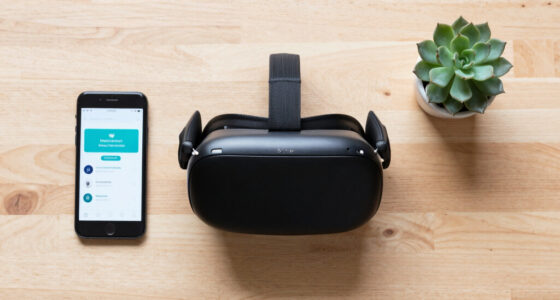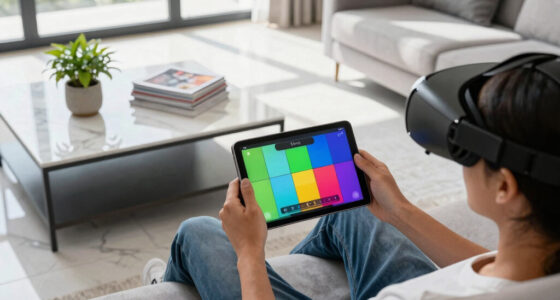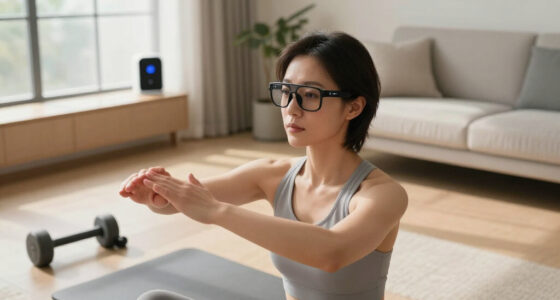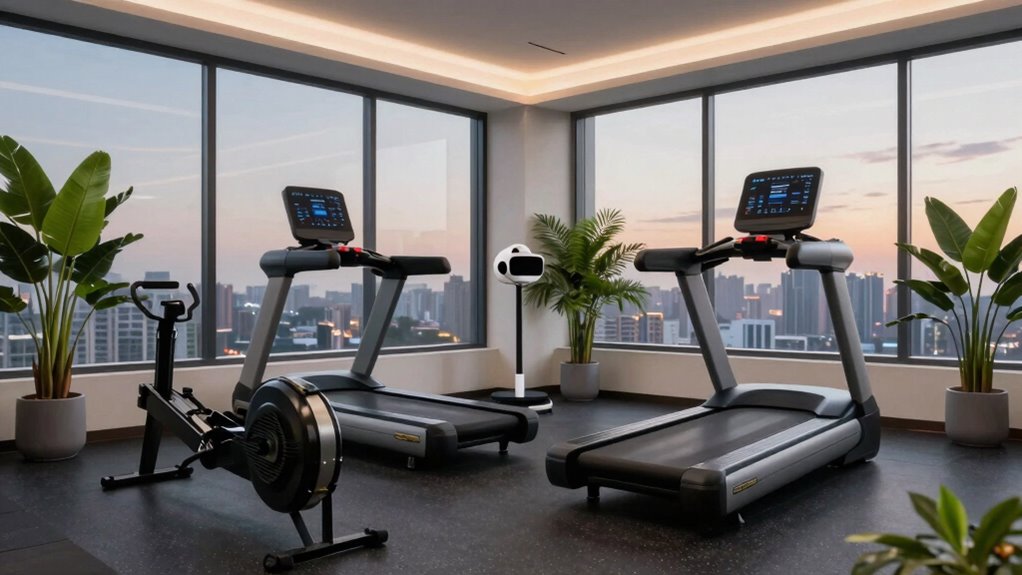
To optimize your VR-friendly fitness room, position your treadmill along a wall or corner for easy access and safety, ensuring there’s plenty of space around it for quick adjustments. Place your rower centrally for better virtual views and smooth movement. Keep pathways clear and use markers to define safe zones. Align equipment with virtual scenery to boost immersion and avoid obstructing your view. As you move forward, you’ll discover more tips for creating a safe, immersive workout space.
Key Takeaways
- Position equipment to avoid blocking virtual views and ensure controls are within easy reach for seamless interaction.
- Place treadmills along walls or corners to maximize space efficiency and safety during VR workouts.
- Align equipment with virtual scenery to enhance immersion and support natural movement flow.
- Use markers or tape to define safe zones, ensuring clear pathways and preventing accidents.
- Regularly evaluate and adjust placement for comfort, safety, and optimal virtual experience integration.
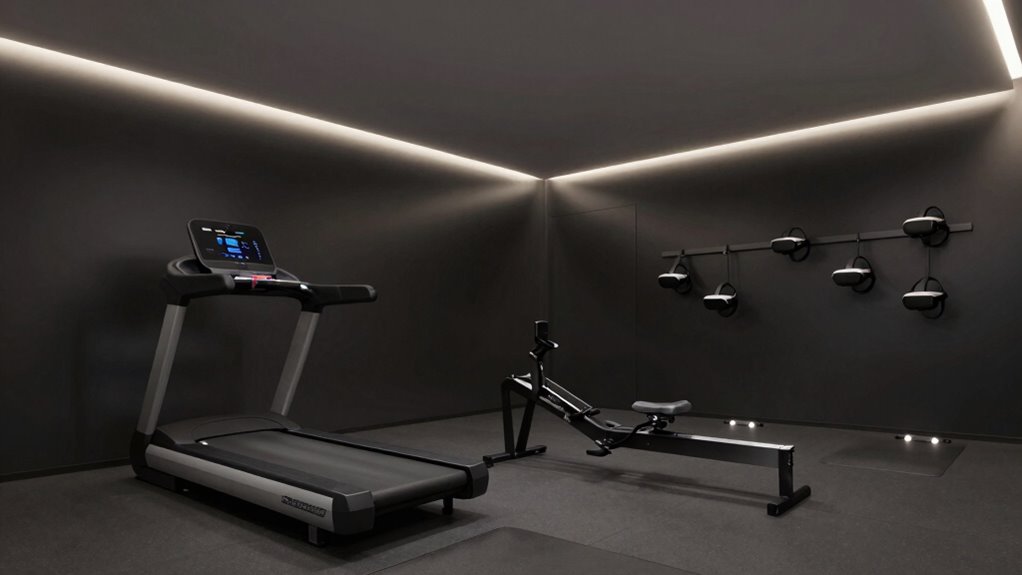
Creating a VR-friendly fitness room involves more than just adding high-tech gear; it requires careful thought about how traditional equipment like treadmills and rowers integrate into an immersive environment. Your goal is to create a seamless virtual space where physical equipment supports your workouts without disrupting the VR experience. The way you place equipment is vital—you want it accessible but discreet enough to avoid breaking immersion. Proper equipment placement ensures safety and maximizes workout efficiency while maintaining the illusion of being in a different world.
Strategic equipment placement enhances immersion, safety, and efficiency in your VR fitness space.
Start by considering the size and layout of your room. You need enough space around each piece of equipment for safe movement and quick adjustments. In a VR setting, this means placing the treadmill or rower where you can easily reach controls without disturbing your virtual experience. Position the equipment so that it doesn’t block your view of the virtual space; you want to feel fully immersed without constantly adjusting or repositioning your body. Keep clear pathways to prevent accidental bumps or falls, which could ruin your workout or cause injury.
When thinking about equipment placement, consider how the virtual space interacts with the physical space. You might want to set up your treadmill along a wall or in a corner, where it’s out of the way but still accessible. For rowers, placing them centrally allows for easier movement and better visibility of virtual surroundings. Use markers or tape on the floor to define safe zones, helping you stay within the physical limits of your room while engaging fully with the VR environment. This prevents you from stepping outside your safe zone and guarantees your workout remains safe and efficient.
In addition to safety, think about how the virtual space influences your equipment setup. If your VR environment features scenic outdoor trails or scenic river views, position your treadmill or rower to face that virtual scenery. This enhances immersion and makes your workout feel more natural. Keep the equipment aligned with the virtual experience, so the physical movement matches what you see in the headset, reducing disorientation or motion sickness. Additionally, consider how proper equipment placement can help prevent fatigue and discomfort during longer sessions. Incorporating ergonomic design principles can further improve comfort and reduce strain during extended use.
Moreover, paying attention to room acoustics can enhance your workout experience, especially if you use audio cues or virtual environments with sound. To further optimize your setup, think about lighting conditions, which can influence both safety and immersion. Finally, remember that equipment placement isn’t static. As you get more familiar with your VR setup, adjust placement for comfort and performance. Regularly evaluate how your physical setup aligns with your virtual environment, making changes as needed to optimize both safety and immersion. With thoughtful equipment placement, your traditional fitness gear becomes an integral part of a compelling, immersive VR fitness experience.
As an affiliate, we earn on qualifying purchases.
Frequently Asked Questions
Are Vr-Compatible Treadmills and Rowers Safe for All Users?
VR-compatible treadmills and rowers are generally safe for most users if you prioritize virtual safety and equipment durability. Make certain the equipment has safety features like emergency stops and sturdy construction. Always follow manufacturer guidelines, start slow, and listen to your body. Proper setup and supervision help prevent accidents. If you have health issues or mobility concerns, consult a professional before using VR fitness equipment to ensure safety for all users.
How Do I Integrate VR Headsets With Fitness Equipment?
You can integrate VR headsets with fitness equipment by first performing virtual calibration to guarantee the headset aligns perfectly with your equipment’s dimensions. Then, connect your VR system to compatible sensors and apps that create immersive environments, making your workout more engaging. Adjust settings for comfort and safety, and always test the setup before exercising. This seamless integration enhances motivation and makes your fitness routine more interactive and enjoyable.
What Are the Space Requirements for VR Fitness Gear?
Did you know that VR fitness gear typically requires at least an 8×8-foot space? Virtual space considerations are vital to avoid accidents and guarantee smooth movement. You should prioritize equipment placement strategies that keep sensors and headsets unobstructed, allowing full range of motion. Plan for enough clearance around your treadmill and rower, so you can move naturally without hitting walls or furniture, making your VR workouts safer and more immersive.
Can VR Fitness Rooms Accommodate Multiple Users Simultaneously?
Yes, VR fitness rooms can accommodate multiple users simultaneously. You’ll experience virtual multiplayer sessions that encourage social interaction and teamwork, making workouts more engaging. To guarantee safety and comfort, space requirements should be carefully planned, allowing each user enough room to move freely without interference. Proper layout promotes seamless virtual multiplayer activities, fostering a social environment where everyone can participate, compete, and stay motivated together.
How Do I Maintain and Clean Vr-Enabled Exercise Equipment?
To maintain your VR-enabled exercise equipment, regularly clean virtual hygiene surfaces with a microfiber cloth and disinfect controllers and headsets with appropriate wipes. Keep equipment calibrated by following manufacturer instructions, ensuring sensors and tracking are accurate. This prevents virtual glitches and maintains a smooth user experience. Consistent cleaning and calibration help keep your VR fitness room safe, hygienic, and functioning at its best, so you can focus on your workout without issues.
As an affiliate, we earn on qualifying purchases.
Conclusion
As you step into your VR-friendly fitness room, remember that treadmills and rowers are more than machines—they’re your gateways to a universe where limits dissolve. Think of them as the oars and pathways guiding you through uncharted waters and endless horizons. Embrace the journey, knowing each stride and pull symbolizes your strength and resilience. In this space, your effort becomes a vessel carrying you beyond the physical, into a domain where your true potential awaits.
floor markers for workout safety
As an affiliate, we earn on qualifying purchases.
As an affiliate, we earn on qualifying purchases.
As an affiliate, we earn on qualifying purchases.