
TL;DR

Play games on Amazon Luna for your next adventure, included with Prime
- A rotating selection of games, no download needed
- Play on TV, laptop or phone
- Fast, free delivery for your gear, too
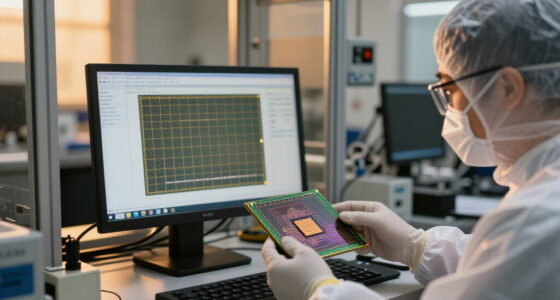
Testing of an HP OmniBook Ultra 16 found that its Nvidia RTX Spark chip reports the same core silicon and hardware identifiers as the DGX Spark’s GB10. The laptop’s memory runs faster, and some memory-bandwidth tests showed a larger advantage than the stated memory speeds alone would predict; the cause of all differences is not yet clear.
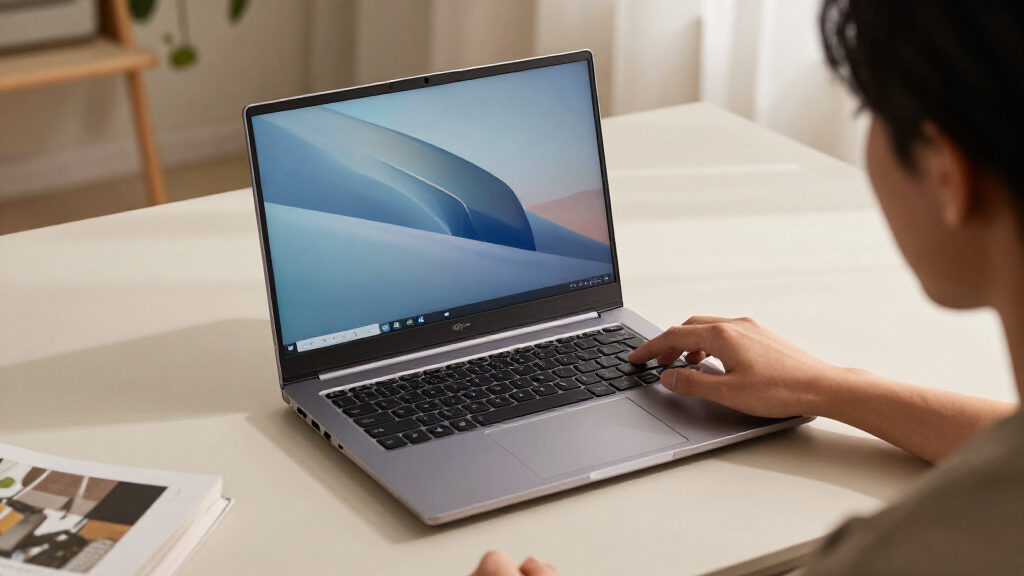
Testing of an HP OmniBook Ultra 16 equipped with Nvidia’s RTX Spark found that it reports the same processor and graphics hardware as the DGX Spark’s GB10, but the laptop runs its memory faster and leads in several bandwidth tests. The results suggest the two systems use the same underlying chip design, while firmware, memory configuration and operating-system behavior help shape their performance.
XDA Developers’ testing compared the HP laptop with Nvidia’s DGX Spark using matching CPU and GPU tests. Both systems reported SoC revision 0x04268901, with 10 Arm Cortex-X925 performance cores and 10 Cortex-A725 efficiency cores. Their GPUs also reported 48 streaming multiprocessors, CUDA compute capability 12.1, 24 MiB of L2 cache and a maximum clock of 3,003 MHz. The report says the systems’ firmware describes the same on-chip peripherals at matching physical addresses, and Nvidia’s driver code handles their GPUs in the same way.
The systems differ in memory speed despite each having 128 GB of LPDDR5X on a 256-bit bus. The RTX Spark laptop’s memory ran at 9,400 MT/s, compared with 8,533 MT/s for the DGX Spark. XDA calculated theoretical bandwidth of roughly 300 GB/s for the laptop and 273 GB/s for the DGX Spark. In a GPU read test using a 2 GB buffer, the laptop measured 282.9 GB/s, while the DGX Spark reached 239.8 GB/s—an approximately 18% measured advantage.
Results varied by workload. In CPU STREAM triad testing with all 20 cores active, the laptop reached 142.5 GB/s against 116.2 GB/s on the DGX Spark. Single-thread results were equal at 45.0 GB/s. XDA said that in the broader CPU and GPU benchmark comparisons, differences were often within a few percent, with the laptop tending to lead in memory-bound tasks. The tests do not establish one cause for every gap.
Memory Bandwidth Shapes Local AI Work
The distinction matters for users evaluating these systems for workloads that move large amounts of data, including running local language models. Memory bandwidth can affect how quickly a system supplies data to its GPU, so the laptop’s higher measured throughput may influence performance in some such tasks. The comparison does not, however, establish a general performance ranking: results depend on workload, and the report’s tests show differences rather than a consistent advantage across every benchmark.
The findings also show why a shared chip name or matching processor specifications do not guarantee identical system behavior. Memory speed, firmware and software can affect performance even when processor and GPU identifiers match. Buyers comparing the DGX Spark with an RTX Spark laptop should look at system-level tests for their intended workloads, rather than relying only on chip specifications.
Products Worth Considering

Samsung Galaxy Tab S10 FE 128GB Wi-Fi Android Tablet, Blue

Bose QuietComfort Ultra Wireless Noise-Cancelling Headphones with Spatial Audio, Black

Logitech MX Brio Ultra HD 4K Webcam, Graphite
As an affiliate, we earn on qualifying purchases.
Matching Identifiers, Different Platforms
Nvidia introduced the RTX Spark for Windows-based machines, while the DGX Spark is a separate system built around the GB10 and tested in this report under Linux. XDA compared the HP OmniBook Ultra 16 with the DGX Spark to examine whether the RTX Spark’s apparent similarity to the GB10 extended beyond headline specifications.
The report found matching processor and GPU details, firmware descriptions and related device identifiers. For example, the DGX Spark’s GPU identifies as 10DE:2E12, while the HP laptop’s identifies as 10DE:2E03. Nvidia’s published porting guide lists a desktop RTX Spark variant as 10DE:2E13. XDA describes these similarities as strong evidence of a shared chip design, but says the identifiers alone do not prove whether either product has parts of the chip disabled.
““In my testing, I found that both HP’s laptop and Nvidia’s DGX Spark report the same SoC ID, the same CPU cores, the same GPU, and firmware that describes the same hardware.””
— Adam Conway, XDA Developers
Why Some Benchmarks Pull Ahead
The testing does not determine exactly why the laptop’s measured bandwidth exceeds what the difference in stated memory speeds might suggest. XDA repeated the GPU test using 2 MB pages on both systems, but the gap remained. Memory timings, fabric clocks, driver behavior or other platform factors were not isolated as the cause. The all-core CPU result could also reflect operating-system thread placement or scheduling.
Some latency tests favored the DGX Spark. A pointer-chasing test across a 1 GB working set measured 134.5 nanoseconds on a laptop performance core and 131.1 nanoseconds on the DGX Spark. On an efficiency core, the laptop measured 204 nanoseconds, compared with 162 nanoseconds on the DGX Spark. The report raises power management and memory-fabric behavior as possible factors, but does not confirm an explanation. It also remains unclear whether either chip has portions of its silicon disabled.
More Testing Needed Across Systems
The report provides a comparison of one HP RTX Spark laptop and one DGX Spark, not a survey of every RTX Spark configuration. Further testing across additional laptops, firmware versions and workloads could show whether the memory and latency differences recur on other systems. Tests that isolate memory timings, fabric clocks, power management and operating-system scheduling would help explain the results.
For now, the reported evidence supports a shared-chip-design conclusion while leaving some system-level differences unresolved. Readers considering either machine should compare benchmarks for the applications they plan to run, particularly if performance in memory-bound workloads is a priority.
Key Questions
Do the RTX Spark laptop and DGX Spark use the same chip?
XDA’s tests found matching SoC revisions, CPU cores, GPU specifications and firmware hardware descriptions. The report says this strongly suggests a shared chip design, but does not establish whether parts of either chip are disabled.
Which system had faster memory in the tests?
The HP OmniBook Ultra 16’s RTX Spark memory ran at 9,400 MT/s, compared with 8,533 MT/s on the DGX Spark. In a 2 GB GPU read test, the laptop measured 282.9 GB/s and the DGX Spark 239.8 GB/s.
Was the laptop faster in every benchmark?
No. XDA reported that many CPU and GPU test differences were within a few percent, with the laptop often ahead in memory-bound workloads. Some latency results favored the DGX Spark, especially on an efficiency core.
Why did the bandwidth results differ by more than the memory speeds?
The report did not identify a confirmed cause. Page size alone did not explain the GPU test gap; memory timings, fabric clocks, drivers, power management and operating-system behavior remain possible factors.
Source: XDA Developers