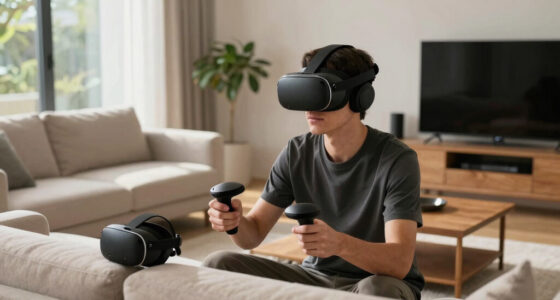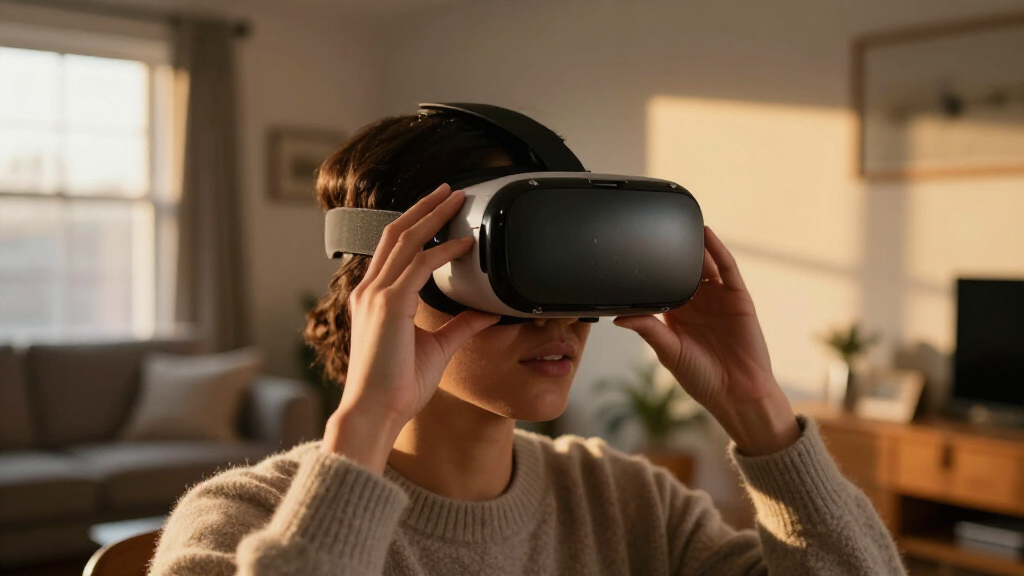

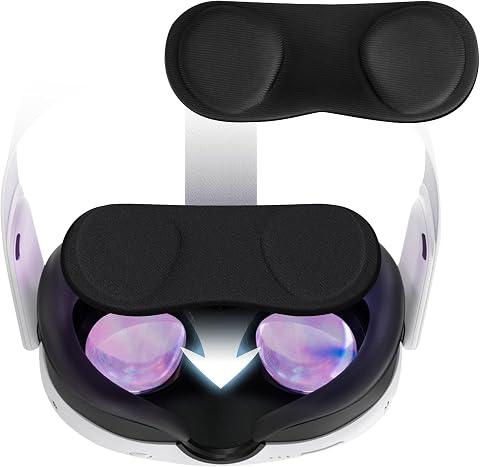
VR prescription lens inserts solve the most common problem in virtual reality: wearing a headset over glasses is uncomfortable, fogs up easily, and can scratch your headset lenses. After comparing the leading options for Meta Quest 2, Quest 3, and Quest 3S, the magnetic blue light filtering inserts for Quest 2 and Quest 3S stand out as the best overall pick thanks to their quick-swap magnetic frame and eye-comfort coating. The XYYORITRIX magnetic inserts for Quest 3 are the strongest premium alternative, while the PSI melanin lenses offer the most advanced blue light protection in the lineup. The main tradeoffs in this category come down to fixed-strength versus custom prescriptions, magnetic versus snap-in mounting, and whether blue light filtering is included or not. Keep reading for the full breakdown of all nine options.

Get VR and gaming gear delivered free — and shop member deals
- Fast, free delivery on millions of items
- Access to Prime Big Deal Days deals on October 6–7
- Prime Video, Amazon Music and more included
Complete the kit


Key Takeaways
- Magnetic attachment frames proved to be the biggest differentiator in this roundup — they let multiple users share one headset by swapping lens sets in seconds, which snap-in designs like the standard Amavasion inserts cannot match.
- Six of the nine options ship with fixed prescription strengths (usually -2.75 to -4.50 SPH), so buyers whose exact prescription does not match an available strength should prioritize the models that support customization or accept a slight clarity compromise.
- Blue light filtering is standard on the magnetic models from this lineup but missing on the basic Amavasion fixed-strength inserts, making the coating a deciding factor for long VR sessions rather than a premium extra.
- The PSI single-eye inserts (right eye -4.00, left eye -4.50) are the standout choice for people with asymmetric vision, a niche almost no other product in this comparison addresses.
- Lens inserts are headset-specific: every product here fits only the Quest 2, Quest 3, or Quest 3S, so confirming your headset model before ordering matters more than any other single decision in this guide.


| VR prescription lens insert | Brand | Compatibility |
|---|---|---|
| Amavasion Prescription Lens In | Amavasion | Meta Quest 2 |
| Prescription Lenses for Meta Q | TUHSDVDHV | Meta Quest 2, Meta Quest 3S |
| Amavasion Prescription Lens In | Amavasion | — |
| XYYORITRIX Myopia Prescription | XYYORITRIX | Meta Quest 3 |
| XYYORITRIX Myopia Lenses for M | XYYORITRIX | — |
| PSI Single Prescription Lens I | PSI | — |
| PSI Prescription Lens Insert f | PSI | — |
| PSI Premium Melanin Anti-Blue | PSI | Meta Quest 3S |
| Sonicgrace Magnetic Blue Light | — | Meta Quest 2 |
More Details on Our Top Picks
Amavasion Prescription Lens Insert for Meta Quest 2 (SPH -2.75)
Amavasion’s Quest 2 insert keeps things simple: a two-lens set at a fixed -2.75 sphere, built to snap into the headset frame without tools. This pick makes the most sense for casual Quest 2 owners whose prescription happens to match, because it delivers the core benefit — ditching glasses inside the headset — without paying for coatings or magnetic mounting. Compared with the TUHSDVDHV magnetic inserts, installation is less convenient since you’re pressing a frame into place rather than clicking in a magnet, and there’s no blue light filtering here. Compared with Amavasion’s own single-lens -3.50 option, you at least get both eyes covered in one purchase. The tradeoff is rigidity: one prescription strength, one headset, no customization, and the fixed diopter means an imperfect match for anyone with mild astigmatism or asymmetric eyes.
Pros:- Covers both eyes in one purchase
- Straightforward frame installation with no tools
- Custom-fit design for the Meta Quest 2
- Removes the need to wear glasses inside the headset
Cons:- Only one fixed prescription strength (-2.75 SPH)
- Compatible with the Quest 2 only
- No blue light or anti-glare coatings
Best for: Quest 2 owners with a matching -2.75 prescription in both eyes who want a low-cost glasses-free fix
Not ideal for: Anyone with different prescriptions per eye or a different headset — the fixed strength and Quest 2-only fit rule them out
- Brand:Amavasion
- Compatibility:Meta Quest 2
- Prescription Strength:SPH -2.75
- Quantity:Two lenses
- Attachment:Frame insert
- Color:Black
Our verdict“A sensible budget pick if your prescription matches exactly and you only own a Quest 2 — otherwise look elsewhere.”
Prescription Lenses for Meta Quest 2 / Quest 3S with Magnetic Attachment and Blue Light Filtering
This option stands out as the only one in this batch that is custom-made to your actual prescription rather than a fixed diopter, which immediately solves the biggest problem with the Amavasion -2.75 and XYYORITRIX -4.5 inserts — the guessing game of whether a stock strength matches your eyes. The magnetic attachment makes swapping lenses out for shared headsets or cleaning genuinely quick, and blue light filtering adds comfort for long sessions that the standard Amavasion sets skip. The tradeoff: buying from a lesser-known brand means vague warranty terms and some sloppy listing details, including mismatched category placements and conflicting weights. Compared with the PSI single-lens inserts, you get a complete custom pair, but with less established track record behind it.
Pros:- Lenses ground to your individual prescription instead of a fixed diopter
- Magnetic mounting for fast installation and removal
- Blue light filtering reduces strain in extended sessions
- Works across both Quest 2 and Quest 3S
Cons:- Generic brand with unclear warranty and support
- Listing contains inconsistent or irrelevant spec details
- Custom production likely means longer wait for delivery
Best for: Buyers with unusual or asymmetric prescriptions who can’t use fixed-strength inserts and want both Quest 2 and Quest 3S coverage
Not ideal for: Shoppers who prioritize brand accountability and clear after-sales support — the generic branding makes recourse unclear
- Brand:TUHSDVDHV
- Compatibility:Meta Quest 2, Meta Quest 3S
- Prescription:Custom-made to individual prescription
- Attachment:Magnetic
- Lens Features:Blue light filtering
- Weight:30–50 g
Our verdict“The strongest choice here for anyone whose prescription doesn’t fit off-the-shelf diopters, provided you’re comfortable with an unfamiliar brand.”
Amavasion Prescription Lens Insert for Meta Quest 3S/2, SPH -3.50 (Single Lens)
Selling one lens at a time sounds like a drawback, but it’s actually the smartest format for the many VR users whose eyes need different corrections. Instead of forcing a matched pair like the Amavasion -2.75 set, this lets you build exactly the combination you need — pair it with another diopter from Amavasion’s -1.00 to -6.00 range, or even a PSI single-lens insert at a different strength. The anti-glare coating is a real advantage over the uncoated Amavasion pair, cutting reflections that stand out against the headset’s bright display. The tradeoff is cost and hassle: buying lenses individually means two separate purchases, and the -3.50 spherical power still ignores astigmatism. Installation stays tool-free, but there’s no magnetic convenience like the TUHSDVDHV system offers.
Pros:- Sold as a single lens, allowing different powers per eye
- Anti-glare coating reduces display reflections
- Wide diopter range available (-1.00 to -6.00)
- Fits both Quest 3S and Quest 2
Cons:- Package contains only one lens, doubling purchases for most buyers
- Fixed spherical power with no astigmatism correction
- Frame-mount installation is less convenient than magnetic systems
Best for: Users with different prescriptions in each eye who want to mix and match diopters from a wide -1.00 to -6.00 range
Not ideal for: Owners wanting a complete matched pair in one order — you’ll pay twice and wait twice
- Brand:Amavasion
- Compatible Devices:Meta Quest 3S, Meta Quest 2
- Lens Power:SPH -3.50
- Quantity:1 lens (left or right)
- Coating:Anti-glare
- Available Range:-1.00 to -6.00 diopters
Our verdict“The most flexible option for asymmetric prescriptions, at the cost of buying your lenses one at a time.”
XYYORITRIX Myopia Prescription Lens for Meta Quest 3 (-4.5), Magnetic Frame with Anti-Blue Light Coating
This model is better suited to dedicated Quest 3 owners who want the most refined mounting system in this lineup. Four magnets per lens means the insert seats firmly with one click and pulls straight out for cleaning — a clear step up from the frame-press fit of both Amavasion options, and more secure than typical two-magnet designs. The anti-blue light plus anti-UV coating pair targets eye fatigue during marathon sessions, and the one-year warranty gives it an accountability edge over the TUHSDVDHV custom lenses, whose support terms are murky. The tradeoff is the narrow audience: a fixed -4.5 diopter with no astigmatism correction, Quest 3 only, and a relatively strong prescription that will blur everything for anyone milder. Clear L/R markings are a small but practical touch the single-lens Amavasion can’t offer.
Pros:- Four-magnet mounting for stable, one-step attachment and removal
- Anti-blue light and UV coatings for long-session comfort
- Clear L/R markings prevent left-right mix-ups
- One-year warranty included
Cons:- Single fixed prescription strength (-4.5)
- Quest 3 compatibility only
- Newer product line with limited marketplace history
Best for: Quest 3 owners around -4.5 diopters who play long sessions and value magnetic mounting and coated optics
Not ideal for: Anyone with a milder prescription or astigmatism — the fixed -4.5 strength will actively degrade clarity
- Brand:XYYORITRIX
- Compatibility:Meta Quest 3
- Prescription Strength:-4.5 diopters
- Mounting:Magnetic frame (4 magnets per lens)
- Coatings:Anti-blue light, anti-UV
- UV Protection:Yes
- Warranty:1 year
Our verdict“The most complete fixed-strength package for Quest 3, provided -4.5 matches your actual prescription.”
XYYORITRIX Myopia Lenses for Meta Quest 3, Magnetic Frame, Anti-Blue Light, -3.0
Think of this as the milder-prescription sibling to the XYYORITRIX -4.5 set: same magnetic frame, same anti-blue-light and anti-scratch lens treatments, two clearly marked lenses, but tuned to -3.0 diopters. That makes it the better fit for the large middle of the myopia bell curve, while the -4.5 version serves stronger corrections — choosing between them is purely a question of your actual prescription. Compared with the Amavasion -2.75 pair, you gain magnetic mounting and lens coatings; compared with the TUHSDVDHV custom lenses, you gain speed and simplicity at the cost of precision. The tradeoff remains the same across fixed-strength inserts: a -3.0 sphere with no cylinder correction means anyone with meaningful astigmatism or a prescription even half a diopter off won’t get the sharpness they expect.
Pros:- Complete two-lens set ready to install out of the box
- Magnetic frames for quick attachment and removal
- Anti-blue light and anti-scratch lens treatments
- Clear left and right frame markings
Cons:- Only one fixed lens strength (-3.0)
- No astigmatism correction
- Quest 3 only, with no cross-headset support
Best for: Quest 3 users at or very near -3.0 diopters who want a ready-made coated pair with magnetic mounting
Not ideal for: Anyone with astigmatism or a prescription outside a narrow band around -3.0 — the fixed strength can’t adapt
- Brand:XYYORITRIX
- Compatible Device:Meta Quest 3
- Lens Strength:-3.0
- Frame Type:Magnetic
- Lens Features:Anti-blue light, anti-scratch
- Package Contents:2 myopia lenses
Our verdict“A convenient coated pair for average myopia on Quest 3, as long as -3.0 closely matches your eyes.”
PSI Single Prescription Lens Insert for Meta Quest 3, Right Eye, SPH -4.00
Most prescription lens inserts force you to buy a matched pair, which wastes money if your eyes need different corrections. This single right-eye lens solves that by letting you mix strengths — pair it with PSI’s left-eye units at whatever SPH value you actually need. Compared with the Amavasion single-lens insert for Quest 3S/2, this one is purpose-built for the Quest 3’s optics housing, so the base plate sits flush rather than adding pressure near the facial interface. Installation follows the same base-and-lens two-step system as the rest of PSI’s lineup, so swapping lenses between sessions takes seconds. The tradeoff is obvious: you are buying half a product per order, so budgeting for two purchases is unavoidable, and there’s no anti-blue-light coating on this variant.
Pros:- Lenses sold individually so each eye gets its exact correction
- Quick two-step base-and-lens installation
- Purpose-built fit for Meta Quest 3 optics housing
- Lightweight at just over 8 grams
Cons:- Includes only one lens, so a full setup requires two orders
- No blue light filtering on this variant
Best for: Nearsighted Quest 3 owners whose eyes need different corrections and who don’t want to compromise on either side
Not ideal for: Buyers wanting a complete pair in one purchase — you’ll need to order the left eye separately
- Brand:PSI
- Compatible device:Meta Quest 3
- Lens:Single right-eye lens
- Prescription:SPH -4.00
- Dimensions:2.24 x 2.04 x 0.31 in
- Weight:8.21 g
- Items included:Lens kit, base, component
Our verdict“If your prescription is asymmetric, this is the cleanest way to get both eyes corrected without overpaying for a matched pair.”
PSI Prescription Lens Insert for Meta Quest 3, Left Eye, SPH -4.50
This is the stronger sibling of the PSI right-eye -4.00 insert, pushing correction to SPH -4.50 and adding an anti-blue-light feature the base model lacks. That coating matters for long VR sessions, where late-evening play can interfere with sleep — the same reasoning behind the blue light filters on the Sonicgrace Quest 2 insert and the XYYORITRIX magnetic lenses. Like the rest of PSI’s modular range, it uses the shared base-and-lens design, so if you already own a PSI base for your Quest 3 you can add this without redundant hardware. The single-lens format remains the sticking point: unlike the two-lens PSI melanin package, you’re assembling your correction one eye at a time, and the Quest 3-only fit means no carrying it over to an older headset.
Pros:- Anti-blue-light coating reduces eye strain during extended sessions
- Correction strength of -4.50 suits moderately high myopia
- Compatible with PSI’s existing base system
- Quick snap-in installation
Cons:- Single-lens listing requires a second purchase for full correction
- Locked to Meta Quest 3 compatibility
Best for: Highly nearsighted Quest 3 users in the -4.5 range who game at night and want blue light protection built in
Not ideal for: Quest 2 owners or anyone with astigmatism needing cylinder correction
- Brand:PSI
- Compatible device:Meta Quest 3
- Lens configuration:Single lens, left or right
- Prescription:SPH -4.50L
- Lens feature:Anti-blue-light
- Dimensions:2.24 x 2.04 x 0.31 in
- Weight:8.21 g
Our verdict“The pick for -4.5 myopes who want their correction and blue light filtering handled in one lens.”
PSI Premium Melanin Anti-Blue Light Lenses for Meta Quest 3S
While everything else in this roundup corrects myopia, this set takes the opposite approach: a complete two-lens pair with no prescription, purely for eye protection. The melanin lens material is the differentiator — where standard blue light filters can cast a yellow tint over VR worlds, melanin filtering preserves color accuracy, which matters in games where visual fidelity is the point. You also get a case and cloth, accessories none of the single-lens PSI or Amavasion listings include. It shares the same precision-molded fit philosophy as the PSI prescription inserts but is shaped for the Quest 3S specifically. The honest limitation: if you wear glasses, this does nothing for you — it’s purely protective, and the brown tint is visible if you look for it.
Pros:- Melanin lenses filter blue light without yellow-tint color distortion
- Full pair included, no second purchase needed
- Case and microfiber cloth bundled
- High-precision mold fits the Quest 3S exactly
Cons:- No prescription correction at all
- Quest 3S-exclusive fit — no cross-headset use
Best for: 20/20-vision Quest 3S owners who play long sessions and care about color accuracy plus bundled accessories
Not ideal for: Anyone with myopia or astigmatism — these offer zero corrective power
- Brand:PSI
- Compatibility:Meta Quest 3S
- Lens type:Melanin (anti-blue light)
- Prescription:None (non-prescription)
- Quantity:2 lenses
- Color:Brown
- Weight:8.21 g
- Included accessories:Case, cloth
Our verdict“The only true two-lens value play here, provided your eyesight doesn’t need correcting in the first place.”
Sonicgrace Magnetic Blue Light Filter Lens Insert for Meta Quest 2, Right Eye, SPH -3.50
Where PSI’s inserts clip into a dedicated base plate, this Sonicgrace lens uses a magnetic alloy frame — and that difference defines the experience. Magnets mean you can pop the lens off in seconds when a friend wants to try the headset, then click it back for your own session; the three bottom slots keep it locked in place during active gameplay so the convenience doesn’t come at the cost of stability. It’s the same attachment logic as the XYYORITRIX magnetic lenses for Quest 3, but aimed at the older Quest 2, where most magnetic options are scarcer. The blue light filter is standard rather than melanin-based, so expect some tint. And like the PSI singles, this is one right-eye lens at -3.50 — the diopter range runs -2.0 to -6.0 if you need a different strength, but each is a separate order.
Pros:- Magnetic frame detaches and reattaches in seconds
- Three bottom slots prevent shifting during movement
- Blue light filter for long sessions
- Lightweight alloy frame adds minimal bulk
Cons:- Quest 2-exclusive compatibility
- Single right-eye lens at fixed -3.50 strength
- Standard blue light filter adds visible tint unlike melanin alternatives
Best for: Quest 2 owners who share the headset and want tool-free magnetic swapping between prescription and bare lenses
Not ideal for: Quest 3 or 3S owners — the mount is Quest 2-only, and there’s no left-eye lens in this listing
- Compatibility:Meta Quest 2
- Lens:Right eye, SPH -3.50
- Diopter range:-2.0D to -6.0D
- Frame material:Alloy
- Attachment:Magnetic
- Additional features:Blue light filter, three bottom slots
Our verdict“The easiest lens to share on a Quest 2, as long as your prescription matches and you own the older headset.”
How We Picked
My ranking for these VR prescription lens inserts came down to four factors: mounting convenience, optical clarity at the stated prescription, lens coatings, and fit and build quality. Magnetic attachment earned a meaningful edge over snap-in designs because it changes daily usability — inserting, removing, and sharing lenses between users becomes effortless, and there is less risk of scuffing the headset’s original optics. Coatings were the second tier of evaluation: anti-blue light and melanin filtering add real value for long sessions, and I weighted models that include them without extra complexity more favorably.
Build quality was judged on frame rigidity, how securely the lens sits against the headset optics, and whether the insert blocks the proximity sensor or interferes with the facial interface. I also accounted for the practical reality that many of these products ship at fixed prescription strengths, so accuracy at the stated diopter and the range of available strengths factored into each placement. Options that serve specific needs — single-eye prescriptions, asymmetric strengths, or a particular headset generation — were ranked within that niche rather than penalized for narrow appeal.
| VR prescription lens insert | Brand | Compatibility |
|---|---|---|
| Amavasion Prescription Lens In | Amavasion | Meta Quest 2 |
| Prescription Lenses for Meta Q | TUHSDVDHV | Meta Quest 2, Meta Quest 3S |
| Amavasion Prescription Lens In | Amavasion | — |
| XYYORITRIX Myopia Prescription | XYYORITRIX | Meta Quest 3 |
| XYYORITRIX Myopia Lenses for M | XYYORITRIX | — |
| PSI Single Prescription Lens I | PSI | — |
| PSI Prescription Lens Insert f | PSI | — |
| PSI Premium Melanin Anti-Blue | PSI | Meta Quest 3S |
| Sonicgrace Magnetic Blue Light | — | Meta Quest 2 |
Factors to Consider When Choosing VR Prescription Lens Inserts
Choosing the right VR prescription lens insert involves more than matching a diopter number. These are the broader factors that shape whether an insert will feel like an upgrade or a regret.
Match the Insert to Your Exact Headset Model
The single most common mistake in this category is ordering an insert for the wrong headset generation. Quest 2, Quest 3, and Quest 3S have different lens spacing, barrel diameters, and mounting geometry, and an insert designed for one will either not attach or sit at the wrong distance from the display panels. Wrong spacing changes the effective eye relief and can reduce the sharpness of the image even when the prescription itself is correct. Before comparing any other feature, confirm the exact model printed on your headset. Also check whether the insert is compatible with your facial interface — some third-party face pads push the eyes closer to the lenses and can collide with thicker insert frames.
Fixed-Strength Versus Custom Prescription
Many inserts on the market ship at preset diopter strengths, which keeps costs down but forces a compromise if your prescription does not match exactly. A difference of a quarter or half a diopter is usually tolerable for VR, where software distance is simulated, but a full diopter off will produce noticeable blur and eye strain. If your prescription falls between available strengths, round toward less correction rather than more — over-correction in VR tends to cause headaches faster than under-correction. Buyers with mild astigmatism under roughly -0.75 can generally use SPH-only inserts without issue, but stronger cylinder correction really calls for custom-ground lenses, which typically means ordering from a service that takes your full prescription rather than picking a fixed-strength product.
Magnetic Frames Change How You Use the Headset
Mounting style sounds like a minor detail until two people share one headset. Magnetic systems leave a thin metal frame inside the headset and let lens sets click on and off in seconds, which matters for households where a glasses wearer and a non-wearer alternate sessions. Snap-in designs are cheaper and perfectly adequate for a single user, but repeated removal flexes the tabs over time and increases the risk of touching the headset’s original lenses. Magnetic frames also tend to hold the insert at a more consistent distance from the optics, which helps image stability. The tradeoff is a slightly higher price and a small extra ring of hardware permanently inside the headset.
Blue Light and Melanin Coatings: When They Matter
Anti-blue light coatings are often dismissed as marketing, but in VR they serve a specific purpose: the displays sit centimeters from your eyes and emit a concentrated dose of blue wavelength light that no phone or monitor matches. A basic anti-blue coating reduces glare and slightly warms the color palette, which most users stop noticing within a session. Melanin lenses go further, filtering a broader band of the spectrum and reducing perceived brightness, which helps people prone to eye fatigue during extended play. The honest tradeoff is color accuracy — photographers and anyone who cares about true-to-life visuals in apps like virtual desktops may prefer uncoated lenses and instead manage comfort through session length and headset brightness settings.
Single-Eye and Asymmetric Prescriptions
A surprising number of people have a meaningful difference between their eyes, and most budget inserts assume both eyes share one strength. If one eye needs noticeably more correction, using a matched pair means one eye is always slightly blurred, and your brain compensates in ways that cause fatigue over long sessions. Single-eye inserts solve this by letting you buy each lens at its own strength, though you then need to verify the left and right units use the same mounting system so they align properly. This is also the right approach for people with one corrected eye and one normal eye. The extra planning pays off in noticeably sharper overall image quality, since VR displays punish any mismatch between your eyes more than real-world viewing does.
Scratch Protection and Long-Term Value
The hidden argument for prescription inserts is protecting the headset itself: original Quest lenses are expensive to replace and scratch permanently, while an insert takes the abuse of cleaning, accidental contact, and glasses bumping. That protection only works if the insert actually covers the original lens fully and sits slightly proud of it. Look for inserts with a hard anti-scratch coating on the outer surface, since cleaning VR lenses with anything other than microfiber is nearly inevitable at some point. Also consider that inserts are transferable — a quality set outlives facial pads and controllers, and magnetic systems in particular resell easily when you upgrade headsets. Spending a little more on durable coatings and a rigid frame usually costs less over the life of the headset than replacing scratched originals.
Frequently Asked Questions
Can I wear my regular glasses inside the headset instead of buying inserts?
You can, but it is the main cause of scratched headset lenses and facial discomfort. Glasses frames press against the Quest’s optics during active gameplay, and even careful users eventually leave permanent scuffs that show up as glare in bright scenes. Glasses also reduce the field of view because your eyes sit farther from the lenses, and they fog up during physically demanding games. Prescription inserts solve all three problems by moving the correction directly onto the headset. If you only play short, seated sessions, glasses are workable — but for regular use, inserts are the better long-term choice for both comfort and headset protection.
What happens if my prescription does not exactly match an available insert strength?
Small mismatches are usually tolerable because VR renders everything at a fixed simulated distance, typically around 1.3 to 2 meters, so the headset is not asking your eyes to focus across a range. A gap of a quarter or half a diopter will look slightly soft but rarely causes strain. If you are a full diopter or more off, expect noticeable blur and probable headaches, and you should either pick the nearest lower strength or order custom-ground lenses. Buyers with astigmatism above roughly -0.75 should also think twice about SPH-only inserts, since cylinder correction is not something fixed-strength products can approximate. When in doubt, round toward less correction rather than more.
Do blue light filtering coatings actually change the VR experience?
Yes, in two noticeable ways. First, the image warms slightly — whites shift toward yellow, which most people stop perceiving after a few minutes but which does affect color-critical work like virtual desktop use or photo viewing. Second, and more usefully, glare from bright high-contrast scenes is reduced, and many users report less eye fatigue during sessions longer than an hour. Melanin lenses are the strongest variant, filtering a wider band of light and dimming the perceived brightness, which suits people sensitive to bright displays or prone to evening sessions before sleep. If accurate color matters to you, choose uncoated lenses and manage comfort through brightness settings instead.
Are magnetic inserts worth the extra cost over snap-in ones?
It depends entirely on how you use your headset. For a single user who never removes the inserts, a snap-in set does the same job for less money, and the magnetic hardware adds nothing visible in daily use. Magnetic frames earn their price in two scenarios: shared headsets where a wearer and non-wearer swap lenses between sessions, and mixed households with different prescriptions. They also reduce wear on the headset’s original lenses because you handle the magnetic lens plate rather than pressing clips against the optics. One caveat: the magnetic ring stays in the headset permanently, so if you frequently switch to glasses use with the insert fully removed, the leftover frame is a minor cosmetic presence.
Can two people with different prescriptions share one headset using inserts?
Yes, and this is exactly where magnetic systems shine. One magnetic frame stays mounted inside the headset, and each person keeps their own lens set that clicks on in a couple of seconds — swapping between users takes less time than adjusting the head strap. Fixed snap-in inserts make sharing possible too, but repeated removal and reinstallation flexes the retention tabs and increases the risk of touching the original lenses with your fingers. If sharing is your main use case, buy two lens sets that use the same magnetic frame system so they align identically. The combined cost of two sets is still typically far below a second headset.
Conclusion
The right pick here depends less on raw quality — all nine do their core job — and more on how you use your headset. For the best overall choice, the magnetic blue light filtering inserts for Quest 2 and Quest 3S balance convenience, comfort coatings, and sharing-friendly design in one package. The XYYORITRIX magnetic inserts for Quest 3 are the best premium pick, pairing a secure magnetic frame with anti-blue light coating for the newest flagship headset. For best value, the Amavasion fixed-strength inserts deliver straightforward prescription correction at the lowest complexity, ideal for single users who know their diopter. Beginners should start with the PSI inserts for Quest 3, which are simple to install and available in single-eye strengths. And for specific needs: the PSI single-eye inserts handle asymmetric prescriptions, the PSI melanin lenses suit eye-fatigue-sensitive users on the Quest 3S, and the Sonicgrace single-lens insert covers right-eye-only correction on the Quest 2. Match the insert to your headset model and prescription first, and the rest of the decision falls into place.
Fall Picks
fall essentials
As an affiliate, we earn on qualifying purchases.