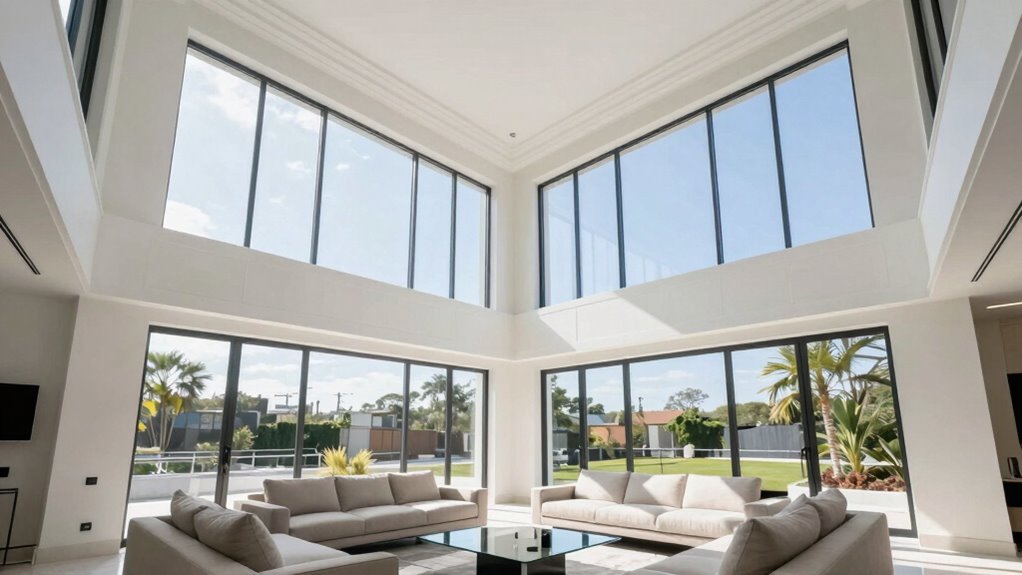

Your VR experience depends heavily on ceiling height, often overlooked by many users. Low ceilings can restrict movement, cause tracking issues, and make spaces feel cramped, reducing immersion and safety. Higher ceilings provide better lighting, more natural gestures, and an open sense of space, improving realism and comfort. This impacts how confidently you explore virtual environments. If you continue exploring, you’ll discover even more ways ceiling height influences your VR performance and enjoyment.

Play games on Amazon Luna for your next adventure, included with Prime
- A rotating selection of games, no download needed
- Play on TV, laptop or phone
- Fast, free delivery for your gear, too
Key Takeaways
- Higher ceilings improve movement freedom, reducing restrictions and enhancing overall immersion in VR experiences.
- Adequate ceiling height ensures better lighting and sensor accuracy for smooth tracking.
- Spacious rooms with tall ceilings decrease collision risks and boost confidence during active gestures.
- Tall ceilings enhance depth perception and realism, making virtual environments feel more authentic.
- Elevated ceilings contribute to comfort and reduce fatigue during extended VR sessions.
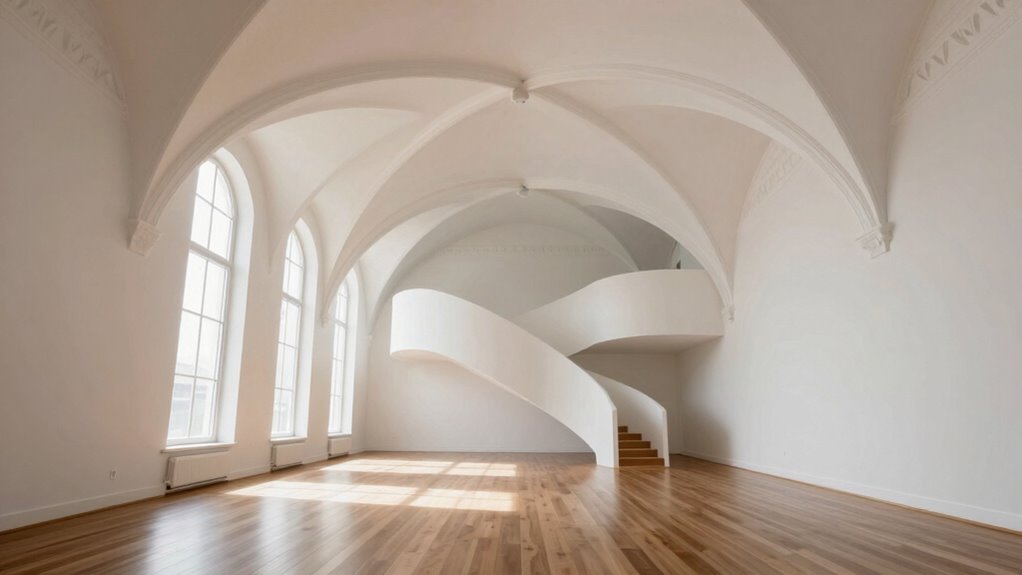
Many VR enthusiasts overlook the importance of ceiling height, yet it’s a critical factor that can considerably impact your experience. When your ceiling is too low, it can create a cramped environment that hampers both your movement and perception within virtual spaces. The height of your room directly influences lighting accuracy, which is essential for a realistic VR experience. Proper lighting helps your headset’s sensors accurately track your movements, so if the ceiling is low and the space feels confined, the lighting may become uneven or insufficient, leading to tracking errors. This can cause delays or jittery movements, breaking your immersion and making the experience less enjoyable.
Ceiling height also plays a significant role in your spatial awareness. In VR, feeling grounded and aware of your surroundings is imperative for safety and comfort. If the room feels too small or the ceiling too low, your brain might struggle to differentiate between the real and virtual worlds. You could find yourself more prone to bumping into walls or furniture, even if you’re physically standing in a safe space. On the other hand, a room with a high ceiling offers more room to move freely and helps your brain maintain a clear sense of space, reducing disorientation or claustrophobia during intense VR sessions. Additionally, a higher ceiling can improve lighting distribution, which is vital for consistent sensor performance. Proper room layout also becomes easier to achieve in spaces with higher ceilings, further enhancing your VR experience.
Having a higher ceiling allows for better spatial mapping, which is the foundation of an immersive VR experience. When the room feels spacious, your movements translate more naturally into the virtual world, making interactions smoother and more precise. This sense of space also boosts your confidence to perform more active gestures, such as jumping or ducking, knowing there’s ample headroom. A room with a low ceiling can limit these movements, making your experience feel restricted and less engaging. Moreover, higher ceilings contribute to a more balanced and comfortable environment, reducing fatigue during long VR sessions.
Furthermore, the height of the ceiling can influence how comfortable you feel during extended VR use, as a cramped space may cause discomfort or increase fatigue due to constant physical constraints. Beyond just movement, ceiling height influences how you perceive depth and scale in VR. Tall ceilings can enhance the realism of virtual environments by providing a sense of grandeur and openness, whereas low ceilings tend to make spaces feel compressed and less authentic. If you’re serious about VR, understanding how ceiling height affects lighting accuracy and spatial awareness can help you select the right setup. It’s not just about having enough space to move; it’s about creating an environment where technology works seamlessly, and your perception remains intact, delivering the immersive experience you crave.
VR room ceiling height measurement tool
As an affiliate, we earn on qualifying purchases.
As an affiliate, we earn on qualifying purchases.
Frequently Asked Questions
How Does Ceiling Height Affect VR Motion Sickness?
Ceiling height impacts VR motion sickness by influencing ceiling acoustics and lighting considerations. A higher ceiling helps reduce echo, making your virtual environment feel more natural and less disorienting. Proper lighting, which is easier to manage in rooms with higher ceilings, minimizes visual inconsistencies that can trigger motion sickness. When the ceiling is tall enough, you experience less sensory conflict, helping you stay comfortable and immersed during VR sessions.
Can Ceiling Height Influence VR Room Calibration Accuracy?
Absolutely, ceiling height can make or break your VR room calibration accuracy! If your ceiling’s too low, you might feel like you’re in a cramped spaceship, throwing off room acoustics and lighting conditions that mess with your tracking precision. A higher ceiling gives you more space to breathe, improving room setup and calibration. It’s like giving your VR system the perfect stage to perform flawlessly, no matter how energetic your moves get!
What Safety Risks Are Associated With Low Ceilings in VR Spaces?
Low ceilings in VR spaces pose safety risks like increased collision chances with overhead fixtures or walls, especially if lighting conditions are poor. You might bump into objects or trip over cables, risking injury. Acoustic considerations also matter: low ceilings can amplify sound, causing disorientation or distraction. To stay safe, make sure adequate lighting, clear pathways, and consider the acoustic environment before setting up your VR space.
How Does Ceiling Height Impact Multi-User VR Experiences?
Ceiling height considerably impacts multi-user VR experiences by enhancing the aesthetic environment and improving spatial perception. When ceilings are higher, you feel less confined, allowing for more natural movement and better interaction among users. This openness fosters a more immersive, comfortable atmosphere, encouraging collaboration and social engagement. By prioritizing adequate ceiling height, you create a more inviting, visually appealing space that enhances overall VR experiences.
Are There Optimal Ceiling Heights for Different VR Activities?
Yes, there are ideal ceiling heights for different VR activities. For immersive experiences like gaming or virtual tours, higher ceilings—around 14 to 16 feet—enhance aesthetic appeal and improve spatial perception, making the environment feel more realistic. For focused training or meetings, lower ceilings, around 10 to 12 feet, work well. Choosing the right height boosts immersion and comfort, ensuring your VR experience feels natural and engaging.
VR sensor lighting and tracking accessories
As an affiliate, we earn on qualifying purchases.
As an affiliate, we earn on qualifying purchases.
Conclusion
Remember, in VR as in life, height isn’t just about space—it’s about perspective. While many focus on graphics or controllers, overlooking ceiling height can limit your experience or cause discomfort. Think of it like the adage, “A tall tree catches much wind.” The more space above you, the more freedom you have to explore and move comfortably. So, don’t underestimate your ceiling height; it’s key to truly expanding your virtual horizons.
As an affiliate, we earn on qualifying purchases.
As an affiliate, we earn on qualifying purchases.
Evergreen bestsellers Picks
bestsellers
As an affiliate, we earn on qualifying purchases.