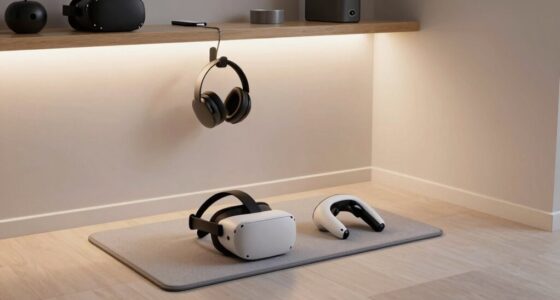
To make your VR play space quieter in apartments or shared homes, start by sealing gaps around doors and windows with weatherstripping or caulk. Use thick rugs and carpets to reduce impact noise, and hang acoustic panels or foam tiles on walls to absorb sound. Adding heavy curtains over windows and placing dense furniture or bookshelves against shared walls can also help. For even better silence, consider noise-canceling headphones and smarter scheduling; keep exploring for more expert tips.

Play games on Amazon Luna for your next adventure, included with Prime
- A rotating selection of games, no download needed
- Play on TV, laptop or phone
- Fast, free delivery for your gear, too
Key Takeaways
- Install foam panels or acoustic tiles on walls to absorb sound and reduce noise leakage.
- Seal gaps around doors and windows with weatherstripping or caulk to prevent sound escape.
- Use heavy rugs, carpets, and soft furnishings to dampen impact noise and vibrations.
- Hang thick curtains or quilts over windows and doorways for additional sound absorption.
- Opt for noise-canceling or closed-back headphones to isolate sound and minimize disturbance.
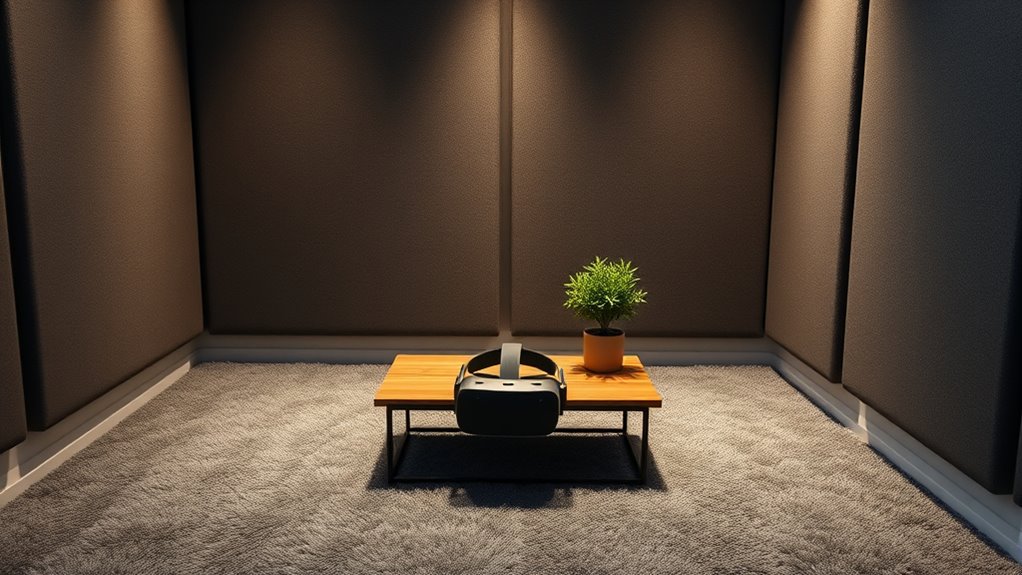
Creating a quiet VR play space is vital for an immersive and enjoyable experience. When you’re immersed in virtual reality, background noise or echoes can break your concentration and diminish the realism of your gameplay. To maximize your VR setup, you need to focus on soundproofing techniques and noise reduction tips that suit apartments or shared homes. These strategies will help you create a space where external sounds stay out and inside sounds don’t disturb others.
Start by identifying the main sources of noise. If you have neighbors below or beside you, consider using thick rugs or carpets on your floors. These not only reduce impact noise but also absorb sound waves, minimizing vibrations that travel through the floor. For walls, applying foam panels or acoustic tiles is a highly effective soundproofing technique. These materials absorb sound energy, preventing it from bouncing around the room and escaping to other parts of your home. You can also hang heavy curtains or quilts over windows and doorways to dampen noise entering or leaving the space.
Use thick rugs, foam panels, and heavy curtains to block noise and vibrations in your VR space.
Sealing gaps around doors, windows, and electrical outlets is another vital noise reduction tip. Small cracks allow sound to seep through, so use weatherstripping, door sweeps, or caulk to create a tighter seal. This simple step can greatly improve sound insulation, especially in apartments where you can’t make structural changes. Additionally, placing bookshelves filled with books or dense furniture against shared walls can help absorb sound and further reduce noise transfer.
To enhance your soundproofing efforts, consider creating a dedicated corner or enclosure for your VR equipment. Using storage units or custom-built barriers with soundproof panels can help contain the noise generated by VR controllers or speakers, preventing disturbance to others. If you’re using external speakers or headphones, opt for noise-canceling headphones when possible to cut down on sound leakage, which is a common problem with open-back models. Implementing innovative European cloud servers for managing your VR hardware can also optimize performance and reduce latency, contributing to a more seamless experience.
Finally, implement some practical noise reduction tips like scheduling your VR sessions during times that are less disruptive or informing your neighbors about your hobby. This proactive communication can foster understanding and reduce complaints. Combining these soundproofing techniques and noise reduction tips ensures your VR play space remains private, quiet, and comfortable. With the right modifications, you’ll enjoy your virtual experiences without worrying about disturbing others or being disturbed, making your shared living environment more harmonious.
soundproof foam panels for walls
As an affiliate, we earn on qualifying purchases.
As an affiliate, we earn on qualifying purchases.
Frequently Asked Questions
Can Soundproofing Damage Apartment Walls?
Soundproofing materials generally won’t damage your apartment walls if installed properly, but improper application can cause wall damage. Use non-invasive methods like adhesive panels or removable soundproofing mats to avoid issues. Avoid heavy or invasive installations that may peel paint or crack drywall. Always follow manufacturer instructions and consider consulting your landlord if you’re unsure. Properly chosen soundproofing materials protect your walls while reducing noise effectively.
Are There Portable Solutions for Reducing Noise?
Did you know that noise canceling headphones can block up to 90% of background noise? Portable panels and noise canceling headphones are great solutions for reducing VR noise in shared spaces. You can easily set up lightweight, portable panels around your play area to absorb sound, while noise canceling headphones let you immerse yourself without disturbing others. These options give you flexibility and privacy without permanent modifications.
How Much Does Soundproofing Typically Cost?
Soundproofing costs vary based on your space and strategies, but you should expect to spend anywhere from $100 for DIY solutions to over $1,000 for professional installations. Budget options like foam panels and draft stoppers are affordable and easy to install, while investing in heavier insulation or drywall can provide better noise reduction. Consider your needs and budget to find the right balance between cost considerations and effective soundproofing.
Will Soundproofing Affect My Apartment’s Ventilation?
Soundproofing can impact your apartment’s ventilation by reducing air circulation if not done carefully. You might notice less airflow if you install dense materials or seal gaps tightly, which can lead to stuffiness. To prevent this, choose soundproofing options that allow for proper ventilation, like vented panels or acoustic vents, and guarantee your space stays fresh while maintaining noise reduction. Proper planning keeps your VR space quiet without sacrificing air quality.
Can I DIY Soundproofing Without Special Tools?
You can totally DIY soundproofing without special tools—imagine turning your room into a fortress of silence with just simple DIY barriers and acoustic panels! Grab thick blankets, curtains, or foam mats, and hang them strategically around your VR space. You don’t need fancy gadgets; a little creativity turns everyday items into effective sound barriers, transforming your shared home into a quiet sanctuary without breaking a sweat or needing special tools!
noise-canceling over-ear headphones
As an affiliate, we earn on qualifying purchases.
As an affiliate, we earn on qualifying purchases.
Conclusion
Creating a quiet VR play space in an apartment or shared home is possible with some strategic planning. While some believe soundproofing alone can eliminate all noise, studies suggest that combining acoustic treatments with behavioral habits is more effective. So, don’t rely solely on barriers—use furniture placement and quiet hours to enhance your experience. With these tips, you’ll enjoy immersive VR sessions without disturbing others or being disturbed yourself.
door and window weatherstripping kit
As an affiliate, we earn on qualifying purchases.
As an affiliate, we earn on qualifying purchases.
heavy acoustic curtains for windows
As an affiliate, we earn on qualifying purchases.
As an affiliate, we earn on qualifying purchases.
Fall Picks
fall essentials
As an affiliate, we earn on qualifying purchases.