Among these standalone virtual reality headsets, I rank the Meta Quest 3 512GB first for its balance of mixed-reality features, storage, and wireless play. The Meta Quest 3S is a more accessible entry point, while the HTC Vive Focus Vision stands out for buyers who also want a wired PC VR option. The main tradeoffs are display quality, comfort, storage, and whether you need PC connectivity or primarily want an all-in-one headset. Older and renewed Quest models may suit tighter budgets, but buyers should weigh their age and condition against newer features. Read on for the full comparison and advice on which headset fits your priorities.

Play games on Amazon Luna for your next adventure, included with Prime
- A rotating selection of games, no download needed
- Play on TV, laptop or phone
- Fast, free delivery for your gear, too
Complete the kit

Key Takeaways
- Quest 3 is the clearest all-round choice: the 512GB model pairs standalone play with mixed-reality capabilities and generous room for apps.
- Quest 3S prioritizes access over display refinement: it offers a current standalone route, but buyers should accept its more basic optics compared with Quest 3.
- HTC’s Focus Vision options serve a different need: their wired PC VR bundles make more sense for buyers seeking a headset that can also connect to a PC.
- Storage and bundles change the decision: Quest 3 and Quest 3S configurations, GOLF+ bundles, and the Optima Academy package vary in capacity or included content.
- Older and renewed Quest 2 and Quest Pro listings require extra scrutiny: condition, support, fit, and generation-specific features matter more than the product name alone.
| Meta Quest Pro Virtual Reality Headset | 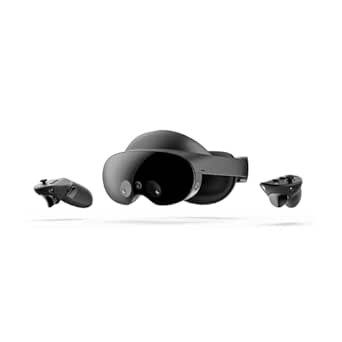 | Best for Mixed Reality and Social Presence | Platform: Standalone | Storage: 256 GB | Memory: 12 GB RAM | VIEW LATEST PRICE | See Our Full Breakdown |
| HTC VIVE Focus Vision Mixed Reality and PC VR Headset with Controllers |  | Best for PC VR Expansion | Resolution: 2448 × 2448 pixels per eye | Field of view: Up to 120 degrees | Refresh rate: 90 Hz | VIEW LATEST PRICE | See Our Full Breakdown |
| Meta Quest 2 All-in-One VR Headset, 128GB, with Silicone Cover and Adjustable Controller Straps |  | Best for First-Time VR Buyers | Storage: 128 GB | Display resolution: 1832 × 1920 pixels per eye | Refresh rate: 90 Hz | VIEW LATEST PRICE | See Our Full Breakdown |
| Meta Quest Pro 256 GB VR Headset with Optima Academy Online Field Trips |  | Best for Learning and Virtual Field Trips | Storage: 256 GB | RAM: 12 GB | Field of view: 110 degrees | VIEW LATEST PRICE | See Our Full Breakdown |
| Meta Quest 3 512GB Virtual Reality Headset (Renewed Premium) |  | Best for Standalone Gaming and Storage | Storage: 512 GB | Processor: Snapdragon XR2 Gen 2 | Memory: 8 GB RAM | VIEW LATEST PRICE | See Our Full Breakdown |
| HTC Vive Focus Vision Wired Bundle – XR Headset with DisplayPort PC VR Streaming Kit |  | Best for High-Fidelity PC VR | Resolution: 2448 × 2448 pixels per eye | Field of view: 120 degrees | Refresh rate: 90 Hz | VIEW LATEST PRICE | See Our Full Breakdown |
| Meta Quest 3S 128GB VR Headset with GOLF+ |  | Best Starter Bundle | Storage: 128 GB | Processor: Snapdragon XR2 Gen 2 | Memory: 8 GB RAM | VIEW LATEST PRICE | See Our Full Breakdown |
| Meta Quest 3S 256GB Wireless VR Headset |  | Best Value for a Larger Game Library | Storage: 256 GB | Processor: Snapdragon XR2 Gen 2 | Memory: 8 GB RAM | VIEW LATEST PRICE | See Our Full Breakdown |
| Meta Quest 2 All-in-One VR Headset, 256 GB (Renewed) |  | Best Renewed Legacy Pick | Storage: 256 GB | Display: LCD | Resolution: 1832 × 1920 pixels per eye | VIEW LATEST PRICE | See Our Full Breakdown |
| Meta Quest 3 512GB VR Headset with GOLF+ |  | Best Overall | Storage: 512 GB | Processor: Snapdragon XR2 Gen 2 | Memory: 8 GB RAM | VIEW LATEST PRICE | See Our Full Breakdown |
| Meta Quest 3S 128GB VR Headset (Renewed Premium) |  | Best Standalone Value for Mixed Reality | Platform: Standalone (Meta Quest) | Processor: Snapdragon XR2 Gen 2 | RAM: 8GB | VIEW LATEST PRICE | See Our Full Breakdown |
| standalone virtual reality headset | Storage | Field of view | Refresh rate | Memory |
|---|---|---|---|---|
| Meta Quest Pro Virtual Reality | 256 GB | 106 degrees | — | 12 GB RAM |
| HTC VIVE Focus Vision Mixed Re | 128 GB, expandable to 2 TB with MicroSD | Up to 120 degrees | 90 Hz | 12 GB RAM |
| Meta Quest 2 All-in-One VR Hea | 128 GB | 110 degrees | 90 Hz | — |
| Meta Quest Pro 256 GB VR Heads | 256 GB | 110 degrees | 90 Hz | — |
| Meta Quest 3 512GB Virtual Rea | 512 GB | 110 degrees | 120 Hz | 8 GB RAM |
| HTC Vive Focus Vision Wired Bu | — | 120 degrees | 90 Hz | 12 GB RAM |
| Meta Quest 3S 128GB VR Headset | 128 GB | 110 degrees | — | 8 GB RAM |
| Meta Quest 3S 256GB Wireless V | 256 GB | — | 60 Hz | 8 GB RAM |
| Meta Quest 2 All-in-One VR Hea | 256 GB | 90 degrees | 90 Hz | — |
| Meta Quest 3 512GB VR Headset | 512 GB | — | 120 Hz | 8 GB RAM |
| Meta Quest 3S 128GB VR Headset | 128GB | 96 degrees | 90Hz | — |
More Details on Our Top Picks
Meta Quest Pro Virtual Reality Headset
The Meta Quest Pro is the pick here for buyers who want more than a conventional standalone gaming headset. Its full-color passthrough supports mixed-reality experiences in your actual surroundings, while real-time facial expressions can make avatar conversations feel more personal. The self-tracking Touch Pro controllers add advanced haptics and avoid relying on the headset to track their position in the usual way. Compared with the Meta Quest 3 512GB, this model gives more attention to social presence and controller features, but has less storage and is substantially heavier at 879 g. Its pancake lenses and 12 GB of RAM round out a capable package, yet the weight may become tiring in long sessions. I’d choose it for mixed-reality collaboration over a lighter, more gaming-focused headset, and skip it if comfort or a larger game library is the priority.
Pros:- Full-color passthrough enables mixed-reality experiences in the user’s surroundings
- Self-tracking Touch Pro controllers include advanced haptics
- Real-time facial expressions support more expressive avatars
- 12 GB of RAM and 256 GB of storage
Cons:- At 879 g, it may feel heavy during extended sessions
- Requires a Meta account
- Has less storage than the Meta Quest 3 512GB
Best for: Buyers focused on mixed-reality collaboration, expressive avatar communication, and advanced controller feedback
Not ideal for: People who prioritize a lighter headset for long play sessions or want more than 256 GB of onboard storage
- Platform:Standalone
- Storage:256 GB
- Memory:12 GB RAM
- Field of view:106 degrees
- Lens technology:Pancake
- Sensors:10 VR/MR sensors
- Controllers:Touch Pro controllers
- Weight:879 g
Our verdict“Choose the Quest Pro for mixed-reality features and expressive social VR, but look elsewhere if low weight matters most.”
HTC VIVE Focus Vision Mixed Reality and PC VR Headset with Controllers
The HTC VIVE Focus Vision is the most flexible choice here for someone who wants a standalone headset now and a route into higher-fidelity PC VR later. Its DisplayPort streaming can deliver a direct PC connection, while 2448 × 2448 pixels per eye and a field of view up to 120 degrees give it a strong visual spec. Eye and hand tracking add options that the Meta Quest 2 does not offer, and a hot-swappable battery helps reduce downtime during longer sessions. The tradeoff is a more involved setup: PC streaming calls for a direct Ethernet connection between the PC and router, and some tracking features depend on separately supported accessories. Its 128 GB base storage is also smaller than the Quest 3 512GB. I’d pick this for PC VR flexibility, not for the simplest plug-and-play standalone experience.
Pros:- Supports both standalone VR and DisplayPort PC VR streaming
- 2448 × 2448 resolution per eye with up to a 120-degree field of view
- Built-in eye and hand tracking
- Hot-swappable battery supports longer sessions
Cons:- PC VR streaming requires a direct Ethernet connection from the PC to the Wi-Fi router
- Some tracking and accessory features require separately supported trackers
- Base storage is 128 GB, below the Meta Quest 3 512GB
Best for: VR enthusiasts who want standalone use alongside a direct DisplayPort PC VR option and advanced tracking
Not ideal for: Buyers seeking a straightforward wireless setup or those unwilling to configure a wired network connection for PC streaming
- Resolution:2448 × 2448 pixels per eye
- Field of view:Up to 120 degrees
- Refresh rate:90 Hz
- Storage:128 GB, expandable to 2 TB with MicroSD
- Memory:12 GB RAM
- Connectivity:DisplayPort, USB, Wi-Fi
- Tracking:Eye and hand tracking; supports face and body trackers
- Battery:Hot-swappable battery with reserve front battery
Our verdict“Choose the Focus Vision if PC VR connectivity and flexible tracking matter more than a simpler standalone setup.”
Meta Quest 2 All-in-One VR Headset, 128GB, with Silicone Cover and Adjustable Controller Straps
The Meta Quest 2 128GB makes the most sense for a first VR headset when access to standalone games matters more than having the newest display or mixed-reality features. It works without a PC or console, and the included silicone cover and adjustable knuckle straps add practical grip and fit options straight away. Its 1832 × 1920 resolution per eye and 90 Hz refresh rate provide the core specs for gaming and entertainment, while a compatible Link cable can add PC VR. Compared with the Meta Quest 3 512GB, the Quest 2 has less storage and lacks the newer model’s full-color passthrough and 120 Hz refresh rate. It also needs wireless internet and the Oculus app during setup, and the Link cable is sold separately. I’d consider it for basic standalone VR, but buyers wanting roomier storage or newer mixed reality should step up.
Pros:- Runs standalone games without requiring a PC or console
- Includes silicone cover and adjustable knuckle straps
- Supports PC VR with a compatible Link cable
- 1832 × 1920 resolution per eye and a 90 Hz refresh rate
Cons:- Wireless internet and the Oculus app are required for setup
- Compatible Link cable is sold separately
- Requires a Facebook account
Best for: First-time VR buyers who want standalone games and useful grip accessories included in the package
Not ideal for: Buyers who want full-color mixed reality, more than 128 GB of storage, or PC VR without buying a separate cable
- Storage:128 GB
- Display resolution:1832 × 1920 pixels per eye
- Refresh rate:90 Hz
- Field of view:110 degrees
- Connectivity:USB Type-C
- Compatibility:Standalone and PC VR
- Included accessories:Two Touch controllers, silicone cover, glasses spacer, charging cable, power adapter, adjustable knuckle straps
Our verdict“Choose the Quest 2 as an entry point for standalone VR if its setup requirements and older feature set suit your needs.”
Meta Quest Pro 256 GB VR Headset with Optima Academy Online Field Trips
This Quest Pro bundle pairs the same broad mixed-reality appeal as the other Quest Pro listing with an education-oriented extra: Optima Academy Online VR field trips. Full-color passthrough, resizable virtual screens, and spatial audio can suit guided learning sessions, while the self-tracking Touch Pro controllers support detailed hand movement. Compared with the standard Meta Quest Pro, the main distinction described here is the field-trip subscription, not a different core headset experience. That makes the bundle a more targeted choice for learners or educators, but the subscription duration is stated inconsistently as one month or 12 months, so I would not base a purchase on a particular access period without confirmation. The headset also shares the Pro’s Meta account requirement and may be less compelling for buyers who mainly want a gaming-focused device like the Meta Quest 3 512GB.
Pros:- Full-color passthrough supports mixed-reality learning experiences
- Touch Pro controllers support self-tracking and detailed finger movements
- 256 GB storage and 12 GB RAM
- Resizable screens and spatial audio support varied learning and media use
Cons:- The included field-trip subscription duration is unclear, with conflicting one-month and 12-month claims
- Requires a Meta account
- The subscription bundle may add little for buyers who do not want educational content
Best for: Learners, educators, and families interested in mixed-reality experiences and included virtual field-trip content
Not ideal for: Buyers who need a confirmed subscription duration or primarily want a gaming-focused headset with more storage
- Storage:256 GB
- RAM:12 GB
- Field of view:110 degrees
- Resolution:1920 × 1080 per eye
- Refresh rate:90 Hz
- Display and lenses:LCD with pancake lenses
- Controllers:Meta Quest Touch Pro Controllers
- Subscription:Optima Academy Online VR field trips; duration unclear
Our verdict“Choose this bundle for its educational angle only if the field-trip access terms are confirmed before purchase.”
Meta Quest 3 512GB Virtual Reality Headset (Renewed Premium)
The Meta Quest 3 512GB is the strongest fit in this group for buyers who want a modern standalone headset with plenty of room for a growing game library. Its Snapdragon XR2 Gen 2 processor, 4K+ display, and 120 Hz refresh rate distinguish it from the older Meta Quest 2, while full-color passthrough brings mixed-reality apps into the room around you. The 512 GB capacity also gives it twice the storage of the standard Quest Pro and four times that of the Quest 2 128GB listing. The clear compromise is runtime: the stated battery life is about 2.2 hours, so longer sessions may call for a recharge break. This listing is Renewed Premium, which is a different purchase condition from a new headset. I’d choose it for gaming and app storage, not for all-day use between charges.
Pros:- 512 GB storage accommodates a large collection of games and apps
- Snapdragon XR2 Gen 2 processor and 4K+ display
- Full-color passthrough supports mixed-reality experiences
- 120 Hz refresh rate
Cons:- Battery life is about 2.2 hours
- Requires a Meta account
- Renewed Premium listing is not a new-condition headset
Best for: Standalone VR gamers and app users who want newer processing, full-color mixed reality, and substantial onboard storage
Not ideal for: People who need long sessions without recharging or prefer a new-condition headset rather than a Renewed Premium listing
- Storage:512 GB
- Processor:Snapdragon XR2 Gen 2
- Memory:8 GB RAM
- Display resolution:4K+
- Refresh rate:120 Hz
- Field of view:110 degrees
- Battery life:About 2.2 hours
- Controller type:Touch Plus
Our verdict“Choose the Quest 3 512GB for a newer, storage-rich standalone gaming experience if its battery life and renewed condition work for you.”
HTC Vive Focus Vision Wired Bundle – XR Headset with DisplayPort PC VR Streaming Kit
The Vive Focus Vision is the specialist pick here: its 2448 × 2448 pixels per eye, 120-degree field of view, and DisplayPort streaming are aimed at detailed PC VR, not just casual wireless play. Unlike the Meta Quest 3, which is a more flexible all-in-one choice, this bundle can use a PC connection for lossless video and pairs that with eye and hand tracking. Its hot-swappable battery also suits longer sessions better than the short stated runtimes of the Quest models. The tradeoff is that its strongest PC VR mode depends on a connected computer, so it is less convenient as a grab-and-play standalone headset. Full-body tracking also needs separate VIVE Ultimate Trackers, and the Windows-focused setup makes it a narrower choice than Meta’s broader wireless lineup.
Pros:- High resolution of 2448 × 2448 pixels per eye and a 120-degree field of view
- DisplayPort streaming supports lossless PC VR visuals
- Built-in eye and hand tracking, with low-light support listed
- Hot-swappable battery with reserve power
Cons:- Its PC VR streaming mode requires a connected PC
- Full-body tracking requires separately purchased VIVE Ultimate Trackers
- More specialized PC setup makes it less convenient for casual standalone use
Best for: PC VR players who want a high-resolution headset, eye and hand tracking, and battery swaps for extended sessions
Not ideal for: Buyers who want a simple, fully wireless headset for casual standalone gaming or do not have a VR-capable PC
- Resolution:2448 × 2448 pixels per eye
- Field of view:120 degrees
- Refresh rate:90 Hz
- Memory:12 GB RAM
- Tracking:Eye and hand tracking; face and body tracking optional
- Connectivity:DisplayPort, USB, Wi-Fi
- Battery:Hot-swappable with reserve battery
- Storage expansion:Up to 2 TB via MicroSD
Our verdict“Choose the Vive Focus Vision if PC VR image quality and long-session battery swaps matter more to you than straightforward wireless convenience.”
Meta Quest 3S 128GB VR Headset with GOLF+
The Quest 3S 128GB with GOLF+ is the clearest entry point for someone who wants a wireless headset with a game ready to try. Its Snapdragon XR2 Gen 2 chip and 8 GB of RAM support current standalone games and mixed reality, while the bundle adds GOLF+ credits and a three-month games catalog trial. Compared with the Quest 3S 256GB, its main compromise is less room for installed games; the core processor and per-eye resolution are the same. It also has a stated 2.5-hour battery life, so long sessions may call for a recharge. Setup requires a smartphone and Meta Horizon app, another step that buyers seeking a device with no account or phone dependency may not welcome. For a newcomer who values included content over extra storage, this bundle is the more purposeful pick.
Pros:- Standalone wireless play without a PC connection
- Snapdragon XR2 Gen 2 processor and 8 GB of RAM
- Includes GOLF+ with in-game credits and a three-month games catalog trial
- Supports mixed reality experiences
Cons:- 128 GB storage leaves less room for games than the 256 GB Quest 3S
- Listed battery life is 2.5 hours
- Requires a smartphone and Meta Horizon app for setup and GOLF+ redemption
Best for: First-time VR buyers who want a wireless headset, a golf game, and a temporary catalog of games to sample
Not ideal for: Players who keep many large games installed or want to set up a headset without a smartphone and Meta Horizon app
- Storage:128 GB
- Processor:Snapdragon XR2 Gen 2
- Memory:8 GB RAM
- Resolution:1832 × 1920 per eye
- Field of view:110 degrees
- Display:LCD
- Battery life:2.5 hours
- Included content:GOLF+ with 1,800 in-game credits and a three-month games catalog trial
Our verdict“Pick this bundle if you are new to VR and want included golf content, but choose the 256 GB Quest 3S if library space matters more.”
Meta Quest 3S 256GB Wireless VR Headset
This Quest 3S 256GB keeps the same Snapdragon XR2 Gen 2 platform and 1832 × 1920-per-eye resolution as the 128 GB GOLF+ bundle, but doubles the storage without tying the choice to that bundle’s included content. That makes it a better fit for people who want several games and apps installed at once. Its full-color passthrough also supports mixed reality, bringing digital elements into a view of the room rather than limiting play to a fully virtual scene. Compared with the Meta Quest 3 512GB, it offers less storage and a listed 60 Hz refresh rate, so it is not the pick for buyers prioritizing the higher refresh rate and sharper display specs of that model. Battery life is only just over two hours, which can interrupt longer workouts or play sessions.
Pros:- 256 GB storage offers more room than the 128 GB Quest 3S bundle
- Snapdragon XR2 Gen 2 processor and 8 GB of RAM
- Dual RGB cameras provide full-color passthrough for mixed reality
- Includes Touch Plus controllers
Cons:- Battery life is listed as just over two hours
- 60 Hz refresh rate is lower than the listed rate on the Meta Quest 3
- Resolution is lower than the Meta Quest 3’s listed per-eye resolution
Best for: Wireless VR buyers who want room for a broader installed game library without needing the bundled GOLF+ content
Not ideal for: Frequent players who want longer sessions between charges or buyers prioritizing a higher refresh rate and higher resolution
- Storage:256 GB
- Processor:Snapdragon XR2 Gen 2
- Memory:8 GB RAM
- Resolution:1832 × 1920 per eye
- Refresh rate:60 Hz
- Connectivity:Wi-Fi
- Cameras:Dual RGB color cameras
- Battery life:More than 2 hours
Our verdict“Choose this Quest 3S for a roomier wireless game library, but step up to the Quest 3 if display performance matters more than storage capacity.”
Meta Quest 2 All-in-One VR Headset, 256 GB (Renewed)
The renewed Quest 2 256GB suits buyers who want standalone VR basics and ample stated storage without needing the newest hardware. Its 1832 × 1920-per-eye LCD and 90 Hz refresh rate compare favorably on refresh rate with the Quest 3S models listed here, whose stated rate is 60 Hz. But the Quest 2 has a narrower 90-degree field of view and lacks the newer models’ listed full-color passthrough and Snapdragon XR2 Gen 2 platform. The 256 GB capacity remains useful for keeping games on the headset, though this is a renewed unit, not a new one, and it comes with a 90-day limited warranty. Buyers who value newer mixed-reality features should look at the Quest 3S; those comfortable with renewed hardware may find this the more storage-focused legacy option.
Pros:- Standalone operation for gaming and entertainment
- 256 GB storage
- 1832 × 1920 resolution per eye with a 90 Hz refresh rate
- Includes motion-sensing controllers and adjustable knuckle straps
Cons:- Renewed condition may not suit buyers seeking new hardware
- 90-degree field of view is narrower than the listed 110 degrees on the Quest 3S
- 90-day limited warranty
Best for: Budget-conscious VR buyers who are comfortable purchasing renewed hardware and want a standalone headset with 256 GB of storage
Not ideal for: Buyers who want new hardware, full-color passthrough, a wider field of view, or a longer warranty
- Storage:256 GB
- Display:LCD
- Resolution:1832 × 1920 pixels per eye
- Refresh rate:90 Hz
- Field of view:90 degrees
- Platform:Meta Quest 2; standalone operation
- Weight:1.8 pounds
- Warranty:90-day limited warranty
Our verdict“Consider this renewed Quest 2 if storage and a 90 Hz refresh rate matter more than newer mixed-reality features or new-device condition.”
Meta Quest 3 512GB VR Headset with GOLF+
The Meta Quest 3 512GB is the strongest all-rounder in this group for buyers who want standalone gaming and mixed reality without giving up display headroom. Its 2064 × 2208 pixels per eye and listed 120 Hz refresh rate exceed the Quest 3S models’ 1832 × 1920 resolution and 60 Hz rate, while 512 GB leaves more space for games than either 256 GB Quest 3S. Full-color passthrough helps mixed-reality apps feel connected to the room, and the included GOLF+ content gives new owners a specific game to start with. Compared with the Vive Focus Vision, it is the more straightforward wireless choice, though it does not offer that headset’s listed DisplayPort streaming or hot-swappable battery. Its 2.2-hour battery life is a notable limit for extended play.
Pros:- 512 GB storage for a larger installed game library
- 2064 × 2208 resolution per eye and a listed 120 Hz refresh rate
- Full-color passthrough supports mixed-reality use
- Includes GOLF+ with in-game credits
Cons:- Listed battery life is about 2.2 hours
- Does not list DisplayPort streaming like the Vive Focus Vision
- Higher display specifications do not remove the need to recharge during longer sessions
Best for: Buyers who want one wireless headset for gaming, fitness, and mixed reality, with ample storage and a higher listed refresh rate
Not ideal for: PC VR specialists who need DisplayPort streaming, or players who regularly want sessions longer than the stated battery life
- Storage:512 GB
- Processor:Snapdragon XR2 Gen 2
- Memory:8 GB RAM
- Resolution:2064 × 2208 pixels per eye
- Maximum display resolution:4128 × 2208 pixels
- Refresh rate:120 Hz
- Display type:LCD
- Battery life:2.2 hours
- Operating system:Meta Horizon OS
Our verdict“Choose the Quest 3 512GB for the most capable all-purpose wireless option here, unless PC streaming or extended battery life is your priority.”
Meta Quest 3S 128GB VR Headset (Renewed Premium)
The Meta Quest 3S 128GB makes sense for buyers who want current-generation standalone performance without stepping up to the Meta Quest 3 512GB. Its Snapdragon XR2 Gen 2 processor and 8GB of RAM support demanding games, while dual RGB passthrough cameras add mixed-reality experiences that older options like the Meta Quest 2 cannot match. That combination gives it a broader use than a headset focused only on virtual environments.
The tradeoffs are practical: 128GB storage leaves less room for a large game library than the Quest 3’s 512GB, and the stated battery life of up to three hours favors shorter sessions. At 515g, it may also feel weighty during extended play. As a renewed headset, its condition may differ from a new unit, so check the seller’s renewal terms before choosing it.
Pros:- Standalone wireless operation avoids a required PC or console connection.
- Snapdragon XR2 Gen 2 processor and 8GB RAM support current-generation VR experiences.
- Dual RGB passthrough cameras enable mixed-reality use beyond fully virtual games.
- 90Hz display and 96-degree field of view support responsive, broad-view gameplay.
Cons:- 128GB storage is more limiting than the 512GB Meta Quest 3 for large installed libraries.
- Battery life is listed at up to three hours, which can cut longer play sessions short.
- The 515g weight may become tiring during extended use, and renewed condition can vary.
Best for: Budget-conscious VR newcomers who want wireless gaming and mixed-reality features, and who are comfortable managing a smaller 128GB library.
Not ideal for: Players who keep many large games installed, want longer uninterrupted sessions, or prefer a new headset with clearly predictable condition.
- Platform:Standalone (Meta Quest)
- Processor:Snapdragon XR2 Gen 2
- RAM:8GB
- Storage:128GB
- Display resolution:2064 × 2208 pixels
- Refresh rate:90Hz
- Field of view:96 degrees
- Battery life:Up to 3 hours
- Weight:515g
Our verdict“Choose this renewed Quest 3S for a more affordable entry to standalone mixed reality, but pick the Quest 3 512GB if storage headroom matters more.”

How We Picked
I ranked these standalone virtual reality headsets by how well each one meets the core promise of untethered VR: it should operate without a PC, offer a practical path into games and apps, and make sense for its intended buyer. I weighed display and mixed-reality capabilities, comfort-related design, storage, controller use, and the flexibility to connect to a PC. Bundles received credit for relevant added content, but not enough to outweigh a weaker fit for everyday standalone use.
The order favors current, versatile headsets over older or condition-dependent listings. That puts the Quest 3 512GB ahead for broad capability, with the Quest 3S lower where its simpler optics are a tradeoff. The Focus Vision models rank for PC VR flexibility rather than as default standalone picks, while Quest 2 and Quest Pro variants are judged with their age, renewed status, and specific bundle contents in mind. Within close product families, I distinguish models by capacity, connectivity, and what the bundle adds.
Factors to Consider When Choosing Standalone Virtual Reality Headsets
A headset’s headline feature is only part of the choice. I’d start with how often you plan to play untethered, what you expect to see through the lenses, and whether the headset needs to serve as a PC VR device too. These broader checks can prevent a common mismatch: paying for capabilities you won’t use or choosing an older model that lacks the feature you actually wanted.
Choose the Display You’ll Use Every Session
Optics affect more than visual sharpness: they shape how easily you can find a clear viewing position and how comfortable the image feels during longer sessions. A lower-cost headset can be a sensible first step, but a display compromise is something you notice every time you wear it, unlike a storage limit you may only meet after installing many apps. Try to compare lens type and adjustment options, not resolution claims alone. Glasses wearers should check whether the headset can accommodate their frames or whether a prescription insert is available. A model with mixed-reality features may broaden what you can do, but those features do not automatically make its VR image better. Prioritize visual comfort if you expect frequent, extended play.
Decide Whether Standalone Means Standalone Only
Wireless operation is the defining convenience of this category, but some buyers also want PC VR access for games or applications that need a computer. A wired streaming bundle may add useful flexibility while reducing the simple, cable-free experience that makes a standalone headset appealing. Check whether PC connectivity is built into the headset or depends on a separate kit, cable, or compatible computer. A powerful PC does not improve the headset’s independent performance when you use it untethered. If you mainly want casual games, fitness, or media, standalone capability should carry more weight than PC features. If you already own a capable gaming PC, paying for a supported PC connection may make a hybrid model more useful.
Match Storage to Your App Habits
Storage capacity matters most to buyers who keep several large games installed or switch between apps without redownloading. A smaller capacity can work well if you play a few titles at a time and are comfortable managing downloads. Before choosing, check whether the model supports expandable storage; do not assume a headset can take a memory card just because it stores apps. Bundles can include a game or learning content, but that extra content does not replace the space needed for later downloads. Renewed listings deserve particular care: confirm the exact capacity and what accessories are included rather than relying on a similar model name. Paying for more storage is useful when it matches your habits, not simply because the largest option exists.
Treat Renewed and Older Models as a Different Kind of Purchase
A renewed headset can lower the barrier to trying VR, but it adds questions that do not apply in the same way to a new unit. Review the seller’s stated condition, return window, warranty coverage, and included controllers or charging accessories before deciding. Battery health and lens condition can affect everyday use, yet listing details may not describe them consistently. Older generations may also differ in software support, compatibility, and access to newer features. Compare the total package and its protections with a newer entry-level headset rather than comparing model names alone. If dependable condition and long-term use matter more than minimizing upfront spend, a current model may be the safer choice.
Check Fit, Weight, and Session Comfort
Comfort depends on face shape, strap adjustment, weight distribution, and whether you plan to move around while wearing the headset. A spec sheet rarely tells you how securely a headset will sit on your face, so look for adjustable fit and consider whether an optional strap or facial interface would be needed. Controller straps can help keep controllers secure during active games, but they do not improve headset fit. People who share a headset should check how easily it can be adjusted between users. For children or smaller faces, fit and manufacturer age guidance matter more than choosing the most advanced model. If possible, buy from a seller with a practical return policy, since comfort is personal.
Separate Useful Bundles From Distractions
Bundles such as GOLF+ or educational field-trip content are worthwhile when they match a real interest or use case. They are less persuasive if you would not choose that software independently, since included content cannot make an uncomfortable or poorly suited headset a better fit. Check whether the bundle is a redeemable code, preloaded content, or a separate service, and confirm any account or region requirements. Also compare the base headset’s storage and capabilities; a bundle does not change the underlying hardware. For a first headset, a familiar game can help you get started, while a bare headset may be the better choice for someone building a varied library. Treat bundled software as a tie-breaker, not the main reason to choose a headset.
Frequently Asked Questions
Is the Quest 3 worth choosing over the Quest 3S if I mainly play games?
Choose based on how much you value visual refinement and mixed-reality use against keeping the purchase simpler. Quest 3 is the stronger fit if you expect to play often, want a more capable mixed-reality experience, or care about its higher storage configuration. Quest 3S makes more sense when your priority is getting into standalone VR and you can accept simpler optics. The game library alone may not settle the choice, since both are part of the Quest family. If possible, compare their fit and viewing experience before deciding, especially if you are sensitive to lens clarity.
Can I use the HTC Vive Focus Vision without a gaming PC?
The Focus Vision is presented here as a mixed-reality and PC VR headset, with a separate wired bundle specifically adding DisplayPort PC VR streaming equipment. That bundle is aimed at buyers who want a computer-connected option, so check the exact package and compatibility requirements before buying. Do not assume that a PC VR bundle is necessary for every standalone function, or that it turns a headset into a fully wireless PC VR system. If your main goal is simply untethered games and apps, compare its standalone capabilities with the Quest models first. If PC VR is a major part of your plan, confirm the required hardware and connection path.
Should I buy a renewed Quest 2 or a new Quest 3S as my first headset?
A renewed Quest 2 may be appealing if you want an older-generation headset and have verified its condition, included accessories, and return protections. A Quest 3S is the more current route in this roundup, which can matter for features and the expected useful life of the device. Compare the specific capacity and bundle contents rather than assuming every listing has the same configuration. Renewed condition also adds uncertainty around wear and battery health that a new unit avoids. For a first headset intended to last, I would favor the current model unless the older listing offers a clear advantage for your needs.
Does a 256GB headset make more sense than a 128GB model?
Capacity is most valuable if you plan to keep multiple large games installed, share the headset, or avoid repeated downloads. A 128GB headset can be enough for a lighter library or a buyer willing to remove apps after finishing them. Check the actual usable space and the storage needs of the apps you expect to install, rather than relying on the number alone. Bundled content can add value, but it may also occupy space or require a download. If you are unsure, consider your habits: frequent players who rotate among many titles are more likely to benefit from the larger configuration.
What should I verify before choosing a Quest Pro bundle?
Start by confirming which Quest Pro listing you are considering, since the roundup includes a standalone headset listing and a 256GB package that adds Optima Academy online field trips. Check the included controllers, accessories, content terms, and any account or access requirements for the educational package. Compare its features with the newer Quest 3 options rather than assuming a premium product name makes it the best current choice. Think about whether the field-trip content or the Pro-specific capabilities serve a real need for you. If your priority is a straightforward gaming headset, a Quest 3 or Quest 3S may be easier to match to that use.
Conclusion
For the best overall, I’d choose the Meta Quest 3 512GB for its balance of standalone play, mixed reality, and storage. The Quest 3S 128GB is my best value and beginner pick for buyers who want a current, more approachable entry into wireless VR and can accept simpler optics. For a best premium direction, the HTC Vive Focus Vision wired bundle suits buyers who specifically want PC VR connectivity alongside headset use; it is not the default choice for someone seeking only untethered gaming. The Quest Pro Optima Academy package is the more specific fit for buyers interested in its included educational field trips, while GOLF+ bundles suit players who want that content. I’d choose a renewed Quest 2 or Quest 3 listing only after checking condition, protections, storage, and included accessories against the newer options.