TL;DR
Open a free Amazon Business account
Business pricing, bulk buying and tax-exempt orders.
Create a free accountAs an affiliate, we earn on qualifying purchases.
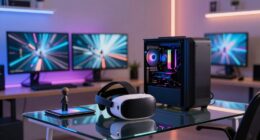
A surge of activity on r/virtualreality indicates that VR is making a strong comeback, with many users successfully running VR on low-end PCs. This development could expand access and reshape the VR market.
Recent discussions on the subreddit r/virtualreality point to a notable resurgence in VR usage, with users reporting successful experiences on low-end PCs. This trend challenges the common belief that high-end hardware is necessary for quality VR, potentially broadening the market and making VR more accessible to a wider audience.
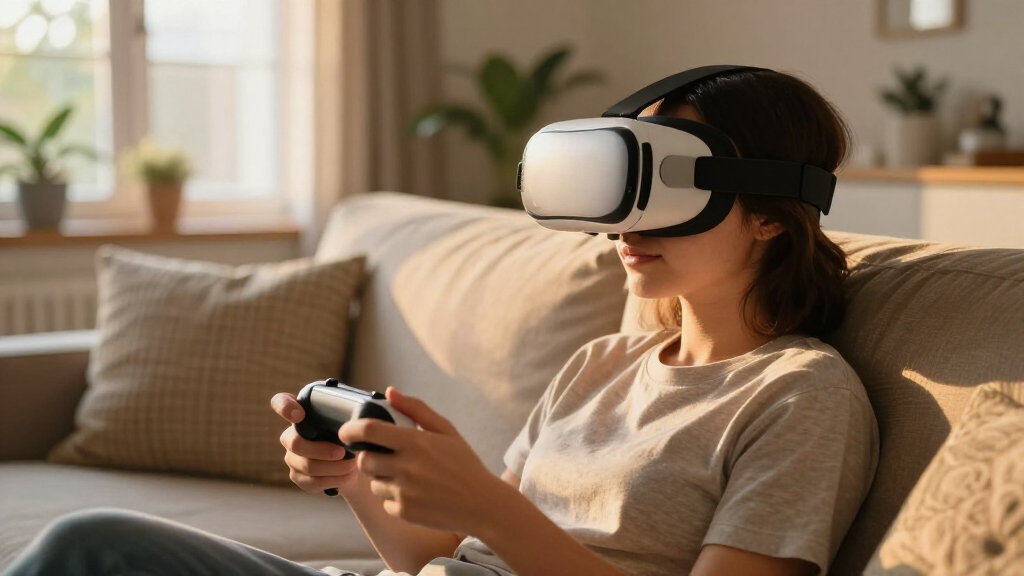
Multiple posts on r/virtualreality over the past few weeks highlight users achieving functional VR experiences on PCs with modest specifications. Some report running VR headsets like Oculus Quest via Oculus Link or similar tethered setups on hardware that previously would have been considered inadequate.
These accounts include PCs with integrated graphics or older GPUs, which traditionally struggled with VR performance. Users describe successful gameplay, smooth visuals, and acceptable latency, contradicting earlier assumptions that only high-end gaming PCs could support VR effectively.
Industry experts have not yet officially confirmed a shift in hardware requirements, but the community’s feedback suggests a possible reevaluation of what is needed for VR to be viable on budget hardware. This could influence future hardware and software development, as well as consumer expectations.
VR Is SO BACKLow-End PC Reality Check
Recent r/virtualreality discussions describe playable VR on modest PCs, including systems with older GPUs or integrated graphics. The reports hint at a wider comeback—but community success is not yet the same as official low-spec support.
A comeback built from the bottom up
The notable development is not a new flagship headset. It is a cluster of users reporting acceptable PCVR experiences on hardware once considered below the practical threshold.
Modest systems are connecting
Users describe functional tethered VR through Oculus Link or similar setups, sometimes using older GPUs or integrated graphics.
“Good enough” is gaining ground
Reports mention playable games, smooth-enough visuals, and acceptable latency—outcomes that challenge older assumptions about mandatory premium hardware.
Access could widen quickly
If these results prove repeatable, VR could reach consumers who already own ordinary PCs and cannot justify a high-end gaming upgrade.
Strong enthusiasm, incomplete evidence
The community narrative is compelling, but the supporting evidence is uneven. These bars show relative confidence in each claim—not measured benchmark scores.
Editorial assessment derived from the supplied report. No standardized test dataset was provided.
What low-end PCVR may trade away
Budget setups can open the door, but they rarely erase hardware constraints. The practical question is whether the compromises remain comfortable for the user and suitable for the application.
| Experience factor | Low-end PCVR | High-end PCVR | What to verify |
|---|---|---|---|
| Basic headset connection | ✓Often possible | ✓Expected | Ports, cable, wireless link, and runtime support |
| Visual quality | ~Reduced settings likely | ✓Higher resolution | Render scale, textures, and refresh rate |
| Stable frame delivery | ~Workload dependent | ✓More headroom | Frame time in demanding scenes |
| Low latency | ~Configuration sensitive | ✓More consistent | Network, encoding, cable, and drivers |
| Universal game support | ✗Not guaranteed | ~Still title dependent | Per-game minimum specifications |
Key: ✓ generally favorable · ✗ meaningful limitation · ~ variable by configuration. Always check the headset vendor and each game’s current requirements before purchasing.
How a forum signal could reshape the market
Community experiments matter when they become repeatable. A lower practical entry point can influence demand, software priorities, official support, and eventually consumer expectations.
User reports
Low-spec PC owners share working configurations and results.
Shared tuning
Drivers, settings, links, and optimization techniques circulate.
Lower barrier
More existing computers become plausible entry points.
Broader demand
Headsets and accessories reach beyond premium gaming rigs.
Industry response
Developers may pursue lighter software and clearer support tiers.
The signals worth watching
The next phase is about verification: standardized testing, official compatibility guidance, and evidence that acceptable performance survives across many systems and applications.
A larger addressable audience
Consumers may enter VR without first buying a premium gaming PC, expanding adoption beyond enthusiasts with substantial hardware budgets.
Optimization becomes a feature
Efficient rendering, scalable presets, better drivers, and improved streaming could become stronger competitive advantages.
Success varies by configuration
Lower graphics quality, dropped frames, latency, motion discomfort, and compatibility problems remain realistic downsides.
No official paradigm shift—yet
Manufacturers and hardware developers have not broadly confirmed that mainstream PCVR now supports low-end systems.
Watch for confirmation
- Revised minimum specifications from headset manufacturers
- Independent benchmarks across older and integrated GPUs
- Driver or firmware updates aimed at lower-spec systems
Before trying it
- Check the exact headset, game, port, and operating system combination
- Test latency and frame stability, not only whether the app launches
- Use adjustable settings and keep refund policies in mind
Shopping for audio & immersion?
AI-assisted guides kept up to date
Potential Market Expansion and Accessibility Impact
This development could significantly broaden the demographic reach of VR, making it accessible to more consumers who cannot afford high-end gaming PCs. If VR can run smoothly on low-end hardware, manufacturers might see increased demand, leading to more affordable headsets and accessories. It also challenges the industry narrative that high-performance PCs are a prerequisite for quality VR experiences, potentially democratizing the technology and accelerating adoption.
As an affiliate, we earn on qualifying purchases.
Historical Hardware Requirements and Market Trends
Historically, VR has been associated with high-end gaming PCs equipped with powerful GPUs, fast CPUs, and ample RAM. This requirement has limited VR adoption to enthusiasts and gamers with substantial budgets. Over the past few years, hardware costs have decreased, but the perception remained that only premium systems could deliver acceptable VR experiences.
Recent developments, including standalone VR headsets and improvements in software optimization, have started to challenge this view. The current online discussions suggest that some users are successfully bypassing previous hardware limitations, possibly due to better software efficiency, driver improvements, or community-driven optimization techniques.
While no official industry statement has confirmed a paradigm shift, these grassroots reports are noteworthy and could influence future hardware design and marketing strategies.
affordable VR headset for low-spec PC
As an affiliate, we earn on qualifying purchases.
As an affiliate, we earn on qualifying purchases.
Unconfirmed Industry-Wide Shift in Hardware Standards
While community reports are promising, there is no official confirmation from VR headset manufacturers or hardware developers that low-end PCs are now fully supported for mainstream VR. It remains unclear whether these success stories are isolated cases, software workarounds, or indicative of a broader industry trend. Further testing, official benchmarks, and developer statements are needed to validate these claims.
As an affiliate, we earn on qualifying purchases.
Monitoring Hardware Compatibility and Industry Response
Expect industry players to evaluate these community reports and possibly release firmware updates, new drivers, or lower-spec requirements for upcoming VR headsets. Additionally, more comprehensive testing by third-party reviewers and hardware manufacturers will clarify whether low-end PCs can reliably support VR at scale. Consumers and developers will likely watch these developments closely to determine if VR hardware standards are evolving.
As an affiliate, we earn on qualifying purchases.
Key Questions
Can I run VR on a low-end PC today?
Many community members report success with low-end PCs, but official support and performance guarantees are not yet confirmed by manufacturers. Results may vary based on hardware and software configurations.
What hardware do I need to try VR on a budget?
Some users have used PCs with integrated graphics or older GPUs, along with compatible VR headsets like Oculus Quest via Oculus Link or similar tethered setups. Specific hardware requirements are still evolving.
Will this trend make VR more affordable?
If confirmed and supported officially, this could lead to more affordable VR headsets and PCs, expanding access beyond high-end gaming setups.
Are there any risks or downsides to using low-end hardware for VR?
Potential issues include reduced graphics quality, increased latency, and possible hardware compatibility problems. Users should proceed with caution and verify compatibility before investing.
Source: r/virtualreality
NFL season / tailgating Picks
team gear
As an affiliate, we earn on qualifying purchases.