TL;DR

Get VR and gaming gear delivered free — and shop member deals
- Fast, free delivery on millions of items
- Access to Prime Big Deal Days deals on October 6–7
- Prime Video, Amazon Music and more included
Montreal Black youth have developed a virtual reality experience to depict the realities of anti-Black racism. The project aims to increase awareness and spark community conversations. The initiative is ongoing, with plans for public exhibitions.
Montreal Black youth have developed a virtual reality experience to depict the realities of anti-Black racism. This initiative aims to increase awareness and foster community dialogue about racial discrimination, with plans for public exhibitions in the coming months.
The project was created by a group of Black youth in Montreal using virtual reality technology to simulate experiences of discrimination and systemic racism faced by Black communities. According to organizers, the VR experience seeks to provide viewers with an immersive perspective on racial injustices, aiming to bridge understanding and empathy.
Sources indicate that the VR experience includes scenarios such as racial profiling, microaggressions, and barriers to access in various social settings. The initiative has received support from local community organizations and aims to be showcased in public venues to reach a wider audience.
Youth-led innovation · Montreal
Virtual reality makes the invisible visible
Black youth in Montreal have developed an immersive experience depicting racial profiling, microaggressions and systemic barriers. The ongoing project is designed to build awareness, deepen empathy and move community conversations about anti-Black racism forward.
Our goal is to make the invisible visible. VR allows people to walk in our shoes, even if just for a moment.
Anonymous project organizer
Three realities brought into view
The scenarios translate forms of discrimination that can be minimized or overlooked into encounters viewers must actively navigate.
Racial profiling
Immersive scenarios illustrate how suspicion and surveillance can be applied differently to Black people in ordinary public or institutional settings.
Microaggressions
Subtle comments, assumptions and exclusions are framed as recurring experiences whose impact becomes clearer when encountered from a first-person perspective.
Systemic barriers
The experience highlights obstacles embedded in social environments and institutions—not only individual acts of prejudice.
From encounter to conversation
The project treats VR as a civic storytelling medium: an entry point for recognition, reflection and discussion rather than an endpoint in itself.
Intended pathway
What is known—and what comes next
Public presentations and viewer feedback are planned, but details about reach, funding and measurable impact remain limited.
| Dimension | Current picture | Status | What to watch |
|---|---|---|---|
| Experience content | Scenarios address profiling, microaggressions and barriers to access. | Reported | How scenarios are refined through community input |
| Public reach | Community centres, schools and cultural events are anticipated. | Planned | Confirmed dates, venues and audience size |
| Evaluation | Organizers intend to collect feedback from viewers. | Planned | Evaluation method and published findings |
| Long-term impact | No public outcome metrics have yet been released. | Open | Changes in awareness, behaviour or policy discussion |
Sequence reflects announced intentions; timing and venues remain subject to confirmation.
The unanswered impact questions
The project’s promise is clear, but its effectiveness should ultimately be assessed through transparent reach and outcome data.
Status visualization only—not a quantitative measure of progress or effectiveness.
Traceability · the intended change chain
Impact of VR Project on Anti-Racism Awareness
This initiative matters because it employs innovative technology to confront racial issues, potentially influencing public perceptions and policy discussions. By immersing viewers in the experiences of Black individuals, it aims to foster empathy and understanding, which are critical in combating systemic racism. The project underscores the role of youth-led activism in shaping social change through creative approaches.
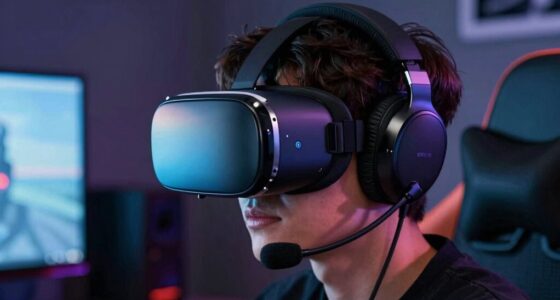
VR headset for immersive experiences
As an affiliate, we earn on qualifying purchases.
As an affiliate, we earn on qualifying purchases.
Background on Anti-Black Racism Initiatives in Montreal
Montreal has a history of addressing anti-Black racism through community activism, policy reforms, and educational programs. Recent years have seen increased efforts to raise awareness about racial discrimination, including public protests and advocacy campaigns. The use of virtual reality as a tool for social justice is a newer development, with other cities exploring similar approaches to engage communities and policymakers.
The project by Montreal youth builds on ongoing conversations about racial equity and the importance of amplifying marginalized voices through innovative means.
“Our goal is to make the invisible visible. VR allows people to walk in our shoes, even if just for a moment.”
— an anonymous organizer
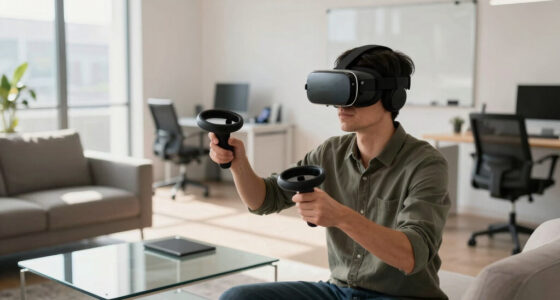
VR controllers for social awareness projects
As an affiliate, we earn on qualifying purchases.
As an affiliate, we earn on qualifying purchases.
Unanswered Questions About Project Reach and Impact
It is not yet clear how widely the VR experience will be distributed or how effective it will be in changing perceptions. Details about the project’s funding, specific exhibition venues, and measurable outcomes remain undisclosed. Additionally, the long-term impact on community awareness and policy influence is still to be evaluated.
best VR headsets for educational use
As an affiliate, we earn on qualifying purchases.
As an affiliate, we earn on qualifying purchases.
Upcoming Public Exhibitions and Evaluation Plans
Organizers plan to showcase the VR experience at community centers, schools, and cultural events over the next few months. They also intend to gather feedback from viewers to assess the project’s impact. Further efforts may include partnerships with local institutions and potential expansion of the initiative based on initial reception.
virtual reality experience for anti-racism awareness
As an affiliate, we earn on qualifying purchases.
As an affiliate, we earn on qualifying purchases.
Key Questions
How does the VR experience depict anti-Black racism?
The VR experience simulates scenarios such as racial profiling, microaggressions, and systemic barriers faced by Black communities, providing an immersive perspective on these issues.
Who created the VR project?
The project was developed by a group of Black youth in Montreal, with support from local community organizations.
Where will the VR experience be shown?
Initial plans include exhibitions at community centers, schools, and cultural events in Montreal, with further venues to be announced.
What is the goal of this initiative?
The primary goal is to raise awareness about anti-Black racism and foster empathy through an immersive, technological approach.
Are there any measurable outcomes yet?
As the project is still in its early stages, specific impact metrics or evaluations have not yet been publicly released.
Source: rss
Fall Picks
fall essentials
As an affiliate, we earn on qualifying purchases.