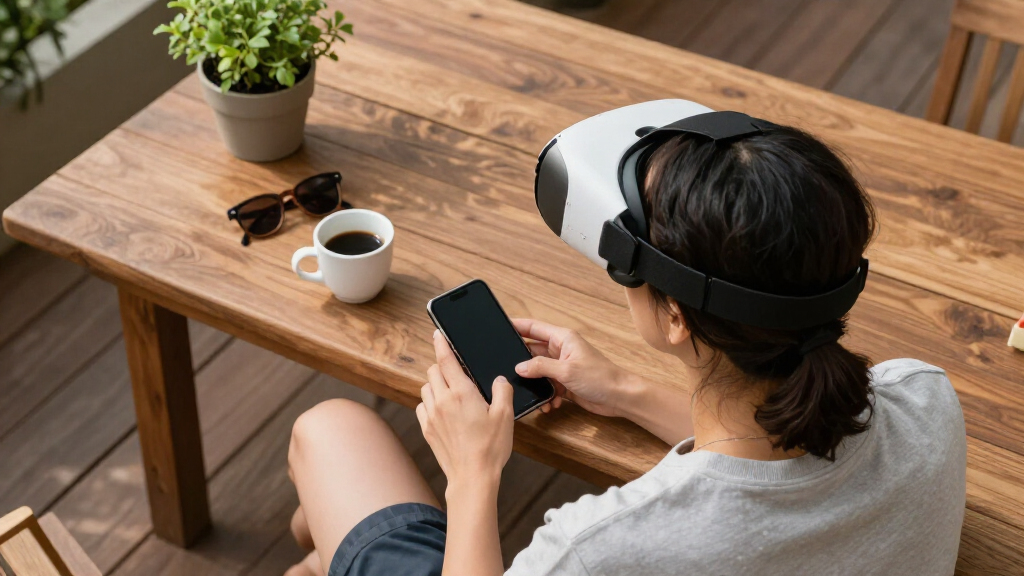

If you’re searching for a VR headset with eye tracking, the Pimax Crystal Super with eye tracking stands out as the best overall pick, thanks to its micro-OLED panels, 57 PPD clarity, and eye tracking that drives both foveated rendering and sim-racing analytics. Close behind are the HTC Vive Focus Vision, which pairs eye tracking with flexible standalone and wired PC VR modes, and the Meta Quest 3, the strongest all-in-one value even though its eye tracking support is software-dependent rather than built in. The core tradeoff in this category is simple: Pimax delivers the sharpest image for flight sims and iRacing but demands a powerful gaming PC, while Meta and HTC offer convenience and portability at lower visual fidelity. Eye tracking also splits the field — some headsets use it for foveated rendering to boost performance, others for analytics and social avatars, and a few barely use it at all. Read on for the full breakdown of all twelve headsets and which one fits your setup, budget, and use case.

Play games on Amazon Luna for your next adventure, included with Prime
- A rotating selection of games, no download needed
- Play on TV, laptop or phone
- Fast, free delivery for your gear, too
Complete the kit

Key Takeaways
- Pimax dominates the top of this roundup for eye tracking because its Crystal line actually uses gaze data for foveated rendering, delivering real performance gains in flight sims — most rivals treat eye tracking as a checkbox feature.
- True native eye tracking is rare here: only the Pimax Crystal Super (eye tracking variant), Pimax Crystal line, HTC Vive Pro Eye, and Meta Quest Pro have built-in gaze hardware, while Quest 3 and Quest 3S rely on software approximations or skip it entirely.
- PC-tethered headsets (Pimax, Vive Pro Eye) consistently outperform standalone models in visual clarity and sim compatibility, but they trade away the portability and ease of use that make Quest headsets the default for beginners.
- The Meta Quest 3S (Renewed Premium) emerged as the surprise budget entry — a refurbished route into VR for under $300, provided you accept that it won’t do hardware eye tracking at all.
- Duplicate listings matter in this category: the Pimax Crystal Super and Vive Focus Vision each appear in multiple configurations, and picking the wrong variant (missing the eye tracking module or streaming kit) is the most common purchasing mistake.
| Pimax Crystal Super VR Headset with Micro-OLED and Eye Tracking |  | Best Overall Eye Tracking | Display: Micro-OLED | Resolution: 3840 x 3552 per eye | Field of View: 116° | VIEW LATEST PRICE | See Our Full Breakdown |
| Pimax Crystal Light VR Headset for PC, 2880×2880 per Eye, 8K QLED Display with Local Dimming |  | Best Value for Sim Enthusiasts | Resolution: 2880 x 2880 per eye | Display: QLED with local dimming and HDR | Refresh Rate: 120Hz | VIEW LATEST PRICE | See Our Full Breakdown |
| HTC Vive Focus Vision Wired Bundle — XR Headset with DisplayPort PC VR Streaming Kit |  | Best Hybrid Flexibility | Resolution: 2448 x 2448 per eye | Field of View: Up to 120° | Refresh Rate: 90Hz | VIEW LATEST PRICE | See Our Full Breakdown |
| Meta Quest 3 512GB Virtual Reality Headset with Gorilla Tag Bundle |  | Best for Casual and Wireless Play | Storage: 512GB | Display: 4K+ Infinite Display | Processor: Snapdragon XR2 Gen 2 | VIEW LATEST PRICE | See Our Full Breakdown |
| Pimax Crystal Super VR Headset, 57PPD & 3840×3840 Resolution per Eye |  | Best Sharpness for Detail Obsessives | Resolution: 3840 x 3840 per eye | Pixel Density: 57 PPD | Display: QLED + MiniLED | VIEW LATEST PRICE | See Our Full Breakdown |
| HTC Vive Focus Vision — Mixed Reality and PC VR Headset + Controllers |  | Best Hybrid Eye-Tracking Pick | Display: 5K resolution (2448 x 2448 per eye) | Field of View: Up to 120° | Refresh Rate: 90 Hz | VIEW LATEST PRICE | See Our Full Breakdown |
| Meta Quest 3S 128GB Virtual Reality Headset (Renewed Premium) |  | Best Budget Entry Point | Storage: 128 GB | Memory: 8 GB RAM | Display: 2064 x 2208 LCD, 2.5 inches | VIEW LATEST PRICE | See Our Full Breakdown |
| Meta Quest 3S 128GB Virtual Reality Headset with Gorilla Tag Bundle |  | Best for Kids and Family Gaming | Storage: 128 GB | Memory: 8 GB RAM | Processor: Snapdragon XR2 Gen 2 | VIEW LATEST PRICE | See Our Full Breakdown |
| Meta Quest Pro | 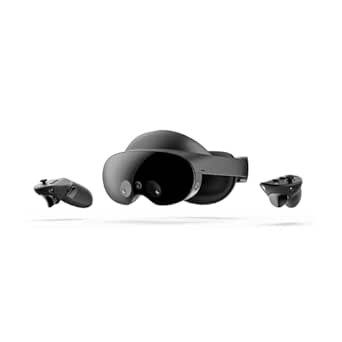 | Best Premium Standalone | Storage: 256 GB | RAM: 12 GB | Sensors: 10 VR/MR sensors | VIEW LATEST PRICE | See Our Full Breakdown |
| HTC Vive Pro Eye Virtual Reality System |  | Best for Enterprise Eye Tracking | Eye Tracking: Precise and accurate with analytics support | Foveated Rendering: Yes | Visual Fidelity: High-quality graphics, textures, and text | VIEW LATEST PRICE | See Our Full Breakdown |
| HTC Vive XR Elite with Deluxe Pack — Mixed Reality and PC VR Headset + Controllers |  | Best Hybrid Flexibility | Resolution: 3840 x 1920 combined | Field of View: Up to 110° | Refresh Rate: 90Hz | VIEW LATEST PRICE | See Our Full Breakdown |
| Pimax Crystal Super VR Headset, 3840×3840 per Eye, Ultrawide, 140° FOV, Eye-Tracking, PC Compatible |  | Best for Simulation Enthusiasts | Resolution: 3840×3840 per eye | Field of View: 140° | Display Technology: QLED with Mini-LED and Local Dimming | VIEW LATEST PRICE | See Our Full Breakdown |
| VR headset with eye tracking | Refresh Rate | Field of View | Display | Resolution |
|---|---|---|---|---|
| Pimax Crystal Super VR Headset | 90Hz | 116° | Micro-OLED | 3840 x 3552 per eye |
| Pimax Crystal Light VR Headset | 120Hz | — | QLED with local dimming and HDR | 2880 x 2880 per eye |
| HTC Vive Focus Vision Wired Bu | 90Hz | Up to 120° | — | 2448 x 2448 per eye |
| Meta Quest 3 512GB Virtual Rea | — | — | 4K+ Infinite Display | — |
| Pimax Crystal Super VR Headset | 72Hz / 90Hz | 106° | QLED + MiniLED | 3840 x 3840 per eye |
| HTC Vive Focus Vision | 90 Hz | Up to 120° | 5K resolution (2448 x 2448 per eye) | — |
| Meta Quest 3S 128GB Virtual Re | 90 Hz | 96 degrees | 2064 x 2208 LCD, 2.5 inches | — |
| Meta Quest 3S 128GB Virtual Re | — | — | — | — |
| Meta Quest Pro | — | — | — | — |
| HTC Vive Pro Eye Virtual Reali | — | — | — | — |
| HTC Vive XR Elite with Deluxe | 90Hz | Up to 110° | — | 3840 x 1920 combined |
| Pimax Crystal Super VR Headset | 90Hz | 140° | — | 3840×3840 per eye |
More Details on Our Top Picks
Pimax Crystal Super VR Headset with Micro-OLED and Eye Tracking
This model stands out as the most complete eye-tracking package in the lineup. The Micro-OLED panels at 3840×3552 per eye deliver the sharpest cockpit instrumentation and dashboard text here, which matters for sim racers who need to read small gauges at a glance. Compared with the Pimax Crystal Light, the Super trades a faster 120Hz refresh rate for superior contrast and per-eye clarity — a sensible swap for seated simulation. The 116° field of view also edges out the 106° on the QLED Super variant, reducing the snorkel effect during long flights. The tradeoffs are real: it demands a genuinely powerful GPU, caps at 90Hz, and carries a premium price that casual players will struggle to justify.
Pros:- Ultra-HD Micro-OLED displays with best-in-class per-eye clarity
- Native eye tracking enables foveated rendering to reduce GPU load
- Wide 116° field of view for deeper immersion
- Precise inside-out 6DOF tracking with no base stations needed
Cons:- Premium price that rivals full PC builds
- 90Hz refresh rate trails the 120Hz Crystal Light
- Requires a high-end gaming PC to feed the panels properly
Best for: Flight sim and racing enthusiasts who want maximum visual fidelity and eye tracking for foveated rendering
Not ideal for: Budget or first-time VR buyers — the price and GPU requirements make it overkill for casual gaming
- Display:Micro-OLED
- Resolution:3840 x 3552 per eye
- Field of View:116°
- Refresh Rate:90Hz
- Tracking:Inside-out 6DOF
- Eye Tracking:Yes
- Connectivity:DisplayPort
Our verdict“If eye tracking and maximum clarity for simulation are the priority and budget is flexible, this is the pick.”
Pimax Crystal Light VR Headset for PC, 2880×2880 per Eye, 8K QLED Display with Local Dimming
Sitting below the Crystal Super in Pimax’s stack, the Crystal Light makes the most sense for buyers who want big-screen sim clarity without the flagship price. The 8K QLED display with local dimming and HDR produces deeper blacks and punchier contrast than standard LCD rivals like the Vive Focus Vision, which matters at night in flight sims. Its 120Hz refresh rate actually beats the Super’s 90Hz, giving it an edge for fast motion in iRacing. The compromise is resolution — 2880×2880 per eye is a visible step down from the Super’s Micro-OLED panels when reading fine instrument text. At 815 grams, it’s also one of the heavier options here, so neck fatigue during marathon sessions is a genuine concern.
Pros:- 120Hz refresh rate is the fastest in this lineup
- QLED with local dimming and HDR for strong contrast
- Lighter and cheaper than the Crystal Super
- Seamless SteamVR compatibility
Cons:- 815g weight causes fatigue during long sessions
- Lower per-eye resolution than the Crystal Super
- Requires a capable gaming PC and wired HDMI connection
Best for: PC sim racers and pilots who want high refresh rates and HDR contrast at a mid-tier price
Not ideal for: Stand-alone or console players — this is strictly a tethered PC VR headset requiring SteamVR setup
- Resolution:2880 x 2880 per eye
- Display:QLED with local dimming and HDR
- Refresh Rate:120Hz
- Tracking:Inside-out camera tracking
- Eye Tracking:Yes
- Weight:815 grams
- Connectivity:HDMI
Our verdict“The smart middle ground for simulation fans who value motion smoothness and contrast over absolute pixel count.”
HTC Vive Focus Vision Wired Bundle — XR Headset with DisplayPort PC VR Streaming Kit
Where the Pimax options are pure PC VR, the Vive Focus Vision plays both sides: it works standalone for mixed reality, then plugs into a PC via DisplayPort for lossless PC VR streaming. That flexibility is unique here — the Meta Quest 3 streams PC VR too, but wirelessly with compression artifacts the Focus Vision avoids entirely. Its eye and hand tracking plus full-body tracking support make it the strongest choice for enterprise training, motion capture, or social VR where gaze interaction matters. The 2448×2448 per-eye resolution falls well short of Pimax panels, and the setup process is more involved than a Quest’s — buyers trading resolution for versatility should go in with eyes open.
Pros:- Dual-mode design: standalone XR plus wired DisplayPort PC VR
- Eye, hand, and full-body tracking in one package
- Hot-swappable batteries for uninterrupted sessions
- Expandable storage up to 2TB via MicroSD
Cons:- Setup complexity is steep compared with the Quest 3
- 5K resolution lags behind similarly priced Pimax headsets
- Full feature set requires a compatible PC and accessories
Best for: Professionals and enthusiasts who need one headset for standalone XR, eye tracking, and wired PC VR
Not ideal for: Pure visual-fidelity seekers — its resolution trails Pimax rivals by a wide margin at a similar price
- Resolution:2448 x 2448 per eye
- Field of View:Up to 120°
- Refresh Rate:90Hz
- Tracking:Cameras with infrared floodlight, submillimeter accuracy
- Eye Tracking:Yes
- RAM:12 GB
- Battery:Hot-swappable with reserve front battery
- Connectivity:DisplayPort, Ethernet, 3.5mm audio
Our verdict“The right choice when versatility and tracking depth matter more than raw display sharpness.”
Meta Quest 3 512GB Virtual Reality Headset with Gorilla Tag Bundle
An honest caveat up front: the Quest 3 lacks built-in eye tracking, so it earns its place here as the accessibility pick rather than a spec match for the Vive Focus Vision or Crystal Super. What it offers instead is friction — or rather, the absence of it. No PC, no cables, no SteamVR configuration; it works out of the box with over 100 games. Compared with the Quest 3S elsewhere in this roundup, the 512GB model’s storage and sharper pancake optics make it the better long-term buy for heavy gamers. The Snapdragon XR2 Gen 2 handles standalone titles well, but battery life tops out around two hours, and anyone wanting eye-tracked PC VR later will need to upgrade hardware entirely.
Pros:- Completely wireless with no PC required
- 4K+ display and strong XR2 Gen 2 performance
- 512GB storage fits a large game library
- Excellent passthrough for mixed reality play
Cons:- No native eye tracking unlike other picks in this roundup
- Battery life tops out around two hours
- PC VR streaming is compressed and wireless-only
Best for: Families and casual gamers who want instant wireless VR with a huge game library
Not ideal for: Buyers specifically seeking eye tracking — this headset doesn’t have it and can’t add it
- Storage:512GB
- Display:4K+ Infinite Display
- Processor:Snapdragon XR2 Gen 2
- RAM:8GB
- Battery Life:2+ hours
- Eye Tracking:No
Our verdict“The easiest entry into VR available — just don’t buy it expecting gaze tracking.”
Pimax Crystal Super VR Headset, 57PPD & 3840×3840 Resolution per Eye
This QLED+MiniLED variant of the Crystal Super takes a different path from its Micro-OLED sibling: a narrower 106° field of view in exchange for 57 pixels per degree — the densest image in this batch. For flight simmers who squint at tiny radio stacks and distant runway markings, that sharpness is the whole point. The flexible eye tracking and adjustable IPD mean the headset adapts to individual faces rather than forcing compromises, something the fixed-fit Quest 3 can’t match. The tradeoff is speed: it tops out at 90Hz, trailing the Crystal Light’s 120Hz, and the USB-based connectivity plus Windows-only platform narrows its audience further. Anyone outside the sim-racing niche will find this specialization hard to justify.
Pros:- 57PPD image density is the sharpest in the lineup
- QLED+MiniLED delivers strong brightness and contrast
- Eye tracking with adjustable IPD for a personalized fit
- Comfortable design suited to long simulator sessions
Cons:- 90Hz maximum refresh rate trails cheaper rivals
- Narrower 106° FOV than the Micro-OLED Crystal Super
- Windows-only with USB connectivity limits flexibility
Best for: Detail-obsessed flight simmers who prioritize reading fine instrument text over field of view
Not ideal for: macOS or console users — Windows-only support and PC horsepower demands shut them out
- Resolution:3840 x 3840 per eye
- Pixel Density:57 PPD
- Display:QLED + MiniLED
- Field of View:106°
- Refresh Rate:72Hz / 90Hz
- Eye Tracking:Yes
- Platform:Windows PC VR
Our verdict“A specialist tool for simmers who need maximum perceived sharpness above all else.”
HTC Vive Focus Vision — Mixed Reality and PC VR Headset + Controllers
The Vive Focus Vision earns its spot by doing something the Meta Quest 3S simply can’t: combining standalone freedom with DisplayPort-tethered PC VR, so eye tracking works whether you’re on the couch or pushing a sim rig at full fidelity. Its 5K panel at 2448×2448 per eye outclasses the Quest 3S’s LCD in clarity, and the hot-swappable battery means sessions don’t end when one cell drains. Compared with the HTC Vive Pro Eye, it drops the PC requirement entirely while keeping comparable tracking depth. The tradeoffs are real, though — setup is genuinely involved, the magnesium frame still gets heavy over long flights, and the price sits well above casual budgets.
Pros:- 5K resolution with sharp 2448×2448 per-eye visuals
- Built-in eye, hand, and full-body tracking in one package
- Hot-swappable battery extends sessions indefinitely
- DisplayPort streaming for uncompressed PC VR
Cons:- Complex setup that can frustrate newcomers
- Heavy for extended sessions despite balanced design
- Premium price point
Best for: Enthusiasts and sim racers who want one headset for both standalone play and high-fidelity PC VR with eye tracking
Not ideal for: Casual or first-time VR buyers — the setup complexity and price are overkill for light gaming
- Display:5K resolution (2448 x 2448 per eye)
- Field of View:Up to 120°
- Refresh Rate:90 Hz
- Tracking:Eye, hand, and full-body tracking
- Connectivity:DisplayPort streaming, Ethernet for PC VR
- Memory:12 GB RAM
- Battery:Hot-swappable front battery
- Storage:Expandable up to 2 TB via MicroSD
Our verdict“Buy this if you want eye tracking and the flexibility to switch between standalone and PC VR without buying two headsets.”
Meta Quest 3S 128GB Virtual Reality Headset (Renewed Premium)
As a renewed unit, the Quest 3S is the cheapest way into modern VR that still runs on the Snapdragon XR2 Gen 2 — the same chip class that powers the more expensive Meta Quest 3. You give up the wider field of view and pancake lenses of pricier models like the Vive Focus Vision, but you keep full-color passthrough and hand tracking, which the aging Vive Pro Eye can’t match as a standalone. The 2064×2208 display at 90Hz delivers far better visuals than its price suggests. Note the fine print: no eye tracking here, no weight listed, and the ~3-hour battery means charging breaks on long sessions. The 2-month game trial softens the entry cost considerably.
Pros:- Lowest-cost entry into the current-generation Quest lineup
- Snapdragon XR2 Gen 2 delivers next-gen graphics
- Full-color passthrough and hand tracking included
- Wireless design with no PC required
Cons:- Battery caps out around 3 hours
- Renewed condition means variable cosmetic wear
- No eye tracking despite the roundup’s focus
Best for: Budget-conscious first-time VR buyers who want the Quest ecosystem at the lowest possible price
Not ideal for: Buyers specifically chasing eye tracking or foveated rendering — this model has neither
- Storage:128 GB
- Memory:8 GB RAM
- Display:2064 x 2208 LCD, 2.5 inches
- Refresh Rate:90 Hz
- Processor:Snapdragon XR2 Gen 2
- Field of View:96 degrees
- Battery Life:Approximately 3 hours
- Platform:Meta Horizon OS
Our verdict“A smart, low-risk way to try VR before committing to eye-tracking headsets that cost three times as much.”
Meta Quest 3S 128GB Virtual Reality Headset with Gorilla Tag Bundle
This is essentially the renewed Quest 3S above, repackaged for a younger audience — the Gorilla Tag bundle with exclusive items and game credits is the whole reason to pick it over the standalone unit. The same Snapdragon XR2 Gen 2 chip and 8GB of RAM mean identical performance, and the 3-month trial covering over 100 games outlasts the 2-month offer on the cheaper renewed model. Like that unit, though, there’s no eye tracking — if that feature is the deciding factor, skip straight to the Vive Focus Vision or Quest Pro. The 2+ hour battery and physical play-space requirements are genuine constraints for kids who lose track of time in Gorilla Tag.
Pros:- Exclusive Gorilla Tag content and in-game credits included
- 3-month trial with access to 100+ games
- Lightweight wireless design safe for active play
- Dual RGB color cameras for passthrough
Cons:- Battery limited to roughly 2+ hours
- Bundle pricing exceeds the base headset
- Requires a cleared physical play space for safe use
Best for: Families buying for kids who already play or want Gorilla Tag, with a large starter library included
Not ideal for: Adult enthusiasts wanting eye tracking or high-end visuals — this is a family gaming device, not a premium headset
- Storage:128 GB
- Memory:8 GB RAM
- Processor:Snapdragon XR2 Gen 2
- Battery Life:2+ hours
- Cameras:Dual RGB color cameras
- Bundle:Gorilla Tag items and game credits
Our verdict“The right pick when the gift matters more than the specs — kids get the game they want plus months of content out of the box.”
Meta Quest Pro
The Quest Pro sits in an unusual middle ground: more refined than the Quest 3S thanks to pancake lenses and quantum dot displays, yet far more affordable than the PC-tethered Pimax Crystal Super. Its 10-sensor array enables eye tracking and face tracking, making it the only standalone in this batch that supports gaze-driven interaction and realistic avatars — a real draw for social VR and remote work. Compared with the Vive Focus Vision, its 256GB storage and 12GB of RAM make it better at multitasking across virtual desktops, though its raw visual fidelity trails HTC’s 5K panel. Two caveats: a Meta account is mandatory, and availability restrictions applied to users under 18 in some states.
Pros:- Eye and face tracking via 10-sensor array
- Pancake lenses with quantum dot display for sharp, compact optics
- Ergonomic balanced design for long work sessions
- 256GB storage and 12GB RAM handle multitasking well
Cons:- Mandatory Meta account requirement
- Resolution trails dedicated PC VR headsets at this price
- Sits awkwardly between Quest 3 and premium PC tiers
Best for: Professionals and social VR users who need eye and face tracking in a comfortable, wireless headset
Not ideal for: Buyers who object to mandatory account creation or want maximum resolution for sim racing — a Pimax serves that better
- Storage:256 GB
- RAM:12 GB
- Sensors:10 VR/MR sensors
- Display Technology:Pancake lenses, quantum dot technology
- Tracking:Eye and face tracking with hand-tracked controllers
- Passthrough:High-resolution mixed reality
- Account:Meta account required
Our verdict“Choose this for gaze-driven social and productivity VR without a PC — skip it if account requirements or sim-racing fidelity are dealbreakers.”
HTC Vive Pro Eye Virtual Reality System
The Vive Pro Eye is the only headset in this lineup built specifically around gaze data — its precise eye tracking enables foveated rendering and, more distinctively, user analytics for training, research, and usability studies. That’s a capability the Quest Pro gestures at but doesn’t match for enterprise tooling. Where the Vive Focus Vision modernized this formula into a standalone form, the Pro Eye remains PC-tethered, which is both its strength — rock-solid performance for professional workflows — and its weakness. Visual fidelity holds up for text-heavy and detailed scenes, and the adjustable fit suits full-day sessions. But a powerful gaming PC is non-negotiable, and the total cost of ownership climbs past what most home users should spend.
Pros:- Gaze analytics for research and enterprise training
- Foveated rendering boosts performance on capable PCs
- Comfortable adjustable fit for all-day use
- 2-month VIVEPORT Infinity subscription with 700+ titles included
Cons:- Requires a powerful, compatible gaming PC
- Expensive relative to consumer standalone headsets
- Older platform compared with the Vive Focus Vision
Best for: Businesses and researchers running eye-tracking analytics, training simulations, or UX studies
Not ideal for: Home users without a high-end PC — the tether requirement and cost make consumer headsets a better fit
- Eye Tracking:Precise and accurate with analytics support
- Foveated Rendering:Yes
- Visual Fidelity:High-quality graphics, textures, and text
- Comfort:Adjustable fit for extended sessions
- Connection:PC-tethered (requires compatible PC)
- Content Bundle:2 months VIVEPORT Infinity
Our verdict“The right tool when eye-tracking data itself is the product — for everyone else, a modern standalone covers more ground for less.”
HTC Vive XR Elite with Deluxe Pack — Mixed Reality and PC VR Headset + Controllers
The HTC Vive XR Elite earns its spot by refusing to pick a lane — it works as a standalone mixed reality headset and as a PC VR display, which is something no Pimax model in this lineup can claim. Compared with the Meta Quest 3, its standout advantage for eye-tracking shoppers is the stepless IPD and diopter adjustment, which delivers a precise optical fit without glasses, while the swappable battery means you can carry a spare instead of being tethered mid-session. That said, the flexibility comes at a cost: PC streaming works best with the VIVE USB Streaming Cable, sold separately, and the 90Hz panel can’t touch the Pimax Crystal Super’s per-eye sharpness. This pick makes the most sense for buyers who value versatility and a glasses-free fit over raw visual fidelity.
Pros:- Dual standalone and PC VR operation gives it rare flexibility in this lineup
- Stepless IPD and diopter adjustment enables a precise, glasses-free fit
- Swappable battery extends playtime without waiting for a recharge
- Deluxe Pack adds practical accessories like the face gasket and deluxe strap
Cons:- VIVE USB Streaming Cable for reliable PC VR is sold separately
- Around 2 hours of battery life limits long sessions unless you buy spare batteries
- Some advertised features depend on individual VR title compatibility
Best for: Buyers who want one headset for both standalone mixed reality and PC VR sessions, especially glasses wearers who benefit from diopter adjustment
Not ideal for: Simulation enthusiasts chasing maximum clarity — the resolution falls well short of Pimax Crystal-class displays, and the separate cable purchase adds hidden cost
- Resolution:3840 x 1920 combined
- Field of View:Up to 110°
- Refresh Rate:90Hz
- Battery Life:Up to 2 hours (swappable)
- Adjustments:Stepless IPD and diopter
- Connectivity:Wireless and USB streaming (cable sold separately)
- Includes:Deluxe Pack: Face Gasket 2.0, Deluxe Strap, Temple Clips, MR Gasket
Our verdict“A strong choice for versatile users who want mixed reality and PC VR in one lightweight, glasses-friendly package — as long as raw resolution isn’t the priority.”
Pimax Crystal Super VR Headset, 3840×3840 per Eye, Ultrawide, 140° FOV, Eye-Tracking, PC Compatible
Where the Pimax Crystal Super pulls ahead of nearly everything in this roundup is sheer visual scale: 3840×3840 per eye with QLED Mini-LED local dimming and a 140° field of view that puts cockpit gauges and trackside detail into your peripheral vision. Compared with the Pimax Crystal Light, this model adds integrated eye tracking, which enables foveated rendering to keep those enormous panels running at usable framerates — a genuine necessity rather than a gimmick at this resolution. The tradeoffs are real: it’s wired, PC-only, and demanding, requiring a high-end GPU plus a more involved setup than the plug-and-play Meta Quest 3. This model is better suited to committed sim racers and pilots than casual players, but for that audience, nothing else here comes close.
Pros:- 3840×3840 per eye resolution virtually eliminates the screen-door effect
- 140° field of view dramatically improves peripheral awareness in sims
- Eye tracking enables foveated rendering to offset the demanding display
- Ergonomic design holds up during long simulation sessions
Cons:- Requires a powerful GPU to run high resolutions at acceptable framerates
- Wired DisplayPort connection restricts room-scale movement
- Setup is more complex than standalone headsets like the Quest 3
Best for: Flight sim and racing sim enthusiasts with high-end gaming PCs who prioritize maximum clarity and peripheral vision
Not ideal for: Casual or standalone-focused users — it needs a powerful PC, a wired connection, and patience during setup
- Resolution:3840×3840 per eye
- Field of View:140°
- Display Technology:QLED with Mini-LED and Local Dimming
- Refresh Rate:90Hz
- Tracking:Inside-out tracking with eye tracking
- Connectivity:DisplayPort, USB
- Compatibility:PC (Windows 10)
Our verdict“The ultimate PC-tethered display for sim racing and flight enthusiasts who have the hardware to feed it — everyone else should buy something simpler.”

How We Picked
I ranked these twelve headsets through the specific lens of eye tracking capability first, everything else second. That meant verifying whether each model has genuine gaze hardware, whether that hardware is used for meaningful outcomes like foveated rendering, dynamic interocular adjustment, or sim-racing telemetry, and whether the feature justifies the price premium over a non-tracking variant. Headsets with robust eye tracking implementations ranked higher than those where the capability is absent or incidental, no matter how strong their other specs looked.
From there, I weighed display clarity (PPD and resolution per eye), PC VR versus standalone flexibility, tracking and comfort, and value at the actual street price. Flight sim and racing enthusiasts get extra weight because they’re the buyers who benefit most from eye tracking today. I also flagged configuration confusion where relevant — several of these headsets ship in multiple bundles, and the ranking reflects the specific variant named, not the entire product family.
| VR headset with eye tracking | Tracking | Eye Tracking | Connectivity |
|---|---|---|---|
| Pimax Crystal Super VR Headset | Inside-out 6DOF | Yes | DisplayPort |
| Pimax Crystal Light VR Headset | Inside-out camera tracking | Yes | HDMI |
| HTC Vive Focus Vision Wired Bu | Cameras with infrared floodlight, submillimeter accuracy | Yes | DisplayPort, Ethernet, 3.5mm audio |
| Meta Quest 3 512GB Virtual Rea | — | No | — |
| Pimax Crystal Super VR Headset | — | Yes | — |
| HTC Vive Focus Vision | Eye, hand, and full-body tracking | — | DisplayPort streaming, Ethernet for PC VR |
| Meta Quest 3S 128GB Virtual Re | — | — | — |
| Meta Quest 3S 128GB Virtual Re | — | — | — |
| Meta Quest Pro | Eye and face tracking with hand-tracked controllers | — | — |
| HTC Vive Pro Eye Virtual Reali | — | Precise and accurate with analytics support | — |
| HTC Vive XR Elite with Deluxe | — | — | Wireless and USB streaming (cable sold separately) |
| Pimax Crystal Super VR Headset | Inside-out tracking with eye tracking | — | DisplayPort, USB |
Factors to Consider When Choosing VR Headset With Eye Tracking
Eye tracking changes how you should shop for a VR headset, because the feature is marketed unevenly and implemented even less consistently. Before committing to any of the twelve picks above, work through these factors to avoid paying for capability you’ll never use.Confirm the Eye Tracking Is Actually Hardware
The single biggest trap in this category is assuming every modern headset tracks your eyes. Many listings and bundles use loose language that suggests eye tracking when the headset only supports face-tracking software or has a variant available separately — the Pimax Crystal Super is sold both with and without the eye tracking module, and buyers who don’t read carefully end up with the wrong SKU. Before purchasing, check the exact model name and confirm infrared eye cameras are included. If a listing doesn’t explicitly say eye tracking, assume it isn’t there. This matters most if you’re buying for a specific purpose like foveated rendering in DCS or gaze analytics in racing sims, where software approximations won’t do the job.
Match the Headset to Your Graphics Card, Not Your Wishlist
High-resolution PC VR headsets like the Pimax Crystal line render 2880×2880 to 3840×3840 per eye, and that demands a genuinely high-end GPU — an RTX 4080-class card or better is realistic for the Crystal Super at full clarity. Buyers routinely overbuy on headset resolution and underbuy on the PC driving it, ending up with reprojection artifacts that ruin the sharpness they paid for. Eye tracking with foveated rendering partially offsets this by rendering only where you look at full detail, which is exactly why it’s most valuable on the most demanding headsets. If your GPU is mid-range, a Quest 3 or Vive Focus Vision with aggressive foveated rendering or lower panel resolution will deliver a smoother experience than a struggling flagship. Be honest about your hardware before choosing the top of the lineup.
Decide Between Standalone Freedom and PC-Tethered Fidelity
Standalone headsets like the Quest 3, Quest 3S, and Vive Focus Vision run on internal chips and can optionally stream from a PC, while headsets like the Pimax Crystal line and Vive Pro Eye are PC-only. The standalone route means no cable, no gaming PC requirement, and a five-minute setup — ideal for mixed reality, fitness, and casual gaming. The PC route means dramatically better image quality, native DisplayPort latency for competitive sim racing, and access to eye tracking features that standalone chips can’t process in real time. A common mistake is buying a PC-only headset without owning a capable PC, or buying standalone and expecting sim-racing-grade visuals. The Vive Focus Vision’s wired bundle tries to split the difference, and it largely succeeds, but each mode still carries compromises.
Understand What Eye Tracking Is Actually For
Eye tracking serves four distinct purposes, and knowing which one you need narrows your pick fast. Foveated rendering boosts performance by rendering your peripheral vision at lower resolution — the killer app for high-PPD headsets. Gaze-controlled interaction lets menus and interfaces respond to where you look, useful for accessibility and productivity. Analytics feed gaze data into racing and flight sim tools, which is why sim racers gravitate to Pimax. Social avatars use eye movement for realistic virtual presence, Meta’s original pitch with the Quest Pro. If none of these apply to you, paying extra for eye tracking hardware is wasted budget — a standard Quest 3 will serve you better than a tracking-equipped premium headset you never leverage.
Watch for Bundle Confusion and Renewed Units
Several entries in this roundup exist as multiple SKUs: the same headset appears with different storage, with or without controllers, with or without streaming kits, and in renewed condition. The Meta Quest 3S listings illustrate this well — one is new with a Gorilla Tag bundle, one is a renewed premium unit at a lower price, and the difference in warranty and battery health matters more than most buyers realize. Renewed headsets can be excellent value, but check the return window and lens condition specifically, since scratched pancake lenses can’t be fixed. Similarly, Pimax and HTC bundles vary in included controllers, face pads, and cables. Always verify the exact bundle contents against the manufacturer’s current offering before checkout.
Budget for the Ecosystem, Not Just the Headset
The sticker price is rarely the total cost. PC VR headsets assume you already own a capable gaming PC, a proper play space, and often aftermarket comfort gear — the Pimax Crystal line’s weight makes a premium head strap or counterweight almost mandatory for long sim sessions. Standalone buyers should factor in accessory controllers, elite straps, and storage capacity, since 128GB fills fast on Quest devices with large sim and game installs. Content costs add up too: flight simulators like DCS and MSFS have expensive modules, while the Meta store’s subscription options suit casual users better. A realistic total budget is often 30-50% above the headset price. Plan for that from the start rather than discovering it after unboxing.
Frequently Asked Questions
Does the Meta Quest 3 have eye tracking?
No — the Quest 3 does not have hardware eye tracking, despite being one of the most popular headsets in this roundup. It uses inward-facing cameras for face expression tracking in some social apps, but it cannot track your gaze for foveated rendering or analytics. This is a meaningful limitation if eye tracking is the reason you’re shopping, though the Quest 3 remains an excellent general-purpose headset. If you want Meta hardware with true eye tracking, the Quest Pro included infrared eye cameras, though it’s an older and pricier product with a discontinued place in Meta’s lineup. For genuine gaze hardware at the top of the market, Pimax and HTC are the stronger paths in 2026.
Why does eye tracking matter most for flight sims and racing?
High-fidelity simulators render enormous detail — cockpit instruments, distant terrain, track surfaces — and doing that at full resolution across a wide field of view overwhelms even powerful GPUs. Eye tracking enables foveated rendering, where the headset renders maximum detail only where your eyes are looking and reduces detail everywhere else, often recovering 30-50% of GPU headroom. In iRacing and DCS, that headroom translates directly into higher frame rates and stable latency, which affects both immersion and lap times. Gaze data also feeds driver-training tools that show where you were actually looking through a corner — something no amount of resolution can replicate. That’s why the sim-focused Pimax models rank so highly in this comparison despite their cost and PC requirements.
Is a renewed VR headset like the Quest 3S worth buying?
A renewed Quest 3S can be strong value if you buy from a seller with a solid return policy, since the hardware itself is reliable and the savings are real. The specific risks are lens scratches, degraded battery health, and missing accessories, and lens damage is the one that can’t be remedied — inspect the pancake lenses immediately on arrival. Because the 3S lacks eye tracking hardware anyway, you’re not gambling on a specialized sensor failing; you’re gambling on cosmetic and battery condition. For a first headset or a budget entry into VR, that’s a reasonable bet. For buyers who need guaranteed longevity, paying extra for a new unit with full warranty remains the safer route.
What PC do I need for the Pimax Crystal Super or Crystal Light?
Plan on an RTX 4080, RTX 4090, or equivalent current-generation card for the Crystal Super’s 3840×3840 per-eye panels at high refresh rates, and an RTX 4070-class card at minimum for the Crystal Light. The eye tracking variant helps here: foveated rendering reduces how much of the frame the GPU must render at full detail, which can make the difference between playable and choppy. You’ll also want DisplayPort connectivity, a well-ventilated case for long sessions, and a USB port for headset data. Underpowering these headsets doesn’t just lower frame rates — it triggers reprojection that smears the very clarity you paid premium money for. If your GPU falls short, the Quest 3 or Vive Focus Vision path will feel better in practice.
Is the HTC Vive Pro Eye still worth buying in 2026?
It depends entirely on price and your use case. The Vive Pro Eye was groundbreaking as one of the first consumer headsets with integrated eye tracking, and it still works well for enterprise applications, accessibility research, and gaze-based interaction. But its resolution and fresnel lenses are now a generation behind Pimax micro-OLED and Meta pancake optics, so visual clarity suffers noticeably compared with newer options. Its tracking base stations also add setup complexity that inside-out headsets have eliminated. If you find one heavily discounted and need its specific enterprise eye tracking ecosystem, it holds up; for sim racing or general gaming, that money is better spent on a modern Pimax or Quest setup.
Conclusion
For most buyers shopping specifically for a VR headset with eye tracking, the Pimax Crystal Super with eye tracking is the best overall pick — it’s the headset where gaze hardware genuinely earns its keep through foveated rendering and sim-grade clarity. The Pimax Crystal Light takes the best value slot among PC VR purists, delivering near-flagship resolution for flight sims and iRacing at a noticeably lower price. If budget rules everything, the Meta Quest 3S (Renewed Premium) is the best entry point into VR, with the honest caveat that it skips hardware eye tracking entirely. Beginners who want simplicity and versatility should choose the Meta Quest 3 or the Vive Focus Vision, both of which offer standalone freedom with optional PC streaming. For premium social VR and productivity with real gaze-driven avatars, the Quest Pro remains the specialist pick. Match the headset to your GPU, your use case, and whether you’ll actually use eye tracking — that’s the difference between a purchase you love and one you regret.