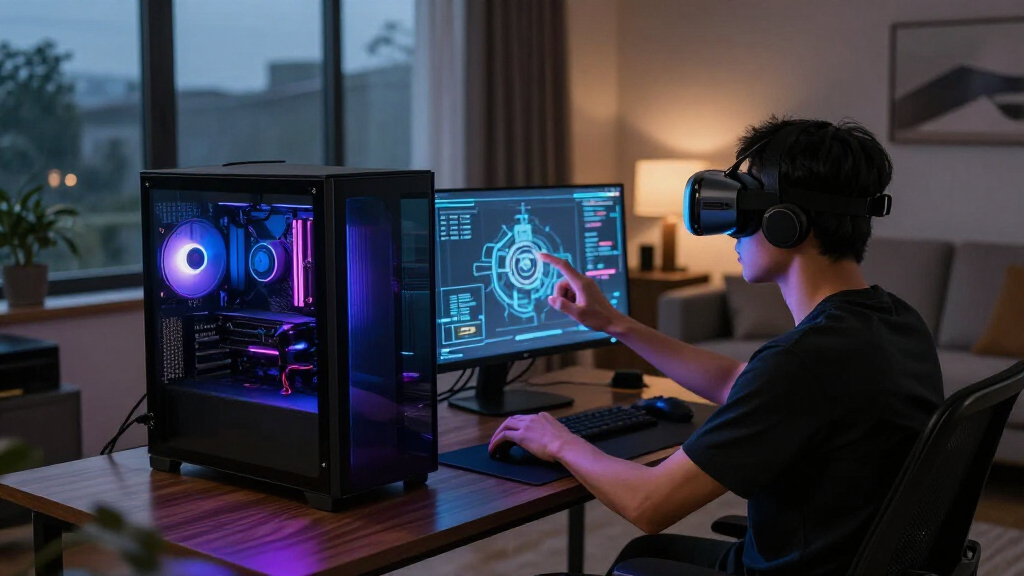
For high-end gaming, I’d start with the Skytech Gaming PC with Ryzen 7 9850X3D and RTX 5080 as my overall pick: its listed processor and graphics card make a strong pairing for demanding games. The Thermaltake Reactor 9880 and ZOTAC MEK Apocalypse Special Edition also stand out for combining a Ryzen 7 9800X3D with an RTX 5080. The choice gets harder when you weigh graphics performance against cooling, storage, memory, case design, and how much room you want for future upgrades. A premium name or a large RAM figure alone does not settle that tradeoff. Read on for my ranking, buying advice, and recommendations by buyer type.

Play games on Amazon Luna for your next adventure, included with Prime
- A rotating selection of games, no download needed
- Play on TV, laptop or phone
- Fast, free delivery for your gear, too
Key Takeaways
- Three RTX 5080 systems with Ryzen X3D processors lead the performance group: Skytech’s 9850X3D model, Thermaltake’s Reactor 9880, and STORMCRAFT’s Phantom pair high-end graphics with gaming-focused CPUs.
- The RTX 5070 and 5070 Ti PCs are a separate step down in listed graphics tier: they may suit buyers who do not need the strongest GPU in this lineup, but model names alone do not establish real-world frame rates.
- More memory and storage can matter more for mixed workloads: Horizon lists 64GB RAM and 5TB storage, while most specified systems list 32GB and 2TB; buyers should match capacity to their games and projects.
- Several listings omit key configuration details: the MSI Aegis ZS, Codex Z2, and Infinite RS AI entries need closer SKU-level checks before a buyer can compare their components fairly.
- Premium branding and distinctive cases serve different priorities: Alienware, Lenovo Legion, and Skytech O11 Vision offer recognizable product families or design cues, while component-level specifications remain essential for judging gaming fit.
| Skytech Azure Gaming PC Desktop – Ryzen 7 9850X3D, RX 9070 XT 16GB, 32GB DDR5, 2TB SSD |  | Best for AMD 4K Gaming | Processor: AMD Ryzen 7 9850X3D, 4.7GHz base, up to 5.6GHz | Graphics: AMD Radeon RX 9070 XT, 16GB GDDR6; brand may vary | Memory: 32GB DDR5 5600 | VIEW LATEST PRICE | See Our Full Breakdown |
| ZOTAC MEK Gaming PC Apocalypse Special Edition – Ryzen 7 9800X3D, NVIDIA RTX 5080 16GB |  | Best for NVIDIA 4K Gaming | Processor: AMD Ryzen 7 9800X3D, 8 cores, 16 threads, up to 5.2GHz | Graphics: ZOTAC GeForce RTX 5080 Apocalypse Special Edition OC, 16GB GDDR7 | Memory: 32GB DDR5-6000 RGB | VIEW LATEST PRICE | See Our Full Breakdown |
| Alienware Aurora Gaming Desktop with Intel Core Ultra 7 265KF |  | Best for Alienware Software and Service | Processor: Intel Core Ultra 7 265KF | Graphics: NVIDIA GeForce RTX 5070 | Operating system: Windows 11 Home | VIEW LATEST PRICE | See Our Full Breakdown |
| Horizon Autherium Dragon RGB Gaming PC Desktop – Intel Core i9, RTX 5070 OC, 64GB RAM, 5TB Storage, Windows 11 Pro, 360mm AIO |  | Best for Large Game Libraries and Multitasking | Processor: Unlocked, overclocked Intel Core i9, up to 5.4GHz; generation unspecified | Graphics: NVIDIA GeForce RTX 5070 OC, 12GB | Memory: 64GB | VIEW LATEST PRICE | See Our Full Breakdown |
| MSI Aegis ZS Gaming Desktop |  | Best for Gaming and CPU-Heavy Work | Processor: AMD Ryzen 9 9900X, 12 cores | Graphics: NVIDIA GeForce RTX 5080, 16GB | Memory: 32GB DDR5-6000 | VIEW LATEST PRICE | See Our Full Breakdown |
| MSI Codex Z2 Gaming Desktop (AMD Ryzen 7 8700F, NVIDIA RTX 5070, 32GB DDR5, 2TB SSD) |  | Best Balanced Midrange Pick | Processor: AMD Ryzen 7 8700F, 8 cores, 16 threads, up to 5.0 GHz | Graphics: NVIDIA GeForce RTX 5070, Blackwell architecture | Memory: 32GB DDR5 | VIEW LATEST PRICE | See Our Full Breakdown |
| MSI Aegis R2 AI Gaming Desktop (C2NVR9-1452US) |  | Best for CPU-Heavy Gaming and Creation | Model: C2NVR9-1452US | Processor: Intel Core Ultra 9 285 | Graphics: NVIDIA GeForce RTX 5070 Ti, 16GB GDDR6 | VIEW LATEST PRICE | See Our Full Breakdown |
| Skytech Gaming O11 Vision Desktop PC with Ryzen 7 9850X3D and GeForce RTX 5070 Ti |  | Best Liquid-Cooled Showcase Build | Processor: AMD Ryzen 7 9850X3D, 4.7 GHz base, up to 5.6 GHz | Graphics: NVIDIA GeForce RTX 5070 Ti, 16GB GDDR7; brand may vary | Memory: 32GB DDR5 5600 | VIEW LATEST PRICE | See Our Full Breakdown |
| Alienware Aurora Gaming Desktop (RTX 5080, Intel Core Ultra 9) |  | Best for Maximum Graphics Headroom | Graphics: NVIDIA GeForce RTX 5080, Blackwell architecture | Processor: Intel Core Ultra 9 | Chassis finish: Matte basalt black | VIEW LATEST PRICE | See Our Full Breakdown |
| Alienware Aurora Gaming Desktop with RTX 5070 and Intel Core Ultra 7 265F |  | Best for Alienware Style at the RTX 5070 Tier | Graphics: NVIDIA GeForce RTX 5070 | Processor: Intel Core Ultra 7 265F | Chassis finish: Matte basalt black | VIEW LATEST PRICE | See Our Full Breakdown |
| Skytech Gaming PC Desktop – AMD Ryzen 7 9850X3D, NVIDIA RTX 5080, 32GB DDR5, 2TB NVMe SSD |  | Best Overall | CPU: AMD Ryzen 7 9850X3D 4.7GHz (5.6GHz Turbo) | GPU: NVIDIA RTX 5080 16GB GDDR7 (brand may vary) | RAM: 32GB DDR5 6000 RGB with heat spreader | VIEW LATEST PRICE | See Our Full Breakdown |
| STORMCRAFT Phantom Gaming PC with Ryzen 7 9800X3D and GeForce RTX 5080 |  | Best Warranty and Support | Processor: AMD Ryzen 7 9800X3D, 8 cores / 16 threads, up to 5.2 GHz | Graphics: GeForce RTX 5080, 16GB GDDR7 | Memory: 32GB DDR5 6000MHz RGB | VIEW LATEST PRICE | See Our Full Breakdown |
| Thermaltake Reactor 9880 Gaming Desktop with AMD Ryzen 7 9800X3D and GeForce RTX 5080 |  | Best Platform for Upgraders | Processor: AMD Ryzen 7 9800X3D | Graphics: NVIDIA GeForce RTX 5080 | Motherboard chipset: AMD X870 | VIEW LATEST PRICE | See Our Full Breakdown |
| Lenovo Legion Tower 5i Gaming PC with Intel Core Ultra 7 265F and NVIDIA GeForce RTX 5070 Ti |  | Best Entry Point to High-End and Best for Creators | Processor: Intel Core Ultra 7 265F | Graphics: NVIDIA GeForce RTX 5070 Ti | Memory: 32GB 5600MHz DDR5, expandable to 128GB | VIEW LATEST PRICE | See Our Full Breakdown |
| MSI Infinite RS AI 2NVZ9-1290US Gaming PC |  | Most Speculative Pick | Brand: MSI | Model: 2NVZ9-1290US | Package Dimensions: 27 x 25 x 11.5 inches | VIEW LATEST PRICE | See Our Full Breakdown |
| high-end gaming PC | Processor | Graphics | Cooling | Storage |
|---|---|---|---|---|
| Skytech Azure Gaming PC Deskto | AMD Ryzen 7 9850X3D, 4.7GHz base, up to 5.6GHz | AMD Radeon RX 9070 XT, 16GB GDDR6; brand may vary | 360mm AIO liquid CPU cooler with ARGB fans | 2TB Gen4 NVMe M.2 SSD |
| ZOTAC MEK Gaming PC Apocalypse | AMD Ryzen 7 9800X3D, 8 cores, 16 threads, up to 5.2GHz | ZOTAC GeForce RTX 5080 Apocalypse Special Edition OC, 16GB GDDR7 | 360mm AIO liquid cooler and eight 120mm ARGB PWM fans | 2TB Gen4 NVMe M.2 SSD, up to 5000MB/s read |
| Alienware Aurora Gaming Deskto | Intel Core Ultra 7 265KF | NVIDIA GeForce RTX 5070 | Optional 240mm CPU liquid cooling heat exchanger | — |
| Horizon Autherium Dragon RGB G | Unlocked, overclocked Intel Core i9, up to 5.4GHz; generation unspecified | NVIDIA GeForce RTX 5070 OC, 12GB | 360mm AIO liquid cooling and 11 total fans | 5TB total: 1TB M.2 NVMe SSD and 4TB 7200RPM HDD |
| MSI Aegis ZS Gaming Desktop | AMD Ryzen 9 9900X, 12 cores | NVIDIA GeForce RTX 5080, 16GB | 360mm liquid cooling | 2TB M.2 NVMe SSD |
| MSI Codex Z2 Gaming Desktop | AMD Ryzen 7 8700F, 8 cores, 16 threads, up to 5.0 GHz | NVIDIA GeForce RTX 5070, Blackwell architecture | ARGB air cooler and four system fans | 2TB SSD |
| MSI Aegis R2 AI Gaming Desktop | Intel Core Ultra 9 285 | NVIDIA GeForce RTX 5070 Ti, 16GB GDDR6 | RGB CPU air cooler and four system fans | 2TB M.2 NVMe SSD |
| Skytech Gaming O11 Vision Desk | AMD Ryzen 7 9850X3D, 4.7 GHz base, up to 5.6 GHz | NVIDIA GeForce RTX 5070 Ti, 16GB GDDR7; brand may vary | 360mm AIO liquid CPU cooler with ARGB fans | 2TB Gen4 NVMe M.2 SSD |
| Alienware Aurora Gaming Deskto | Intel Core Ultra 9 | NVIDIA GeForce RTX 5080, Blackwell architecture | Optional 240mm liquid CPU cooling | — |
| Alienware Aurora Gaming Deskto | Intel Core Ultra 7 265F | NVIDIA GeForce RTX 5070 | — | — |
| Skytech Gaming PC Desktop | — | — | 360mm AIO liquid CPU cooler with ARGB fans | 2TB NVMe M.2 SSD |
| STORMCRAFT Phantom Gaming PC w | AMD Ryzen 7 9800X3D, 8 cores / 16 threads, up to 5.2 GHz | GeForce RTX 5080, 16GB GDDR7 | 360mm AIO liquid cooling with 7 adjustable ARGB fans | 2TB NVMe Gen4 SSD |
| Thermaltake Reactor 9880 Gamin | AMD Ryzen 7 9800X3D | NVIDIA GeForce RTX 5080 | 360mm closed-loop liquid cooling | 2TB NVMe M.2 |
| Lenovo Legion Tower 5i Gaming | Intel Core Ultra 7 265F | NVIDIA GeForce RTX 5070 Ti | Up to 180W optimized air cooling | 1TB |
| MSI Infinite RS AI 2NVZ9-1290U | — | — | — | — |
More Details on Our Top Picks
Skytech Azure Gaming PC Desktop – Ryzen 7 9850X3D, RX 9070 XT 16GB, 32GB DDR5, 2TB SSD
The Skytech Azure pairs a Ryzen 7 9850X3D with a Radeon RX 9070 XT, making it the AMD-focused choice for buyers targeting 4K gaming. Its 32GB of DDR5 and 2TB Gen4 SSD give games and everyday apps room to run without an immediate storage upgrade, while the 360mm liquid cooler is built for sustained CPU loads. Compared with the ZOTAC MEK Apocalypse, the Azure trades an RTX 5080 and NVIDIA features for an AMD graphics card; choose the MEK if those matter more to your games or workflow. The Azure’s meaningful tradeoffs are that the GPU brand may vary and the supplied details don’t specify the exact I/O configuration. Its one-year parts-and-labor warranty is also shorter than the MEK’s GPU coverage.
Pros:- Ryzen 7 9850X3D and Radeon RX 9070 XT are a strong pairing for demanding games.
- 32GB DDR5 and a 2TB Gen4 NVMe SSD provide useful memory and fast game storage.
- 360mm AIO cooling supports sustained CPU workloads.
- Assembled in the USA with one year of parts-and-labor warranty coverage.
Cons:- Radeon card brand may vary from the product images.
- Exact I/O ports and component models may differ from depictions.
- One-year warranty is shorter than the ZOTAC MEK’s stated three-year GPU warranty.
Best for: AMD-leaning PC gamers who want a fast 4K-capable system, ample SSD space, and a high-end gaming CPU.
Not ideal for: Buyers who want a specified graphics-card brand, NVIDIA-specific features, or longer stated GPU warranty coverage.
- Processor:AMD Ryzen 7 9850X3D, 4.7GHz base, up to 5.6GHz
- Graphics:AMD Radeon RX 9070 XT, 16GB GDDR6; brand may vary
- Memory:32GB DDR5 5600
- Storage:2TB Gen4 NVMe M.2 SSD
- Cooling:360mm AIO liquid CPU cooler with ARGB fans
- Operating system:Windows 11 Home 64-bit
- Wireless:802.11ac
- Warranty:1 year parts and labor
Our verdict“Choose the Azure if you want an AMD-based high-end gaming PC with a 2TB SSD and 360mm cooling, and can accept variable component branding.”
ZOTAC MEK Gaming PC Apocalypse Special Edition – Ryzen 7 9800X3D, NVIDIA RTX 5080 16GB
The ZOTAC MEK is the lineup’s strongest fit for buyers who want an RTX 5080 paired with a gaming-focused Ryzen processor. Its 9800X3D, 32GB of DDR5-6000, and 2TB Gen4 SSD make a balanced foundation for demanding games, while DLSS 4 and the card’s 16GB of GDDR7 add options for supported titles. Compared with the MSI Aegis ZS, it offers the same RTX 5080 class but has a Ryzen 7 9800X3D rather than a 12-core Ryzen 9 9900X; the MSI may suit heavier productivity use better. Eight ARGB fans and a 360mm cooler fill out the MEK’s striking white chassis, though the glass and bright design call for more upkeep. It also has only one year of system warranty coverage, despite three years for the GPU.
Pros:- RTX 5080 with 16GB GDDR7 and DLSS 4 support.
- Ryzen 7 9800X3D is tailored to demanding gaming workloads.
- 32GB DDR5-6000 and a 2TB Gen4 SSD offer capable baseline memory and storage.
- Three-year GPU warranty and Windows 11 Pro without preinstalled bloatware, as specified.
Cons:- System warranty is one year even though GPU coverage is three years.
- White glass chassis and extensive ARGB lighting may need frequent cleaning.
- Return shipping under warranty is available only for U.S. addresses.
Best for: Gamers prioritizing an RTX 5080, DLSS 4 support, and a gaming-oriented Ryzen X3D processor in a distinctive white build.
Not ideal for: Buyers seeking a subtle, low-maintenance case, a longer whole-system warranty, or more CPU cores for productivity workloads.
- Processor:AMD Ryzen 7 9800X3D, 8 cores, 16 threads, up to 5.2GHz
- Graphics:ZOTAC GeForce RTX 5080 Apocalypse Special Edition OC, 16GB GDDR7
- Memory:32GB DDR5-6000 RGB
- Storage:2TB Gen4 NVMe M.2 SSD, up to 5000MB/s read
- Power supply:850W 80+ Gold
- Cooling:360mm AIO liquid cooler and eight 120mm ARGB PWM fans
- Connectivity:Wi-Fi 6E, Bluetooth 5.3, 5-Gigabit LAN, HDMI 2.1b, three DisplayPort 2.1b
- Operating system:Windows 11 Pro
- Warranty:1 year system; 3 years GPU
Our verdict“Pick the MEK if RTX 5080 gaming and its white showcase build matter more to you than a longer system warranty or a higher-core-count CPU.”
Alienware Aurora Gaming Desktop with Intel Core Ultra 7 265KF
The Alienware Aurora earns its place through a polished AlienFX lighting and profile setup and a stated one-year onsite service plan. Its Core Ultra 7 265KF and RTX 5070 form a capable gaming combination, but the supplied configuration details are sparse beside the fully specified Skytech Azure and the RTX 5080-equipped ZOTAC MEK. That makes this a better match for buyers who value Alienware’s branded software and service arrangement over comparing memory, storage, and cooling options feature by feature. The RTX 5070 also places it below the MEK in graphics tier, so buyers targeting the most demanding 4K settings should look higher in the roundup. Liquid CPU cooling is optional, a key configuration detail to check because the listed information does not confirm it is included.
Pros:- NVIDIA GeForce RTX 5070 graphics.
- AlienFX lighting and Alienware Command Center game profiles.
- One year of onsite service is specified.
- Optional 240mm CPU liquid cooling is available.
Cons:- CPU liquid cooling is optional, so the listed configuration may not include it.
- Memory capacity and storage details are not supplied.
- RTX 5070 sits below the RTX 5080 graphics in the ZOTAC MEK and MSI Aegis ZS.
Best for: Alienware fans who want customizable lighting, game profiles, and stated onsite service in a prebuilt gaming desktop.
Not ideal for: Buyers seeking clearly specified memory and storage, included liquid cooling, or RTX 5080-class graphics for demanding 4K play.
- Processor:Intel Core Ultra 7 265KF
- Graphics:NVIDIA GeForce RTX 5070
- Operating system:Windows 11 Home
- Cooling:Optional 240mm CPU liquid cooling heat exchanger
- Lighting:Customizable AlienFX lighting
- Software:Alienware Command Center performance modes and game profiles
- Service:1 year onsite service
Our verdict“Choose this Aurora for Alienware’s software and onsite service if you are comfortable checking the cooling, memory, and storage configuration before buying.”
Horizon Autherium Dragon RGB Gaming PC Desktop – Intel Core i9, RTX 5070 OC, 64GB RAM, 5TB Storage, Windows 11 Pro, 360mm AIO
The Horizon Autherium Dragon stands apart with 64GB of RAM and 5TB of combined storage, making it the capacity-focused pick here. Its 1TB NVMe SSD can handle the operating system and frequently played games, while the 4TB hard drive gives a large library a place to live; loading from that HDD will be slower. Compared with the Alienware Aurora, the Horizon specifies substantially more memory and storage, plus a 360mm cooler. Its RTX 5070 OC, however, remains a step below the RTX 5080 cards in the ZOTAC MEK and MSI Aegis ZS for graphics-heavy gaming. A 360mm AIO and 11 fans are a substantial cooling setup, but the large dragon-front case may dominate a desk, and the Intel Core i9 generation is not specified.
Pros:- 64GB RAM supports heavy multitasking and memory-intensive applications.
- 5TB total storage combines a fast NVMe SSD with a large 4TB HDD.
- Factory-overclocked RTX 5070 supports ray tracing and DLSS 4.0.
- Specified 360mm AIO, 11 fans, and extended parts-and-labor warranty.
Cons:- The 4TB HDD is slower for game loading than the SSD.
- RTX 5070 is a lower graphics tier than the RTX 5080 in the ZOTAC MEK and MSI Aegis ZS.
- Large dragon-front case may not suit restrained setups, and the CPU generation is unspecified.
Best for: Players with large installed game libraries who also run memory-heavy creative apps or multitask while gaming.
Not ideal for: Buyers focused on the strongest available graphics performance, a compact case, or all-SSD storage for a game library.
- Processor:Unlocked, overclocked Intel Core i9, up to 5.4GHz; generation unspecified
- Graphics:NVIDIA GeForce RTX 5070 OC, 12GB
- Memory:64GB
- Storage:5TB total: 1TB M.2 NVMe SSD and 4TB 7200RPM HDD
- Cooling:360mm AIO liquid cooling and 11 total fans
- Power supply:850W 80+ Gold
- Operating system:Windows 11 Pro
- Video outputs:1 HDMI and 3 DisplayPort
- Warranty:3 years parts and 5 years labor
Our verdict“Choose the Horizon if memory capacity and room for a large game library outweigh top-tier GPU performance and a compact design.”
MSI Aegis ZS Gaming Desktop
The MSI Aegis ZS balances high-end gaming with heavier CPU tasks by pairing an RTX 5080 with a 12-core Ryzen 9 9900X. That gives it a different emphasis from the ZOTAC MEK, whose Ryzen 7 9800X3D is specifically gaming-focused: the MSI is the more natural fit for someone who also edits, renders, or runs demanding multitasking workloads. For gaming, both offer RTX 5080 graphics, 32GB DDR5-6000, 2TB SSDs, and 360mm liquid cooling. The MSI also includes Wi-Fi 7 and a keyboard and mouse, which can simplify setup. Its tradeoff is incomplete platform detail: the PSU and motherboard are unspecified, making future upgrades harder to evaluate. The listing also does not provide warranty details.
Pros:- RTX 5080 16GB graphics for demanding gaming.
- 12-core Ryzen 9 9900X is suited to gaming plus CPU-heavy work.
- 32GB DDR5-6000, 2TB NVMe SSD, and 360mm liquid cooling.
- Wi-Fi 7, Windows 11 Pro, and bundled keyboard and mouse.
Cons:- Power supply and motherboard details are not provided.
- Warranty information is not specified in the supplied product data.
- The ZOTAC MEK provides a gaming-focused Ryzen X3D processor and a stated GPU warranty.
Best for: Gamers who also run CPU-heavy creative or productivity workloads and want an RTX 5080 system with Wi-Fi 7.
Not ideal for: Buyers who want detailed motherboard and PSU information before purchase, a stated warranty, or an X3D processor aimed primarily at gaming.
- Processor:AMD Ryzen 9 9900X, 12 cores
- Graphics:NVIDIA GeForce RTX 5080, 16GB
- Memory:32GB DDR5-6000
- Storage:2TB M.2 NVMe SSD
- Cooling:360mm liquid cooling
- Connectivity:Wi-Fi 7 and Bluetooth 5.3
- Operating system:Windows 11 Pro 64-bit
- Included accessories:Keyboard and mouse
Our verdict“Pick the Aegis ZS if you want RTX 5080 gaming alongside a 12-core CPU for work, and can accept missing platform and warranty details.”
MSI Codex Z2 Gaming Desktop (AMD Ryzen 7 8700F, NVIDIA RTX 5070, 32GB DDR5, 2TB SSD)
The MSI Codex Z2 pairs an eight-core Ryzen 7 with an RTX 5070, 32GB of memory, and 2TB of SSD space, making it a balanced choice for high-end gaming without stepping up to the more demanding graphics tier. Compared with the MSI Aegis R2 AI, it gives up the faster RTX 5070 Ti and Core Ultra 9, but keeps the same memory and storage capacity in a simpler gaming-focused package. Four case fans and an ARGB air cooler provide active airflow, though this setup lacks the liquid cooling offered by the Skytech O11 Vision. The RTX 5070 supports ray tracing, while the 2TB drive leaves room for a substantial game library. Windows 11 Home suits personal use, but buyers who need business features may need a different edition.
Pros:- Eight-core Ryzen 7 processor supports gaming and multitasking
- RTX 5070 brings Blackwell graphics and ray tracing capability
- 32GB DDR5 memory and 2TB SSD provide room for games and applications
- Four system fans and an ARGB air cooler provide case airflow
Cons:- RTX 5070 sits below the RTX 5070 Ti in the MSI Aegis R2 AI
- Air cooling may be less suited to sustained heavy workloads than the Skytech O11 Vision’s 360mm liquid cooler
- Windows 11 Home may not suit buyers who need business features
Best for: PC gamers who want an RTX 5070 system with ample memory and storage for gaming, streaming, and everyday multitasking.
Not ideal for: Buyers targeting the highest frame rates at demanding settings or sustained heavy workloads who would benefit from the RTX 5070 Ti or liquid cooling in the MSI Aegis R2 AI or Skytech O11 Vision.
- Processor:AMD Ryzen 7 8700F, 8 cores, 16 threads, up to 5.0 GHz
- Graphics:NVIDIA GeForce RTX 5070, Blackwell architecture
- Memory:32GB DDR5
- Storage:2TB SSD
- Operating system:Windows 11 Home
- Cooling:ARGB air cooler and four system fans
- Lighting:Customizable RGB via MSI Center software
Our verdict“Choose the Codex Z2 for a well-equipped RTX 5070 gaming desktop with generous memory and storage, and look to a Ti-class system for more graphics headroom.”
MSI Aegis R2 AI Gaming Desktop (C2NVR9-1452US)
The MSI Aegis R2 AI takes a more processor-forward route than the Codex Z2, pairing a Core Ultra 9 285 with an RTX 5070 Ti and 32GB of DDR5. That combination suits buyers who game while streaming or edit video between sessions; the 2TB NVMe drive also keeps large projects and games close at hand. Its RTX 5070 Ti offers more graphics headroom than the Codex Z2’s RTX 5070, though the Alienware Aurora with RTX 5080 is the stronger fit for shoppers prioritizing GPU power. Cooling relies on an RGB air cooler and four case fans, rather than the Skytech O11 Vision’s 360mm liquid cooler. The large tower is VR-ready and includes USB-C, but its two expansion slots leave limited room for future add-in cards.
Pros:- Core Ultra 9 285 and RTX 5070 Ti suit gaming and content creation
- 32GB DDR5 memory and 2TB M.2 NVMe SSD
- Four system fans and an RGB CPU air cooler
- VR-ready with USB Type-C, HDMI, and DisplayPort
Cons:- Air cooling may run warmer or louder under sustained heavy loads than the Skytech O11 Vision’s liquid cooler
- Two expansion slots restrict add-in card upgrades
- RTX 5070 Ti provides less graphics headroom than the Alienware Aurora RTX 5080
Best for: Gamers and video creators who want a high-end Intel processor, an RTX 5070 Ti, and fast onboard storage in one VR-ready tower.
Not ideal for: Buyers planning multiple expansion cards or seeking liquid cooling for long, heavy workloads.
- Model:C2NVR9-1452US
- Processor:Intel Core Ultra 9 285
- Graphics:NVIDIA GeForce RTX 5070 Ti, 16GB GDDR6
- Memory:32GB DDR5
- Storage:2TB M.2 NVMe SSD
- Cooling:RGB CPU air cooler and four system fans
- Expansion slots:2
- Connectivity:USB Type-C, USB 3.2 Gen 2, HDMI, DisplayPort, Bluetooth, and Ethernet
Our verdict“Pick the Aegis R2 AI if CPU-heavy creation and gaming matter as much as its RTX 5070 Ti, and skip it if expansion room or liquid cooling is a priority.”
Skytech Gaming O11 Vision Desktop PC with Ryzen 7 9850X3D and GeForce RTX 5070 Ti
The Skytech O11 Vision combines a Ryzen 7 9850X3D and RTX 5070 Ti with a 360mm ARGB liquid cooler in a white Lian Li case built to put its components on display. Against the air-cooled MSI Aegis R2 AI, its larger liquid cooler is the more appealing match for buyers who expect sustained gaming loads and want a prominent lighting setup. Both offer 32GB of memory and 2TB of fast storage; the MSI pairs its GPU with a Core Ultra 9, while this Skytech centers on the Ryzen 7 9850X3D. Wi-Fi 5 is an older wireless standard, and the graphics card brand and some ports may vary. A keyboard and mouse are included, which makes setup easier, though buyers who already own peripherals may not value the bundle.
Pros:- Ryzen 7 9850X3D and RTX 5070 Ti target demanding gaming
- 360mm AIO liquid CPU cooler with ARGB fans
- 32GB DDR5 memory and 2TB Gen4 NVMe storage
- Includes a gaming keyboard and mouse
Cons:- Wi-Fi 5 is older than newer wireless standards
- RTX 5070 Ti brand may vary
- Additional ports may vary by configuration
Best for: Enthusiast gamers who want a white display-case build, liquid CPU cooling, and an included keyboard and mouse.
Not ideal for: Buyers who need newer Wi-Fi, fixed component-brand details, or predictable port availability before ordering.
- Processor:AMD Ryzen 7 9850X3D, 4.7 GHz base, up to 5.6 GHz
- Graphics:NVIDIA GeForce RTX 5070 Ti, 16GB GDDR7; brand may vary
- Memory:32GB DDR5 5600
- Storage:2TB Gen4 NVMe M.2 SSD
- Cooling:360mm AIO liquid CPU cooler with ARGB fans
- Case:White Lian Li PC-O11 Vision
- Wireless:Wi-Fi 5 (802.11ac)
- Power supply:850W Gold ATX 3
Our verdict“Choose the Skytech O11 Vision for a liquid-cooled white showcase PC with included peripherals, provided variable components and ports suit your needs.”
Alienware Aurora Gaming Desktop (RTX 5080, Intel Core Ultra 9)
For buyers who want the strongest graphics option in this batch, the Alienware Aurora RTX 5080 steps above the RTX 5070 Ti in the MSI Aegis R2 AI and Skytech O11 Vision. Its Blackwell RTX 5080 is the central reason to choose it for demanding games and content creation; the listing also names an Intel Core Ultra 9, customizable AlienFX lighting, and Alienware software for performance profiles. The tradeoff is incomplete cooling detail: a 240mm liquid heat exchanger is optional, so buyers should confirm the selected configuration rather than assume it is included. Alienware’s matte black chassis and one-year onsite service add a distinct ownership package, but shoppers who want confirmed memory, storage, and cooling specifications have more detail to weigh in the MSI and Skytech listings.
Pros:- RTX 5080 offers more graphics headroom than the RTX 5070 Ti systems in this batch
- Intel Core Ultra 9 processor for gaming and content creation
- Customizable AlienFX lighting and performance profiles
- One year of Dell onsite service and limited hardware warranty
Cons:- 240mm liquid CPU cooling is optional, not specified as standard
- Memory and storage capacities are not provided in the listing data
- Cooling configuration should be confirmed for sustained heavy workloads
Best for: Enthusiast gamers and creators who prioritize RTX 5080 graphics and value onsite service and Alienware’s lighting ecosystem.
Not ideal for: Buyers who need confirmed memory, storage, and included liquid cooling details before choosing a configuration.
- Graphics:NVIDIA GeForce RTX 5080, Blackwell architecture
- Processor:Intel Core Ultra 9
- Chassis finish:Matte basalt black
- Lighting:Customizable AlienFX zones with stadium lighting
- Cooling:Optional 240mm liquid CPU cooling
- Software:Alienware Command Center
- Service:One year onsite service and limited hardware warranty
Our verdict“Choose this Aurora when RTX 5080 graphics and onsite support lead your priorities, after confirming the memory, storage, and cooling in your configuration.”
Alienware Aurora Gaming Desktop with RTX 5070 and Intel Core Ultra 7 265F
This Alienware Aurora brings the RTX 5070 into a matte basalt black chassis with AlienFX lighting, Command Center profiles, and one year of onsite service. Its Core Ultra 7 265F places it below the Core Ultra 9 in the RTX 5080 Aurora, while the GPU also sits below that model’s RTX 5080; the distinction is a more modest graphics tier within the same Alienware family. MSI’s Codex Z2 is easier to evaluate as a complete gaming system because its listing specifies 32GB of RAM and a 2TB SSD. Those details are missing here, so buyers should verify the configuration before choosing it for a large game library or heavier creation work. Alienware’s software and service package may appeal to brand loyalists, but the available specs leave less certainty about the core setup.
Pros:- RTX 5070 graphics for gaming
- Intel Core Ultra 7 265F processor
- Customizable AlienFX lighting and performance profiles
- One year of onsite service
Cons:- Memory capacity is not provided in the listing data
- Storage capacity is not provided in the listing data
- RTX 5070 has less graphics headroom than the RTX 5080 Aurora
Best for: Alienware fans seeking an RTX 5070 desktop with customizable lighting, game profiles, and onsite service.
Not ideal for: Buyers who need specified memory and storage capacities or want a clearly documented configuration for gaming and creation.
- Graphics:NVIDIA GeForce RTX 5070
- Processor:Intel Core Ultra 7 265F
- Chassis finish:Matte basalt black
- Lighting:Customizable AlienFX lighting zones
- Software:Alienware Command Center
- Service:One year onsite service
Our verdict“Consider this Aurora if Alienware’s design and service appeal to you, but confirm its memory and storage configuration before buying.”
Skytech Gaming PC Desktop – AMD Ryzen 7 9850X3D, NVIDIA RTX 5080, 32GB DDR5, 2TB NVMe SSD
Of the five systems here, this Skytech build has the strongest claim to the top spot because it pairs the Ryzen 7 9850X3D — the newer, faster sibling of the 9800X3D in the Thermaltake Reactor and STORMCRAFT Phantom — with an RTX 5080 and a 360mm AIO cooler in the King 95 showcase case. That combination translates directly into 4K Ultra gameplay at 60+ FPS without thermal throttling, which is the whole point of a high-end prebuilt. The clean Windows 11 install with no bloatware and the bundled keyboard and mouse sweeten the deal compared with more barebones rivals. The tradeoffs are real, though: the graphics card brand may vary from the listing images, and the Wi-Fi 5 radio is dated next to Lenovo’s Wi-Fi 6E.
Pros:- Ryzen 7 9850X3D plus RTX 5080 delivers 4K Ultra gaming at 60+ FPS
- 360mm AIO liquid cooling prevents thermal throttling during long sessions
- Clean Windows 11 install with no bloatware
- Includes free gaming keyboard, mouse, 1-year warranty, and technical support
Cons:- Graphics card brand may vary from listing images
- Only Wi-Fi 5 connectivity rather than newer Wi-Fi 6/6E
Best for: Enthusiasts who want the fastest gaming CPU available and true 4K Ultra performance out of the box without touching the settings
Not ideal for: Buyers who want guaranteed component brands and modern wireless networking — the GPU brand varies and Wi-Fi 5 lags behind the Lenovo Legion Tower 5i
- CPU:AMD Ryzen 7 9850X3D 4.7GHz (5.6GHz Turbo)
- GPU:NVIDIA RTX 5080 16GB GDDR7 (brand may vary)
- RAM:32GB DDR5 6000 RGB with heat spreader
- Storage:2TB NVMe M.2 SSD
- Cooling:360mm AIO liquid CPU cooler with ARGB fans
- OS:Windows 11 Home 64-bit
- Warranty:1 year parts and labor
Our verdict“If you want the most complete high-end gaming package in this lineup and can accept some component-brand uncertainty, this is the one to buy.”
STORMCRAFT Phantom Gaming PC with Ryzen 7 9800X3D and GeForce RTX 5080
What separates the STORMCRAFT Phantom from the identically specced Thermaltake Reactor 9880 is everything around the hardware. Both run a Ryzen 7 9800X3D and RTX 5080 with 32GB DDR5 and a 2TB NVMe SSD, but the Phantom backs it with 2-year parts and 3-year labor coverage plus lifetime technical support — a meaningfully longer safety net than Skytech’s single year. The seven adjustable ARGB fans and 360mm AIO also make it the flashier showcase build of the trio, and its California assembly appeals to buyers who want domestic support. The compromises sit in the details: the 850W Gold PSU leaves less upgrade headroom than some rivals, the B850 chipset is a step below the Reactor’s X870, and the listing is vague on whether peripherals are included.
Pros:- 2-year parts, 3-year labor warranty with lifetime technical support
- Ryzen 7 9800X3D and RTX 5080 handle 4K high-refresh gaming
- Seven adjustable ARGB fans plus 360mm liquid cooling
- Assembled in California with domestic support channels
Cons:- B850 chipset and 850W PSU limit future upgrade headroom
- Peripherals are listed as compatible but not clearly stated as included
Best for: Buyers who want near-top performance but prioritize long warranty coverage and lifetime technical support over maximum specs
Not ideal for: Future upgraders and connectivity-focused buyers — the 850W PSU and B850 chipset leave less headroom than the Thermaltake Reactor’s X870 platform
- Processor:AMD Ryzen 7 9800X3D, 8 cores / 16 threads, up to 5.2 GHz
- Graphics:GeForce RTX 5080, 16GB GDDR7
- Memory:32GB DDR5 6000MHz RGB
- Storage:2TB NVMe Gen4 SSD
- Cooling:360mm AIO liquid cooling with 7 adjustable ARGB fans
- Power supply:850W Gold-certified
- Warranty:2 years parts, 3 years labor, lifetime technical support
Our verdict“This is the pick when you want Reactor-level performance but a longer warranty standing behind it.”
Thermaltake Reactor 9880 Gaming Desktop with AMD Ryzen 7 9800X3D and GeForce RTX 5080
On paper the Reactor 9880 matches the STORMCRAFT Phantom nearly component for component — 9800X3D, RTX 5080, 32GB DDR5, 2TB NVMe, 360mm liquid cooling — but its AMD X870 motherboard is the differentiator that matters long-term. Compared with the Phantom’s B850 board, the X870 platform gives you a stronger foundation for future GPU and storage upgrades without swapping the whole system. The faster DDR5 6400 memory and the thermaltake chassis with tempered glass and perforated side panels for airflow round out a build that rewards tinkerers. The drawbacks are the flip side of that focus: there’s no bundled peripherals like the Skytech includes, warranty terms aren’t spelled out to the same degree as STORMCRAFT’s multi-year coverage, and as a newer listing it carries less of a track record.
Pros:- X870 chipset provides a stronger upgrade path than B850 rivals
- DDR5 6400 memory runs faster than comparable builds
- 360mm liquid cooling with airflow-focused tempered glass chassis
- Ryzen 7 9800X3D and RTX 5080 deliver flagship-tier gaming performance
Cons:- No peripherals bundled, unlike the Skytech build
- Warranty and support terms are less clearly documented than STORMCRAFT’s
Best for: PC builders at heart who want a prebuilt today but plan to upgrade the GPU and storage over the next several years
Not ideal for: Buyers who want included peripherals and clearly documented long-term warranty coverage — the Skytech and STORMCRAFT both cover those bases better
- Processor:AMD Ryzen 7 9800X3D
- Graphics:NVIDIA GeForce RTX 5080
- Motherboard chipset:AMD X870
- Memory:32GB DDR5 6400MT/s RGB
- Storage:2TB NVMe M.2
- Cooling:360mm closed-loop liquid cooling
- OS:Windows 11
Our verdict“The right choice if you see your prebuilt as a starting point and want the best motherboard platform to build on.”
Lenovo Legion Tower 5i Gaming PC with Intel Core Ultra 7 265F and NVIDIA GeForce RTX 5070 Ti
The Legion Tower 5i is the most accessible system in this batch, slotting in below the RTX 5080 machines with an RTX 5070 Ti that still handles 1440p at high refresh and respectable 4K. Its standout trait is expandability: memory scales up to 128GB, which none of the fixed-configuration rivals can match and which matters if your workload includes video editing or 3D rendering alongside gaming. The tool-less transparent side panel makes upgrades genuinely easy, and Wi-Fi 6E plus 2.5G Ethernet beats the Skytech’s dated Wi-Fi 5. The compromises are clear against the Thermaltake Reactor: air cooling up to 180W instead of a 360mm AIO, a 1TB drive rather than 2TB, and no liquid cooling for sustained heavy loads. The included Game Pass and EA Play trials soften the entry cost.
Pros:- Memory expandable to 128GB for creative workloads
- Tool-less transparent side panel makes DIY upgrades easy
- Wi-Fi 6E and 2.5G Ethernet for fast, modern networking
- Includes 3 months of PC Game Pass and EA Play
Cons:- Air cooling is less capable than liquid cooling under sustained heavy workloads
- Only 1TB of storage versus 2TB on most rivals here
Best for: Gamers who also do creative work and want a big-brand desktop they can upgrade to 128GB RAM over time
Not ideal for: Sustained-max-load gamers and heavy install collectors — air cooling trails the 360mm AIO systems and 1TB of storage fills up fast
- Processor:Intel Core Ultra 7 265F
- Graphics:NVIDIA GeForce RTX 5070 Ti
- Memory:32GB 5600MHz DDR5, expandable to 128GB
- Storage:1TB
- Connectivity:Wi-Fi 6E, 2.5G Ethernet
- Cooling:Up to 180W optimized air cooling
Our verdict“The smart pick if you want a step below RTX 5080 money but with the best long-term upgrade story in this lineup.”
MSI Infinite RS AI 2NVZ9-1290US Gaming PC
The MSI Infinite RS AI earns its place on brand reputation alone — MSI’s Infinite RS line has historically sat at the top of its desktop stack, and the manufacturer warranty and established support network are things boutique builders like STORMCRAFT can’t fully replicate at scale. But this listing is the least transparent in the roundup: no CPU, GPU, RAM, or storage details are published, which makes an honest comparison with the fully documented Thermaltake Reactor or Skytech builds impossible. At 62.9 pounds and 27 inches deep, it’s also the physically largest and heaviest system here, so plan desk or floor space accordingly. I’d treat this as a pick for MSI loyalists who trust the brand’s tiering and are willing to verify the exact configuration with the seller before committing.
Pros:- Established major gaming brand with a manufacturer warranty
- Infinite RS line historically represents MSI’s premium desktop tier
- Large chassis suggests room for high-output components and airflow
Cons:- No published CPU, GPU, RAM, or storage specifications
- Very little marketplace track record for this specific model
- Bulky footprint at 27 inches deep and nearly 63 pounds
Best for: MSI loyalists who trust the Infinite RS tier and are willing to confirm the exact configuration before purchase
Not ideal for: Comparison shoppers — with no published CPU, GPU, or RAM specifications, there’s no way to judge value against fully documented rivals
- Brand:MSI
- Model:2NVZ9-1290US
- Package Dimensions:27 x 25 x 11.5 inches
- Item Weight:62.9 lbs
- Manufacturer Warranty:MSI manufacturer warranty included
- Date First Available:May 6, 2025
Our verdict“Only worth it if you trust MSI’s premium naming and verify the internals first — otherwise the documented RTX 5080 builds here are safer bets.”

How We Picked
I ranked these PCs by the buyer-relevant details available in their listings: graphics card and processor pairing, memory and storage capacity, cooling information, and the clarity of the configuration. For high-end gaming, the GPU tier is a major separator, while a capable CPU helps sustain performance in CPU-heavy games and high-refresh play. I gave the strongest positions to systems listing an RTX 5080 alongside a Ryzen 7 X3D processor, then considered the RTX 5070 Ti and RTX 5070 options for buyers with different performance needs. Extra memory, storage, and stated cooling can improve flexibility, but those figures do not replace a balanced component configuration.
Where product names lacked specific hardware details, I treated the ranking as provisional rather than assuming components from the series name. The order also reflects how easy it is for a reader to understand what they are buying: specific GPU, CPU, RAM, and storage listings are easier to compare than broad desktop names. I did not use price, ratings, or review counts. Before purchasing, verify the exact SKU, power supply, cooler, motherboard, warranty, and upgrade access, since those details are not consistently provided here.
Factors to Consider When Choosing Best High-end Gaming PCs
I’d choose a high-end gaming PC by matching its graphics tier and supporting parts to the way I play, then checking the details that affect ownership after setup. These broader checks help avoid paying for capacity or branding that does not improve your intended use.
Match the GPU to Your Resolution and Games
Start with the display you own or plan to buy, because a graphics card has little value in isolation from resolution and refresh rate. Higher resolutions and demanding visual settings place more pressure on the GPU, while competitive games at high frame rates can put greater emphasis on the CPU and display. A faster graphics card can also keep a system useful longer, but it may bring more heat, power demand, and fan noise. Check independent performance results for the exact card and games you care about instead of treating a GPU name as a guarantee. Avoid choosing a premium GPU if your monitor and game library will not make use of its extra headroom. Reserve part of your decision for the PSU and cooling needed to support that card reliably.
Look for a Balanced CPU and GPU Pair
A high-end graphics card paired with a processor that struggles in your games can leave performance on the table, especially at high frame rates. CPU-heavy strategy games, simulation titles, and busy multiplayer matches can benefit from strong processor performance. Conversely, at higher resolutions, the GPU often carries more of the workload, so a modest CPU difference may matter less than moving up a graphics tier. Ryzen X3D labels in this roundup identify processors aimed at gaming performance, but the exact model and full system configuration still matter. Compare benchmarks for the games you play rather than assuming that the newest or most expensive CPU is always the best match. A balanced build can also be easier to cool and quieter during long sessions.
Choose Memory and Storage for Your Actual Workload
Memory and drive capacity determine how comfortably a PC handles large game libraries, streaming, editing, and other tasks alongside gaming. The listings here range from 32GB RAM and 2TB SSD configurations to Horizon’s stated 64GB and 5TB, a meaningful capacity difference for buyers with demanding workloads. More capacity is useful only if you will use it; it does not automatically make games run faster. Check whether storage is a single drive or split across drives, and whether the system has open slots for later expansion. Game sizes and installed libraries tend to grow, so a second drive can be more practical than replacing the boot drive. Also confirm the drive type and memory configuration in the exact SKU, since abbreviated product listings can leave these details unclear.
Check Cooling, Noise, and Case Access
Powerful parts need adequate cooling, but a large cooler specification by itself does not tell you how the whole system will behave. Horizon lists a 360mm AIO, while other product details may require checking the exact configuration and case layout. Look for independent thermal and noise measurements when available, especially if the PC will sit near your desk or run under heavy loads for hours. Case airflow, fan placement, dust filters, and radiator clearance all affect day-to-day comfort and maintenance. A showcase case can look appealing yet make cleaning or component access less convenient. Before buying, check that the case has room for future graphics cards and that common parts can be replaced without relying on proprietary fittings.
Verify the Exact SKU and Upgrade Path
Gaming desktop names can cover several configurations, so a family name is not enough to compare systems. This matters for entries such as MSI Aegis ZS and Infinite RS AI, where the provided listing does not state a complete set of components. Confirm the exact GPU, CPU, memory, storage, PSU wattage, motherboard, and wireless connectivity before deciding. Ask whether the PSU and motherboard use standard parts, since proprietary designs can narrow later upgrade choices. Check warranty coverage and who handles service if a component fails. A clear parts list and accessible support can be more useful over several years than a small spec advantage today.
Decide What Makes a Premium Build Worth It
Paying more makes sense when the extra spend buys a component you need, better cooling, a quieter design, useful capacity, or support that fits your expectations. It is less compelling when the difference is mostly a special edition badge or a case feature you will rarely notice. Alienware and Legion branding may appeal to buyers who value a recognizable product family, while a detailed component list helps buyers who want to compare parts directly. Set a short priority list before shopping, such as maximum graphics performance, a compact footprint, or room for future storage. Then compare systems on those priorities rather than counting spec-sheet features without context. Leave space for a suitable monitor and peripherals, since the PC alone does not determine the quality of the gaming setup.
Frequently Asked Questions
Is an RTX 5080 PC worth choosing over an RTX 5070 or RTX 5070 Ti system?
I’d favor an RTX 5080 if I play demanding games at high resolutions or want more graphics headroom for future releases. The RTX 5070 and 5070 Ti systems may be a better match if my display, games, or performance targets do not call for the top graphics tier in this roundup. The exact difference depends on the game, settings, and full configuration, so I would check independent benchmarks before buying. I would also confirm that the PSU and cooling are suitable for the selected GPU. That keeps the decision focused on useful performance rather than the card name alone.
Should I choose a Ryzen X3D processor or an Intel Core Ultra gaming desktop?
I would compare the exact processor models and game benchmarks rather than decide by brand. The Ryzen 7 9800X3D and 9850X3D systems listed here are paired with strong GPUs, which makes them clear options for buyers focused on gaming. Intel Core Ultra appears across several Alienware and Legion entries, but some listings give different GPU tiers, so the whole configuration affects the comparison. CPU performance can matter more in high-frame-rate and CPU-heavy games, while resolution can shift more work to the graphics card. Check tests for your main games and the exact SKU before choosing.
Do I need 64GB of RAM for a high-end gaming PC?
For a gaming-focused system, I would first ask whether my games and other open applications actually use more than 32GB. Horizon’s listing stands out with 64GB, which could help buyers who also edit media, run large creative projects, or keep many demanding applications open. The other specified systems commonly list 32GB, giving buyers a useful baseline for comparison. Extra RAM does not automatically improve frame rates when a game already has enough memory. I would check whether the modules can be upgraded later before paying for capacity I may not use.
How can I compare gaming PCs when a listing leaves out component details?
I would not treat a series name as a complete specification. Ask for the exact SKU and written details for the graphics card, processor, memory, storage, power supply, motherboard, and cooler. That is especially relevant for roundup entries like the MSI Aegis ZS and Infinite RS AI, whose supplied names do not describe every component. Missing details make it hard to compare value, noise, or future upgrades. If the seller cannot confirm the configuration, I would choose a listing with a clearer parts list.
Which parts should I check for upgrades before buying a prebuilt gaming PC?
I would start with the motherboard, power supply, case clearance, and available memory and storage slots. Those determine whether I can add drives or RAM and whether a future graphics card will fit and receive enough power. A proprietary motherboard or PSU can make otherwise simple upgrades more difficult, so I would confirm the part models instead of relying on the product family name. I would also check warranty terms to understand how upgrades affect service. These checks matter even on a powerful system because upgrade flexibility affects how long it stays useful to me.
Conclusion
For the strongest listed gaming combination, I’d choose the Skytech Ryzen 7 9850X3D and RTX 5080 as my best overall, with the Thermaltake Reactor 9880 and STORMCRAFT Phantom as close alternatives built around a Ryzen 7 9800X3D and RTX 5080. For best value within this lineup, I’d compare the MSI Codex Z2 and Lenovo Legion Tower 5i if an RTX 5070 or 5070 Ti meets my needs, while checking each exact configuration before deciding. For a premium brand-led option, the Alienware Aurora with RTX 5080 and Core Ultra 9 is the listing to investigate; for beginners, I’d lean toward a clearly specified system with a straightforward support path, such as the Lenovo Legion Tower 5i. Buyers who want substantial listed capacity should examine the Horizon Autherium Dragon and verify its exact components, while those drawn to a distinctive showcase case can look at the Skytech O11 Vision. My final choice would come down to the GPU tier I can use, the completeness of the parts list, and the upgrade and support details the seller confirms.
Fall Picks
fall essentials
As an affiliate, we earn on qualifying purchases.