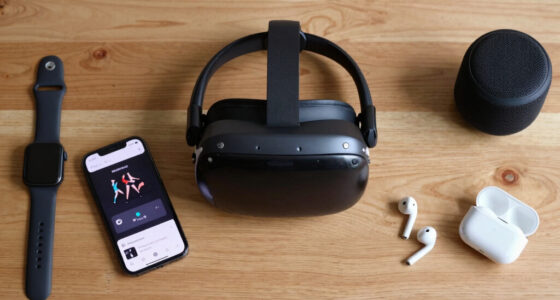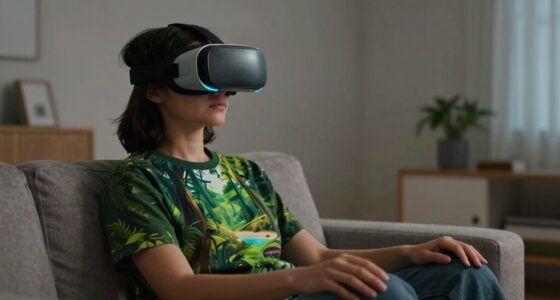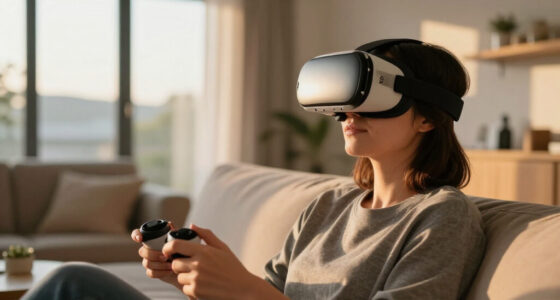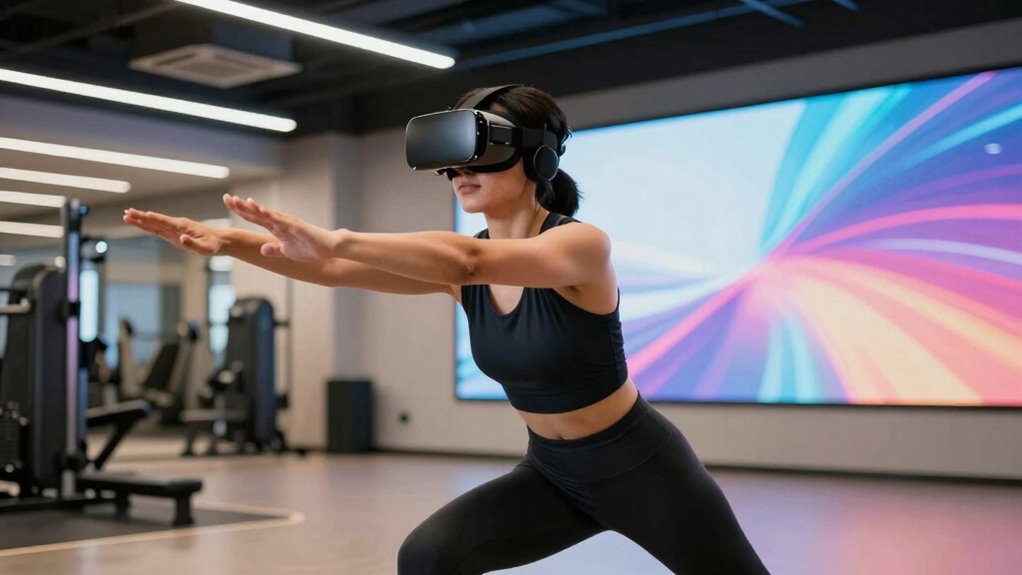
In VR fitness, dynamic and controlled stretches like spinal twists, hamstring reaches, shoulder rolls, and hip openers work best, making use of immersive visuals to boost engagement. These movements improve flexibility, posture, and overall body awareness. Virtual environments, such as beaches or forests, make stretching more enjoyable and motivating. If you want to discover more about optimizing your VR stretching routine and specific exercises, keep exploring for detailed guidance.

Play games on Amazon Luna for your next adventure, included with Prime
- A rotating selection of games, no download needed
- Play on TV, laptop or phone
- Fast, free delivery for your gear, too
Key Takeaways
- Dynamic stretches like spinal twists and hamstring stretches work well with VR for immersive guidance.
- Shoulder rolls and hip openers are easy to follow and enhance flexibility through visual cues.
- Movements that combine controlled motion with visualization, such as lunges in scenic environments, boost engagement.
- Gentle, guided stretches focused on recovery, like neck stretches, are ideal for relaxing VR sessions.
- Incorporating breathing exercises with stretches in calming virtual settings maximizes relaxation and mindfulness.
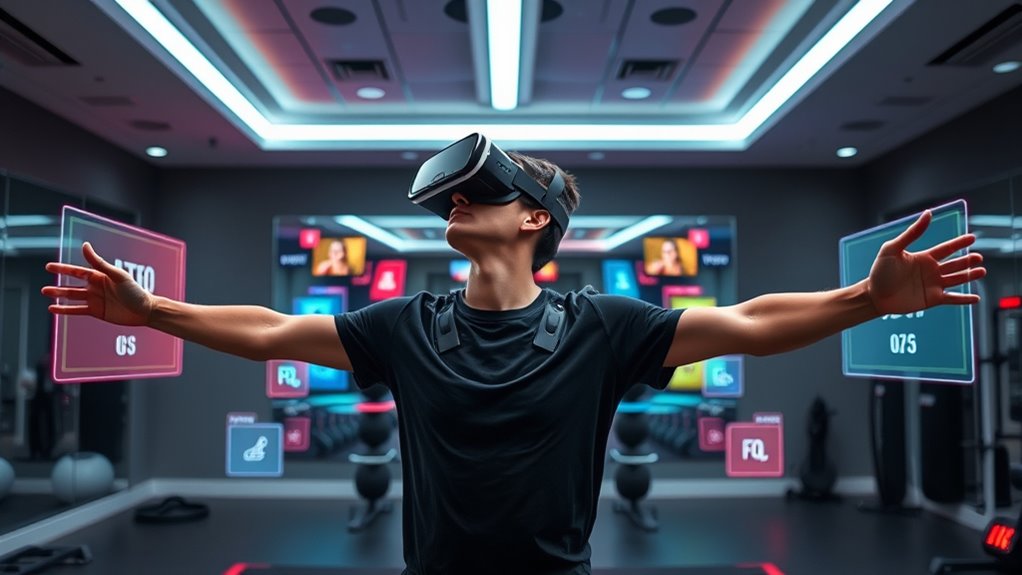
Have you ever considered how virtual reality can transform your stretching routine? When you step into a VR environment, it becomes more than just a way to pass the time—it turns stretching into an immersive experience that boosts your overall well-being. VR promotes virtual relaxation, helping you unwind mentally as you focus on your body’s movements. Instead of the usual monotony of stretching, you’re transported to calming landscapes or guided by soothing voices, making it easier to stay committed and mindful of your posture. This heightened sense of presence encourages you to stretch more effectively, reducing tension and preventing injuries.
Virtual reality transforms stretching into an immersive, relaxing experience that enhances focus and reduces tension.
Incorporating VR into your stretching routine also enhances posture correction. Many VR fitness apps include real-time feedback, where sensors or camera tracking analyze your form as you move. This immediate correction helps you identify and fix improper alignments, ensuring you’re stretching the right muscles without overstretching or straining. Over time, this leads to better posture habits, which can alleviate chronic pain and improve your overall movement efficiency. You become more aware of how you hold your body throughout the day, making adjustments that stick even outside of VR sessions.
The movements that pair best with VR stretching are those that involve dynamic and controlled motions. Think about gentle spinal twists, hamstring stretches, shoulder rolls, and hip openers—these are easy to guide with VR overlays or virtual instructors. When you perform these movements in a virtual setting, you get visual cues and progress tracking that keep you motivated. Plus, VR environments can simulate the sensation of stretching in different settings, like a serene beach or a peaceful forest, adding an element of enjoyment that encourages you to stretch longer and more consistently.
VR also allows you to customize your stretching sessions based on your needs. Whether you’re targeting flexibility, recovery, or relaxation, you can select specific programs that emphasize the movements best suited for your goals. For example, if you’re recovering from an injury, VR can guide you through gentle, controlled stretches designed to promote healing and improve posture. If relaxation is your goal, immersive environments combined with breathing exercises can help you achieve complete mental and physical relaxation, making stretching not just a routine but a restorative experience. Additionally, integrating smart home technology can further enhance your experience by providing a seamless transition between your VR sessions and your overall wellness routine.
In the end, VR enhances your stretching by making it more engaging, effective, and personalized. The blend of virtual relaxation, real-time posture correction, and targeted movements creates a seamless experience that benefits both your body and mind. So, the next time you consider your stretching routine, think about how virtual reality can elevate it into a transformative practice that leaves you feeling refreshed, aligned, and motivated.
Frequently Asked Questions
How Do I Prevent VR Motion Sickness During Stretching?
To prevent VR motion sickness during stretching, you should start slowly and take frequent breaks. Adjust the VR headset for a comfortable fit to reduce visual discomfort, and make certain your play area is well-lit. If you experience vestibular issues, focus on fixed points in the virtual environment and avoid rapid movements. Staying hydrated and maintaining good ventilation can also help minimize symptoms, making your VR stretching sessions more enjoyable.
What Safety Precautions Should I Take During VR Stretching?
To stay safe during VR stretching, make sure your VR equipment is well-maintained to avoid glitches. Set up a clear ambient environment, free of obstacles, to prevent accidents. Adjust your play area to ensure ample space and wear comfortable, properly fitted gear. Take regular breaks to avoid fatigue, and stay aware of your surroundings to prevent injuries. These precautions keep your VR stretching experience safe and enjoyable.
Can VR Stretching Improve Flexibility Effectively?
Ever wondered if VR stretching can genuinely boost your flexibility? It can, especially with consistent virtual relaxation routines that target your muscles effectively. You benefit from guided movements that enhance flexibility benefits, making stretches more engaging and enjoyable. VR stretching encourages active participation, helping you improve your range of motion over time. While it’s not a miracle cure, combined with regular practice, it’s a fun way to see real progress.
Is VR Stretching Suitable for Beginners or Only Advanced Users?
VR stretching is beginner friendly, making it suitable for newcomers, but it also offers advanced techniques for experienced users. You can start with simple, guided movements that help build flexibility and confidence. As you progress, the VR environment permits you to challenge yourself with more complex stretches. This adaptability ensures everyone, regardless of skill level, can benefit from VR stretching while gradually advancing their flexibility.
How Often Should I Perform VR Stretching Sessions?
You should perform VR stretching sessions 3-4 times a week, focusing on your virtual posture and stretching duration. Keep sessions short, around 10-15 minutes, to avoid fatigue and maintain effectiveness. Regular practice helps improve flexibility and posture, but listen to your body. Consistency is key, so find a routine that fits your schedule and gradually increase stretching duration as you become more comfortable.
Conclusion
As you explore VR stretching, think of it as tending to a garden—you nurture your body with each movement, helping it bloom. These tailored movements aren’t just exercises; they’re your tools to release vitality and balance. Embrace the experience, and let your mind and body weave together in harmony. With each session, you’re planting seeds of strength and flexibility, watching yourself grow stronger and more resilient—one virtual stretch at a time.
Evergreen bestsellers Picks
bestsellers
As an affiliate, we earn on qualifying purchases.