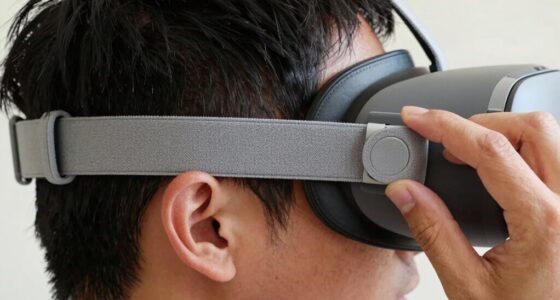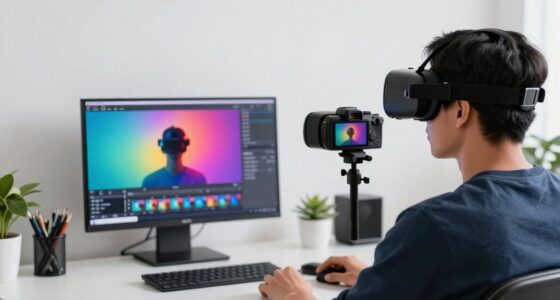

In low-light conditions, reliable tracking becomes challenging because camera sensors struggle to gather enough light, resulting in blurry images and missed detections. To improve performance, you need to carefully calibrate your sensors, adjusting sensitivity and noise reduction settings for dark environments. Combining effective calibration with image enhancement techniques can help your system adapt better to limited lighting. Continued adjustments and smart algorithms will further boost tracking accuracy even as darkness deepens, offering more insights into overcoming this issue.

Play games on Amazon Luna for your next adventure, included with Prime
- A rotating selection of games, no download needed
- Play on TV, laptop or phone
- Fast, free delivery for your gear, too
Key Takeaways
- Proper sensor calibration and image enhancement are vital to improve detection in low-light conditions.
- Increasing ambient light or using lighting controls can significantly boost tracking reliability.
- Tuning camera sensitivity and noise reduction settings helps maintain image quality in darkness.
- Combining hardware calibration with smart algorithms compensates for minimal lighting and reduces false detections.
- Establishing the minimum required lighting levels ensures consistent tracking performance in dark environments.

In low-light conditions, tracking systems often struggle to perform reliably, leading to blurred images and missed detections. When ambient light drops below a certain threshold, the camera sensors can’t gather enough information to produce clear, detailed images. This makes it harder for the system to distinguish objects, track movements accurately, and maintain consistent performance. To combat this, proper sensor calibration becomes vital. Sensor calibration involves adjusting the camera’s sensors to optimize their response to varying lighting conditions, ensuring they can capture the best possible image quality even when ambient light is limited. By calibrating sensors correctly, you help the system adapt to different lighting environments, minimizing the effects of darkness and improving detection reliability.
Ambient light plays a significant role in the performance of tracking systems. As the ambient light decreases, the camera’s ability to differentiate objects diminishes, leading to lower contrast and increased noise in images. This not only hampers object detection but can also cause the system to lose track of targets altogether. To address this, many systems incorporate automatic exposure adjustments and gain control, which help compensate for changing light levels, but these features have their limits. When ambient light becomes too weak, even these adjustments can’t fully compensate, and the tracking system’s accuracy drops sharply. Hence, understanding the relationship between ambient light levels and sensor response is key to maintaining reliable tracking.
Lower ambient light reduces contrast, increases noise, and challenges object detection in tracking systems.
Another essential factor is guaranteeing your sensors are properly calibrated for low-light conditions. Calibration isn’t a one-time setup; it involves ongoing adjustments to account for the specific lighting environment and hardware variations. For example, calibrating for low-light environments might include tuning the camera’s sensitivity settings or applying noise reduction algorithms to improve image clarity. When calibration is off, the system may interpret noise as movement or miss subtle changes altogether. Proper sensor calibration helps your tracking system better utilize available ambient light, reducing false detections and missed objects. Additionally, integrating smart algorithms that enhance image quality can further improve performance in challenging lighting conditions.
Ultimately, maintaining reliable tracking in dim environments demands a combination of adequate sensor calibration and managing ambient light. While you can’t always control the lighting, you can optimize your system’s response through calibration and smart algorithms that enhance image quality. Recognizing the importance of ambient light and ensuring your sensors are finely tuned can make all the difference, transforming poor lighting conditions from an obstacle into a manageable challenge. By doing so, you guarantee your tracking remains dependable, even when the world around you gets darker.
low light camera sensor calibration
As an affiliate, we earn on qualifying purchases.
As an affiliate, we earn on qualifying purchases.
Frequently Asked Questions
How Does Ambient Light Affect Tracking Accuracy?
Ambient light directly impacts your tracking accuracy by influencing sensor sensitivity. When there’s enough light, sensors can detect objects more reliably, especially if the light spectrum matches their ideal range. In low-light conditions, sensors struggle, reducing tracking precision. Bright, well-balanced lighting enhances sensor performance, ensuring consistent tracking. Conversely, insufficient or uneven ambient light hampers sensor sensitivity, making it harder to maintain accurate, reliable tracking results.
Can Hardware Improvements Mitigate Low-Light Issues?
Yes, hardware improvements can help mitigate low-light issues. Sensor enhancements, like higher sensitivity and larger apertures, allow your devices to capture more light in dark environments. Hardware adaptations, such as advanced image processors and better IR sensors, improve tracking accuracy when ambient light is minimal. These upgrades enable your system to perform reliably even in dim conditions, reducing the ‘Too Dark’ problem and ensuring consistent tracking performance.
What Are the Best Lighting Conditions for Different Environments?
You should aim for well-calibrated sensors with ideal lighting conditions tailored to each environment. In indoor spaces, moderate lighting reduces power consumption while ensuring reliable tracking. Outdoors, brighter conditions enhance sensor accuracy but increase power needs. Regular sensor calibration helps maintain performance across varying light levels. Adjust lighting to balance clarity and energy use, ensuring your system functions reliably without unnecessary power drain, regardless of the environment.
How Do Different Tracking Algorithms Perform in Darkness?
In darkness, your tracking algorithms perform better with infrared sensors and thermal imaging. Infrared sensors detect heat signatures, allowing reliable tracking even in complete darkness, while thermal imaging captures temperature differences, making objects stand out against the background. These methods outperform traditional visual tracking in low-light conditions, ensuring your system remains effective when lighting is minimal or absent, providing consistent accuracy regardless of ambient light levels.
Are There Safety Concerns With Increased Lighting for Tracking?
Increasing lighting for tracking can pose safety concerns like lighting hazards, such as tripping or glare, which may cause accidents. It also raises privacy implications, as more illumination can make surveillance more intrusive, potentially exposing personal details. You should weigh these risks carefully, ensuring lighting levels are safe and privacy boundaries are respected, to balance effective tracking with overall safety and privacy considerations.
night vision camera with noise reduction
As an affiliate, we earn on qualifying purchases.
As an affiliate, we earn on qualifying purchases.
Conclusion
To guarantee reliable tracking in low-light conditions, you need sufficient lighting. Imagine you’re monitoring a warehouse at night; without proper illumination, cameras struggle to identify objects. By adding strategic lighting, you improve visibility and tracking accuracy. Don’t let darkness hinder your system—adjust lighting to meet minimum levels. When you do, you’ll see smoother operations and fewer errors, just like a real case where proper lighting helped a security team catch intruders more effectively.
infrared LED lighting for cameras
As an affiliate, we earn on qualifying purchases.
As an affiliate, we earn on qualifying purchases.
As an affiliate, we earn on qualifying purchases.
Fall Picks
fall essentials
As an affiliate, we earn on qualifying purchases.