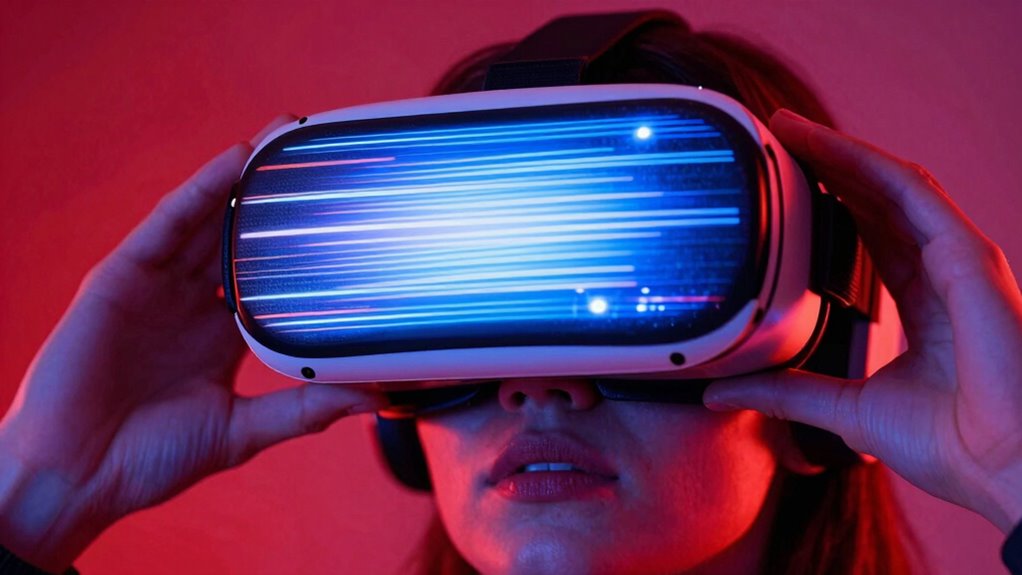
Photosensitive seizure warnings in VR let you know about potential risks from flashing or flickering lights that could trigger seizures if you’re sensitive. These warnings highlight visuals with rapid changes, high contrast, or strobing effects that might cause health issues. Understanding what these warnings mean helps you stay safe, make adjustments, or take breaks. If you keep exploring, you’ll discover how developers design content to minimize these risks and keep users safe.
Key Takeaways
- They alert users to potential risks of flashing or flickering visuals that may trigger seizures.
- These warnings help individuals with neurological sensitivities make informed decisions before use.
- They typically appear before intense scenes or during high-contrast, rapid flashing content.
- The labels promote safer VR experiences by encouraging breaks and adjusting device settings.
- Understanding these warnings can reduce health risks for susceptible users during VR sessions.
Understanding Photosensitive Seizures and Their Triggers
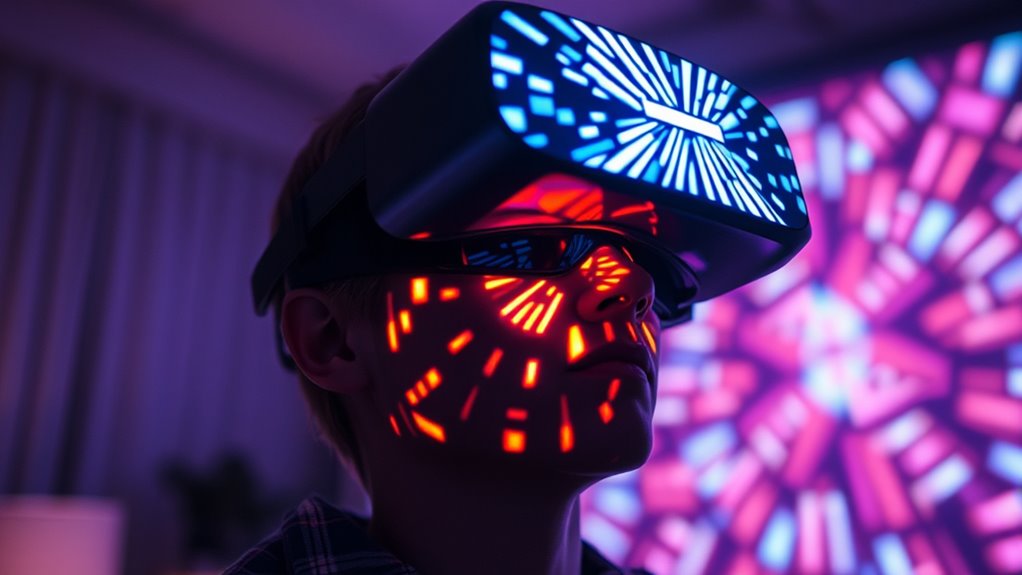
Photosensitive seizures occur when flickering or flashing lights trigger abnormal brain activity, leading to seizures in some individuals. You might not realize that certain visual patterns or rapid light changes can cause these responses. Bright, flashing lights, especially in the 3-30 Hz frequency range, are common triggers. Screens with high contrast, rapid flashing, or strobing effects are especially problematic, as visual stimuli can directly impact neurological responses. People with a history of epilepsy or neurological sensitivities are more vulnerable. It’s important to understand that not everyone reacts the same way; some might have no issues, while others experience seizures. Awareness of these triggers helps you recognize risky visuals and take precautions, especially when using devices like VR headsets that can produce intense, flickering images. Free floating visual patterns can also contribute to the risk of photosensitive seizures, emphasizing the importance of understanding and managing neurological responses to visual stimuli in virtual environments. Recognizing visual triggers and adjusting exposure can significantly reduce the risk of adverse reactions.
The Purpose of Warning Labels in Virtual Reality Devices
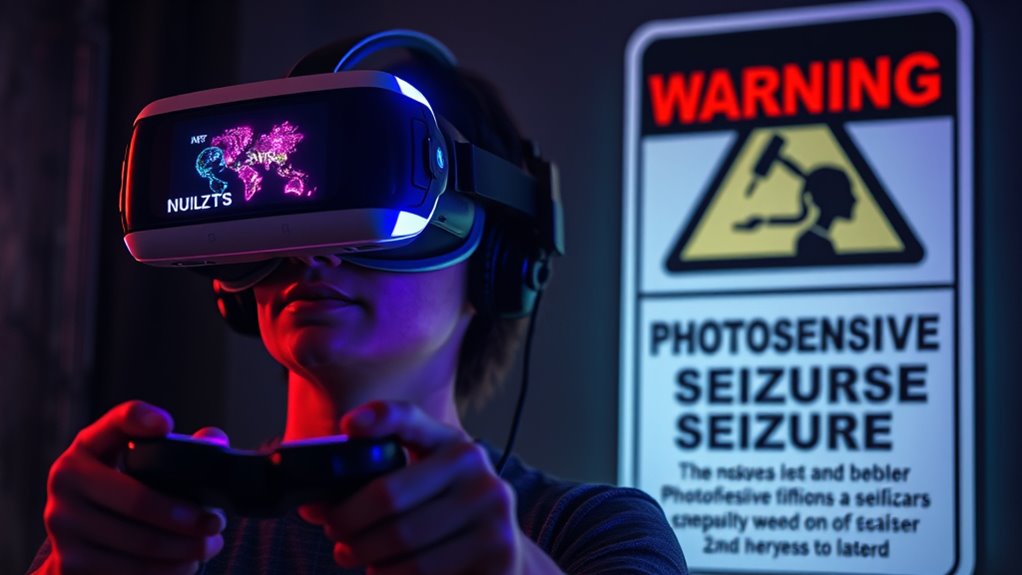
Warning labels on virtual reality devices serve an essential role in protecting users from potential health risks, especially for those prone to seizures triggered by flashing or flickering lights. These labels inform users about possible dangers before they start using the device, encouraging caution and awareness. They act as a safeguard, allowing individuals with photosensitive epilepsy or similar conditions to make informed decisions about their participation. By providing clear warnings, manufacturers aim to reduce the risk of adverse reactions and liability. The labels also promote responsible use, prompting users to take breaks or adjust settings if they experience discomfort. Incorporating adaptive lighting and other visual adjustments can further minimize risks associated with flashing lights in VR environments. Additionally, understanding how visual stimuli influence susceptibility can help users recognize early signs of discomfort and respond appropriately. Ultimately, their purpose is to ensure a safer experience for everyone, especially vulnerable users, by highlighting the importance of understanding visual stimuli that could pose health hazards.
Common Visual Stimuli That May Trigger Seizures
Certain visual patterns and effects in virtual reality environments can unexpectedly trigger seizures in sensitive individuals. Rapid flashing lights, especially at frequencies between 3 and 30 Hz, are common culprits. High-contrast patterns like stripes, checkerboards, or strobe effects can also provoke seizures. Bright flashes or sudden scene changes may overwhelm your visual system, increasing risk. Moving patterns with intense contrast or repetitive oscillations are particularly problematic. Additionally, certain color combinations or flickering screens can act as triggers, especially if they produce a high level of visual stimulation. If you’re prone to photosensitive seizures, it’s essential to be cautious with environments featuring flashing lights, rapid motion, or high-contrast visuals. Recognizing these stimuli helps you avoid situations that could lead to adverse reactions. It’s also helpful to understand visual stimulation and how certain patterns can influence your risk. Being aware of seizure triggers can aid in better managing exposure and minimizing risks during VR experiences. Incorporating designer principles such as balanced contrasts and thoughtful use of textures can help reduce overwhelming visual effects, making virtual environments safer for sensitive users. Understanding protective strategies is crucial for creating safer VR content and environments. Awareness of visual ergonomics can further support safer interactions and reduce visual fatigue that may contribute to seizure risk.
How Developers Incorporate Safety Features in VR Content
To minimize the risk of seizures, developers actively incorporate safety features into VR content, ensuring a safer experience for all users. They use techniques like gradual exposure, adjustable brightness, and visual warnings. These measures help prevent sudden, intense flashes that could trigger seizures. Developers also include settings to limit flashing lights or high-contrast patterns. Imagine the VR environment as a grid:
| Safe Environment | Warning Indicators | Adjustable Settings |
|---|---|---|
| Calm, muted visuals | Pop-up alerts before intense scenes | Brightness sliders for user control |
This setup allows users to customize their experience and stay aware of potential triggers. Incorporating seizure safety measures is vital for creating inclusive VR experiences. Additionally, employing visual contrast controls helps reduce the risk of overstimulation. By implementing these safety features, developers prioritize user well-being without compromising immersion or enjoyment.
Tips for Users to Minimize Risks During VR Experiences
While developers implement safety features to reduce seizure risks, you also play an essential role in protecting yourself during VR sessions. To minimize risks, take regular breaks—at least 10 to 15 minutes every hour—to prevent fatigue and overstimulation. Adjust the brightness and contrast settings on your device to reduce sudden flashes or intense visuals. If you start feeling dizzy, disoriented, or notice any visual discomfort, pause the experience immediately. Use the built-in warning features, such as prompts or reminders, to stay alert. Avoid playing in a dimly lit room or with excessive flashing lights around you. Most importantly, listen to your body and stop if anything feels off. Staying mindful and cautious helps ensure a safe and enjoyable VR experience.
Frequently Asked Questions
Are Photosensitive Seizures Common Among VR Users?
Photosensitive seizures are rare among VR users, but they can happen to some individuals, especially those with a history of epilepsy. You might not experience this often, but it’s important to be cautious if you have sensitivities. Always pay attention to warning signs and take breaks if you feel uncomfortable. Using VR responsibly can help minimize your risk, ensuring a safer and more enjoyable experience.
How Effective Are Current VR Warning Labels in Preventing Seizures?
Current VR warning labels are fairly effective at alerting you to potential risks, but their impact varies. They catch your attention and encourage you to take precautions, like taking breaks or adjusting settings. However, some users might overlook or ignore these warnings, which reduces their overall effectiveness. To stay safe, always read warnings carefully and follow recommended guidelines, especially if you have a history of photosensitive seizures.
Can Certain Colors or Patterns Increase Seizure Risk?
Certain colors and patterns can indeed increase your seizure risk. Bright, flashing lights, especially red and white, are known to trigger photosensitive seizures in about 3% of those with epilepsy. Rapidly changing patterns or high-contrast visuals can also be dangerous. If you have a history of seizures, it’s essential to avoid intense visual stimuli. Always pay attention to warnings and consult a healthcare professional if you’re unsure about specific visuals.
What Should I Do if I Experience Symptoms During VR Use?
If you experience symptoms like dizziness, nausea, or visual disturbances during VR use, stop immediately and remove your headset. Sit in a safe, comfortable place and rest. If symptoms persist or worsen, seek medical attention promptly. It’s important to listen to your body and avoid pushing through discomfort, as continued exposure could be dangerous. Always follow safety guidelines and consult a healthcare professional if you have concerns.
Are There Specific Age Groups More Vulnerable to Vr-Induced Seizures?
Are certain age groups more at risk for VR-induced seizures? Yes, young children and teenagers are generally more vulnerable because their brains are still developing. If you’re in these age groups, you should be extra cautious and follow safety guidelines carefully. Have you checked the age recommendations on your VR headset? Staying informed helps you enjoy VR safely and reduces the chance of adverse reactions.
Conclusion
By paying attention to photosensitive seizure warnings, you’re like a skilled navigator steering through a vibrant, unpredictable sea of visuals. These labels act as your lighthouse, guiding you safely past hidden rocks of flashing lights and rapid patterns. Staying aware and taking precautions transforms your VR journey into a thrilling adventure rather than a storm to weather. Embrace these safety tips, and let your virtual voyage be a dazzling yet secure voyage across a mesmerizing digital horizon.