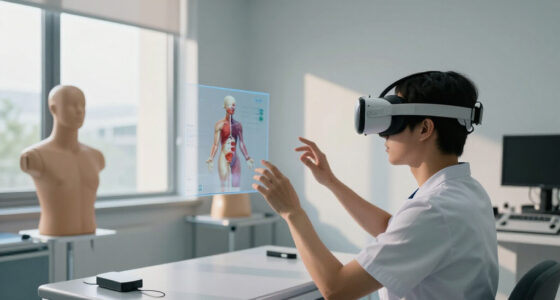
After a long day, fatigue makes motion sickness in VR worse because your sensory systems become less synchronized and more sensitive to visual and balance disruptions. When you’re tired, your body’s ability to adapt declines, increasing dizziness, nausea, and headaches during VR sessions. Taking breaks, adjusting settings, and pacing your use can help, but if you stay tired, symptoms may intensify—learn more about effective strategies to manage fatigue and improve your VR experience.

Play games on Amazon Luna for your next adventure, included with Prime
- A rotating selection of games, no download needed
- Play on TV, laptop or phone
- Fast, free delivery for your gear, too
Key Takeaways
- Fatigue heightens sensitivity to cybersickness symptoms during VR, increasing discomfort after long sessions.
- Tiredness causes visual and vestibular systems to become less synchronized, worsening motion sickness.
- Extended VR use when fatigued shifts perceptual thresholds, making users more prone to nausea, dizziness, and headaches.
- Fatigue reduces the body’s ability to adapt to VR environments, requiring careful pacing and breaks to prevent discomfort.
- Implementing rest periods and comfort adjustments can mitigate fatigue-related increases in motion sickness.

Virtual reality offers immersive experiences that can feel incredibly real, but many users encounter fatigue and motion sickness afterward. As you spend longer sessions in VR, your body begins to respond differently, and the likelihood of experiencing cybersickness increases. Fatigue can amplify your sensitivity to motion sickness, making it harder to enjoy extended VR sessions. To combat this, understanding cybersickness adaptation becomes essential. Cybersickness adaptation is your brain’s ability to adjust gradually to virtual environments, reducing the intensity of symptoms over time. If you start with shorter sessions and gradually increase your exposure, your body learns to cope better, diminishing feelings of nausea and disorientation. Incorporating deliberate fatigue mitigation strategies can also help. Taking regular breaks prevents your senses from becoming overwhelmed and gives your body time to recover, which is vital after a long day. Hydration, proper rest, and maintaining good posture contribute markedly to reducing fatigue, making your VR experience more comfortable.
When you’re fatigued, your perceptual thresholds shift, and what once was manageable may now trigger severe cybersickness. Your visual and vestibular systems become less synchronized, leading to dizziness, nausea, or headaches. To counteract this, consider adjusting your VR settings—lowering the frame rate or reducing motion intensity can help your brain process the visuals more easily. Using comfort options like teleportation instead of smooth walking or reducing acceleration in movement can also lessen cybersickness symptoms. These modifications support cybersickness adaptation by making virtual motion less jarring, especially when you’re tired. Additionally, paying attention to your environment—such as ensuring proper ventilation and avoiding overly bright or flickering visuals—can further mitigate fatigue and sickness.
Furthermore, integrating smart home technology solutions like climate control or air quality monitoring can create a more comfortable environment, reducing physical fatigue and enhancing your VR experience. Long sessions demand more than just technical adjustments; they require you to listen to your body. Incorporate rest periods into your VR routine, especially after a long day, to allow your senses to reset. Staying hydrated, avoiding caffeine or alcohol beforehand, and ensuring you’re well-rested can all contribute to fatigue mitigation. Remember, your body’s response to VR is dynamic, and fatigue can heighten your susceptibility to motion sickness. By intentionally pacing your sessions and gradually building cybersickness adaptation, you can enjoy VR without enduring the unpleasant aftereffects. With patience and mindful practices, you’ll find that your tolerance improves, and VR becomes a more comfortable, enjoyable experience—even after a long day.
VR comfort settings adjustment tools
As an affiliate, we earn on qualifying purchases.
As an affiliate, we earn on qualifying purchases.
Frequently Asked Questions
Can Certain Types of VR Content Reduce Fatigue-Related Motion Sickness?
Yes, certain VR content can help reduce fatigue-related motion sickness. Opt for experiences with high visual immersion and simple content complexity, as these minimize sensory overload and lessen discomfort. By avoiding overly intense or fast-paced visuals, you lessen the strain on your eyes and balance systems. This tailored content allows you to enjoy VR longer without feeling overwhelmed or sick, especially after a long, tiring day.
How Does Hydration Influence VR Fatigue and Associated Discomfort?
Hydration importance is key when it comes to VR fatigue and discomfort. If you keep up your fluid intake, you help prevent dehydration, which can worsen symptoms like headaches and dizziness. Staying well-hydrated supports your body’s ability to manage sensory stress and reduces the likelihood of motion sickness. Make sure to drink water regularly before, during, and after VR sessions to stay comfortable and minimize fatigue-related issues.
Are There Specific Demographic Groups More Prone to Fatigue-Induced Motion Sickness?
You’re more likely to experience fatigue-induced motion sickness if you’re in certain age groups or belong to specific genders. Younger adults and older individuals often find themselves more vulnerable, like delicate flowers catching the breeze. Women tend to be more prone than men, possibly due to hormonal differences. Recognizing these patterns helps you prepare better, taking breaks and adjusting VR settings to keep discomfort at bay.
Can Specialized VR Headsets Minimize Fatigue and Motion Sickness?
Specialized VR headsets can help minimize fatigue and motion sickness through ergonomic design and sensory integration. By fitting comfortably and reducing strain on your eyes and neck, these headsets lessen physical fatigue. Additionally, advanced sensory integration aligns visual and vestibular cues, decreasing disorientation. As a result, you’ll enjoy a smoother experience, especially after long sessions. Choosing a headset with these features guarantees you stay comfortable and less prone to motion sickness.
What Are the Long-Term Effects of Frequent VR Use on Fatigue Levels?
Frequent VR use can lead to increased fatigue if you don’t practice proper fatigue management. Your VR endurance may decrease over time, making longer sessions more tiring and potentially worsening motion sickness. To protect yourself, take regular breaks, stay hydrated, and listen to your body’s signals. By managing fatigue effectively, you can enjoy extended VR experiences without long-term negative effects, maintaining comfort and preventing burnout.
As an affiliate, we earn on qualifying purchases.
Conclusion
As your day winds down, your mind and body become delicate threads pulled tight, making you more vulnerable to the swirling storm of motion sickness in VR. Fatigue acts like a fading lighthouse beam, dimming your defenses and blurring the boundary between reality and illusion. By recognizing this, you can set sail with caution, giving yourself time to rest and reset. After all, a well-charged mind is the steady anchor in the turbulent seas of virtual worlds.
As an affiliate, we earn on qualifying purchases.
As an affiliate, we earn on qualifying purchases.
Fall Picks
fall essentials
As an affiliate, we earn on qualifying purchases.