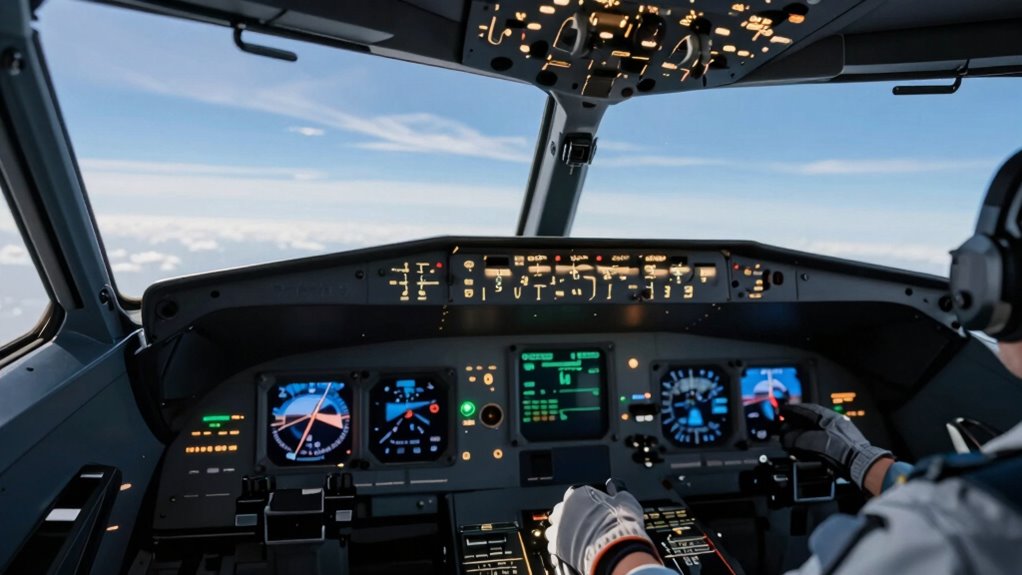
If you’re exploring flight sim VR, you’ll see it needs different priorities than action VR because it centers on authenticity and skill-building over instant entertainment. Immersive controls and realistic environments are essential to replicate real cockpit experiences and improve navigation, decision-making, and safety skills. Precise feedback and environment fidelity boost training effectiveness, ensuring you develop confidence that transfers well to real-world flying. Continue exploring to discover how these priorities create a true sense of flying mastery.

Play games on Amazon Luna for your next adventure, included with Prime
- A rotating selection of games, no download needed
- Play on TV, laptop or phone
- Fast, free delivery for your gear, too
Key Takeaways
- Flight Sim VR demands high fidelity controls to accurately replicate cockpit interactions, unlike Action VR’s emphasis on quick reflexes.
- Realistic environments in Flight Sim VR enhance navigation and decision-making, whereas Action VR focuses on entertainment and fast-paced gameplay.
- Safety and skill transfer are prioritized in Flight Sim VR to ensure real-world applicability, differing from Action VR’s entertainment focus.
- Precise tactile feedback and muscle memory development are essential in Flight Sim VR for effective pilot training.
- Consistent, detailed environmental conditions in Flight Sim VR support scenario-based training, unlike the more variable settings of Action VR.
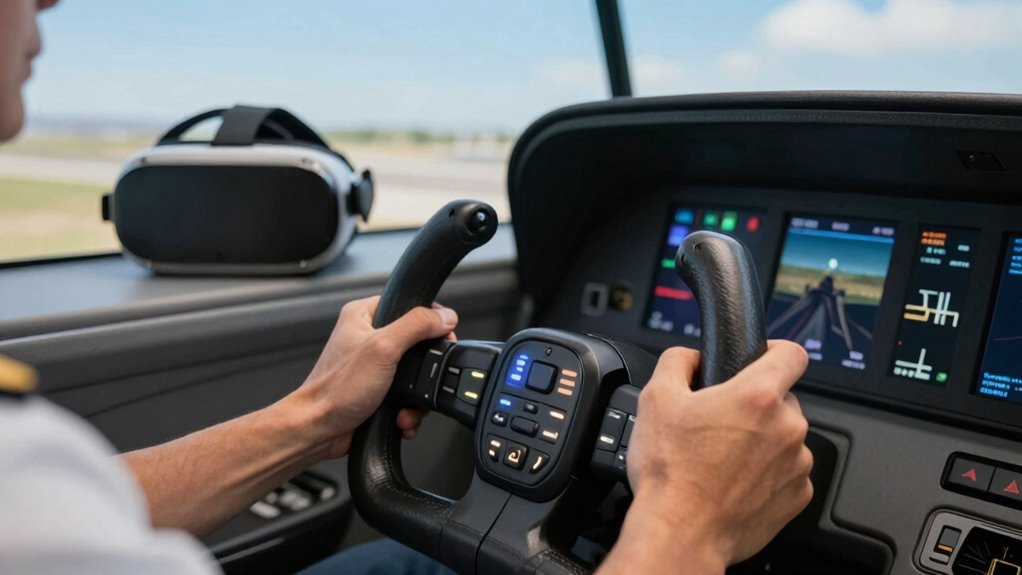
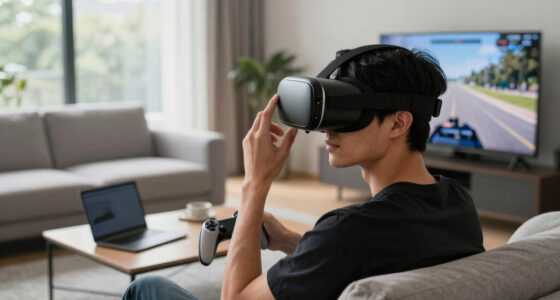
Virtual reality flight simulators have transformed the way enthusiasts and trainees approach aviation training, but to make the most of these immersive experiences, emphasizing key features is essential. Unlike action VR, where entertainment and quick reflexes dominate, flight sim VR demands a different set of priorities to truly replicate the complexities of flying. The core focus should be on immersive controls and realistic environments, which are vital for creating an authentic experience that enhances skill development and situational awareness.
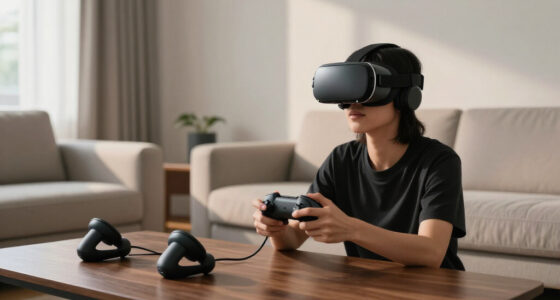
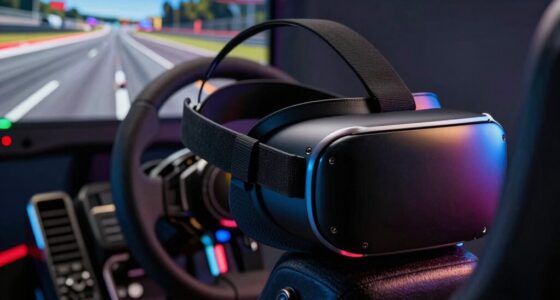
Immersive controls are fundamental because they directly impact your ability to simulate real cockpit interactions. In flight training, tactile feedback, precise button presses, and instrument manipulation are crucial. Your VR setup needs to include high-fidelity controls that mimic actual aircraft systems, from throttle levers to steering yokes. This isn’t just about visual accuracy; it’s about engaging your muscle memory and developing the fine motor skills necessary for real-world flying. When controls are immersive and responsive, you gain confidence and familiarity, making the transition to actual aircraft smoother. Additionally, precise control fidelity ensures that your training closely mirrors real operations, increasing the effectiveness of your practice.
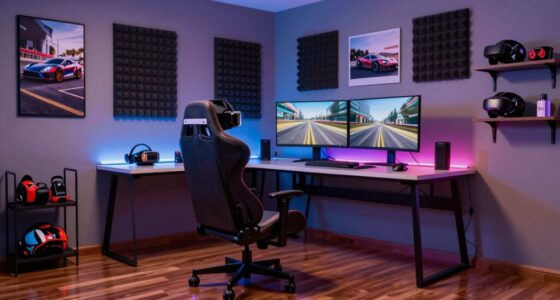
Realistic environments also play a significant role. Unlike action VR, where the focus might be on fast-paced combat or exploration, flight simulation requires meticulously detailed surroundings that replicate the real world. This includes accurate terrain, weather conditions, and airport layouts. Such environments challenge your navigation skills and decision-making under various scenarios. The more authentic the environment, the better you can train your senses and reactions, which are essential in real aviation situations. High-quality graphics, dynamic weather systems, and true-to-life airport models all contribute to creating a believable world where you can practice procedures without the risks of actual flight. Additionally, accurate environmental details help reinforce spatial awareness and improve your ability to respond to real-world scenarios effectively. Incorporating reliable simulation hardware can further enhance the realism and consistency of your training sessions. When simulation environments are closely matched to real-world conditions, your training becomes even more applicable and effective. Ensuring seamless integration of these details can significantly boost your situational understanding and preparedness.
Another reason VR flight simulators need different priorities is that safety and skill transfer matter more than mere entertainment. In action VR, the goal might be adrenaline or quick reflexes, but in flight training, you’re building competencies that could save lives. This means that the technology should focus on reducing cognitive load during complex tasks, providing feedback that helps you learn from mistakes, and maintaining consistency across sessions. Prioritizing immersive controls and realistic environments ensures your training translates directly to real-world flying, where every detail counts.
As an affiliate, we earn on qualifying purchases.
Frequently Asked Questions
How Do VR Flight Sim Controls Differ From Action VR Controls?
VR flight sim controls differ from action VR controls mainly in their focus on cockpit realism and precise hand gestures. You’ll use realistic controls like yokes, throttle, and switches to mimic actual flying, enhancing immersion. In contrast, action VR emphasizes quick, intuitive hand gestures for combat or movement. Your goal in flight sims is to replicate real cockpit interactions, requiring more detailed, deliberate controls compared to the faster, more fluid gestures in action VR.
What Hardware Is Essential for Realistic VR Flight Simulation?
Hardware for realistic VR flight simulation is like a finely tuned orchestra, ensuring every element works in harmony. You’ll need a high-quality VR headset for cockpit realism and environmental immersion, such as the Oculus Rift S or HTC Vive Pro. Add a precise flight stick and throttle quadrant for control accuracy, and track IR sensors or haptic feedback devices to enhance immersion. These tools create an authentic flying experience, immersing you fully in the cockpit.
Are There Specific Safety Concerns With VR Flight Sims?
Yes, safety concerns in VR flight sims include passenger comfort and equipment calibration. You should guarantee the headset fits well to prevent discomfort or disorientation, which can lead to accidents or fatigue. Regularly calibrate your equipment to maintain accurate motion tracking and visuals, reducing the risk of nausea or loss of awareness. Staying aware of these factors helps you enjoy immersive training while minimizing safety risks.
How Does Motion Sickness Impact VR Flight Sim Experience?
You might notice visual discomfort or vestibular mismatch during a VR flight sim, making you feel dizzy or nauseous. For example, a pilot trainee experienced motion sickness because their eyes perceived movement, but their inner ear didn’t, creating a mismatch. This sensation can ruin your experience and reduce immersion. To combat this, adjusting frame rates, limiting rapid movements, or taking breaks helps minimize motion sickness and keeps you engaged.
Can VR Flight Sims Be Used for Pilot Training Purposes?
Yes, VR flight sims can be used for pilot training, especially for aerodynamic training and developing cockpit realism. They provide immersive experiences that help pilots practice procedures and improve spatial awareness without risking safety. While they shouldn’t replace full-flight simulators, VR training enhances familiarity with cockpit layouts, controls, and responses. This makes VR a valuable supplementary tool in pilot education, boosting confidence and skills before real-world flights.
high fidelity VR flight simulator
As an affiliate, we earn on qualifying purchases.
As an affiliate, we earn on qualifying purchases.
Conclusion
In VR flight sims, your focus should be on realistic controls and immersion, unlike action VR where quick reactions matter most. Did you know that pilots training with VR report a 30% faster skill acquisition? This shows how prioritizing accuracy over speed enhances learning. So, when you step into a flight sim, remember that precision and realism take precedence—your virtual cockpit demands your full attention for the most authentic experience.
As an affiliate, we earn on qualifying purchases.
realistic flight simulator environment
As an affiliate, we earn on qualifying purchases.
As an affiliate, we earn on qualifying purchases.
Fall Picks
fall essentials
As an affiliate, we earn on qualifying purchases.