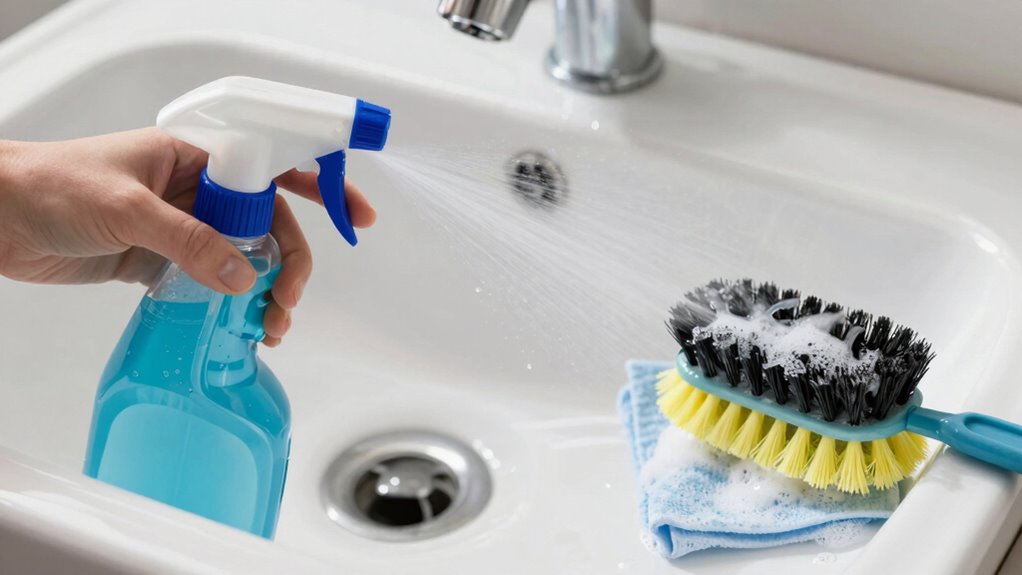

People often confuse cleaning and sanitizing because both improve hygiene, but they serve different purposes. Cleaning removes dirt, dust, and debris using soap and water, while sanitizing reduces bacteria and germs to safer levels. Many assume wiping surfaces is enough, but sanitizing requires specific products and contact time. Understanding these differences helps you keep environments safer. If you want to learn how to do each properly, there’s more to discover below.
Key Takeaways
- People often think cleaning and sanitizing are the same because both involve surface maintenance.
- Cleaning removes dirt and debris, while sanitizing reduces germs to safe levels.
- Lack of awareness about their different purposes leads to confusion.
- Misunderstanding arises from the similar language used in daily routines.
- Many assume cleaning alone sanitizes surfaces, overlooking the need for dedicated sanitizing steps.
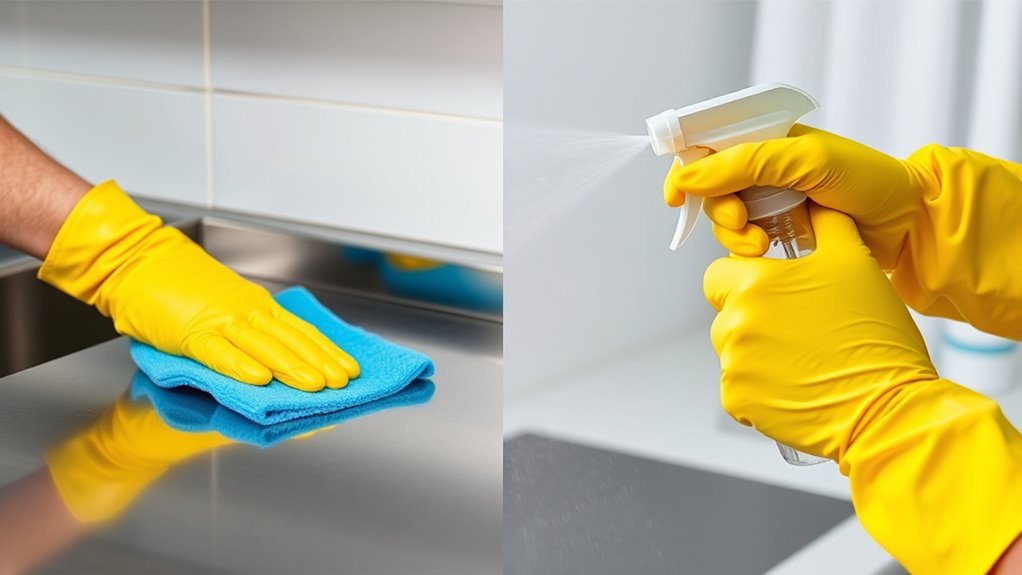
When it comes to maintaining a hygienic environment, understanding the difference between sanitizing and cleaning is essential. Many people assume these terms are interchangeable, but they serve distinct purposes, especially when it comes to disinfecting procedures and surface maintenance. Cleaning involves removing dirt, dust, and debris from surfaces, typically using soap or detergent and water. It doesn’t necessarily kill germs but helps create a cleaner surface, reducing the presence of harmful bacteria and viruses. Disinfecting procedures, on the other hand, focus on eliminating pathogens on surfaces to prevent the spread of illness. Disinfectants are applied after cleaning to ensure surfaces are not just visually clean but also hygienically safe.
You might think that simply wiping down a surface is enough, but without proper disinfecting procedures, germs can linger. Proper surface maintenance requires a two-step process: clean first to remove visible grime, then disinfect to kill germs. This distinction is vital in settings like healthcare, food service, or even your home, where the risk of infection is higher. Skipping the disinfecting step might give a false sense of security, as surfaces could still harbor bacteria or viruses. Using the right disinfectant and following manufacturer instructions guarantees effective surface maintenance. This involves letting the disinfectant sit for the recommended contact time to maximize its germ-killing power.
People tend to confuse cleaning with disinfecting because they often perform these tasks simultaneously or use cleaning products that claim to disinfect. However, not all cleaning products are disinfectants, and even some disinfectants require specific application methods for maximum effectiveness. It’s important to recognize that cleaning is a preparatory step, not a substitute for disinfecting. If you want to truly reduce the risk of infection, you need to incorporate disinfecting procedures into your routine, especially on high-touch surfaces like doorknobs, light switches, and countertops. Additionally, understanding the proper application of disinfectants can significantly improve their effectiveness in killing germs.
Understanding surface maintenance also involves knowing when to clean versus disinfect. For routine cleaning, wiping down surfaces with soap and water may suffice. But during cold and flu season or in a healthcare setting, you should escalate to disinfecting protocols. This distinction helps ensure you’re not just creating a visually clean environment but a safe one. By properly applying disinfectants after cleaning, you improve hygiene standards, prevent disease transmission, and maintain a healthier environment overall. Knowing when and how to disinfect is a vital part of effective surface maintenance, making your efforts more targeted and effective.
Frequently Asked Questions
Can Cleaning Alone Eliminate All Germs?
Cleaning alone doesn’t eliminate all germs, as many believe disinfectants are necessary. Disinfectant myths often lead people to think cleaning is enough, but cleaning vs disinfecting serve different purposes. Cleaning removes dirt and some germs, while disinfecting kills most bacteria and viruses. To truly reduce your risk, you need to use a disinfectant on high-touch surfaces after cleaning. This combo ensures your space is both tidy and safer from germs.
How Often Should I Sanitize My Household Surfaces?
You should sanitize your household surfaces daily, especially in high-touch areas like doorknobs and countertops. To guarantee disinfectant effectiveness, follow the product’s recommended surface contact time. Regular sanitizing reduces germs and keeps your home safer. Always clean surfaces first to remove dirt, then apply disinfectant, allowing it to sit for the necessary time. This routine helps maintain a healthier environment and minimizes the risk of illness.
What Tools Are Best for Sanitizing Effectively?
Imagine wielding a gentle brush or sprayer, and you get the perfect tools for sanitizing. Use spray bottles with disinfectant types like EPA-registered solutions and microfiber cloths or steamers for hard surfaces. Follow proper sanitizing protocols, applying disinfectants evenly and allowing proper contact time. These tools guarantee effective sanitizing, helping you keep your household safe and clean without fuss. Always read labels and follow manufacturer instructions for best results.
Are Natural Cleaning Products as Effective as Chemical Sanitizers?
Natural cleaning products can be effective, especially with eco-friendly alternatives like vinegar and tea tree oil, but their effectiveness comparison to chemical sanitizers varies. You might find they work well for general cleaning, yet for killing germs on surfaces like kitchens or bathrooms, chemical sanitizers often provide stronger, faster results. Consider your needs—natural options are safer and eco-friendly, but for maximum germ control, chemical sanitizers might be more reliable.
Does Cleaning Remove Bacteria or Just Dirt?
Cleaning primarily removes dirt, dust, and debris from surfaces, but it doesn’t necessarily kill bacteria. Disinfecting misconceptions often lead people to think cleaning alone is enough to eliminate germs, which isn’t true. To effectively reduce bacteria and viruses, you need to disinfect afterward. Remember, cleaning myths can cause complacency, so always follow proper disinfecting procedures, especially in high-touch areas, to make sure surfaces are truly sanitized and safe.
Conclusion
So, now that you know the key differences between sanitizing and cleaning, you might think the battle is over. But here’s the twist—what you don’t realize is that choosing the wrong method could leave unseen risks behind. Are you truly protecting yourself and your loved ones? The real question is, how will you guarantee every surface gets the right treatment? The answer might just change how you see cleanliness forever. Stay vigilant—things aren’t always as simple as they seem.