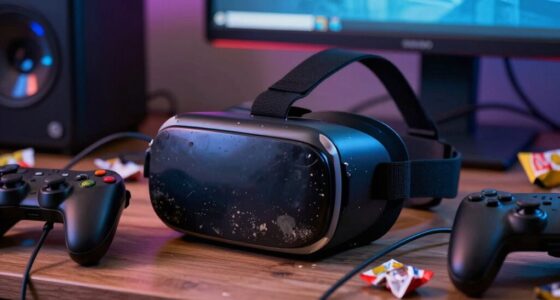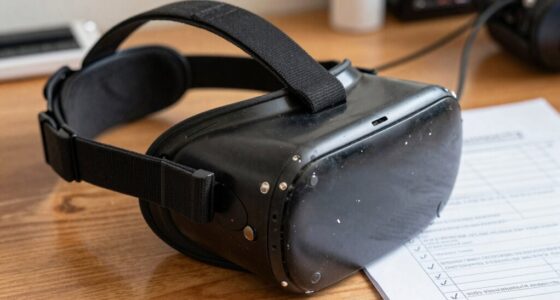
Choosing a VR headset for immersive gaming often comes down to whether you want freedom from a console or a more tightly integrated PlayStation experience. Meta Quest 3 runs games on the headset itself, and it can also connect to a compatible gaming PC for a broader library. PlayStation VR2 requires a PS5, but its OLED display, eye tracking, headset rumble, and adaptive Sense controllers are built around console games such as Horizon Call of the Mountain and Gran Turismo 7.

Play games on Amazon Luna for your next adventure, included with Prime
- A rotating selection of games, no download needed
- Play on TV, laptop or phone
- Fast, free delivery for your gear, too

Meta Quest 3 512GB | VR Headset — GOLF+ Included — Tee Off in VR
- ✔ Resolution: 2064 × 2208 pixels per eye
- ✔ Storage: 512GB
- ✔ Processor: Snapdragon XR2 Gen 2

Meta Quest 3S 128GB | VR Headset — Golf+ Included — Tee Off in VR
- ✔ Resolution: 1832 × 1920 pixels per eye
- ✔ Storage: 128GB
- ✔ Processor: Snapdragon XR2 Gen 2

Meta Quest 3S 128GB | Virtual Reality — VR Headset (Renewed Premium)
- ✔ Resolution: 2064 × 2208 pixels (listing figure; per-eye basis is unclear)
- ✔ Storage: 128GB
- ✔ Processor: Snapdragon XR2 Gen 2
That makes the core tradeoff clear: Quest 3 is the flexible system for players who want to play in different settings or add PC VR, while PS VR2 is the stronger fit for PS5 owners who value console-focused immersion and already have access to its games. Neither headset is automatically the better choice for every player. The right one depends on your existing hardware, the games you want to play, and whether flexibility or PlayStation-specific features matter more than the cost of buying into another platform.
At a Glance
| Criteria | Meta Quest 3 | PlayStation VR2 | Winner |
|---|---|---|---|
| How it works | Standalone headset; optional PC connection | Requires a PS5; tethered by cable | A |
| Display and visual experience | High-resolution LCD with pancake lenses; sharp image across more of the view | OLED display with deep blacks; Fresnel lenses can show glare and a smaller clear area | Depends |
| Immersion features | Color passthrough and mixed reality; no eye tracking or headset rumble | Eye tracking, headset rumble, adaptive triggers, and controller haptics | B |
| Game library | Standalone Quest games plus compatible PC VR titles | PS VR2 catalogue, including selected PS5 titles; not the original PSVR library | Depends |
| Setup and flexibility | Works without a console or PC; portable | Simple console setup, but play is tied to PS5 and cable length | A |
| Comfort and controls | No ring-free Touch Plus controllers; fit and comfort vary by user | Sense controllers add tactile effects; headset fit and balance vary by user | Depends |
| Value | One headset can serve standalone, mixed-reality, and PC VR needs | Strong feature set for PS5 owners; requires buying or owning a PS5 | A |
Meta Quest 3 512GB | VR Headset — GOLF+ Included — Tee Off in VR
For gaming that feels convincing from the moment we put the headset on, the Meta Quest 3 512GB is the strongest choice in this group. Its listed resolution of 2064 × 2208 pixels per eye and pancake lens system give it a clearer visual foundation than the Quest 3S models. In games with detailed environments, fine interface text, or distant objects, that extra clarity can help the world feel more coherent instead of like a screen viewed through a headset.That visual edge is paired with a Snapdragon XR2 Gen 2 processor, 8GB RAM, wireless standalone operation, and 512GB of storage. The processor generation and memory are shared with the new Quest 3S, so we should not choose Quest 3 solely on the assumption that it has a newer gaming platform. Its advantage is the more refined display and much larger capacity: more room for installed games and media before we need to manage what stays on the headset. Compared with either 128GB 3S, that is a tangible convenience for a growing library.The tradeoffs are real. The listed battery life is about 2.2 hours, which makes a charging plan sensible for marathon sessions, and standalone play means we are buying into Meta’s ecosystem rather than getting a general-purpose PC headset. The headset also costs more in commitment than the simpler 3S proposition, even though no price comparison belongs in the decision. If visual sharpness is our priority, those concessions are easier to accept. If we are new to VR and mainly want to try casual games, the Quest 3S covers the basics with less emphasis on optics.The listing includes GOLF+ and a game-catalog trial, adding an immediate activity to explore, though those offers should be treated as bundle extras rather than the reason to pick this headset. For players who want a broad mix of action, exploration, and seated experiences, the Quest 3’s combination of clarity, wireless freedom, and generous capacity makes it the best-rounded fit here. We should skip it if we mainly want a low-commitment first taste of VR or expect long sessions without breaks.
Pros:
- Higher listed per-eye resolution than the Quest 3S models
- Pancake lenses support a clearer visual experience
- 512GB capacity leaves more room for installed games
- Standalone wireless play with Snapdragon XR2 Gen 2 and 8GB RAM
Cons:
- Listed battery life is only about 2.2 hours
- Meta Quest ecosystem limits the choice to its supported platform
- Visual advantage may be unnecessary for occasional or casual players
Best for: Players who want the clearest visuals and enough storage to build a sizable standalone game library.
Not ideal for: First-time VR buyers focused on casual play, or players who need extended sessions without stopping to recharge.
Bottom line: Choose the Quest 3 when visual clarity and library space matter more to us than keeping the setup simple.
“Choose the Quest 3 when visual clarity and library space matter more to us than keeping the setup simple.”
Meta Quest 3S 128GB | VR Headset — Golf+ Included — Tee Off in VR
The Meta Quest 3S 128GB is our sensible first step into standalone VR. It uses the same named Snapdragon XR2 Gen 2 processor and 8GB RAM as the Quest 3, so its position below the flagship is not a claim that it cannot run current games. It brings wireless play, motion-sensing controllers, color passthrough, and a straightforward way to explore the Quest library without needing a gaming PC or a room full of equipment.Where it gives up ground is the view itself. The listing specifies 1832 × 1920 pixels per eye, compared with 2064 × 2208 on Quest 3, and the 3S uses Fresnel optics rather than the Quest 3’s pancake lenses. That makes the 3S a less compelling choice for players who are particularly sensitive to visual clarity or want a more polished view of fine details. The distinction is more important for immersive gaming than the processor difference, because these two new models share the same processor generation and memory.Its 128GB capacity is the other practical limit. It can suit a focused collection of games, but players who install many large titles may need to remove and redownload games as their interests shift. That makes the 3S less relaxed as a long-term library device than the 512GB Quest 3. The listed battery life is about 2.5 hours, still a finite session rather than a reason to expect all-day play. The headset includes GOLF+ and describes access to a game-catalog trial, which can help newcomers find something to try early on.Compared with the renewed Quest 3S, this new listing offers a clearer purchase path: we are selecting a new device rather than weighing an item’s prior history and the terms of a renewed guarantee. The renewed version may appeal to buyers who accept that extra uncertainty, but its listed specs are inconsistent with the new 3S listing, including a different stated per-eye resolution and field of view. For a first headset, the new 3S is the more straightforward recommendation. We should choose it when ease of entry and current-generation standalone play matter more than top-tier optics or a large game library.
Pros:
- Snapdragon XR2 Gen 2 and 8GB RAM match the listed Quest 3 platform basics
- Wireless standalone play does not require a PC
- Color passthrough supports mixed-reality experiences
- New-device listing includes GOLF+ and a game-catalog trial
Cons:
- Lower listed resolution and Fresnel optics trail the Quest 3 for visual clarity
- 128GB can constrain a large installed game library
- Battery life is limited to a few hours per charge
Best for: New VR players who want a current standalone headset for trying games, fitness, and mixed-reality experiences.
Not ideal for: Players who prioritize the sharpest image, want a large installed library, or expect a substantial step up from a headset with pancake lenses.
Bottom line: Pick the new Quest 3S as an accessible first headset when current standalone gaming matters more than premium optics.
“Pick the new Quest 3S as an accessible first headset when current standalone gaming matters more than premium optics.”
Meta Quest 3S 128GB | Virtual Reality — VR Headset (Renewed Premium)
This renewed Meta Quest 3S keeps the core appeal of the Quest 3S family: wireless standalone gaming powered by a Snapdragon XR2 Gen 2 chip, 8GB RAM, and color passthrough. On those headline platform details, it resembles the new Quest 3S, so the central question is less about performance class and more about the renewed listing’s condition, included accessories, and support terms. We should check those details before treating it as interchangeable with a new headset.For immersion, the supplied listing calls out 2064 × 2208 pixels and a 96-degree field of view, while the new Quest 3S listing gives 1832 × 1920 per eye and 110 degrees. Those figures do not match, so we should avoid assuming that the renewed device offers a better display or wider view. The listing also does not clearly specify lens type. By contrast, the Quest 3’s pancake lenses and stated resolution are a more dependable reason to choose it for visual refinement. If the exact view matters to us, the new Quest 3 or new Quest 3S listing gives a clearer basis for comparison.The 128GB storage capacity matches the new 3S and remains the main constraint for players who want many games installed at once. The renewed description mentions access to a 40+ game offer and a three-month trial, but offers can depend on eligibility and redemption terms; they should not be treated as permanent library space. It lists a 3-hour battery average, yet battery condition is precisely the kind of detail buyers should verify with a renewed device. The Amazon Renewed Guarantee provides a stated support framework, but we should read its applicable terms and confirm what is included in the specific listing.This is the least straightforward pick in the lineup. It may suit a buyer who is already comfortable with renewed electronics and is willing to inspect return and warranty details, while the new Quest 3S is the simpler route for a first-time user. The Quest 3 remains the better-supported choice for our visual-immersion ranking thanks to its explicit pancake lenses and larger capacity. We would consider this renewed 3S only after confirming condition and included accessories; otherwise, the new 3S offers a more predictable starting point.
Pros:
- Standalone wireless gaming with Snapdragon XR2 Gen 2
- 8GB RAM and color passthrough are listed
- Renewed guarantee is described by the listing
- Listed 3-hour battery average may suit shorter play sessions if condition supports it
Cons:
- Renewed condition and included accessories need careful verification
- Listed display and field-of-view details differ from the new Quest 3S listing
- 128GB capacity matches the more clearly specified new 3S, not the larger Quest 3
Best for: Buyers comfortable with renewed electronics who verify condition, accessories, and guarantee terms before purchase.
Not ideal for: First-time VR buyers seeking a predictable new-device experience, or players who want clearly specified premium optics and more storage.
Bottom line: Consider the renewed Quest 3S only if we are comfortable verifying its condition and support details before committing.
“Consider the renewed Quest 3S only if we are comfortable verifying its condition and support details before committing.”
As an Amazon Associate we earn from qualifying purchases.
Key Differences
The biggest practical difference is the platform commitment. Quest 3 can be the whole gaming setup by itself, and a PC connection can extend it to compatible PC VR games. PS VR2 is an accessory for a PS5, so its value rises when you already own the console and want to play its VR catalogue. If you would need to buy a PS5 as well, the total cost changes the comparison substantially.
PS VR2 has a stronger set of dedicated immersion features: its OLED panel produces deep blacks, while eye tracking, headset vibration, and adaptive triggers can make supported games feel more physical. Quest 3 counters with pancake lenses, a sharper-feeling clear area across the view, standalone play, and color passthrough for mixed reality. The image qualities differ rather than producing a universal visual winner: dark scenes favor PS VR2, while clarity across the lenses often favors Quest 3.
Game choice should settle the decision. Quest offers a wide standalone selection and PC VR access, but not every PC title is compatible or equally easy to configure. PS VR2 offers a focused set of PS5 VR games, though the original PSVR catalogue does not carry over wholesale. Check the specific games you care about before buying; library preference can outweigh a modest difference in display or comfort.
Detailed Comparison
How it works (Meta Quest 3 wins — moderate)
Quest 3 runs games on its own hardware, so you can start playing without a console or gaming PC. Connect it to a capable PC and compatible titles can use that system’s graphics power. PS VR2 needs a PS5 and connects to it by cable. That gives PS5 owners a straightforward route into console VR, but it rules out playing independently or taking the system away from the console. Quest 3 wins by a moderate margin for users who value choice; PS VR2’s dependency matters less if a PS5 is already part of the setup.
Display and visual experience (moderate difference)
PS VR2’s OLED panels are particularly appealing in dark games, where their deep blacks can make scenes feel more atmospheric. Its Fresnel lenses can produce glare and keep the clearest area closer to the center. Quest 3 uses LCD panels with pancake lenses, which provide a broad, sharp-looking viewing area but cannot match OLED black levels. The winner depends on the games and the visual quality you notice most. The difference is moderate: choose PS VR2 for black levels and Quest 3 for clarity across the lenses.
Immersion features (PlayStation VR2 wins — moderate)
PS VR2 has eye tracking, headset rumble, and Sense controllers with adaptive triggers and haptic feedback. Games that use these features can make aiming, impacts, and environmental changes feel more immediate. Quest 3 offers color passthrough and mixed-reality play, blending virtual content with your room, but it lacks PS VR2’s eye tracking and headset vibration. PS VR2 wins by a moderate margin for conventional, supported VR games; Quest 3 is more compelling if the idea of mixing digital play with your surroundings is part of the appeal.
Game library (major difference)
Quest 3 has a broad standalone catalogue and can reach compatible PC VR games when paired with a gaming PC. That combination offers more routes to play, although PC VR access may involve setup and compatibility checks. PS VR2 has notable PS5 exclusives and polished console releases, but it is a separate catalogue from the original PSVR, and many PS5 games are not VR games. There is no overall winner without a shortlist: Quest 3 leads for range and PC access, while PS VR2 wins for a player whose must-play titles are on its platform.
Setup and flexibility (Meta Quest 3 wins — major)
Quest 3 is portable and works across rooms without a console tether. It also supports mixed-reality experiences through its cameras. Wireless PC VR can add freedom of movement, though it depends on a suitable network and may require configuration. PS VR2 is easy to pair with a PS5, but the cable limits movement and the headset stays tied to the console. Quest 3 wins by a major margin for travel, room changes, and all-in-one use. PS VR2 remains convenient for a fixed PlayStation gaming area.
Comfort and controls (minor difference)
Comfort depends on head shape, fit, and session length, so neither headset can claim a universal win. Quest 3 has compact pancake optics, and its Touch Plus controllers do not use the large tracking rings found on some earlier controllers. PS VR2’s Sense controllers provide distinctive haptics and adaptive triggers, but the headset is tethered and some players find its fit or lens sweet spot takes adjustment. The gap is minor to moderate: try the fit if possible, and choose based on whether controller effects or a wireless setup matters more.
Value (Meta Quest 3 wins — major)
Quest 3 usually makes better value sense when you want one headset for standalone gaming, mixed reality, and possible PC VR. Its flexibility can avoid the need for another gaming device. PS VR2 can be compelling for a PS5 owner who will play several titles that use its hardware features; in that case, paying for the headset adds a focused experience to equipment already owned. If you need to buy a PS5 solely for VR, the combined expense is harder to justify. Quest 3 wins for most buyers on platform flexibility, while PS VR2 can be worth its cost for committed PlayStation players.
Meta Quest 3: Pros and Cons
Pros:
- Standalone gaming without a console or PC
- Optional access to compatible PC VR games
- Pancake lenses give a broad clear viewing area
- Portable, wireless play and color passthrough
Cons:
- LCD black levels fall short of OLED in dark scenes
- No eye tracking, headset rumble, or adaptive trigger effects
- PC VR connection can take extra setup
- Some demanding games may be limited by standalone hardware
PlayStation VR2: Pros and Cons
Pros:
- OLED panels deliver deep blacks
- Eye tracking, headset rumble, and adaptive Sense controllers add tactile detail
- Straightforward fit for players already using PS5
- Strong appeal for supported PlayStation VR titles
Cons:
- Requires a PS5 and a wired connection
- Does not support the original PSVR library as a whole
- Fresnel lenses can show glare and a narrower clear area
- Less flexible for travel and play away from the console
Who Should Choose What
Choose Meta Quest 3 if:
- You want to play without buying a console or gaming PC.
- You want one headset for standalone games, mixed reality, and possible PC VR.
- You expect to move between rooms or take the headset with you.
- You prefer a broad platform choice over PlayStation-specific effects.
Choose PlayStation VR2 if:
- You already own a PS5 and want VR games made for that console.
- OLED black levels matter to you, especially for darker games.
- You value eye tracking, headset rumble, and adaptive triggers in supported titles.
- Your shortlist includes PS VR2 games that are unavailable on Quest.
Skip both if: Skip both if your must-play games are not available on either platform, you do not want a headset tethered to a console or worn standalone, or you would need to buy extra hardware that makes the total cost unjustifiable.
Value for Money
Quest 3 is the safer value for a buyer starting from scratch because it does not require a separate console and can cover standalone gaming, mixed reality, and compatible PC VR. The PC option adds value only if you own a suitable computer and are willing to manage the connection. Paying more for a high-end Quest configuration makes sense when its extra storage will be useful for a large installed library; otherwise, compare the base headset price with the games and accessories you plan to buy.
PS VR2 is worth its cost when the PS5 is already in your home and you will play several games that make use of its OLED display, eye tracking, or haptics. Those features have real gaming value, but they cannot compensate for a library that does not match your tastes. If you need to purchase both the PS5 and headset, count them together. For most first-time VR buyers seeking flexibility, Quest 3 is the better value; for an existing PS5 owner with a strong PS VR2 game shortlist, the premium for console-specific immersion can be justified.
Final Verdict
For most people looking for an immersive gaming headset, choose Meta Quest 3. It offers the easiest entry point, works without other gaming hardware, and can grow into PC VR if your setup supports it. Its pancake lenses and wireless portability suit players who want to use VR in different rooms and try more than one kind of experience.
Choose PlayStation VR2 if you already own a PS5, prefer its OLED image and tactile features, and have specific games in mind that make the system worthwhile. The deciding factor is platform fit: flexibility and lower setup commitment favor Quest 3; PS5 integration and supported immersion features favor PS VR2. Do not pay more for PS VR2 just for its feature list if its game catalogue is not the one you want.
Frequently Asked Questions
Which headset is better for immersive gaming?
PS VR2 has the edge in supported games that use OLED contrast, eye tracking, headset rumble, and adaptive triggers. Quest 3 is better for players who value wireless freedom, standalone play, or access to compatible PC VR titles. Your preferred games matter more than the feature list alone.
Does PS VR2 work without a PS5?
PS VR2 is designed to work with a PS5 for its console VR experience. It is not a standalone headset. Quest 3 can run games on the headset itself, without a console or PC.
Can Quest 3 play PC VR games?
Quest 3 can connect to a compatible gaming PC for PC VR games. Compatibility and setup depend on the game and connection method. Check the titles you want and your computer’s specifications before counting PC VR as part of the value.
Is the PS VR2 library compatible with the original PSVR?
The original PSVR library does not carry over as a whole. Some titles have PS VR2 versions, but compatibility is not universal, so check each game before buying.