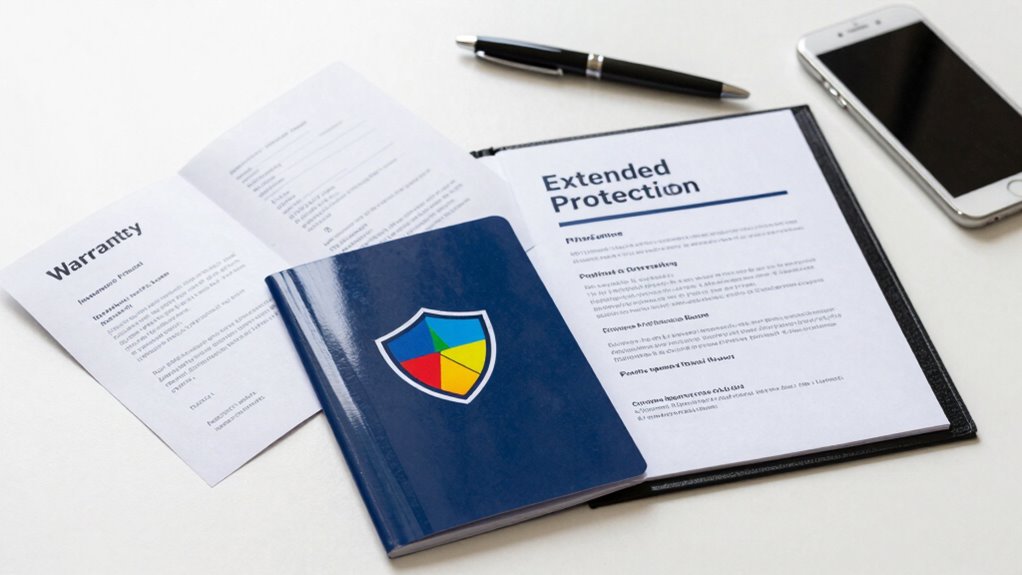

Warranties cover manufacturing defects and hardware failures, lasting for a limited time and handled directly by the manufacturer. Insurance is a separate policy that protects against accidents, theft, or loss, often with deductibles and premiums. Extended protection plans extend warranty coverage and add extras like accidental damage or surges. Understanding how each works helps you choose the right level of protection—learn more to decide what fits your needs best.

Get VR and gaming gear delivered free — and shop member deals
- Fast, free delivery on millions of items
- Access to Prime Big Deal Days deals on October 6–7
- Prime Video, Amazon Music and more included
Key Takeaways
- Warranties cover manufacturing defects and hardware failures, usually for a limited time, at no extra cost.
- Insurance provides broader protection against accidental damage, theft, or loss, often requiring premiums and deductibles.
- Extended protection plans extend warranty coverage beyond the initial period and may include additional protections like accidental damage.
- Claim processes differ: warranties are handled by the manufacturer, while insurance and extended plans may involve third-party providers.
- Warranties focus on product quality issues, whereas insurance and extended plans cover unforeseen events and longer-term risks.

When you’re purchasing a new appliance or electronic device, understanding the differences between warranty, insurance, and extended protection can save you time and money. These options each provide some level of product coverage, but they function differently and serve distinct purposes. A warranty typically comes with the product itself and covers manufacturing defects or hardware failures within a set period. It’s a manufacturer’s promise that if something goes wrong due to quality issues, they’ll repair or replace the item at no extra cost. The claim process under a warranty is usually straightforward: you contact the manufacturer or authorized service center, provide proof of purchase, and then they handle the repairs or replacements. This process tends to be quick and limited to specific issues outlined in the warranty terms.
Insurance, on the other hand, is a separate policy you purchase to protect against accidental damage, theft, loss, or other unforeseen events. Unlike warranties, insurance offers broader product coverage, but it’s not limited to manufacturer defects. If your device is damaged due to an accident or stolen, you file a claim with your insurance provider. The claim process often involves submitting detailed documentation—photos, police reports if stolen, or proof of damage—and sometimes an appraisal or inspection. Once approved, the insurer typically reimburses you for repairs, replacement, or loss, but you might pay a deductible. Insurance tends to be more flexible, covering a wider range of issues, but it often involves monthly premiums and can be more complex to navigate.
Extended protection plans, sometimes called service plans or protection plans, bridge the gap between warranties and insurance. These plans are usually offered by retailers or third-party companies and extend the coverage period beyond the manufacturer’s warranty. They might include additional product coverage such as accidental damage, power surges, or cosmetic repairs. When you need to make a claim under an extended protection plan, the process can vary but generally involves contacting the plan provider, providing proof of purchase, and describing the issue. These plans are designed to give you peace of mind by offering more all-encompassing coverage and longer-term support, but they often come with specific exclusions and conditions.
Frequently Asked Questions
Can Warranties Be Transferred to New Owners?
Yes, warranties can often be transferred to new owners. When you experience an ownership change or a product transfer, check your warranty terms to confirm if transferability is allowed. Typically, you’ll need to notify the manufacturer or retailer and provide proof of the transfer. Transferring a warranty can add value for the new owner, ensuring they’re protected and making the product more appealing during resale.
Are Extended Protections Available for All Product Types?
You might think extended protections cover all products, but that’s not always true. In fact, product eligibility varies by provider, and coverage limitations often restrict certain items or conditions. To determine if your specific product qualifies, check the provider’s policies. While many electronics and appliances can be covered, some specialty or high-value items may not be eligible. Always review the terms carefully to understand what’s included and what’s not.
How Do Deductibles Differ Between Insurance and Warranties?
You’ll find that deductibles differ considerably between insurance and warranties due to coverage nuances and deductible structures. Insurance typically has a deductible you pay out-of-pocket before coverage kicks in, which can vary based on policy terms. Warranties often don’t require deductibles, or if they do, the amount is fixed and predictable. Understanding these differences helps you make informed decisions about protecting your products effectively.
What Is the Typical Duration of Extended Protection Plans?
Extended protection plans typically last between one to five years, depending on the product and provider. You’ll find that plan durations vary, offering coverage beyond the manufacturer’s warranty to give you peace of mind. During this period, you benefit from product coverage that helps cover repairs or replacements. Be sure to check the specific plan details, as coverage length and terms can differ markedly between providers and products.
Do Warranties Cover Accidental Damage or Just Manufacturing Defects?
You might think warranties only cover manufacturing defects, but some do include accidental damage coverage. It’s essential to read the fine print because many warranties exclude accidental damage, focusing solely on manufacturing issues. Extended protection plans sometimes add accidental coverage, but not always. So, if you’re worried about drops, spills, or other accidents, confirm whether your warranty or plan covers these incidents before relying on it.
Conclusion
Understanding the differences between warranty, insurance, and extended protection helps you make smarter choices. While warranties cover repairs and defects, insurance shields you from theft or damage, and extended protection offers added peace of mind after the warranty expires. Think of warranties as your product’s safety net, insurance as your personal shield, and extended protection as your ongoing security. Knowing when to depend on each ensures you’re always protected, without paying for unnecessary coverage.
Fall Picks
fall essentials
As an affiliate, we earn on qualifying purchases.