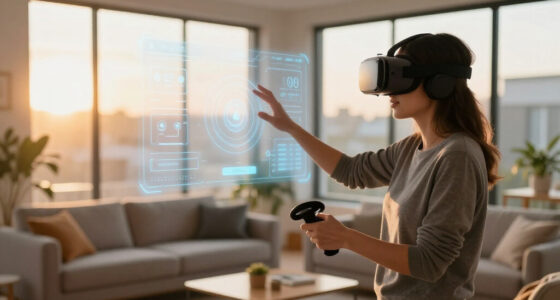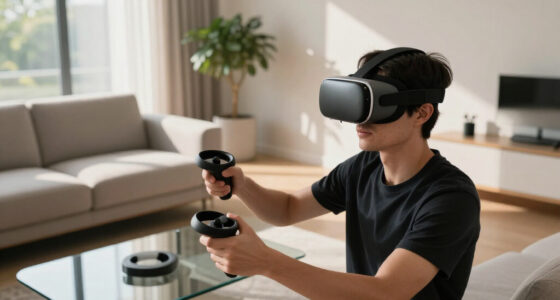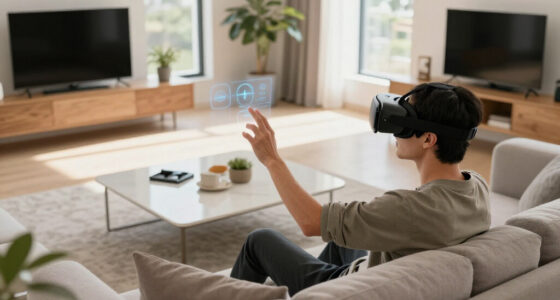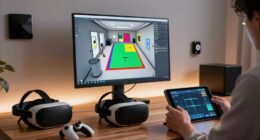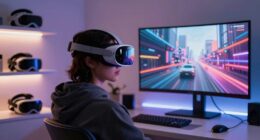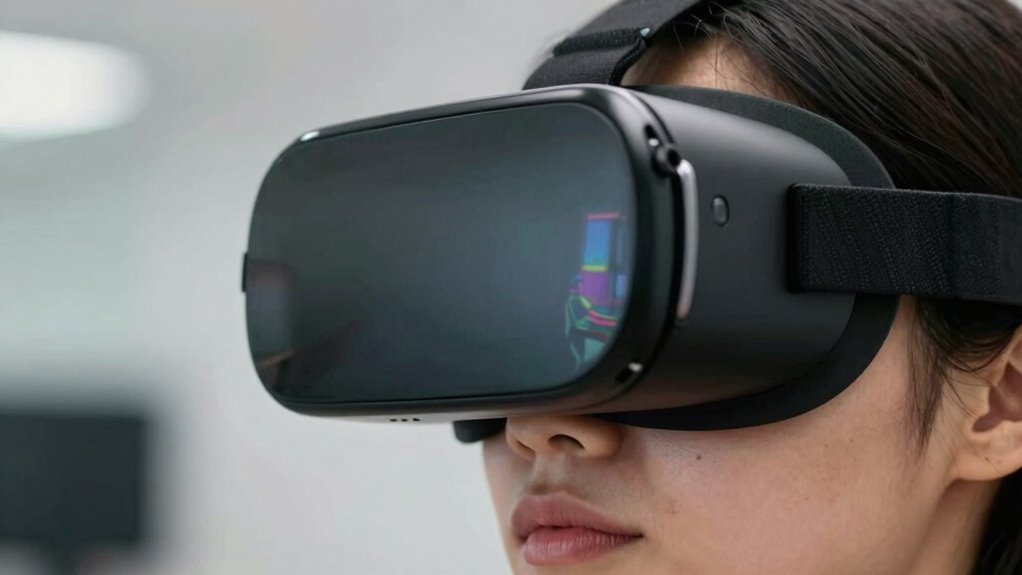
VR optics directly impact your eye comfort and focus by shaping how clearly and comfortably you see virtual images. Poorly designed lenses can cause distortion, double images, or eyestrain, especially if they don’t match your eye measurements or IPD. Good optics minimize visual strain, improve clarity, and reduce fatigue during extended use. Advances in technology, like adaptive optics, aim to personalize your experience further. To learn how these innovations can enhance your VR sessions, keep exploring the details.

Play games on Amazon Luna for your next adventure, included with Prime
- A rotating selection of games, no download needed
- Play on TV, laptop or phone
- Fast, free delivery for your gear, too
Key Takeaways
- Proper VR optics minimize lens distortion, reducing eye strain and visual fatigue during extended use.
- Accurate alignment and IPD adjustment ensure comfortable focus and prevent eye fatigue.
- Advanced optics technologies, like adaptive lenses, personalize visuals to improve comfort and clarity.
- Poorly designed optics can cause blurring, double images, and difficulty focusing, leading to discomfort.
- Maintaining visual clarity through optimized optics enhances overall VR experience and reduces headaches.

When it comes to enjoying virtual reality, your eye comfort should be a top priority, especially since prolonged use can lead to fatigue and strain. The design of VR optics plays an important role in how comfortable your eyes feel and how well you can focus on the virtual environment. One key factor is visual acuity, or how clearly you see objects at various distances. VR headsets aim to match your natural vision, but if the optics aren’t optimized, they can cause blurring or double images that strain your eyes. This discomfort can lead to headaches and difficulty concentrating, which diminishes your overall experience.
Prioritizing eye comfort in VR ensures clearer visuals and reduces fatigue during extended use.
Lens distortion is another critical aspect of VR optics that directly impacts eye comfort. Many VR headsets use lenses to magnify the images displayed on screens very close to your eyes. However, these lenses often introduce geometric distortions—curving straight lines or warping images—that your eyes must work harder to interpret correctly. When lens distortion isn’t properly managed, it can cause visual discomfort and make focusing more difficult, especially during extended sessions. Manufacturers try to minimize this by designing lenses that compensate for distortion, but imperfections can still occur, particularly if the headset isn’t precisely fitted or if your eye measurements differ from the headset’s assumptions.
Your eyes are naturally adapted to see objects at different distances with minimal effort, but VR optics can interfere with this process. If the lenses don’t align perfectly with your interpupillary distance (IPD), it can cause a mismatch in focal points, forcing your eyes to strain more than they should. This misalignment can lead to visual fatigue and reduce your ability to focus sharply on the virtual scene. Some headsets offer adjustable lenses or IPD settings to help you customize the fit, which can considerably improve visual clarity and reduce eye strain. Ensuring proper calibration and lens alignment is essential for maintaining comfort during extended VR sessions. Additionally, manufacturers are exploring adaptive optics to further enhance visual comfort by dynamically adjusting to individual eye differences. These advancements aim to provide a more natural visual experience, reducing eye fatigue over time.
As an affiliate, we earn on qualifying purchases.
Frequently Asked Questions
How Do Different Lens Materials Impact Eye Comfort?
Different lens materials impact your eye comfort mainly through lens durability and material transparency. Durable materials resist scratches and damage, making your experience smoother and safer, while transparent materials reduce eye strain by providing clear, crisp visuals. When choosing VR optics, opt for lenses that balance strength with high transparency, ensuring comfortable, consistent focus without causing discomfort or fatigue during extended use.
Can VR Optics Cause Long-Term Eye Health Issues?
VR optics can potentially cause long-term eye health issues if you experience frequent eye strain or visual fatigue. Prolonged use may lead to discomfort, blurred vision, or headaches. To minimize risks, take regular breaks, adjust the headset properly, and guarantee your device’s lenses are clean and well-maintained. If you notice persistent symptoms, consult an eye care professional to prevent any lasting damage and maintain healthy vision habits.
What Role Does Eye Prescription Adjustment Play in VR Use?
Prescription customization plays a vital role in VR use by reducing eye strain and ensuring clear focus. When your VR headset’s optics match your eye prescription, you experience less discomfort and sharper visuals. Without proper adjustments, you might strain your eyes or see blurred images. Always update your prescription with the device, and consider custom lenses if needed, to enhance comfort and prevent long-term eye issues.
Are There Specific VR Designs Better for Sensitive Eyes?
Yes, certain VR designs are better for sensitive eyes. Look for models emphasizing improved VR ergonomics, such as adjustable IPD and lighter weight, to reduce strain. Devices with high-quality optics and reduced glare help minimize eye sensitivity issues. You should also choose headsets with customizable fit and ventilation to enhance comfort. Prioritize these features, and you’ll experience less fatigue and better focus during your VR sessions.
How Does Lens Coating Affect Visual Clarity and Comfort?
Lens coatings are like a shield for your eyes, shaping your VR experience. They improve visual clarity by reducing glare and minimizing color distortion, making images sharper and more vibrant. Coatings also help prevent eye strain by blocking harmful reflections, allowing you to focus longer without discomfort. So, choosing lenses with quality coatings means you enjoy clearer, more comfortable visuals, enhancing your overall VR immersion.
As an affiliate, we earn on qualifying purchases.
Conclusion
In the domain of VR, choosing the right optics can mean the difference between a seamless adventure and a headache-filled quest. You’ll want to prioritize comfort and clear focus to keep your experience immersive and strain-free. Think of it as the Holy Grail of virtual reality—perfectly balanced optics that let you lose yourself without losing your sight. So, don’t settle for less; after all, even in a digital age, your eyes deserve the best, just like a knight’s trusty steed.
As an affiliate, we earn on qualifying purchases.
As an affiliate, we earn on qualifying purchases.
Fall Picks
fall essentials
As an affiliate, we earn on qualifying purchases.