
A dedicated VR router can outperform expensive whole-home setups by providing a focused, reliable connection built specifically for your virtual reality needs. It minimizes lag, reduces interruptions, and prioritizes VR traffic to guarantee smooth gameplay and streaming. Plus, it offers better network security, customization, and easier management tailored to immersive experiences. If you want to learn how this specialized setup can enhance your VR adventures even further, keep exploring the details.

Play games on Amazon Luna for your next adventure, included with Prime
- A rotating selection of games, no download needed
- Play on TV, laptop or phone
- Fast, free delivery for your gear, too
Key Takeaways
- A dedicated VR router offers optimized, low-latency connections specifically for VR, outperforming general-purpose whole-home systems.
- It provides enhanced security and network control tailored to VR devices, reducing vulnerabilities.
- Custom QoS settings prioritize VR traffic, ensuring smoother experiences without bandwidth competition.
- Simplified management isolates VR issues quickly, minimizing disruptions during immersive sessions.
- Investing in a dedicated VR router ensures consistent high-quality performance, surpassing the capabilities of more expensive, multi-purpose setups.
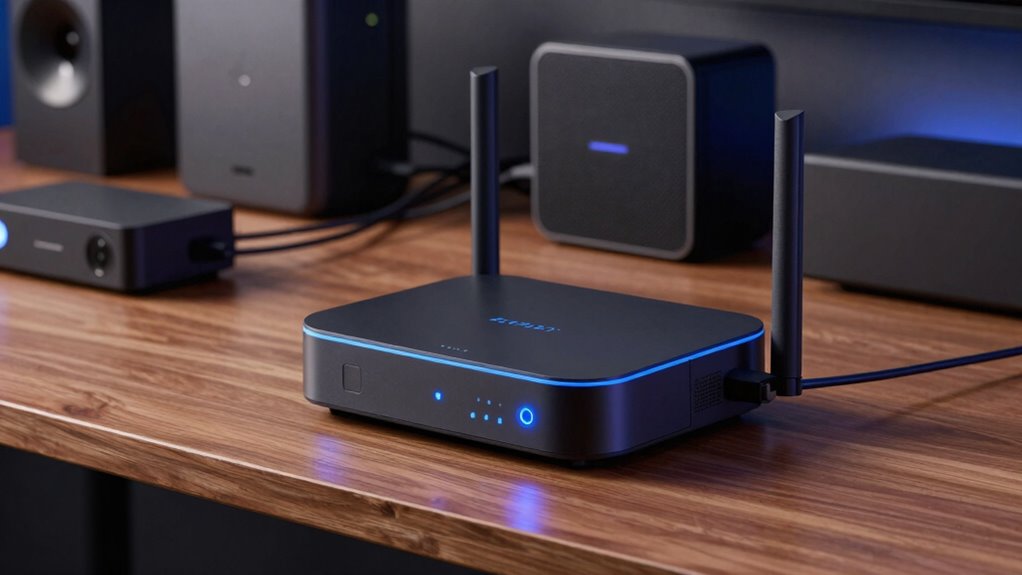
A dedicated VR router offers significant advantages for anyone serious about immersive virtual reality experiences. Unlike standard routers, these devices are fine-tuned specifically for VR, providing a smoother, more reliable connection. When you’re immersed in a virtual environment, even minor lag or interruptions can ruin the experience, and a dedicated VR router minimizes that risk by prioritizing VR traffic. You won’t have to worry about competing devices hogging bandwidth—your VR setup gets the full focus it needs for seamless gameplay and streaming. This targeted approach guarantees you don’t experience frustrating disconnects or latency issues that often plague multi-purpose, whole-home setups.
Wireless security is another key benefit. With a dedicated VR router, you get tighter control over your network, so you can implement security measures tailored to your VR activities. You won’t need to rely on generic security settings that may leave vulnerabilities exposed; instead, you can configure encryption protocols, set up guest networks, and monitor device access specifically for your VR hardware. This dedicated focus reduces the chances of unauthorized access, keeping your immersive sessions private and safe. Plus, since the VR router is dedicated, it’s less likely to be overwhelmed by security scans or routine network tasks that slow down broader home networks.
Another major advantage is network customization. With a dedicated VR router, you can fine-tune your network parameters for superior VR performance. You can set specific quality of service (QoS) rules that prioritize VR traffic over other devices, ensuring your gaming or virtual experiences stay uninterrupted. You also have the flexibility to adjust bandwidth allocation, assign static IP addresses, and configure port forwarding for specific VR applications or accessories. This level of customization isn’t typically available with standard routers designed for general use. Instead, you get a streamlined, tailored setup that adapts to your VR needs, giving you consistent, high-quality experiences every time.
A dedicated VR router simplifies your network management by focusing solely on your VR setup. You don’t need to juggle multiple device connections or troubleshoot conflicts caused by other household gadgets. It’s easier to identify issues and implement targeted solutions, saving you time and frustration. Plus, because it’s optimized specifically for VR, you’ll notice faster response times and lower latency, which are vital for realistic and immersive virtual environments. All these features combined make a dedicated VR router a smarter investment, especially if you’re committed to pushing the limits of your virtual experiences without the distractions or compromises that come with a broader, less specialized network setup. Additionally, a dedicated device allows for better network security and control, further enhancing your overall VR experience.
As an affiliate, we earn on qualifying purchases.
Frequently Asked Questions
Can a VR Router Improve Latency for Other Devices?
Yes, a VR router can improve latency for other devices by managing network congestion more effectively. It prioritizes VR traffic, reducing signal interference and ensuring smoother performance. This dedicated focus prevents bandwidth hogging from other devices, leading to lower latency. As a result, you’ll experience less lag and better overall connectivity, even when multiple devices are active, making your entire network more efficient and responsive.
How Does a Dedicated VR Router Impact Overall Network Security?
A dedicated VR router enhances your network security by enabling network segmentation, isolating your VR devices from other connected devices. This separation reduces potential vulnerabilities and limits access to sensitive data. Additionally, it boosts privacy by preventing unauthorized devices from intercepting VR traffic. By focusing on dedicated hardware, you gain better control over security protocols, ensuring a safer, more private environment for your VR experiences and overall home network.
Is a VR Router Compatible With All VR Headsets?
Think of a dedicated VR router like a universal adapter—designed to connect seamlessly with various VR headsets. While most VR headsets are compatible, you need to check specific models for VR headset compatibility. Some routers might require firmware updates to guarantee peak performance. So, before buying, verify your VR headset’s compatibility and keep the router firmware updated for the best experience.
What Is the Setup Process for a Dedicated VR Router?
You start by connecting your VR router to your modem with an Ethernet cable, ensuring device compatibility. Then, access the router’s network configuration page through a browser, usually by entering its IP address. Follow the setup wizard to customize your network, set a strong Wi-Fi password, and optimize settings for low latency. Once configured, connect your VR headset to the dedicated network for a seamless, immersive experience.
Does a VR Router Require Additional Software or Firmware?
A VR router typically doesn’t require extra software, but firmware customization can enhance its performance. You might need to update or customize firmware for ideal hardware compatibility, especially with VR devices. Most routers come with user-friendly interfaces, making firmware updates straightforward. Make sure your device supports the latest firmware to improve stability and reduce latency, which is vital for an immersive VR experience.
As an affiliate, we earn on qualifying purchases.
Conclusion
Imagine having a router built just for your VR needs—you might think a whole-home setup has it all covered. But what if that dedicated VR router not only outperforms the more expensive system but also keeps you ahead of the game? It’s not just about speed; it’s about seamless immersion and uninterrupted play. The choice is clearer than ever—will you settle for less or take the leap and realize your true VR potential? The decision is yours.
As an affiliate, we earn on qualifying purchases.
VR device network security router
As an affiliate, we earn on qualifying purchases.
As an affiliate, we earn on qualifying purchases.
Fall Picks
fall essentials
As an affiliate, we earn on qualifying purchases.