When selecting the best processors for VR, performance and latency are paramount. The AMD Ryzen 7 5800X3D stands out as the top overall pick thanks to its innovative 3D V-Cache technology that boosts gaming responsiveness. For those on a tighter budget, the AMD Ryzen 5 5600 offers solid performance at a lower cost, while the AMD Ryzen 9 9950X3D provides extreme multi-core power for demanding VR experiences. The main tradeoffs involve balancing raw power, price, and future compatibility, as no single processor excels at everything. Keep reading for a detailed breakdown of these options to find your best fit.

Play games on Amazon Luna for your next adventure, included with Prime
- A rotating selection of games, no download needed
- Play on TV, laptop or phone
- Fast, free delivery for your gear, too
Key Takeaways
- The Ryzen 7 5800X3D delivers excellent gaming performance with innovative cache technology, making it ideal for high-fidelity VR.
- Higher core count CPUs like the Ryzen 9 9950X3D excel in multi-threaded tasks but are often overkill for typical VR gaming needs.
- Price-to-performance varies significantly; mid-range options like the Ryzen 5 5600 can handle most VR titles without breaking the bank.
- Future-proofing is tied to socket compatibility and PCIe support, which higher-end models tend to offer more readily.
- Thermal management and cooling are critical; top-performing CPUs often require better cooling solutions to maintain stability during long VR sessions.
| AMD Ryzen 7 5800X3D 8-core, 16-Thread Desktop Processor with AMD 3D V-Cache Technology |  | Best Overall for Gaming Performance | Processor Series: Ryzen 7 | Processor Speed: 4.5 GHz | Processor Socket: Socket AM4 | VIEW LATEST PRICE | See Our Full Breakdown |
| AMD Ryzen 5 5600 6-Core, 12-Thread Unlocked Desktop Processor with Wraith Stealth Cooler |  | Best Value for Mid-Range VR Gaming | Processor Series: Ryzen 5 | Processor Speed: 4.4 GHz | Processor Socket: Socket AM4 | VIEW LATEST PRICE | See Our Full Breakdown |
| AMD Ryzen 7 9800X3D 8-Core, 16-Thread Desktop Processor |  | Best for High-End Gaming and Productivity | Processor Series: Ryzen 7 | Processor Speed: 4.7 GHz | Processor Socket: Socket AM5 | VIEW LATEST PRICE | See Our Full Breakdown |
| AMD Ryzen 9 9950X3D 16-Core Processor |  | Best for Content Creators and Heavy Multitasking | Core Count: 16 | Max Boost Clock: 5.7 GHz | Base Clock: 4.3 GHz | VIEW LATEST PRICE | See Our Full Breakdown |
| AMD Ryzen 7 7800X3D 8-Core, 16-Thread Desktop Processor | 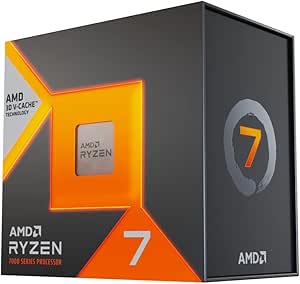 | Best for Gaming and General VR Performance | Processor Series: Ryzen 7 | Processor Speed: 4.2 GHz | Processor Cores: 8 | VIEW LATEST PRICE | See Our Full Breakdown |
| AMD Ryzen 5 9600X 6-Core, 12-Thread Unlocked Desktop Processor |  | Best for Mid-Range VR Gamers on a Budget | Cores: 6 | Threads: 12 | Max Boost Clock: 5.4 GHz | VIEW LATEST PRICE | See Our Full Breakdown |
| processors for VR | Processor Series | Processor Speed | Processor Cores | Processor Socket |
|---|---|---|---|---|
| AMD Ryzen 7 5800X3D 8-core | Ryzen 7 | 4.5 GHz | 8 | Socket AM4 |
| AMD Ryzen 5 5600 6-Core | Ryzen 5 | 4.4 GHz | 6 | Socket AM4 |
| AMD Ryzen 7 9800X3D 8-Core | Ryzen 7 | 4.7 GHz | 8 | Socket AM5 |
| AMD Ryzen 9 9950X3D 16-Core Pr | — | — | — | — |
| AMD Ryzen 7 7800X3D 8-Core | Ryzen 7 | 4.2 GHz | 8 | — |
| AMD Ryzen 5 9600X 6-Core | — | — | — | — |
More Details on Our Top Picks
AMD Ryzen 7 5800X3D 8-core, 16-Thread Desktop Processor with AMD 3D V-Cache Technology
The AMD Ryzen 7 5800X3D stands out as the best choice for gamers seeking maximum performance, thanks to its innovative 3D V-Cache technology that significantly boosts gaming frame rates. Compared with the Ryzen 7 9800X3D, it offers comparable core counts but benefits from wider compatibility and lower power requirements, making it more practical for most gaming builds. The large 96MB L3 cache enhances responsiveness and reduces latency during intensive gaming sessions. However, it requires a compatible PCIe 4.0 motherboard and doesn’t include a cooler, which adds to overall costs. This processor is ideal for dedicated gamers who want top-tier performance without the need for extreme overclocking or content creation. The main tradeoff is that it’s optimized strictly for gaming, so productivity tasks may not see the same gains.
Pros:- Exceptional gaming performance due to large L3 cache
- Supports PCIe 4.0 for faster data transfer
- High clock speeds for gaming-centric workloads
Cons:- No included cooler, requiring additional purchase
- Limited to PCIe 4.0 compatible motherboards
- No integrated graphics, so a discrete GPU is necessary
Best for: High-end gaming enthusiasts building a performance-focused rig
Not ideal for: Content creators or streamers needing multi-threaded productivity performance on a budget
- Processor Series:Ryzen 7
- Processor Speed:4.5 GHz
- Processor Socket:Socket AM4
- Secondary Cache:100 MB
- Wattage:105 watts
- Processor Threads:16
- Processor Cores:8
- Platform:Windows
Our verdict“This CPU is perfect for gamers who want the best possible performance in demanding titles, with some tradeoffs in compatibility and cooling costs.”
AMD Ryzen 5 5600 6-Core, 12-Thread Unlocked Desktop Processor with Wraith Stealth Cooler
The Ryzen 5 5600 offers a balanced mix of performance and affordability for VR gaming enthusiasts who don’t need the extreme power of higher-end chips like the Ryzen 9 9950X3D. Its 6 cores and 12 threads deliver smooth multitasking and gaming performance at a reasonable price point. Overclocking support allows users to squeeze extra performance, especially when paired with the included Wraith Stealth cooler. While it may fall short in multi-core heavy workloads compared to the Ryzen 7 7800X3D, it provides enough power for most VR titles without requiring a costly cooling setup. Its main limitation is the absence of integrated graphics, making a discrete GPU essential, and limited details on software support updates. This CPU makes sense for budget-conscious gamers wanting solid VR performance without overpaying.
Pros:- Good performance for its price point
- Supports overclocking for extra performance
- Includes a capable Wraith Stealth cooler
Cons:- No integrated graphics, requiring a discrete GPU
- Limited future-proofing against more demanding VR titles
- Wattage may require a decent power supply
Best for: Budget-conscious gamers building a VR-ready system
Not ideal for: Streamers or content creators needing higher core counts for multitasking
- Processor Series:Ryzen 5
- Processor Speed:4.4 GHz
- Processor Socket:Socket AM4
- Secondary Cache:32 MB
- Wattage:65 watts
- Processor Threads:12
- Processor Cores:6
Our verdict“This processor provides excellent value for VR gamers on a budget who prioritize smooth gameplay over multi-core multitasking.”
AMD Ryzen 7 9800X3D 8-Core, 16-Thread Desktop Processor
The Ryzen 7 9800X3D exemplifies cutting-edge Zen 5 technology, offering up to 5.2GHz clock speeds and 8 cores with 16 threads. Its large 96MB L3 cache outperforms many competitors in gaming and workflows that benefit from cache size, like VR and 3D rendering. Compared to the Ryzen 7 5800X3D, it provides higher clock speeds but demands a more robust cooling solution and a compatible AM5 motherboard, which can add to overall system costs. Its thermal performance improvements make it suitable for sustained workloads, but the higher power draw (140W) means a more substantial power supply is required. This CPU is best suited for enthusiasts willing to invest in premium cooling and platform upgrades, aiming for top-tier VR and gaming performance.
Pros:- Extremely high clock speeds for demanding VR titles
- Large cache improves responsiveness and frame stability
- Built on Zen 5 architecture for future-proofing
Cons:- Requires an expensive AM5 motherboard and new cooling solutions
- High power consumption, increasing system costs
- Premium price point may be prohibitive for some users
Best for: Enthusiasts seeking maximum VR performance with overclocking headroom
Not ideal for: Casual gamers or those on a tight budget due to high cost and platform requirements
- Processor Series:Ryzen 7
- Processor Speed:4.7 GHz
- Processor Socket:Socket AM5
- Secondary Cache:8 MB
- Wattage:140 watts
- Processor Threads:16
- Processor Cores:8
Our verdict“This CPU suits high-end users who want the absolute best in VR performance, accepting higher costs and platform complexity.”
AMD Ryzen 9 9950X3D 16-Core Processor
The Ryzen 9 9950X3D offers an impressive 16 cores and 32 threads, making it an excellent choice for both VR enthusiasts and content creators who need multitasking power. Its maximum boost clock of 5.7 GHz ensures smooth performance in demanding VR applications, especially when combined with multi-threaded workloads like video editing or 3D rendering. The Zen 5 architecture provides efficiency and future-proofing, but the high power draw (potentially 170W) and premium price mean it’s not for budget builds. Compared to the Ryzen 7 7800X3D, it provides a significant boost in core count, but at the expense of increased cooling and power requirements. This processor is ideal for users who want the best of both worlds: VR gaming and intensive productivity.
Pros:- Massive core and thread count for multitasking
- High boost clock speeds enhance VR and productivity
- Future-proof architecture based on Zen 5
Cons:- Requires a high-end AM5 motherboard and robust cooling
- High power consumption increases system costs
- Expensive compared to mid-range options
Best for: Power users combining VR gaming with demanding creative workflows
Not ideal for: Casual gamers or users with limited budgets due to high cost and power needs
- Core Count:16
- Max Boost Clock:5.7 GHz
- Base Clock:4.3 GHz
- Form Factor:Desktops
- Architecture:Zen 5
- Socket:AM5
Our verdict“This processor is designed for users who need exceptional multitasking and VR performance, with the willingness to invest heavily.”
AMD Ryzen 7 7800X3D 8-Core, 16-Thread Desktop Processor
The Ryzen 7 7800X3D leverages 5nm technology to deliver a powerful 8-core, 16-thread configuration with a base clock of 4.2 GHz. Its large 96MB L3 cache enhances VR responsiveness and reduces latency, making it a solid choice for gaming and VR experiences. Compared with the Ryzen 5 5600, it offers higher clock speeds and larger cache, translating to better VR frame rates and system responsiveness. Its integrated AMD Radeon Graphics make it suitable for systems that may not have a discrete GPU, but the TDP of 120W requires a capable cooling solution. Designed for gamers and enthusiasts who want a fast, efficient CPU that excels in VR, it balances performance and cost effectively.
Pros:- Excellent gaming and VR performance with large cache
- Built on 5nm process technology for efficiency
- Includes integrated Radeon Graphics for basic visual needs
Cons:- No high-core count for heavy multitasking
- Limited to 120W TDP, which requires quality cooling
- Less suitable for intensive productivity workflows
Best for: Gamers and VR users seeking a balance of speed, efficiency, and integrated graphics
Not ideal for: Heavy content creators or multi-taskers needing many cores for productivity
- Processor Series:Ryzen 7
- Processor Speed:4.2 GHz
- Processor Cores:8
- Threads:16
- Cache Memory:96 MB
- Socket:AM5
Our verdict“This CPU offers a compelling mix of gaming and VR performance with integrated graphics, ideal for mainstream enthusiasts.”
AMD Ryzen 5 9600X 6-Core, 12-Thread Unlocked Desktop Processor
The AMD Ryzen 5 9600X stands out for delivering solid VR performance at a more accessible price point compared to higher-end options like the Ryzen 7 5800X3D. Its 6 cores and 12 threads, combined with a high boost clock of 5.4 GHz, ensure smooth gameplay and reduced latency, essential for immersive VR experiences. Unlike the Ryzen 7 9800X3D, which offers more cores for multitasking, this CPU focuses on single-threaded performance, which benefits most VR applications. However, its lack of an included cooler and the need for a compatible motherboard with PCIe 5.0 support mean additional costs and setup considerations. This processor makes the most sense for gamers seeking strong VR performance without stretching into high-end workstation territory, but it’s less suitable for those wanting maximum multitasking or future-proofing.
Pros:- Provides high gaming performance with over 100 FPS in popular titles
- Unlocked for overclocking to boost VR responsiveness
- Supports DDR5-5600 memory for improved speed
Cons:- Cooler not included, adding to initial setup costs
- Requires a compatible motherboard with PCIe 5.0 support, which can be pricier
Best for: VR gamers who want reliable performance at a budget-friendly price and already plan to invest in a compatible AM5 motherboard.
Not ideal for: Power users who require extensive multitasking or future-proofing with PCIe 5.0 support without additional upgrades.
- Cores:6
- Threads:12
- Max Boost Clock:5.4 GHz
- Cache:38 MB
- Architecture:Zen 5
- Memory Support:DDR5-5600
- Socket:AM5
- PCIe Support:PCIe 5.0 on select motherboards
- Cooler Included:No
Our verdict“This pick is best suited for mid-range VR enthusiasts who prioritize gaming performance and are comfortable with a slightly involved setup.”

How We Picked
To determine the best processors for VR, I focused on performance metrics critical for immersive experiences, such as single-core and multi-core performance, latency, and cache size. Compatibility with current and upcoming VR hardware, along with value for cost, also played a key role. I compared these CPUs against benchmarks relevant to VR gaming, considering power efficiency and thermal management, which impact long gaming sessions. The ranking reflects a balance of raw performance, future readiness, and price, ensuring each option serves a specific user need or budget level.| processors for VR | Processor Series | Processor Socket |
|---|---|---|
| AMD Ryzen 7 5800X3D 8-core | Ryzen 7 | Socket AM4 |
| AMD Ryzen 5 5600 6-Core | Ryzen 5 | Socket AM4 |
| AMD Ryzen 7 9800X3D 8-Core | Ryzen 7 | Socket AM5 |
| AMD Ryzen 9 9950X3D 16-Core Pr | — | — |
| AMD Ryzen 7 7800X3D 8-Core | Ryzen 7 | — |
| AMD Ryzen 5 9600X 6-Core | — | — |
Factors to Consider When Choosing Best Processors For VR
Choosing the best processor for VR involves more than just raw speed. It requires understanding how CPU power influences latency, graphics rendering, and overall experience. I recommend considering these key factors to make an informed purchase that balances performance, budget, and longevity.Performance and Core Count
VR gaming benefits most from high single-core performance to minimize latency, but multi-core capabilities are vital for multitasking and future VR content. Look for CPUs with at least 6 cores and high clock speeds to ensure smooth, responsive experiences. Over time, VR environments become more complex, so investing in a processor with additional cores can future-proof your setup without significantly increasing cost.
Cache Size and Technology
Cache size directly affects how quickly your system can access frequently used data, reducing latency—crucial for VR’s demanding graphics. The AMD Ryzen 7 5800X3D’s innovative 3D V-Cache is a game-changer, significantly boosting gaming responsiveness. When comparing CPUs, prioritize models with larger cache sizes or advanced cache technologies for a smoother VR experience.
Compatibility and Upgradability
Ensure your chosen CPU matches your motherboard’s socket and supports your current or planned VR hardware. Future VR titles are likely to leverage new technologies like PCIe 5.0, so selecting a compatible processor can extend your system’s lifespan. Also, consider whether your cooling solution is adequate, especially for higher-performance chips that generate more heat.
Price-to-Performance Ratio
VR requires a balance between cost and power. While high-end processors like the Ryzen 9 9950X3D offer top-tier performance, they come with a hefty price tag that might not suit every user. Mid-range options such as the Ryzen 5 5600 provide excellent value, handling most VR tasks effectively without overspending. Avoid over-investing in power that won’t translate into better VR experiences.
Thermal and Power Considerations
Powerful CPUs demand good cooling solutions to prevent thermal throttling, which can cause stuttering or lag during VR sessions. Ensure your case and cooling setup support the heat output of your chosen processor. Investing in quality cooling can maintain system stability and prolong component lifespan, especially during long or intense VR gaming sessions.
Frequently Asked Questions
Is a higher core count essential for VR performance?
While more cores can help with multitasking and future-proofing, VR performance primarily depends on high single-core speeds and low latency. Most current VR titles benefit more from a fast, responsive CPU rather than an extremely high core count. However, if you plan to run demanding multitasking or streaming alongside VR, a higher core count becomes more advantageous.
Should I prioritize CPU cache for VR gaming?
Yes, cache size can influence how quickly your system accesses data, affecting latency and responsiveness in VR. The AMD Ryzen 7 5800X3D, with its advanced 3D V-Cache, demonstrates how larger cache can improve gaming fluidity. For VR, a processor with ample cache can reduce lag and stutter, making the experience more seamless.
Are high-end CPUs necessary for all VR setups?
Not necessarily. Many mid-range processors like the Ryzen 5 5600 are capable of delivering excellent VR experiences, especially if paired with a good GPU. High-end CPUs are more suited for users who engage in demanding VR applications, streaming, or future-proofing. Budget-conscious buyers can achieve great results without splurging on the most expensive options.
How important is future-proofing when choosing a processor for VR?
Future-proofing is relevant because VR technology continues to evolve rapidly. Choosing a processor with support for upcoming standards like PCIe 5.0 and higher core counts can extend your system’s relevance. However, balancing this with your current needs and budget is key—overinvesting for future games that are not yet released can lead to unnecessary expenses.
What role does cooling play in VR CPU performance?
Cooling is vital because VR sessions often involve extended periods of high CPU load. Overheated CPUs can throttle, causing lag and stuttering that break immersion. Investing in a quality cooling solution ensures your processor maintains optimal speeds and prevents thermal issues, ultimately delivering a more stable and enjoyable VR experience.
Conclusion
For most users seeking a balanced VR experience, the AMD Ryzen 7 5800X3D offers the best overall performance thanks to its innovative cache technology. Budget-conscious gamers will find the Ryzen 5 5600 provides excellent value without sacrificing too much responsiveness. Power users or those aiming for future-proofing should consider the Ryzen 9 9950X3D for its high core count and performance headroom. Beginners or casual VR enthusiasts can confidently choose mid-range options, while advanced users should look toward high-end models for demanding applications.
As an affiliate, we earn on qualifying purchases.Fall Picks
fall essentials