Mixed reality headsets blend virtual environments with your real surroundings, and choosing the right one comes down to how much you value passthrough quality, standalone convenience versus PC-tethered power, and overall comfort. My top pick overall is the Meta Quest 3 512GB, which delivers the strongest balance of color passthrough, standalone performance, and content library in this lineup. If budget matters most, the Meta Quest 3S 128GB offers much of the same mixed reality experience at a lower tier, while the HTC Vive Focus Vision stands out for buyers who want a headset that doubles as a serious PC VR machine. The main tradeoffs you will face are display and passthrough fidelity versus price, standalone simplicity versus cable-based PC streaming, and full-featured flagship models versus stripped-down or legacy hardware. Keep reading for the full breakdown of all 13 headsets and which buyer each one actually suits.

Play games on Amazon Luna for your next adventure, included with Prime
- A rotating selection of games, no download needed
- Play on TV, laptop or phone
- Fast, free delivery for your gear, too
Complete the kit

Key Takeaways
- The Meta Quest 3 512GB earned the top spot because it is the only headset in this lineup that combines high-quality color passthrough, a large standalone content library, and optional PC connectivity without compromise.
- The Quest 3S 128GB is the clear value pick: it shares the same chip and mixed reality sensors as the Quest 3, so buyers mostly sacrifice display sharpness and storage, not core capability.
- HTC‘s entries (XR Elite, Focus Vision, Deluxe Pack) split sharply by use case — the Focus Vision is the only truly strong pick for PC VR streaming, while the XR Elite trades power for a lighter, glasses-style design.
- Legacy Windows Mixed Reality hardware like the Samsung Odyssey+ and Lenovo Explorer no longer makes sense for most buyers due to discontinued platform support, despite their historically good optics.
- Renewed Premium Quest 3 units and bundle variants (Gorilla Tag) only make sense for specific buyers — renewed saves money with a warranty, while bundles only pay off if you actually want the included software.
| Meta Quest 3 512GB VR Headset (Renewed Premium) |  | Best Overall | Storage: 512GB | Processor: Snapdragon XR2 Gen 2 | Memory: 8GB RAM | VIEW LATEST PRICE | See Our Full Breakdown |
| HTC Vive XR Elite Virtual Reality Headset with Controllers | 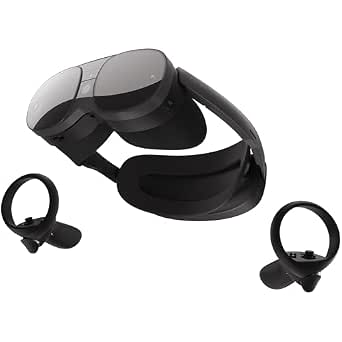 | Best for PC VR Flexibility | Display resolution: 1920 × 1920 per eye | Field of view: 110 degrees | Processor: Qualcomm Snapdragon XR2 | VIEW LATEST PRICE | See Our Full Breakdown |
| Meta Quest Pro 256GB VR/MR Headset with Optima Academy Online Field Trips |  | Best for Education and Multitasking | Storage: 256GB | RAM: 12GB | Sensors: 10 VR/MR sensors | VIEW LATEST PRICE | See Our Full Breakdown |
| Galaxy XR Virtual Reality Headset with Mixed Reality, Silver |  | Best Lightweight Comfort (With Caveats) | Color: Silver | Display: High-resolution | Audio: Spatial audio with immersive surround sound | VIEW LATEST PRICE | See Our Full Breakdown |
| Meta Quest 3 512GB VR Headset with Gorilla Tag Bundle |  | Best Bundle for Families | Storage: 512GB | Processor: Snapdragon XR2 Gen 2 | Memory: 8GB RAM | VIEW LATEST PRICE | See Our Full Breakdown |
| HTC Vive Focus Vision Mixed Reality and PC VR Headset with Controllers |  | Best Premium Pick | Display resolution: 2448 x 2448 pixels per eye (5K total) | Field of view: Up to 120° | Refresh rate: 90 Hz | VIEW LATEST PRICE | See Our Full Breakdown |
| HTC VIVE Focus Vision XR Headset with DisplayPort PC VR Streaming Kit |  | Best for Enterprise and Productivity | Display resolution: 2448 × 2448 pixels per eye; 5K total | Field of view: Up to 120° | Refresh rate: 90 Hz | VIEW LATEST PRICE | See Our Full Breakdown |
| HTC VIVE XR Elite Mixed Reality & PC VR Headset with Controllers (Deluxe Pack) |  | Best Lightweight Convertible | Resolution: 3840 x 1920 combined | Field of view: Up to 110° | Refresh rate: 90 Hz | VIEW LATEST PRICE | See Our Full Breakdown |
| Meta Quest 3 128GB Mixed Reality Headset (Renewed Premium) |  | Best Value Entry Point | Storage: 128 GB | Processor: Snapdragon XR2 Gen 2 | Display: 4K+ Infinite Display, nearly 30% higher resolution than Quest 2 | VIEW LATEST PRICE | See Our Full Breakdown |
| Samsung HMD Odyssey+ Windows Mixed Reality Headset with 2 Wireless Controllers |  | Best Budget PC-Tethered Display | Display: 3.5-inch anti-SDE AMOLED, 2880 x 1600 | Field of view: 110 degrees | Audio: Built-in AKG headphones with 360° spatial sound and mic | VIEW LATEST PRICE | See Our Full Breakdown |
| Meta Quest 3S 128GB VR Headset |  | Best Entry Point for Mixed Reality | Storage: 128GB | Connectivity: Wireless | Audio: USB-C headphones; 3.5mm headphones require a separately sold USB-C adapter | VIEW LATEST PRICE | See Our Full Breakdown |
| Meta Quest 3S 128GB VR Headset – Gorilla Tag Bundle |  | Best for Gorilla Tag Fans | Storage: 128GB | RAM: 8GB | Processor: Snapdragon XR2 Gen 2 | VIEW LATEST PRICE | See Our Full Breakdown |
| Lenovo Explorer Mixed Reality Headset |  | Best Lightweight Windows Option | Model: G0A20001WW | Display resolution: 2880 × 1440 | Weight: Less than 1 lb | VIEW LATEST PRICE | See Our Full Breakdown |
| mixed reality headset | Connectivity |
|---|---|
| Meta Quest 3 512GB VR Headset | Wireless, untethered |
| HTC Vive XR Elite Virtual Real | Wi-Fi, USB Type-C |
| Meta Quest Pro 256GB VR/MR Hea | — |
| Galaxy XR Virtual Reality Head | — |
| Meta Quest 3 512GB VR Headset | — |
| HTC Vive Focus Vision Mixed Re | DisplayPort PC streaming; Wi-Fi streaming |
| HTC VIVE Focus Vision XR Heads | DisplayPort PC VR streaming; Wi-Fi streaming |
| HTC VIVE XR Elite Mixed Realit | Standalone, wireless PC VR, or USB streaming |
| Meta Quest 3 128GB Mixed Reali | — |
| Samsung HMD Odyssey+ Windows M | — |
| Meta Quest 3S 128GB VR Headset | Wireless |
| Meta Quest 3S 128GB VR Headset | Wireless |
| Lenovo Explorer Mixed Reality | — |
More Details on Our Top Picks
Meta Quest 3 512GB VR Headset (Renewed Premium)
The Meta Quest 3 512GB stands out as the most balanced package in this roundup. Its Snapdragon XR2 Gen 2 chip and 8GB of RAM deliver sharper visuals and smoother mixed reality than the original XR2 found in the HTC Vive XR Elite, and the dual RGB passthrough cameras make AR overlays feel genuinely usable rather than grainy. The 512GB of storage matters more than it sounds — compared with the Meta Quest 3S 128GB, this model gives room for a large library without constant deleting. The renewed premium designation keeps the hardware identical while lowering the entry barrier. The tradeoff is familiar: battery life sits at just over two hours, so longer PC-tethered sessions via a cable become the practical workaround.
Pros:- Wireless standalone play with no PC required
- Strong Snapdragon XR2 Gen 2 performance with 8GB RAM
- 512GB storage holds a large game library
- Mixed reality passthrough via dual RGB color cameras
Cons:- Battery life is just over two hours
- Renewed stock means variable cosmetic condition
Best for: Buyers who want flagship-tier standalone mixed reality with a large game library and maximum storage without paying new-retail pricing
Not ideal for: Marathon session players — the two-hour battery means frequent charging breaks
- Storage:512GB
- Processor:Snapdragon XR2 Gen 2
- Memory:8GB RAM
- Display:4K Infinite Display
- Battery life:Over 2 hours
- Cameras:Dual RGB color cameras
- Connectivity:Wireless, untethered
Our verdict“The most complete standalone mixed reality value here — buy it if you want top-tier hardware and storage without new-unit pricing.”
HTC Vive XR Elite Virtual Reality Headset with Controllers
Where the Meta Quest 3 lives entirely in its own ecosystem, the HTC Vive XR Elite splits the difference between standalone XR and tethered PC VR. Its convertible, compact frame with hot-swappable batteries is a genuine advantage over the Quest line’s sealed battery — you can keep playing instead of waiting on a charge. The adjustable IPD and diopter dials also mean glasses wearers get a tailored view without inserts, something no Meta headset in this lineup offers. The catch is the older Snapdragon XR2 processor, which lags the Quest 3’s Gen 2 chip for standalone gaming, so its best performance comes when wired or streamed from a PC. Average battery life is around two hours, roughly matching the competition rather than beating it.
Pros:- Works as both standalone XR and PC VR headset
- Hot-swappable battery design avoids downtime
- Adjustable IPD and diopter dials for glasses wearers
- Compact, convertible frame
Cons:- Older Snapdragon XR2 processor limits standalone performance
- Some features like hand tracking and Wi-Fi 6E depend on content or region
Best for: PC VR enthusiasts who also want a portable standalone headset and hate waiting for charges
Not ideal for: Standalone-first gamers — the older XR2 chip trails the Quest 3 for untethered play
- Display resolution:1920 × 1920 per eye
- Field of view:110 degrees
- Processor:Qualcomm Snapdragon XR2
- Tracking:6-DoF inside-out
- Connectivity:Wi-Fi, USB Type-C
- Battery life:2 hours average
- Compatible devices:Personal computer
Our verdict“This model makes the most sense for buyers anchored to a gaming PC who still want untethered freedom on the side.”
Meta Quest Pro 256GB VR/MR Headset with Optima Academy Online Field Trips
The Meta Quest Pro occupies a different lane than the Quest 3: it trades raw gaming horsepower for refinement. Its pancake lenses, local dimming, and quantum dot display produce richer contrast and a slimmer optical stack, and the self-tracking Touch Pro controllers capture fine finger movements that the standard Quest 3’s controllers cannot — valuable for classroom interaction and avatar-driven collaboration. With 12GB of RAM and support for multiple resizable screens, it targets productivity and education over pure gaming. This bundle’s Optima Academy field trip subscription reinforces that positioning, though the listing’s conflicting subscription lengths (one month versus twelve) make it hard to judge the bundle’s real worth. Compared with the Quest 3, it is also the pricier path to mixed reality passthrough.
Pros:- Pancake lenses with local dimming and quantum dot display
- Self-tracking controllers with advanced haptics
- 12GB RAM supports multitasking with resizable screens
- Full-color mixed reality passthrough
Cons:- Subscription duration is listed inconsistently (one month vs 12 months)
- Higher cost than the Quest 3 for gaming purposes
Best for: Schools, trainers, and remote workers who need expressive avatars, multitasking screens, and educational content
Not ideal for: Budget-conscious gamers — the Quest 3 delivers better gaming performance for less
- Storage:256GB
- RAM:12GB
- Sensors:10 VR/MR sensors
- Controllers:Meta Quest Touch Pro with self-tracking cameras
- Display features:Pancake lenses, local dimming, quantum dot technology
- Mixed reality:Full-color passthrough
- Audio:Spatial audio
Our verdict“Choose this if education, collaboration, and controller expressiveness matter more than gaming value.”
Galaxy XR Virtual Reality Headset with Mixed Reality, Silver
The Galaxy XR earns its spot on ergonomics alone. Its lightweight frame, adjustable head strap, and soft facial cushion position it for longer movie sessions and virtual meetings in a way bulkier headsets like the Samsung HMD Odyssey+ never managed. Precision head, hand, and motion tracking plus spatial audio round out a spec sheet that covers gaming, fitness, and education use cases. But here is the honest problem: the listing omits battery life and core hardware specifications entirely, and there is no track record to verify performance claims. Compared with the transparently specced Meta Quest 3, buying this means accepting real uncertainty about processing power and endurance. It is better suited to comfort-first buyers willing to gamble than to anyone who needs predictable performance.
Pros:- Lightweight ergonomic design with soft facial cushion
- Adjustable head strap for extended wear
- Precision head, hand, and motion tracking
- Immersive spatial audio
Cons:- No published battery life or hardware specifications
- Unproven performance with no established track record
Best for: Comfort-focused casual users who prioritize lightweight long-session wear for movies and meetings
Not ideal for: Spec-driven buyers — no published battery life or hardware details means buying blind
- Color:Silver
- Display:High-resolution
- Audio:Spatial audio with immersive surround sound
- Tracking:Precision sensors for head, hand, and motion tracking
- Design:Lightweight, adjustable head strap, soft facial cushion
- Use cases:Gaming, movies, virtual meetings, education, fitness, mixed reality
Our verdict“A comfort-first wildcard — only worth it if lightweight fit outranks verified specs for you.”
Meta Quest 3 512GB VR Headset with Gorilla Tag Bundle
Functionally, this is the same Quest 3 512GB hardware as the renewed standalone unit — the Snapdragon XR2 Gen 2, 8GB of RAM, and full-color passthrough all carry over. What changes is the audience: the Gorilla Tag bundle with its suit, helmet, and 2,000 shiny rocks is aimed squarely at younger players, and the three-month trial covering 100+ games gives a household immediate content without extra purchases. Compared with the Meta Quest 3S Gorilla Tag bundle, this version pairs the in-game items with the sharper 4K+ display and double the base storage. The drawbacks are inherited: battery life tops out just past two hours, and active games like Gorilla Tag drain it faster, so expect charging breaks between rounds.
Pros:- Same flagship Quest 3 hardware as the standalone model
- Gorilla Tag suit, helmet, and 2,000 shiny rocks included
- Three-month trial of a 100+ game catalog
- Sharp 4K+ display with full-color passthrough
Cons:- Bundle price premium is wasted if no one plays Gorilla Tag
- Battery life just over two hours, less with active games
Best for: Families buying for kids who already love Gorilla Tag and want a stocked game catalog from day one
Not ideal for: Adults uninterested in Gorilla Tag — the standard renewed Quest 3 delivers identical hardware without the themed extras
- Storage:512GB
- Processor:Snapdragon XR2 Gen 2
- Memory:8GB RAM
- Display:4K+ Infinite Display
- Cameras:Two RGB color cameras
- Battery life:Over 2 hours
- Included content:Gorilla Tag suit, helmet, and 2,000 shiny rocks
- Game trial:3 months of access to 100+ games
Our verdict“The right pick when the household includes a Gorilla Tag fan — identical Quest 3 power plus ready-made content.”
HTC Vive Focus Vision Mixed Reality and PC VR Headset with Controllers
This option stands out as the most hardware-complete package in the lineup, pairing true standalone mixed reality with a rare DisplayPort PC VR connection that sidesteps the compression artifacts of wireless streaming. The 2448 x 2448 per-eye resolution is sharper than the VIVE XR Elite’s 3840 x 1920 combined panel, and the magnesium alloy frame plus hot-swappable battery make it better suited to marathon sessions than the Meta Quest 3, which tops out around 2.2 hours with no swap option. Compared with the streaming kit version of the Focus Vision, this bundle includes controllers but fewer fit accessories. The tradeoff: some tracking features demand extra accessories, and Wi-Fi PC streaming depends heavily on network quality.
Pros:- Supports standalone mixed reality and wired DisplayPort PC VR
- 2448 x 2448 per-eye resolution with up to 120° field of view
- Built-in eye and hand tracking with expansion for face and body trackers
- Hot-swappable battery extends session length indefinitely
Cons:- Some tracking features require separately purchased accessories
- PC VR over Wi-Fi depends on a strong, well-configured network
Best for: Enthusiasts and sim racers who want flagship display quality with both standalone freedom and wired PC VR fidelity
Not ideal for: Budget-conscious first-timers — the feature set is overkill if you mainly want casual fitness apps and gaming
- Display resolution:2448 x 2448 pixels per eye (5K total)
- Field of view:Up to 120°
- Refresh rate:90 Hz
- Memory:12 GB RAM
- Tracking:Eye and hand tracking; supports face and body trackers
- Battery:Hot-swappable main battery with reserve front battery
- Connectivity:DisplayPort PC streaming; Wi-Fi streaming
- Storage expansion:Up to 2 TB via MicroSD card
Our verdict“This pick makes the most sense for serious VR users who refuse to compromise between standalone convenience and PC-class visual fidelity.”
HTC VIVE Focus Vision XR Headset with DisplayPort PC VR Streaming Kit
Sitting alongside the standard Focus Vision, this kit version shifts the emphasis from gaming to work-ready XR: the DisplayPort streaming kit and mixed reality scene understanding make it a stronger fit for training simulations, design reviews, and virtual workspaces. Noise- and echo-cancelling microphones put it ahead of the VIVE XR Elite for meetings, and the 12 GB of RAM with 2 TB MicroSD expansion handles heavy enterprise content better than the Meta Quest 3’s fixed 128 GB. Compared with the controller bundle, buyers trade included controllers for the streaming kit, so gamers should think twice. The ergonomic adjustable fit supports long working sessions, though Wi-Fi streaming requires an Ethernet-connected PC router.
Pros:- DisplayPort streaming kit included for lossless PC VR
- Noise- and echo-cancelling microphones for clear communication
- Mixed reality scene understanding for real-world object interaction
- Hot-swappable battery and adjustable ergonomic fit for all-day use
Cons:- Wi-Fi PC streaming requires the PC to be connected to the router by Ethernet
- Additional trackers needed for full face and body tracking
Best for: Businesses and professionals deploying headsets for training, collaboration, and PC-tethered simulation work
Not ideal for: Gamers — the streaming-kit focus means you’re paying for productivity accessories rather than controllers out of the box
- Display resolution:2448 × 2448 pixels per eye; 5K total
- Field of view:Up to 120°
- Refresh rate:90 Hz
- Memory:12 GB RAM
- Tracking:Built-in eye and hand tracking; supports face and body trackers
- Audio:Open-back dual-driver speakers with noise- and echo-cancelling mics
- Battery:Hot-swappable main battery with reserve front battery
- Connectivity:DisplayPort PC VR streaming; Wi-Fi streaming
Our verdict“This model is better suited to organizations building a PC-linked XR workspace than to anyone shopping purely for entertainment.”
HTC VIVE XR Elite Mixed Reality & PC VR Headset with Controllers (Deluxe Pack)
Where the Focus Vision leans heavy and hardware-rich, the XR Elite bets everything on portability and comfort — its convertible glasses-style frame is dramatically lighter, and the Deluxe Pack adds the Face Gasket 2.0, Deluxe Strap, and MR Gasket so buyers don’t chase accessories separately. Full-color passthrough with a depth sensor gives it credible mixed reality chops, and base-station-free tracking with four wide-FOV cameras keeps setup painless. The stepless IPD and diopter adjustments are a genuine win for glasses wearers over the Meta Quest 3. But the 3840 x 1920 combined resolution trails the Focus Vision’s 5K panel, the roughly 2-hour battery life is modest, and the USB streaming cable for PC VR is sold separately.
Pros:- Lightweight convertible design with deluxe fit accessories included
- Stepless IPD and diopter adjustment for glasses wearers
- Base-station-free tracking with four wide-FOV cameras
- Full-color passthrough with depth sensor for mixed reality
Cons:- USB streaming cable for PC VR sold separately
- Battery life tops out around 2 hours
- Hand tracking depends on individual VR title support
Best for: Travelers and glasses wearers who want a foldable, lightweight headset that works standalone or with a PC
Not ideal for: Demanding PC VR enthusiasts — the lower combined resolution and separately sold USB cable limit high-fidelity play
- Resolution:3840 x 1920 combined
- Field of view:Up to 110°
- Refresh rate:90 Hz
- Tracking:4 wide FOV cameras, base station-free
- Battery life:Up to 2 hours (hot-swappable)
- Adjustments:Stepless IPD and diopter
- Connectivity:Standalone, wireless PC VR, or USB streaming
- Included accessories:Face Gasket 2.0, Deluxe Strap, Temple Clips, MR Gasket, controllers
Our verdict“This pick makes the most sense for buyers who prioritize wearability and packability over raw display resolution.”
Meta Quest 3 128GB Mixed Reality Headset (Renewed Premium)
For most people asking ‘which mixed reality headset should I actually buy,’ this is the pragmatic answer. The Snapdragon XR2 Gen 2 delivers more than double the graphics power of Quest 2, and the 4K+ Infinite Display closes much of the sharpness gap with the pricier VIVE Focus Vision — at a far lower barrier to entry. The 500+ app library remains the deepest content ecosystem in standalone XR, spanning gaming, fitness, and entertainment, and Touch Plus controllers with direct hand gestures make navigation feel effortless compared with older Windows MR headsets like the Odyssey+. The compromises are real: this is a renewed unit rather than new, 128 GB fills fast, and roughly 2.2 hours of battery limits extended play.
Pros:- Snapdragon XR2 Gen 2 with over double the graphics power of Quest 2
- 4K+ Infinite Display with nearly 30% higher resolution than Quest 2
- Touch Plus controllers plus controller-free hand gesture navigation
- Access to 500+ immersive apps across gaming, fitness, and entertainment
Cons:- Renewed (refurbished) unit rather than new
- Battery life limited to around 2.2 hours of average use
- 128 GB of storage fills quickly with larger titles
Best for: First-time headset buyers who want flagship-class mixed reality performance at the lowest sensible price
Not ideal for: Buyers who want a sealed new unit, maximum storage for large game libraries, or all-day untethered sessions
- Storage:128 GB
- Processor:Snapdragon XR2 Gen 2
- Display:4K+ Infinite Display, nearly 30% higher resolution than Quest 2
- Audio:3D audio with 40% louder volume range than Quest 2
- Controllers:Touch Plus with Direct Touch gesture support
- Battery life:Up to 2.2 hours average
- Condition:Renewed Premium
- Age requirement:10+
Our verdict“This is the smartest entry point into mixed reality for casual and first-time buyers who accept a refurbished unit in exchange for flagship performance.”
Samsung HMD Odyssey+ Windows Mixed Reality Headset with 2 Wireless Controllers
Unlike every standalone option here, the Odyssey+ is a PC-tethered headset — and that constraint buys it one standout feature: a 3K AMOLED panel with anti-SDE treatment that delivers the deep contrast LCD-based rivals like the Meta Quest 3 can’t match, with the screen-door effect substantially reduced. The built-in AKG headphones eliminate the audio add-on shopping that owners of the VIVE XR Elite face, and inside-out tracking keeps setup simple. Its wide 110° field of view holds its own against pricier modern headsets. The catch is platform dependence: it requires a Windows Mixed Reality-compatible PC, the anti-SDE filter adds slight image softness, and there’s no standalone mode or battery freedom whatsoever.
Pros:- 3K AMOLED display with anti-SDE treatment for rich contrast
- Wide 110° field of view for immersive gameplay
- Built-in AKG headphones with 360° spatial sound and mic
- Lighter, adjustable headband for extended comfort
Cons:- Requires a Windows Mixed Reality-compatible PC to function at all
- Anti-SDE filter introduces slight softness in image sharpness
Best for: PC owners with a capable Windows machine who want OLED contrast quality at a budget price
Not ideal for: Anyone without a Windows MR-compatible gaming PC, or buyers who want standalone, walk-around mixed reality
- Display:3.5-inch anti-SDE AMOLED, 2880 x 1600
- Field of view:110 degrees
- Audio:Built-in AKG headphones with 360° spatial sound and mic
- Controllers:2 wireless controllers included
- Platform compatibility:Windows Mixed Reality, Windows MR Store, SteamVR
- Design:Adjustable headband, 10% lighter construction
Our verdict“This model is better suited to PC-bound gamers chasing OLED image quality on a budget than to anyone wanting standalone freedom.”
Meta Quest 3S 128GB VR Headset
The Meta Quest 3S is a practical starting point for buyers who want wireless VR and mixed reality in one headset. Its full-color mixed reality features support blending apps and games with the room around you, while the included Touch Plus controllers cover active games and workouts. Compared with the Meta Quest 3 128GB Mixed Reality Headset, this model is another compact-storage option in the same family, but the supplied details here do not establish a hardware advantage over that alternative. The included Batman: Arkham Shadow and three-month Horizon+ trial add ready-to-use content. The tradeoffs are less clear on endurance and comfort: the listing gives no battery-life or weight figures, and wired headphone options may require an adapter. I’d choose it for an accessible, untethered mix of play and everyday apps.
Pros:- Supports both virtual reality and mixed reality
- Wireless design suits games and workouts without a PC tether
- Can display multiple screens and cast gameplay to a TV
- Includes Batman: Arkham Shadow and a three-month Meta Horizon+ trial
Cons:- Battery life and headset weight are not specified in the supplied product details
- Using 3.5mm headphones requires a separately sold USB-C adapter
Best for: First-time headset buyers who want wireless VR, room-aware mixed reality, and included games without committing to a PC setup
Not ideal for: Buyers who need confirmed battery endurance, a stated lightweight fit, or 3.5mm headphone support without an adapter
- Storage:128GB
- Connectivity:Wireless
- Audio:USB-C headphones; 3.5mm headphones require a separately sold USB-C adapter
- Controllers:Touch Plus Controllers
- Included content:Batman: Arkham Shadow; three-month Meta Horizon+ trial
- Account age:10+
Our verdict“Choose the Quest 3S if you want a wireless first headset with mixed reality and included content, and can live with unspecified battery life and an adapter need for wired headphones.”
Meta Quest 3S 128GB VR Headset – Gorilla Tag Bundle
This Quest 3S Gorilla Tag bundle makes the most sense for buyers already drawn to Gorilla Tag: it adds the Gorilla Space Program Suit and Helmet, 2,000 Shiny Rocks, and a three-month game catalog trial to the same wireless headset format as the standard Quest 3S. The Snapdragon XR2 Gen 2 processor, 8GB of RAM, and dual RGB cameras support responsive play and full-color passthrough, so the headset can also handle mixed reality beyond the bundled game. Compared with the Meta Quest 3S 128GB VR Headset, the main distinction in the supplied details is the Gorilla Tag content; this bundle’s described battery life is also specific at 2+ hours. That runtime may limit longer sessions, and the trial has auto-renewal terms. I’d pick it for a Gorilla Tag player, not someone who has no interest in its extras.
Pros:- Includes Gorilla Space Program Suit and Helmet plus 2,000 Shiny Rocks
- Snapdragon XR2 Gen 2 processor and 8GB RAM
- Dual RGB cameras provide full-color passthrough
- Wireless design and three-month game catalog trial
Cons:- Listed battery life is 2+ hours, which may constrain extended sessions
- The game catalog trial has auto-renewal terms
- The included content rating is MH+ for ages 13 and up
Best for: Gorilla Tag players who want the themed in-game items and a wireless headset for VR and mixed reality
Not ideal for: Buyers who do not play Gorilla Tag or need sessions longer than roughly two hours without recharging
- Storage:128GB
- RAM:8GB
- Processor:Snapdragon XR2 Gen 2
- Battery life:2+ hours
- Cameras:Dual RGB color cameras
- Connectivity:Wireless
- Included content:Gorilla Space Program Suit and Helmet; 2,000 Shiny Rocks; three-month game catalog trial
Our verdict“Pick this bundle if Gorilla Tag’s included items matter to you; otherwise, the standard Quest 3S offers the same core headset experience without those game-specific extras.”
Lenovo Explorer Mixed Reality Headset
The Lenovo Explorer suits buyers whose mixed reality use is already centered on a compatible Windows setup. Its 2880 × 1440 display and weight under one pound make a lighter, PC-dependent alternative to wireless headsets such as the Meta Quest 3S. That distinction affects daily use: Lenovo offers several ways to interact—including motion controllers, keyboard and mouse, and Xbox controllers—while the Quest 3S is described as a self-contained wireless headset for games, workouts, and apps. Motion controllers are tracked by the headset sensors, which avoids relying on separate tracking hardware as described in the listing. The main tradeoff is platform dependence: this is not the pick for someone seeking an untethered headset or a simple standalone setup. I’d shortlist it for Windows users who value low headset weight and flexible controls.
Pros:- Weighs less than one pound
- 2880 × 1440 display resolution
- Supports motion controllers, keyboard and mouse, and Xbox controllers
- Headset sensors track the motion controllers
Cons:- Requires a compatible Windows Mixed Reality setup
- Unlike the wireless Meta Quest 3S, it is tied to a Windows-based setup
Best for: Windows users with a compatible Windows Mixed Reality setup who want a lightweight headset and multiple control options
Not ideal for: Buyers seeking a standalone wireless headset for travel, workouts, or use without a compatible Windows setup
- Model:G0A20001WW
- Display resolution:2880 × 1440
- Weight:Less than 1 lb
- Compatibility:Windows Mixed Reality
- Interaction options:Motion controllers; keyboard and mouse; Xbox controllers; Cortana
- Included accessories:Cable; motion controllers; battery; quick start guide; warranty
Our verdict“Choose the Lenovo Explorer if you have compatible Windows hardware and prioritize a lightweight fit with varied controls over standalone wireless use.”
How We Picked
I ranked these headsets on four buyer-facing criteria. Mixed reality quality came first: how well the headset captures and composites your real environment, since that is the defining feature of this category. Versatility came second — whether the device works standalone, tethered to a PC, or both, and how much friction each mode involves. Comfort and ergonomics mattered heavily because mixed reality sessions are longer and more active than seated VR, so weight distribution and fit affect real usability. Finally, I weighed longevity and value: platform support, content ecosystem health, and whether each headset justifies its asking price against the others here.
That logic explains the ordering. The Quest 3 variants dominate the top tier because they lead in every category at once. HTC’s headsets cluster in the middle because each excels in one dimension (PC VR for the Focus Vision, portability for the XR Elite) while giving up ground elsewhere. Older Windows Mixed Reality hardware and niche bundles fill the lower ranks not because they are bad devices in isolation, but because every alternative above them offers a safer, better-supported path into mixed reality today.
| mixed reality headset | Connectivity |
|---|---|
| Meta Quest 3 512GB VR Headset | Wireless, untethered |
| HTC Vive XR Elite Virtual Real | Wi-Fi, USB Type-C |
| Meta Quest Pro 256GB VR/MR Hea | — |
| Galaxy XR Virtual Reality Head | — |
| Meta Quest 3 512GB VR Headset | — |
| HTC Vive Focus Vision Mixed Re | DisplayPort PC streaming; Wi-Fi streaming |
| HTC VIVE Focus Vision XR Heads | DisplayPort PC VR streaming; Wi-Fi streaming |
| HTC VIVE XR Elite Mixed Realit | Standalone, wireless PC VR, or USB streaming |
| Meta Quest 3 128GB Mixed Reali | — |
| Samsung HMD Odyssey+ Windows M | — |
| Meta Quest 3S 128GB VR Headset | Wireless |
| Meta Quest 3S 128GB VR Headset | Wireless |
| Lenovo Explorer Mixed Reality | — |
Factors to Consider When Choosing Mixed Reality Headsets
Before committing to a headset, it helps to understand the structural differences within this category — because the wrong platform choice is a mistake no spec sheet can fix.Standalone versus PC-Tethered Architecture
The single biggest decision is whether your headset needs a gaming PC. Standalone headsets like the Quest line carry their own processor, which means zero setup friction and true room-scale mixed reality anywhere, but they are limited by mobile-class chips. PC-tethered or PC-streaming headsets like the Vive Focus Vision unlock far more graphical horsepower, at the cost of a capable computer, cables or a strong wireless link, and more configuration patience. A common mistake is buying a PC VR headset without a PC that can actually drive it, or paying for PC capability you will never use. If you already own a strong gaming rig, the tethered route rewards you; if you do not, standalone is almost always the smarter spend.
Passthrough Quality Determines the Mixed Reality Experience
Mixed reality lives or dies on passthrough — the camera feed of your surroundings that the headset overlays with virtual objects. Headsets in this lineup range from crisp, full-color, depth-aware passthrough on the Quest 3 to grainy grayscale or low-resolution feeds on older hardware. Why does this matter so much? Because poor passthrough makes you take the headset off to read a phone, find a keyboard, or walk to another room, which breaks the entire mixed reality premise. If productivity, fitness, or room-scale gaming in your actual space is the goal, prioritize passthrough quality over almost every other spec. Buyers who mainly want immersive, fully virtual games can deprioritize it and save money.
Platform Longevity and Ecosystem Health
A headset is only as good as the software platform behind it, and this category has a graveyard. Windows Mixed Reality — the platform behind the Samsung Odyssey+ and Lenovo Explorer — has been phased out by Microsoft, which means shrinking app support and rising compatibility risk with future PC hardware updates. Meta’s Horizon OS and HTC’s Viveport ecosystems are actively maintained, with regular updates and new releases. The lesson: check who stands behind the software before you buy, not just the hardware specs. A technically impressive headset on a dying platform is a worse purchase than a modest one on a thriving ecosystem.
Comfort, Weight, and Session Length
Weight and balance differences that seem minor on paper become decisive after 45 minutes of active play. Headsets with front-heavy designs and rigid straps cause facial pressure and neck fatigue, while balanced rigs with proper counterweighting let you stay immersed longer. This matters doubly for mixed reality, where you are typically standing, moving, and interacting with real furniture rather than seated with a controller. Some premium options offer modular or glasses-style form factors that trade battery life and thermal headroom for comfort. My advice: think about your typical session length honestly, and weight your decision toward comfort if you expect sessions beyond an hour.
Storage, Renewed Units, and Bundle Traps
Standalone headsets store games and apps locally, and modern mixed reality titles are large — a 128GB unit fills up faster than most buyers expect if you install several big titles. Renewed Premium units can be a legitimate way to get flagship hardware at a lower cost, provided they come with a real warranty and return window, which is exactly what Meta’s renewed program offers. Bundles are the most common trap in this category: a bundled game only adds value if it is a game you would have bought anyway. The mistake to avoid is letting a bundle or a small storage discount push you toward the wrong base model. Decide the headset first, then let bundles or renewal status tip the price, never the other way around.
Who Should Pay More for a Flagship
Spending up makes sense for three buyer types: people who will use passthrough daily for work or fitness, people with PC VR ambitions who want a headset that scales up, and enthusiasts who will notice display fidelity differences in every session. For casual players who want to try mixed reality gaming a few times a month, mid-tier hardware delivers the core experience at a fraction of the cost. The pattern across this roundup is consistent: paying more buys sharper optics, better passthrough, and more flexible connectivity — not a fundamentally different category of experience. Set your budget against how often you will actually wear the thing, not how impressive the spec sheet looks at checkout.
Frequently Asked Questions
Is the Meta Quest 3 worth the extra cost over the Quest 3S?
For most buyers, yes, but not for everyone. The Quest 3 offers sharper pancake lenses, a wider field of view, and slightly better weight distribution, which together make long sessions noticeably more comfortable and text easier to read. The Quest 3S shares the same processor and the same color passthrough cameras, so the core mixed reality experience is nearly identical. If you plan short, occasional sessions or want the cheapest entry into Quest content, the 3S is the rational choice. If you expect to use the headset weekly or for productivity, the Quest 3’s display advantages justify the gap. The renewed premium Quest 3 narrows that price gap further, which is why it ranks so well in this lineup.
Can the HTC Vive Focus Vision replace a dedicated PC VR headset?
Largely, yes — that is its main selling point. With the DisplayPort streaming kit variant, the Focus Vision delivers a wired, low-latency connection to a gaming PC that rivals native tethered headsets, while still functioning as a standalone device when unplugged. The tradeoff is that you need a PC with the graphics muscle to feed it, and HTC’s standalone app ecosystem is smaller than Meta’s. If your priority is high-fidelity PC titles like flight simulators or racing games with the flexibility of standalone use, it is one of the strongest two-in-one options here. If you never intend to plug into a PC, the Quest lineup is the better ecosystem bet.
Are renewed premium headsets a safe buy?
Meta’s Renewed Premium program is one of the safer ways to buy refurbished hardware, because units are inspected, repackaged, and backed by a warranty and return window rather than sold as-is. The practical risk is cosmetic wear or slightly reduced battery health compared to new units, though the savings often outweigh those downsides for budget-conscious buyers. I would avoid third-party refurbished listings that lack a stated warranty, as controller drift and dead pixels are common failure points in used VR gear. For a headset like the Quest 3, which has a durable design and long platform support ahead of it, renewed makes genuine sense. For older or discontinued hardware, renewal status does not fix the ecosystem problem.
Should I still buy a Windows Mixed Reality headset like the Odyssey+ or Lenovo Explorer?
For most buyers in 2026, no. Microsoft has retired Windows Mixed Reality, which means the software layer these headsets depend on is no longer actively developed and compatibility with future Windows updates is uncertain. The Samsung Odyssey+ in particular still has genuinely good OLED-adjacent optics and was well regarded in its day, but a great display on a deprecated platform is a depreciating asset. They can still serve a tinkerer who wants cheap PC VR through open-source runtimes like OpenXR workarounds, and can run standalone content through sideloaded platforms with effort. As a main headset for a normal buyer, though, every Quest or Vive option in this guide is the safer purchase. Treat these as legacy hardware, not bargains.
Do I need the 512GB storage tier on a standalone headset?
It depends entirely on how many large titles you keep installed. Modern mixed reality games routinely run 8–20GB, and recording passthrough video — a feature people use more than they expect — consumes storage quickly. Casual players who rotate between three or four games will be perfectly happy with 128GB. Enthusiasts with large libraries, frequent video capture, or a dislike of uninstalling and redownloading will appreciate the headroom of 512GB. One thing to remember: standalone headsets lack expandable storage, so the tier you buy is the tier you keep. If you are on the fence, erring toward more storage is the lower-regret choice, but it should never push you to a weaker headset model to get it.
Conclusion
Mapping these 13 headsets to real buyers: for best overall, the Meta Quest 3 512GB is the pick — it leads in passthrough quality, standalone performance, and ecosystem depth, and the Renewed Premium variant makes it more attainable. For best value, the Meta Quest 3S 128GB delivers the same chip and mixed reality sensors as the Quest 3 at a lower tier, making it the smartest entry point for casual players. For best premium and best for PC VR, the HTC Vive Focus Vision with DisplayPort Streaming Kit is the standout, pairing standalone flexibility with serious wired PC performance for enthusiasts with powerful gaming rigs. For beginners, the Quest 3S 128GB again wins on simplicity — no PC, minimal setup, and the largest library of approachable content. For portability-focused buyers, the HTC Vive XR Elite offers a lighter, glasses-inspired form factor, while the Meta Quest Pro suits productivity-focused users who want eye tracking and a productivity-leaning feature set. Skip the Odyssey+ and Lenovo Explorer unless you specifically want cheap legacy PC VR hardware, and treat the Gorilla Tag bundles as a bonus only if that game was already on your list. Whatever your budget, the choice ultimately comes down to one question: standalone simplicity or PC-powered fidelity — and this lineup has a clear winner on each side.
Fall Picks
fall essentials
As an affiliate, we earn on qualifying purchases.