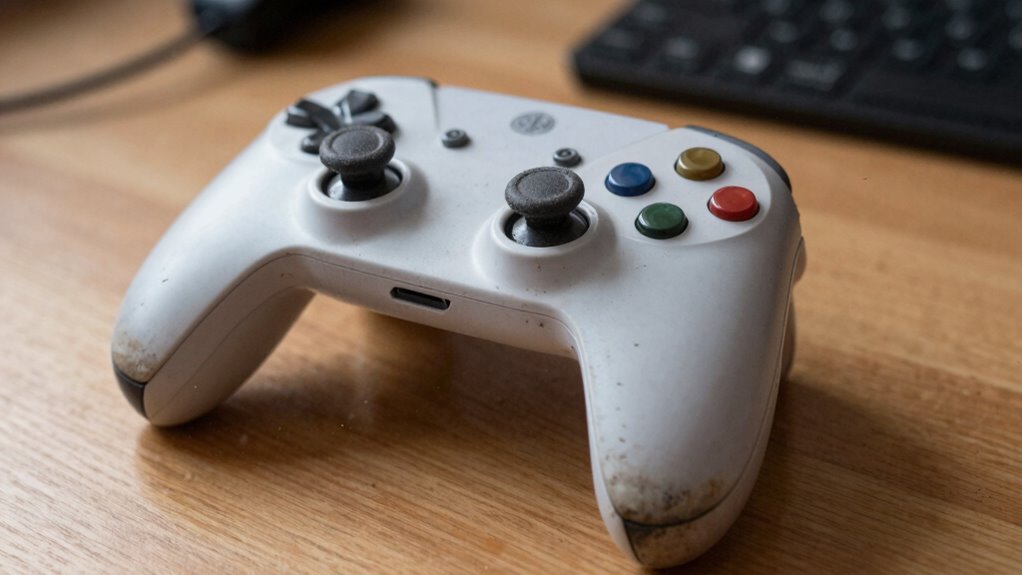
After winter, your controller may drift more because moisture from snow and humidity seeps inside, causing corrosion and sensor buildup. Dust and dirt settle into the device, further affecting internal components. This wear and grime disrupt sensor accuracy, making the controller less responsive. Regular cleaning, proper storage, and calibration can help reduce drift caused by winter’s effects. Keep exploring to learn simple steps that keep your controller working smoothly year-round.
Key Takeaways
- Winter moisture causes internal corrosion and buildup, disrupting sensor accuracy and leading to increased controller drift.
- Moisture exposure promotes dust and grime accumulation inside controllers, impairing sensor function.
- Cold temperatures and humidity can damage internal components, resulting in sensor drift and reduced responsiveness.
- Improper storage during winter allows moisture to seep in, accelerating wear and drift issues over time.
- Lack of regular cleaning, calibration, and moisture management after winter worsens drift problems in controllers.
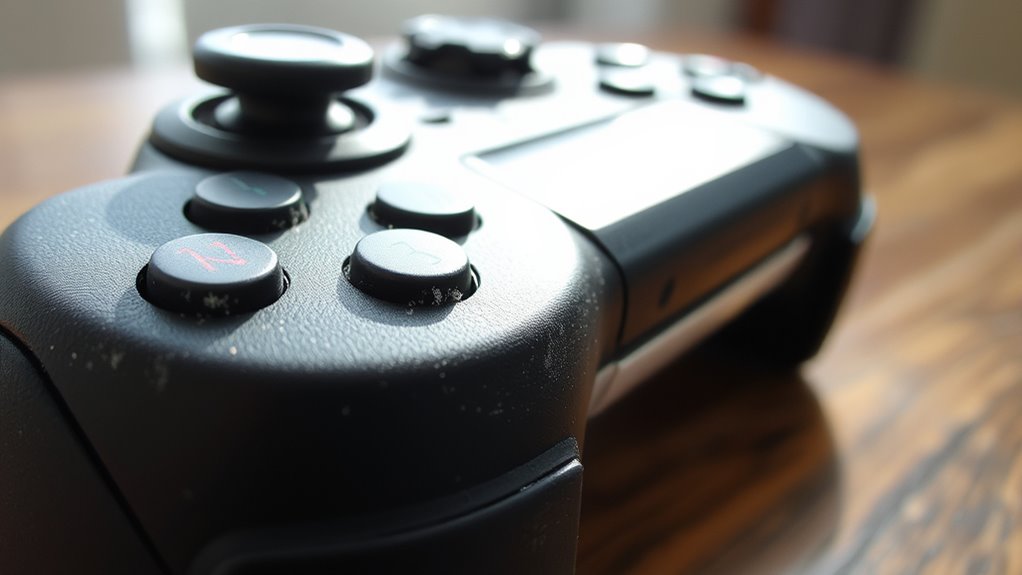
As winter ends and temperatures fluctuate, many gamers notice their controllers becoming less responsive or drifting off course. This change isn’t just coincidence; it’s closely tied to how winter moisture and environmental conditions affect your device. During colder months, moisture from snow, rain, and indoor humidity can seep into your gaming gear, especially if your controllers aren’t properly sealed or stored. This winter moisture can lead to corrosion or buildup inside the controller’s internal components, which interferes with the delicate sensors and circuits responsible for accurate input. Over time, this buildup causes drift, making your controls less precise and frustrating your gaming experience.
You might find that after a period of inactivity or cold weather, your controller’s joystick no longer responds accurately. To fix this, many gamers focus on controller calibration. Proper calibration aligns the controller’s internal sensors with the hardware, restoring responsiveness. Calibration isn’t a one-time fix; it’s a process you should revisit periodically, especially after exposure to winter moisture. Many consoles and controllers have built-in calibration options that allow you to recalibrate the thumbsticks and buttons easily. By doing this, you ensure that the sensors are properly aligned, minimizing drift and improving overall control.
Regular calibration helps fix joystick drift caused by winter moisture exposure.
But calibration alone isn’t enough if your controller has been exposed to moisture for an extended period. You need to carefully clean and dry your device to prevent further corrosion. Use a soft cloth to wipe away any visible moisture, and if you’ve noticed corrosion or grime, consider using isopropyl alcohol with a cotton swab to clean the contacts gently. Keep in mind that moisture can also cause dust and dirt to settle inside the controller, which can further obstruct the sensors. Regular maintenance, especially after winter, helps keep your controller in prime condition. Additionally, understanding how seasonal changes impact your devices enables you to take more effective preventative measures.
In addition to cleaning and calibration, storing your controllers properly during winter months can make a significant difference. Keep them in a dry, temperature-controlled environment, away from windows or areas prone to humidity. Using silica gel packs in your storage can absorb excess moisture and prevent internal condensation. Doing so reduces the risk of winter moisture impacting your controller’s internal components, therefore preventing drift issues before they start.
Ultimately, understanding how seasonal changes affect your controllers empowers you to take proactive steps. Regular calibration, careful cleaning, and proper storage help mitigate the impact of winter moisture. This way, you can enjoy precise, responsive gameplay year-round, no matter how much the weather fluctuates outside.
Frequently Asked Questions
Can I Fix Controller Drift Without Buying a New Controller?
Yes, you can fix controller drift without buying a new controller. Start with controller maintenance by cleaning around the analog sticks to remove dust and debris that cause drift. You might also try recalibrating the sticks or using software settings. These steps help improve hardware longevity and often resolve minor drift issues, saving you money and extending your controller’s lifespan. Just be gentle to avoid causing further damage.
Does Using a Controller Cover Prevent Dust Buildup?
Using a controller cover is like wrapping your controller in a shield — it can help reduce dust accumulation. While covers are somewhat effective, they aren’t foolproof; dust can still sneak in around the edges or through small gaps. Overall, a cover does improve its effectiveness at keeping dust out, but regular cleaning is still necessary to prevent buildup that can cause controller drift over time.
How Often Should I Clean My Controller to Prevent Drift?
You should clean your controller every 2 to 4 weeks to prevent drift caused by dust accumulation. Regular cleaning keeps dust, dirt, and debris from settling in the analog sticks and buttons, which can lead to drift over time. Using a soft cloth or compressed air helps eliminate buildup without damaging internal components. Maintaining a consistent cleaning frequency ensures your controller stays responsive and prevents drift issues from worsening.
Are Some Controllers More Resistant to Winter-Related Wear?
Ever wondered if some controllers resist winter wear better? You bet! Controllers made from durable materials and featuring a wear-resistant design handle cold, moisture, and dust more effectively. These controllers are built to withstand harsh conditions, reducing drift issues after winter. Opt for models with robust construction and weatherproof features, and you’ll enjoy smoother gameplay year-round. Isn’t investing in quality worth avoiding those frustrating drift problems?
Does Storage Location Affect Controller Drift Over Seasons?
Yes, your storage location affects controller drift over seasons. If you store your controller in a dusty area or a place prone to seasonal dust accumulation, dust can settle inside and cause wear on the analog sticks and sensors. Cold weather can also impact the controller’s internal components. To minimize drift, keep your controller in a clean, dry place, and avoid seasonal storage in dusty environments.
Conclusion
So, now you know why your controllers tend to drift more after winter—dust buildup and wear are the culprits. Regular cleaning and gentle handling can make a real difference, extending your controller’s lifespan. Why let dust and cold weather ruin your gaming experience? With a little upkeep, you can keep your controls responsive and accurate, no matter the season. Isn’t it worth taking a few minutes to protect your gear and enjoy seamless gaming?