
TL;DR
Open a free Amazon Business account
Business pricing, bulk buying and tax-exempt orders.
Create a free accountAs an affiliate, we earn on qualifying purchases.
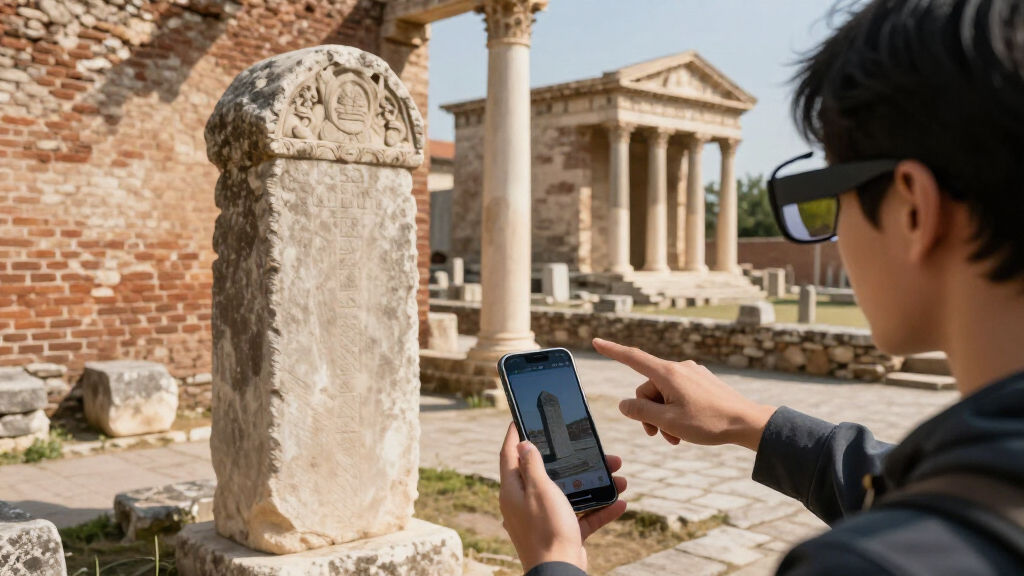
The heritage tourism industry is experiencing a significant transformation through augmented and virtual reality technologies. A new report projects the market will reach US$ 32.5 billion by 2034, highlighting the growing importance of immersive experiences in cultural travel.
Augmented and virtual reality technologies are significantly transforming heritage tourism, with a new report from KPMG estimating the market will reach US$ 32.5 billion by 2034. This growth underscores the increasing integration of immersive experiences in cultural and historical travel, making heritage sites more accessible and engaging for visitors worldwide.
The KPMG report highlights that the adoption of AR (augmented reality) and VR (virtual reality) in heritage tourism has accelerated over recent years, driven by technological advancements and changing traveler preferences. Augmented Reality (AR) And Virtual Reality (VR) Hardware Market Set For Rapid Expansion With 33.2% CAGR These immersive technologies enable visitors to experience historical sites, museums, and cultural landmarks remotely or enhance their onsite visits with interactive content.
The market value is projected to grow at a compound annual growth rate (CAGR) that will see it reach US$ 32.5 billion by 2034. The report attributes this growth to increasing investments by tourism operators, technological innovations, and a rising demand for personalized, engaging cultural experiences. Experts suggest that this shift could redefine how heritage sites attract and educate visitors, particularly in a post-pandemic world where digital engagement has become more vital.
While the report emphasizes positive trends, it also notes that the adoption of AR and VR varies geographically, with higher penetration in developed markets and emerging opportunities in developing regions. It does not specify the precise market share of different technologies or the impact of potential regulatory or technological hurdles.
Implications for Heritage Sites and Travel Industry
This growth indicates that heritage tourism is increasingly reliant on immersive technologies, which could lead to more accessible, engaging, and educational experiences. For visitors, this means enhanced access to cultural landmarks that might be geographically or physically inaccessible. For heritage sites and tourism providers, it offers new revenue streams and marketing avenues. The trend also suggests a broader shift towards digital transformation in the travel industry, which could influence future infrastructure investments and visitor engagement strategies.
However, the reliance on technology raises questions about digital equity, data privacy, and the preservation of authentic experiences. Stakeholders will need to balance technological innovation with cultural and ethical considerations to maximize benefits and minimize risks.
As an affiliate, we earn on qualifying purchases.
Recent Advances and Industry Adoption of AR/VR in Heritage Tourism
Over the past few years, there has been a steady increase in the deployment of AR and VR solutions at heritage sites, museums, and cultural institutions. Major technology companies and startups have introduced platforms that allow virtual tours, interactive exhibits, and augmented overlays that bring history to life. Notable examples include virtual reconstructions of ancient ruins and AR-guided museum visits.
Prior to this report, industry analysts observed that the COVID-19 pandemic accelerated digital adoption in tourism, with many sites investing in immersive tech to compensate for reduced physical visitors. While the market was previously valued at a few billion dollars, recent projections indicate rapid growth, with the potential to reshape the cultural tourism landscape significantly.
It remains uncertain how widespread adoption will become globally, especially in regions with limited technological infrastructure, and how regulatory frameworks might evolve to address privacy and intellectual property concerns related to immersive content.
“The integration of AR and VR in heritage tourism is transforming the way people access and experience cultural history.”
— an anonymous researcher
AR glasses for cultural experiences
As an affiliate, we earn on qualifying purchases.
As an affiliate, we earn on qualifying purchases.
Uncertainties Surrounding Market Growth and Adoption
It is not yet clear how quickly adoption will expand globally, especially in less developed regions. The impact of regulatory challenges, technological limitations, and potential privacy concerns remains uncertain. Additionally, the actual user engagement levels and the long-term sustainability of immersive experiences in heritage tourism are still being evaluated.
virtual reality museum tour equipment
As an affiliate, we earn on qualifying purchases.
As an affiliate, we earn on qualifying purchases.
Future Developments and Industry Trends to Watch
Stakeholders will likely focus on expanding technological infrastructure, developing culturally sensitive content, and establishing regulatory frameworks. Further research and pilot projects are expected to demonstrate the effectiveness of AR and VR in increasing visitor engagement and revenue. Monitoring technological innovations and investment patterns will be key to understanding the sector’s evolution over the coming years.
As an affiliate, we earn on qualifying purchases.
Key Questions
How is AR and VR currently used in heritage tourism?
Many heritage sites and museums use AR and VR for virtual tours, interactive exhibits, and augmented overlays that enhance onsite visits or enable remote exploration.
What is the projected market size for AR and VR in heritage tourism?
The market is expected to reach US$ 32.5 billion by 2034, according to a recent KPMG report.
What are the main benefits of using AR and VR in heritage tourism?
These technologies make cultural experiences more accessible, engaging, and educational, allowing virtual access to otherwise inaccessible sites and providing interactive learning opportunities.
Are there any challenges or risks associated with this technological shift?
Challenges include uneven technological infrastructure, privacy concerns, regulatory hurdles, and the need to preserve authentic cultural experiences while integrating digital content.
Source: rss
Flea & tick season Picks
flea and tick prevention
As an affiliate, we earn on qualifying purchases.