TL;DR

Play games on Amazon Luna for your next adventure, included with Prime
- A rotating selection of games, no download needed
- Play on TV, laptop or phone
- Fast, free delivery for your gear, too
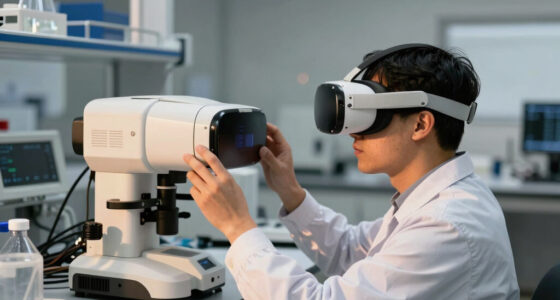
A health research station is now employing augmented and virtual reality tools for advanced medical research and training. This development marks a significant step in integrating immersive tech into healthcare studies, confirmed by authorities. Details on the scope and specific applications remain emerging.
Researchers have begun utilizing augmented reality (AR) and virtual reality (VR) tools at a dedicated health research station to advance medical studies and training methods, according to officials.
The health research station has integrated AR and VR technologies to simulate medical procedures, enhance diagnostics, and facilitate immersive training for healthcare professionals. Officials confirmed that this initiative aims to improve research outcomes and clinical education through immersive experiences.
While specific details about the technology platforms and scope of deployment are still emerging, authorities emphasized that the use of AR and VR is now operational at the station and is being actively tested in various medical research projects.
Sources indicate that this move aligns with broader efforts to incorporate immersive technologies into healthcare environments, though comprehensive results and long-term impacts are still under evaluation.
Impact of AR and VR on Medical Research and Training
This development matters because it represents a significant step toward modernizing healthcare research and education. The use of AR and VR can improve the accuracy of simulations, reduce training costs, and accelerate the development of new treatments. For patients, this could translate into better diagnostics and therapies in the future.
Experts suggest that integrating immersive tech into research stations could set a new standard for medical training and experimentation, potentially leading to faster innovation in healthcare.
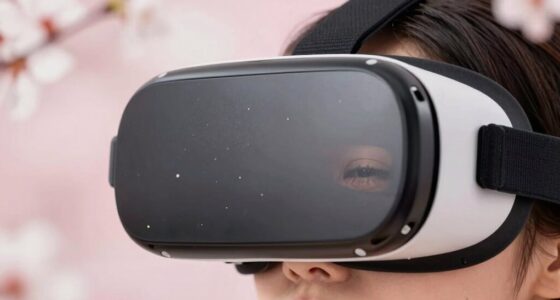
virtual reality surgical simulation headset
As an affiliate, we earn on qualifying purchases.
As an affiliate, we earn on qualifying purchases.
Background on Immersive Technologies in Healthcare
Over recent years, AR and VR have been increasingly explored for medical applications, including surgical simulations, patient education, and diagnostic procedures. Prior to this development, such technologies were primarily used in pilot programs or limited research settings.
This latest initiative marks a move toward more widespread adoption, with dedicated stations now employing these tools for ongoing research and training. The exact timeline for widespread implementation remains uncertain, but this represents a notable advancement in the field.
“The use of AR and VR at the research station is already showing promising results in improving training efficiency and research accuracy.”
— an anonymous researcher
augmented reality medical training tools
As an affiliate, we earn on qualifying purchases.
As an affiliate, we earn on qualifying purchases.
Unconfirmed Details About Technology Scope and Results
It is not yet clear how extensively the AR and VR tools will be deployed across the station or what specific medical research outcomes they will influence. Long-term effectiveness and integration into standard practice are still under evaluation, and detailed results are pending.
VR diagnostic training equipment
As an affiliate, we earn on qualifying purchases.
As an affiliate, we earn on qualifying purchases.
Next Steps in Implementing AR and VR at the Research Station
Researchers plan to expand the use of AR and VR tools in additional projects and gather data on their effectiveness. Further updates on the technology’s impact and potential for broader adoption are expected in the coming months, with more detailed results anticipated after pilot testing phases.
As an affiliate, we earn on qualifying purchases.
Key Questions
What specific medical areas are being targeted with AR and VR tools?
Details are still emerging, but initial applications include surgical simulation, diagnostic training, and patient education.
Are these technologies available for clinical use or only research?
Currently, they are being used within a research setting, with plans to evaluate their potential for clinical adoption in the future.
What are the expected benefits of using AR and VR in healthcare research?
Expected benefits include improved training precision, faster research development, and enhanced diagnostic capabilities.
When will the results of this initiative be publicly available?
Results are expected to be published after further testing and evaluation, likely within the next few months.
Source: rss
Halloween Picks
halloween
As an affiliate, we earn on qualifying purchases.