
To build a more comfortable VR sim racing position, start by ensuring your headset fits snugly without putting pressure on your face or head, adjusting straps for even support. Make sure your seat supports an upright posture and supports your back, with pedals positioned so your legs are slightly bent and relaxed. Keep your arms at a comfortable bend with the wheel within easy reach, and check your overall setup regularly. For more tips, you’ll discover how small adjustments can make a big difference.

Get VR and gaming gear delivered free — and shop member deals
- Fast, free delivery on millions of items
- Access to Prime Big Deal Days deals on October 6–7
- Prime Video, Amazon Music and more included
Key Takeaways
- Adjust VR headset straps for a snug, comfortable fit that avoids pressure points and maintains clear vision.
- Incorporate ergonomic seating with proper back support to promote upright posture and reduce fatigue.
- Position pedals and steering wheel for natural leg bend and relaxed arm and wrist angles.
- Ensure good ventilation and airflow to prevent overheating and sweating during long sessions.
- Regularly check and fine-tune your setup to maintain optimal comfort and body alignment.
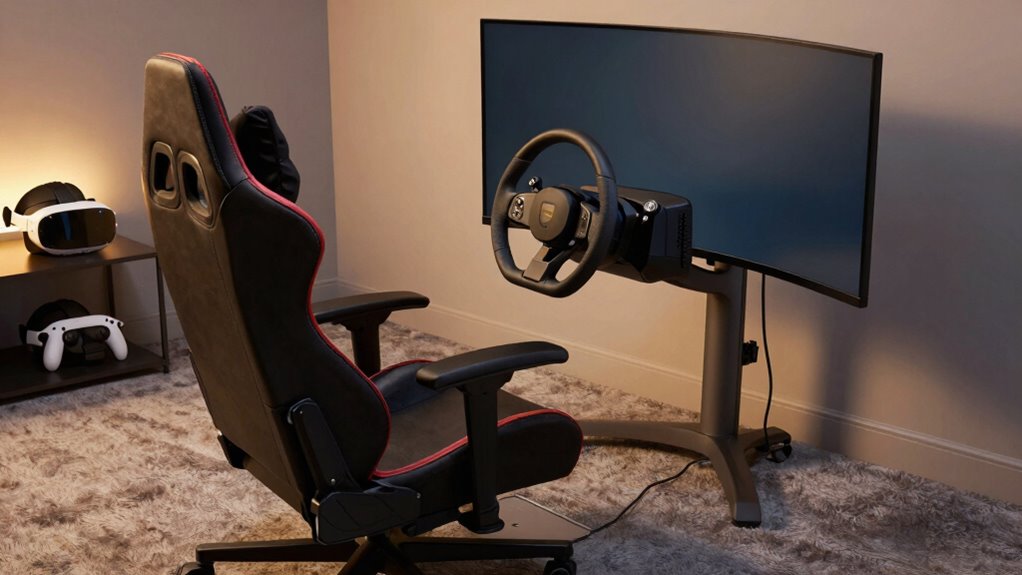
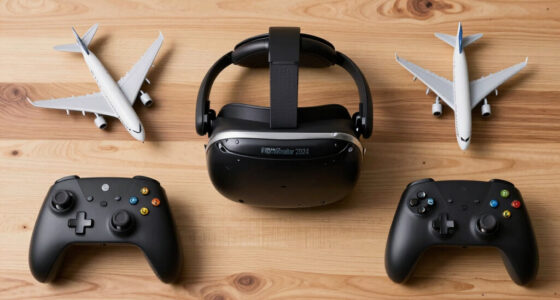
Creating a comfortable VR sim racing position is essential for maximizing your performance and enjoyment. When you’re immersed in a racing game, every detail counts, and that starts with how well your setup supports your body and gear. A good VR headset fit is crucial because if your headset isn’t snug but comfortable, it can cause discomfort or even headaches after extended play. To achieve this, adjust the straps so they rest evenly and aren’t too tight, ensuring your vision remains clear without putting unnecessary pressure on your face or head. Proper fit prevents fatigue and helps you stay focused on the race. Additionally, paying attention to ergonomic design principles can help optimize your racing setup for comfort and efficiency. Incorporating kitchen appliance principles like proper airflow and ventilation can also improve comfort during long sessions, preventing overheating or sweating. Regularly checking your setup for posture alignment ensures that your body remains in a natural position, reducing strain and promoting sustained comfort.
Ensure your VR headset fits snugly and comfortably to prevent discomfort and maintain focus during long races.
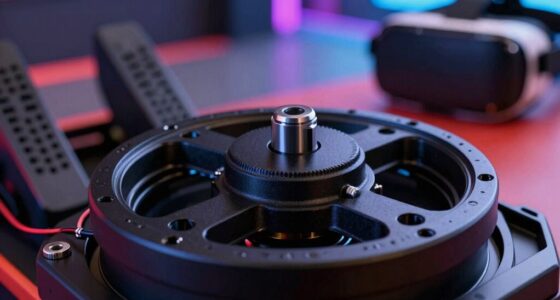
Pedal placement is another critical element in creating a comfortable racing position. Your pedals should be positioned so that your legs are slightly bent at the knees, not overstretched or cramped. Adjust your pedal plate or stand so your feet rest naturally on the pedals, with your heels firmly on the floor and toes able to press comfortably. Proper pedal placement reduces tension in your legs and ankles, allowing for more precise control and quicker reactions. Remember, the goal isn’t just to reach the pedals but to do so with a relaxed posture that minimizes fatigue during long sessions.
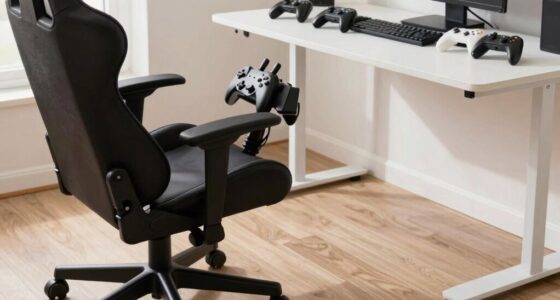
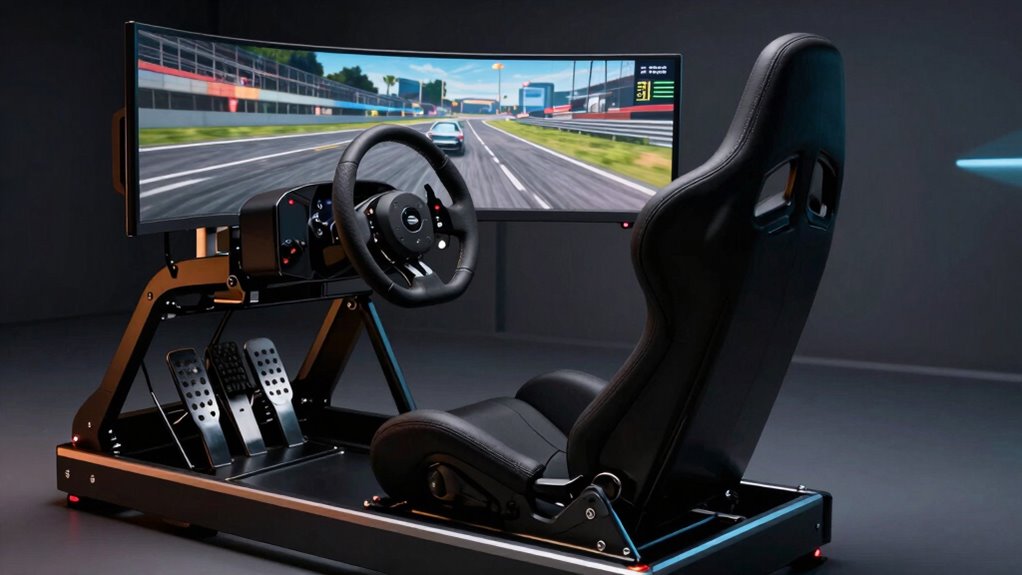
Beyond these specific points, your overall seating position plays a significant role. You want your seat to support your back and allow you to sit upright without slouching. Your steering wheel should be positioned so that your arms are slightly bent when gripping it, providing good leverage and control. Adjust the seat height and distance from the wheel and pedals so that your shoulders are relaxed, and your wrists rest naturally on the wheel. This setup not only improves comfort but also enhances your ability to react swiftly and accurately during races. Keep in mind that comfort isn’t static. As you spend more time racing, you may need to revisit and tweak your setup. Small adjustments to head position, pedal angle, or seat height can make a big difference in reducing fatigue and preventing discomfort. Regularly check that your VR headset fit remains secure and comfortable, especially if you switch between different headsets or wear glasses. By fine-tuning your VR setup—paying close attention to headset fit and pedal placement—you create a racing environment that supports your body, keeps you focused, and elevates your performance to new levels.
As an affiliate, we earn on qualifying purchases.
Frequently Asked Questions
What Are the Best VR Headsets for Racing Comfort?
The best VR headsets for racing comfort prioritize ergonomic design, reducing strain during long sessions. Look for models with adjustable straps and balanced weight distribution to enhance VR headset ergonomics. Pair them with a well-padded racing seat to prevent discomfort, and consider headset padding that minimizes pressure points. These features guarantee you stay comfortable, focused, and immersed, making your racing experience more enjoyable and less fatiguing.
How Can I Reduce Motion Sickness During VR Racing?
To cut down motion sickness during VR racing, think of your experience as a dance where harmony matters. You should enable visual stabilization to keep the world steady and reduce disorienting motion. Incorporate haptic feedback gently, so it enhances immersion without overwhelming you. Take breaks often, and gradually increase your session length. This balance between visual cues and physical sensations helps your brain sync better, making racing smoother and more enjoyable.
What Clothing Minimizes Discomfort During Long VR Sessions?
You should wear clothing made from breathable, lightweight material like moisture-wicking fabrics to stay comfortable during long VR sessions. Make sure your clothes have an ergonomic fit, avoiding tight or restrictive garments that can cause discomfort or restrict movement. Loose-fitting, soft fabrics help prevent chafing and overheating, allowing you to focus on your racing without distractions. Prioritizing the right clothing keeps you comfortable, so you can enjoy extended VR sim racing sessions.
How Often Should I Take Breaks During VR Sim Racing?
You should take a break every 30 to 60 minutes during VR sim racing. Studies show prolonged sessions can cause discomfort or strain, so using ergonomic accessories and making posture adjustments helps guarantee fatigue. During breaks, stretch and relax your muscles to maintain comfort and focus. This routine ensures you stay refreshed, reducing the risk of discomfort and enhancing your overall racing experience.
Can Specific Seat Materials Improve Comfort in VR Racing Setups?
Yes, specific seat materials can substantially improve your comfort in VR racing setups. Opt for an ergonomic seat design that supports your posture during long sessions. Cushioning material choices like memory foam or gel-infused padding provide better pressure distribution and reduce fatigue. These materials conform to your body, enhancing comfort and stability, so you stay focused on your race without distraction or discomfort.
ergonomic racing seat for sim racing
As an affiliate, we earn on qualifying purchases.
As an affiliate, we earn on qualifying purchases.
Conclusion
By adjusting your seat, aligning your controls, and optimizing your VR setup, you create a racing environment that’s comfortable, immersive, and responsive. Focus on your posture, fine-tune your equipment, and stay attentive to your body’s signals. When your position feels just right, your concentration sharpens, your reactions quicken, and your experience becomes more enjoyable. Ultimately, a well-balanced setup enhances your performance, your comfort, and your passion for the race—making every session better than the last.
pedal stand for racing simulator
As an affiliate, we earn on qualifying purchases.
As an affiliate, we earn on qualifying purchases.
gaming steering wheel and pedal set
As an affiliate, we earn on qualifying purchases.
As an affiliate, we earn on qualifying purchases.
Fall Picks
fall essentials
As an affiliate, we earn on qualifying purchases.