
To set up space rules for VR with roommates that actually stick, start by communicating your plans clearly and respecting shared areas. Use headphones to reduce noise, and schedule VR times to avoid conflicts. Establish guidelines for cleaning equipment and sharing devices fairly. Maintain ongoing conversations to adapt rules as needed and respect each other’s privacy and comfort. Ready to learn effective strategies that keep everyone happy? Keep going to discover even more helpful tips.

Play games on Amazon Luna for your next adventure, included with Prime
- A rotating selection of games, no download needed
- Play on TV, laptop or phone
- Fast, free delivery for your gear, too
Key Takeaways
- Communicate your VR schedule and intentions openly to set clear expectations with roommates.
- Designate specific times or areas for VR use to prevent conflicts and maintain shared space harmony.
- Use headphones and keep noise levels minimal to respect roommates’ activities and privacy.
- Establish rules for cleaning and sharing VR equipment to ensure fairness and responsibility.
- Maintain ongoing dialogue to adapt rules as needed and foster mutual understanding and respect.
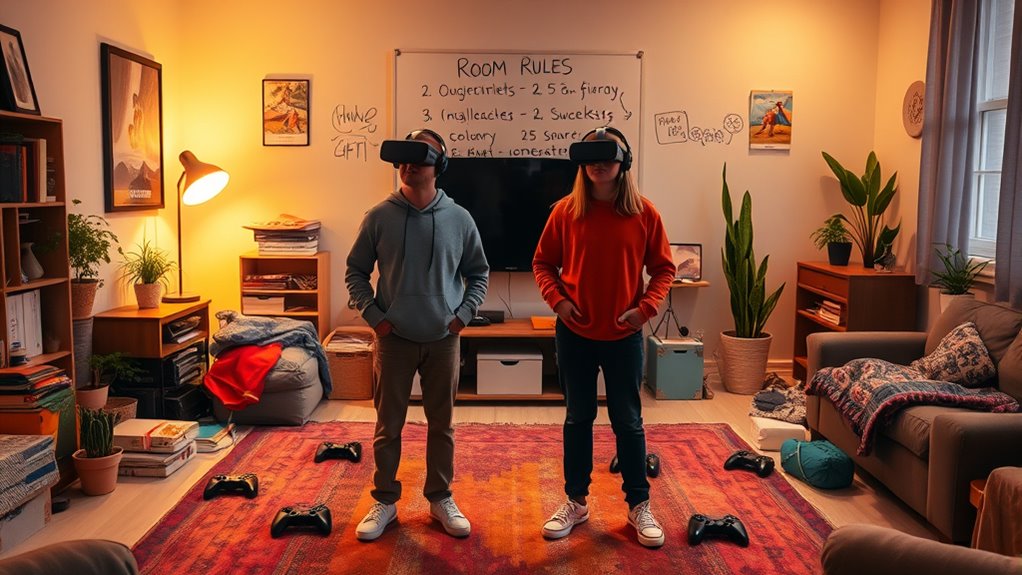
Have you ever wondered how virtual reality can transform the way you share space with roommates? VR introduces a whole new dimension to your living situation, making it essential to establish clear boundaries and etiquette to guarantee everyone feels comfortable. Privacy boundaries become even more important when you’re immersed in a digital environment that can sometimes spill over into real-world interactions. For example, you might be using VR for work, gaming, or socializing, but your roommates need to know when you’re in a space where personal privacy should be respected. Setting rules about when you’re “offline” and not to be disturbed helps maintain a sense of security and respect. It’s a good idea to designate specific times or areas where VR use is limited or where privacy takes precedence, preventing misunderstandings or accidental intrusions.
Establish clear boundaries and designated times to respect privacy when using VR shared with roommates.
Shared tech etiquette also plays a crucial role in making VR a positive experience for everyone. Just because VR is a solitary activity doesn’t mean it’s exempt from common courtesy. Always communicate with your roommates before jumping into a session, especially if your VR activity involves loud sounds, movement, or shared spaces. Let them know when you plan to use the equipment and for how long, so they don’t feel blindsided or neglected. Similarly, respect their needs and boundaries—if they’re working from home or resting, consider postponing your VR session or using headphones to minimize noise. Remember, it’s about balancing your digital immersion with respect for their space and comfort.
Creating shared tech etiquette isn’t just about individual boundaries; it’s about establishing a mutual understanding. For instance, cleaning up VR equipment after use, avoiding monopolizing shared devices, and being mindful of how your activity affects others all contribute to a harmonious living environment. You might also agree on designated “tech-free” zones or times, fostering face-to-face interactions alongside your virtual experiences. Clear communication about these boundaries and expectations helps prevent conflicts before they start.
Ultimately, integrating VR into your living space requires intentional planning and ongoing dialogue. By respecting privacy boundaries and practicing shared tech etiquette, you ensure that everyone benefits from the technology without feeling overwhelmed or overlooked. This way, VR becomes a tool that enhances your shared living experience, rather than a source of friction. When you prioritize respect, transparency, and cooperation, your virtual adventures can coexist seamlessly with your roommates’ needs—making your shared space more enjoyable for all. Additionally, choosing the right home theatre projector technology can improve your virtual environment, creating a more immersive experience that everyone can enjoy without disrupting others.
VR headset with noise-canceling headphones
As an affiliate, we earn on qualifying purchases.
As an affiliate, we earn on qualifying purchases.
Frequently Asked Questions
How Do I Prevent VR Sessions From Disturbing My Roommates?
To prevent VR sessions from disturbing your roommates, establish clear virtual boundaries and communicate your schedule. Use equipment labeling to mark your VR gear and designate specific times for your sessions, respecting shared space. You can also set up a dedicated area for VR, so everyone knows where the boundaries are. Regularly check in with your roommates to make sure they’re comfortable, adjusting rules as needed to keep the peace.
What Are Some Safety Tips for Shared VR Space?
To stay safe in a shared VR space, always practice VR headset hygiene by cleaning your device regularly to prevent germs. Establish clear shared virtual boundaries with your roommates, so everyone knows where they can move safely. Use wrist straps to avoid accidental drops and take breaks often to prevent dizziness or eye strain. Communicating openly helps maintain respect and safety, ensuring everyone enjoys VR sessions without issues.
How Can I Organize VR Equipment to Avoid Conflicts?
Think of your VR equipment as treasures waiting to be found. Use smart storage solutions like labeled bins or shelves to keep everything organized, making it easy to find and return gear. Clearly label each piece of equipment so your roommates know where it belongs. This way, conflicts fade into the background, and your shared space stays harmonious, letting you focus on the immersive adventures ahead.
What Rules Should I Establish for VR Noise Levels?
Set clear sound level rules to prevent conflicts, like keeping noise within agreed limits. Encourage headset etiquette so everyone knows when someone’s immersed and shouldn’t be disturbed. Use a volume cap on devices or designate quiet hours for VR use, especially during late-night gaming. Communicate openly about sound expectations, and regularly check in to make certain everyone feels comfortable. These rules help maintain harmony and respect among roommates.
How Do I Handle Privacy Concerns in Shared VR Environments?
Think of shared VR space like a dance floor—everyone needs clear boundaries to avoid stepping on toes. To handle privacy concerns, establish rules for respecting personal space and privacy boundaries, like muting microphones or taking virtual breaks when needed. Communicate openly with your roommates, and use privacy settings to control who can see or access your virtual environment. This keeps everyone comfortable and preserves trust in your shared space.
As an affiliate, we earn on qualifying purchases.
Conclusion
By setting clear space rules with your roommates, you create a harmonious virtual and physical living environment that feels as seamless as breathing. These guidelines prevent conflicts from spiraling into chaos, making your shared space a sanctuary instead of a battleground. Think of it like building an unbreakable fortress where everyone’s comfort is protected. Stick to your rules, communicate openly, and watch your shared space become a paradise so perfect, it’s almost too good to be true.
VR sharing and storage organizer
As an affiliate, we earn on qualifying purchases.
As an affiliate, we earn on qualifying purchases.
As an affiliate, we earn on qualifying purchases.
Fall Picks
fall essentials
As an affiliate, we earn on qualifying purchases.