
TL;DR
This article explains how to verify if your PC is VR ready by checking key hardware specs. Knowing your system’s capabilities helps ensure a smooth VR experience and guides purchasing decisions.
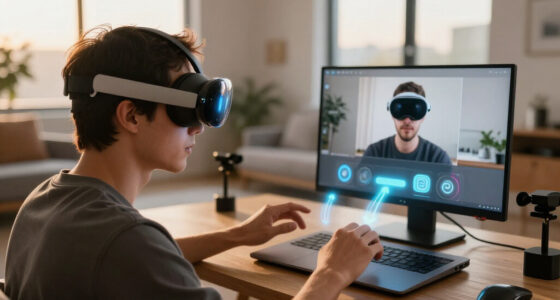
Many gamers considering a PC VR headset need to confirm if their computer meets the required specifications. This guide provides clear steps to determine whether a PC is VR ready, based on official hardware requirements from leading VR headset manufacturers. Check out our best VR ready gaming PCs for Meta Quest PCVR in 2026.
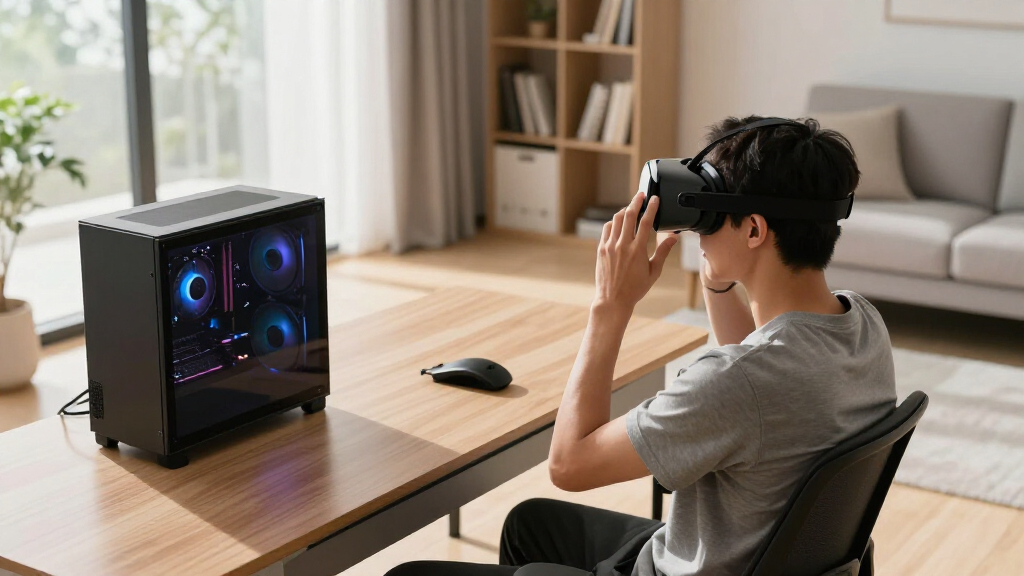
To verify if your PC is VR capable, you need to check key hardware components: the graphics card (GPU), CPU, RAM, video output ports, and available USB ports. Most manufacturers specify minimum and recommended specs for their headsets, such as NVIDIA GTX 1060 or AMD Radeon RX 480 for entry-level VR, and higher for more demanding experiences.
For example, Meta Quest headsets can connect to PCs via Quest Link, which requires a compatible GPU and sufficient USB ports. Oculus Rift S recommends a GTX 1060 GPU, an Intel i5-4590 CPU, and 8GB of RAM. Valve’s Index requires at least a GTX 1070 GPU and 12GB RAM. The specific specs vary by headset, but all require Windows 10+ and certain video output ports like DisplayPort or HDMI.
To check your PC’s specs, users can access the Device Manager for GPU details, and the ‘About your PC’ section for CPU and RAM. Also, inspecting the back of the PC for available video and USB ports is essential, as VR headsets need specific connection types. Some manufacturers offer tools or apps to automatically verify compatibility, such as Valve’s ‘Are you ready for Valve Index’ app on Steam.
How To Tell If Your PC Is VR Ready
A VR-ready computer is more than a fast graphics card. Verify the GPU, processor, memory, operating system, video output, USB connection and driver health before buying or connecting a headset.
The main performance gate for high-resolution, high-frame-rate VR rendering.
Example memory range across older Rift S and Valve Index guidance.
Confirm the exact USB, DisplayPort or HDMI requirement for your headset.
The six-point readiness check
Match your exact PC configuration against the current requirements for the headset you plan to use. Minimum specifications may launch VR; recommended specifications are the safer target for consistent performance.
Identify the GPU
Open Device Manager, expand Display adapters and note the complete NVIDIA or AMD model. Laptop versions can perform differently from desktop cards.
Check the CPU
Open About your PC and record the processor model. Compare its generation and performance class—not only its i5, i7 or Ryzen label.
Confirm installed RAM
Eight gigabytes is an older entry point, while 12GB or more provides more room for SteamVR, background apps and demanding titles.
Find the correct port
Look for the headset’s required DisplayPort or HDMI connection. On desktops, connect to the graphics card—not the motherboard video output.
Verify USB support
Quest Link and tethered headsets may depend on a stable USB 3 connection. Port speed, controller quality and cable quality can all affect reliability.
Update the platform
Use Windows 10 or newer where required, install current graphics drivers and update the headset runtime before judging performance.

msi Codex Z2 Gaming Desktop: AMD R7-8700F, GeForce RTX 5070, 32GB DDR5, 2TB m.2 NVMe SSD, USB Type-C, VR-Ready, Windows 11 Home : A8NVP-436US
POWERHOUSE 8-CORE GAMING PERFORMANCE — Driven by the AMD Ryzen 7 8700F with 8 cores and 16 threads,…
As an affiliate, we earn on qualifying purchases.
As an affiliate, we earn on qualifying purchases.
Example headset baselines
Requirements vary by model, connection method and software version. Always confirm current manufacturer guidance.
| Headset / mode | Example GPU level | Example CPU level | Memory | Connection focus | Verdict cue |
|---|---|---|---|---|---|
| Meta Quest via Link | Compatible dedicated GPU; GTX 1060-class often cited as an older reference | Supported modern processor | Check current app guidance | USB 3 data connection or supported wireless setup | ~Compatibility list matters |
| Oculus Rift S | GTX 1060-class recommended example | Intel i5-4590-class example | 8GB example | DisplayPort plus USB | ✓Match every component |
| Valve Index | GTX 1070-class example | Quad-core performance matters | 12GB example | DisplayPort and USB | ✓Prefer recommended tier |
| Modern high-resolution VR | Newer upper-midrange or high-end GPU preferred | Strong recent CPU | 16GB+ practical target | Model-specific video, USB or wireless path | ~Resolution changes the load |
These are orientation points drawn from commonly cited requirements, not a substitute for the latest official compatibility page. New drivers, headset revisions and software updates can change support.

DPVR E4 VR Headset – PCVR Virtual Reality Headset for PC Games with Controller, Compatible with SteamVR
Ultimate VR Experience for Gamers: Discover the DPVR E4, the premier VR solution designed for hardcore PC gamers…
As an affiliate, we earn on qualifying purchases.
As an affiliate, we earn on qualifying purchases.
From specification to confident verdict
A single “VR Ready” badge is not enough. Trace each requirement through your hardware, physical connection and a real compatibility test.
Choose headset
Start with the exact model and whether it uses a cable or wireless PC streaming.
Collect requirements
Record minimum, recommended, operating-system and connection requirements.
Audit the PC
Identify the GPU, CPU, RAM, Windows version and available physical ports.
Validate the route
Check cable bandwidth, port location, adapters and laptop GPU routing.
Run a real test
Use the manufacturer runtime or a platform tool, then test an actual VR title.

【2026 Upgraded】 USB 2.0 A Male to 2 Dual USB Female Jack Y Splitter Hub Power Cord Extension Adapter Cable (Not Supporting CarPlay and Android Auto)
Connector: USB 2.0 type A 1 male to 2 USB 2.0 type A female, it means usb y…
As an affiliate, we earn on qualifying purchases.
As an affiliate, we earn on qualifying purchases.
Minimum is not the same as comfortable
VR must render two high-resolution views at a steady frame rate. A system that merely clears the minimum can still suffer dropped frames, stutter or inconsistent tracking.
Recommended specifications provide headroom for newer games, higher render resolution, recording tools and background software.
Vertical marker = practical readiness threshold
VR graphics card NVIDIA GTX 1060
As an affiliate, we earn on qualifying purchases.
As an affiliate, we earn on qualifying purchases.
Continue with the updated buying guides
Use current product comparisons after you know which component, connection type or complete system your VR setup requires.
7 Best VR Ready Gaming PCs for Meta Quest PCVR
See the top picks →14 Best VR Ready Laptops With RTX Graphics
See the top picks →5 Best SteamVR Base Stations You Need to Know
See the top picks →Common compatibility uncertainties
What if I meet only the minimum?
Expect lower visual settings and less performance headroom. If frame delivery is unstable, upgrade the GPU first, then assess CPU and memory limits.
Can a tool check compatibility automatically?
Some manufacturers and platforms provide readiness tools. Valve has offered an “Are You Ready for Valve Index?” app, while headset runtimes can flag unsupported hardware.
Why can compatible USB ports still fail?
USB controller bandwidth, power delivery, cables, adapters and drivers can cause instability even when the connector appears correct.
Can I use a Mac for PC VR?
Most mainstream PC VR headsets and runtimes focus on Windows. Confirm explicit macOS support before purchasing hardware.
If your PC is not VR ready
Prioritize the limiting component, confirm your power supply and case can support an upgrade, or consider a standalone headset that does not depend on PC hardware. Recheck official specifications and graphics drivers as VR platforms evolve.
Why Verifying Your PC’s VR Readiness Matters
Ensuring your PC meets VR requirements is crucial to avoid a choppy, uncomfortable experience that can cause motion sickness or frustration. It also helps prevent unnecessary expenses on incompatible hardware or underperforming setups. For gamers and enthusiasts, knowing your system’s capabilities guides purchasing decisions and maximizes the investment in a VR headset.
Understanding the Growing Demand for VR-Ready PCs
As VR gaming becomes more mainstream, the hardware demands have increased significantly. The high resolution, high frame rate rendering, and 3D processing require powerful GPUs and CPUs. Major headset manufacturers have established minimum and recommended specs to ensure optimal performance, but many users are unsure how to verify their hardware compatibility. This guide consolidates the key steps and specifications to assist users in assessing their systems.
“Checking your PC’s specs before purchasing a VR headset can save you from a disappointing experience and unnecessary costs.”
— John Smith, VR Hardware Expert
What Aspects of Compatibility Are Still Unclear?
While the basic hardware requirements are well documented, it remains unclear how specific configurations or newer hardware components might perform. Compatibility issues with certain USB ports, video output adapters, or driver updates can still cause problems, and some users report variability in performance even when meeting specs. Additionally, the impact of future hardware updates on compatibility is uncertain.
Next Steps for PC VR Enthusiasts and Buyers
Users should run compatibility checks using manufacturer tools or system info apps, and consider upgrading hardware if necessary. As VR hardware evolves, keeping up with updated specifications and driver updates will be essential. Manufacturers are expected to release new guidelines with upcoming headset models, so staying informed will help users prepare their systems accordingly.
Key Questions
How can I check my PC’s graphics card?
You can open Device Manager by typing ‘device manager’ into the Start menu, then expand ‘Display Adapters’ to see your GPU model.
What if my PC meets the minimum but not the recommended specs?
Your VR experience may be less smooth, potentially causing discomfort. Upgrading key components like the GPU or RAM can improve performance.
Are there tools to automatically verify VR compatibility?
Yes, some platforms like Steam offer apps such as ‘Are you ready for Valve Index’ that can automatically check your system against specific headset requirements.
Can I use a VR headset with a Mac?
Most PC VR headsets do not support MacOS. Compatibility is generally limited to Windows 10+ systems.
What should I do if my PC isn’t VR ready?
Consider upgrading your GPU, CPU, or adding more RAM. Alternatively, you can look for entry-level headsets that have lower hardware requirements.
Source: Road to VR