
TL;DR

Play games on Amazon Luna for your next adventure, included with Prime
- A rotating selection of games, no download needed
- Play on TV, laptop or phone
- Fast, free delivery for your gear, too
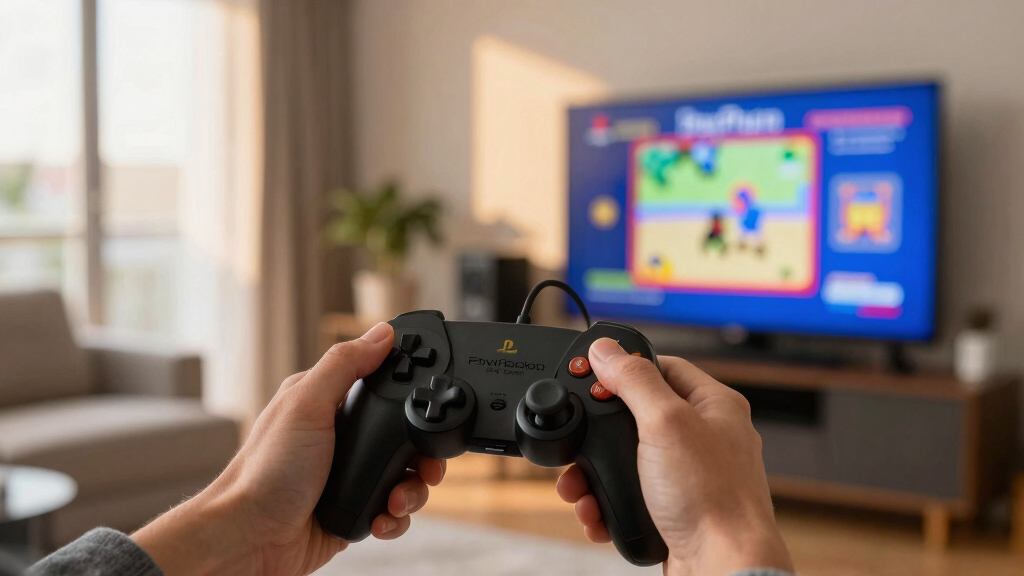
Sony created a prototype DualShock controller that contained an entire PlayStation 1 console, aimed at the Brazilian market. The project was ultimately canceled, but the prototype demonstrated impressive hardware capabilities.
Sony developed a prototype DualShock controller that housed an entire PlayStation 1 console, designed specifically for the Brazilian market. The device, called the PlayStation Puga, was built to connect directly to a TV and could run PS1 games without a separate console, but the project was canceled before commercial release. This revelation sheds light on an innovative hardware concept that was ultimately shelved due to licensing and royalty issues, making it a notable piece of gaming hardware history.
According to information shared by a game developer on YouTube, the PlayStation Puga was a working prototype that combined a DualShock controller with a complete PS1 system inside. The device was powered by an Arm-based processor running at 650 MHz, capable of emulating PS1 games effectively. It used four AA batteries, lasting approximately 20 hours on a single charge, and connected to a TV via an included cable. The prototype was built with the intention of being affordable, with Sony aiming to sell it at a low price point, earning only about 10 cents per unit.
However, the project faced insurmountable licensing issues. The developer explained that Sony’s licensing negotiations for game royalties, especially with third-party publishers like Rockstar, proved problematic. Even Sony’s internal licensing for their own titles became complicated, leading to the project’s cancellation. Despite the cancellation, the hardware demonstrated impressive capabilities, and the emulator built for the device eventually found its way into the Sony Xperia Play, a mobile gaming device.
The prototype did boot into a debug environment but lacked the necessary software to fully operate. It was reportedly well-received internally, but licensing hurdles prevented it from reaching consumers.
Implications of Sony’s Embedded PS1 Prototype
This development highlights Sony’s innovative hardware experimentation during the PS1 era, showcasing a possible all-in-one gaming device that could have changed portable gaming. The cancellation underscores the importance of licensing and royalty negotiations in hardware development, which can halt promising projects. For enthusiasts, it represents a rare glimpse into a potential alternative path for gaming hardware that prioritized convenience and portability, predating modern handheld consoles with integrated systems.
PlayStation Classic portable console
As an affiliate, we earn on qualifying purchases.
As an affiliate, we earn on qualifying purchases.
Historical Context of Sony’s Hardware Innovations
The concept of embedding entire gaming consoles into controllers or portable devices has been explored by various manufacturers, but Sony’s attempt with the PS1 inside a DualShock was unique. The prototype emerged during the late 1990s or early 2000s, a period of experimentation with portable gaming solutions. Although it never reached production, the project demonstrated Sony’s willingness to push hardware boundaries. The emulator technology developed for this prototype eventually influenced other portable gaming devices, such as the Xperia Play, which launched years later.
Previous efforts like the Game Boy Advance and Nintendo’s Game Boy line focused on portability, but Sony’s prototype aimed to combine the full PS1 experience into a handheld form, connecting directly to a TV. The project was ultimately canceled due to licensing complications, but it remains a noteworthy example of innovation that could have reshaped portable gaming if successfully commercialized.
“The prototype demonstrated impressive hardware capabilities, including a 650 MHz ARM processor and 20-hour battery life, all contained within a DualShock controller.”
— an anonymous researcher
DualShock controller with built-in PS1 emulator
As an affiliate, we earn on qualifying purchases.
As an affiliate, we earn on qualifying purchases.
Remaining Questions About the Prototype’s Development
Details about the full hardware specifications, software environment, and whether any units were ever distributed outside Sony’s internal testing remain unclear. It is also unknown if Sony considered reintroducing this concept in later hardware or if any prototypes still exist today.
handheld gaming device with PS1 games
As an affiliate, we earn on qualifying purchases.
As an affiliate, we earn on qualifying purchases.
Potential Impact on Future Portable Gaming Devices
While the project was canceled decades ago, its existence raises questions about Sony’s ongoing interest in integrated gaming hardware. Future developments could revisit similar concepts, especially as portable gaming continues to evolve. For now, the prototype remains a historical curiosity, but it may influence design ideas in upcoming Sony or third-party devices.
As an affiliate, we earn on qualifying purchases.
Key Questions
Was the Sony PS1 DualShock prototype ever sold or released?
No, the prototype was never released or sold commercially. It was a working internal prototype that was ultimately canceled due to licensing issues.
How powerful was the hardware inside the prototype controller?
The prototype used a 650 MHz ARM-based processor and could emulate PS1 games effectively, with a battery life of about 20 hours.
Could this device connect to modern TVs or was it limited to older models?
The prototype connected to TVs via an included cable, similar to standard AV connections of the era. Compatibility with modern TVs would require adapters, but the device was designed for the technology of its time.
Why was the project canceled?
Licensing and royalty negotiation issues with game publishers and internal Sony departments prevented the project from moving forward.
Does this mean Sony is working on similar embedded console devices today?
There is no public evidence that Sony is currently developing similar embedded console devices, but the prototype’s existence indicates ongoing interest in portable, all-in-one gaming solutions.
Source: Tom’s Hardware: For The Hardcore PC Enthusiast
Halloween Picks
halloween
As an affiliate, we earn on qualifying purchases.