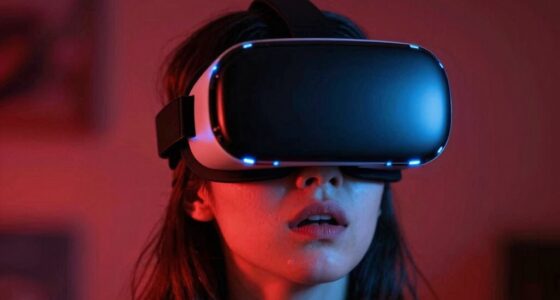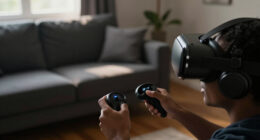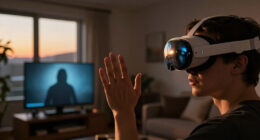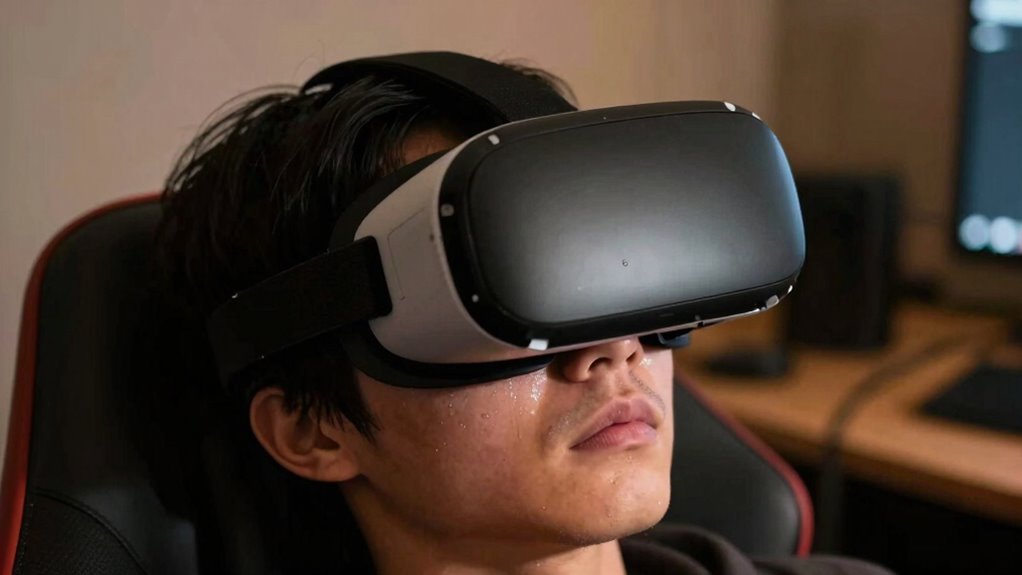

Good sleep quality substantially boosts your VR experience by improving your sensory processing, which helps you stay immersed and comfortable. When you’re well-rested, you’re less likely to experience motion sickness, eye strain, or headaches, making VR sessions more enjoyable. Restorative sleep also helps your brain handle virtual environments more efficiently. If you want to discover ways to improve both your sleep and VR sessions, keep exploring how quality rest can make a difference.

Play games on Amazon Luna for your next adventure, included with Prime
- A rotating selection of games, no download needed
- Play on TV, laptop or phone
- Fast, free delivery for your gear, too
Key Takeaways
- Good sleep improves sensory processing, enhancing VR immersion and reducing discomfort during virtual experiences.
- High-quality sleep minimizes motion sickness and eye strain caused by sensory conflicts in VR.
- Restorative sleep helps prevent brain overstimulation, leading to more comfortable and longer VR sessions.
- Poor sleep increases sensitivity to VR side effects like headaches, dizziness, and nausea.
- Consistent sleep routines support better regulation of sleep cycles, promoting more vivid and memorable VR experiences.
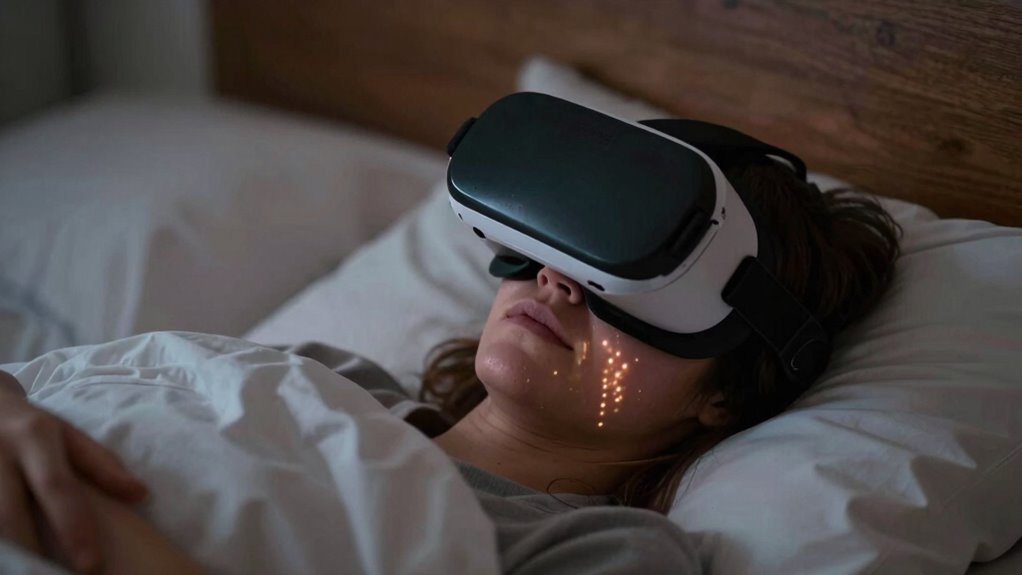
Virtual reality (VR) has become an immersive way to explore new worlds and enhance entertainment, but it can also impact your sleep quality in unexpected ways. When you immerse yourself in VR, your brain is fully engaged, which can influence your dreams and overall rest. Good sleep is essential for processing the vivid experiences you have during VR sessions, especially if you’re using it for dream enhancement. The more deeply your brain is stimulated before bed, the more vivid and memorable your dreams might become, sometimes blurring the lines between virtual and real experiences. While this can make dream work more interesting, it can also lead to restless sleep if your mind remains overly active or if exposure to VR content causes heightened alertness at bedtime. Additionally, brain stimulation from VR can interfere with your natural sleep cycles, making it harder to fall asleep and reach restorative sleep stages. Consistent sleep patterns are crucial for maintaining overall mental and physical health, especially when integrating immersive technologies like VR into your routine. Engaging in calming activities before bedtime can help mitigate these effects and support better sleep hygiene. Proper sleep hygiene, including limiting screen time before bed, can significantly improve your overall sleep quality.
On the other hand, poor sleep quality can diminish your VR experience. When you’re tired, your focus wanes, and you’re less likely to fully immerse yourself in the virtual environment. Sleep deprivation can also impair your ability to process visual and spatial cues, reducing the realism and enjoyment of VR. Additionally, if you’re not rested, you’re more prone to motion sickness during VR sessions. Motion sickness in VR occurs when your eyes perceive movement that your inner ear doesn’t sense, leading to nausea, dizziness, and discomfort. If you’re sleep-deprived, your body’s ability to adapt to these conflicting signals weakens, making motion sickness more common and more intense. Proper sleep hygiene can help mitigate these issues and improve your VR interactions. Ensuring proper sleep quality can also enhance your overall sensory processing and reduce discomfort during VR use.
Consistently poor sleep can also increase your sensitivity to VR’s side effects. When you’re well-rested, your brain handles sensory input more efficiently, minimizing discomfort. But if your sleep suffers, you might find yourself more prone to dizziness, headaches, or eye strain after VR use, which can discourage regular engagement and diminish the overall experience. Conversely, if you get quality sleep, your brain resets and recovers, enabling you to enjoy longer, more immersive VR sessions with less risk of motion sickness or fatigue. Developing a sleep routine that promotes restorative sleep can further support your VR enjoyment and overall well-being.
As an affiliate, we earn on qualifying purchases.
Frequently Asked Questions
Can Poor Sleep Cause VR Motion Sickness?
Poor sleep can definitely cause VR motion sickness. When your sleep hygiene is poor, your brain struggles to process sensory information accurately, making you more prone to dizziness and nausea during VR. Lack of quality sleep also hampers dream recall, which means your brain isn’t fully rested or alert, increasing susceptibility. Ensuring good sleep hygiene helps stabilize your senses, allowing for a smoother, more comfortable VR experience.
How Does Sleep Deprivation Affect VR Immersion?
When you’re sleep-deprived, VR immersion turns into a wild rollercoaster. Your dream recall becomes a tangled mess, and visual clarity diminishes drastically, making every virtual detail fuzzy and confusing. You might feel like you’re battling a foggy haze instead of fully engaging. Sleep deprivation damages your focus and perception, so staying awake long enough to enjoy VR becomes an intense challenge — transforming an immersive experience into a frustrating struggle.
Does Sleep Quality Impact VR Headache Severity?
Yes, sleep quality impacts VR headache severity. Poor sleep hygiene leads to inadequate rest recovery, making your brain more sensitive to VR discomfort. When you don’t get enough restorative sleep, you’re more prone to headaches during or after VR sessions. Prioritizing good sleep hygiene helps your body recover better, reducing headache severity and enhancing your overall VR experience. Restful sleep keeps your sensory systems balanced and less prone to strain.
Can Improving Sleep Enhance VR Reaction Times?
Research shows that better sleep can improve reaction times by up to 20%. By prioritizing sleep hygiene and practicing rest optimization, you can enhance your VR experience. When you get quality sleep, your brain processes visual and spatial information faster, reducing lag and motion sickness. So, making sleep a priority helps sharpen your reflexes, making VR gameplay more immersive and enjoyable. Good rest truly boosts your virtual reality performance.
Is There a Recommended Sleep Schedule Before VR Sessions?
You should aim for a consistent sleep schedule before VR sessions, prioritizing good sleep hygiene. Establish a relaxing bedtime routine to help your body unwind, ensuring you get enough rest. Going to bed and waking up at the same time each day boosts alertness and reaction times, enhancing your VR experience. Avoid screens and caffeine before bed to improve sleep quality, so you’re refreshed and ready for immersive virtual environments.
VR motion sickness prevention devices
As an affiliate, we earn on qualifying purchases.
As an affiliate, we earn on qualifying purchases.
Conclusion
As you slip into the virtual world, your sleep quality paints the backdrop of your experience. When well-rested, you navigate vibrant landscapes with sharp clarity, feeling every detail like a gentle breeze against your skin. But if fatigue clouds your mind, the colors dull, and your movements feel sluggish—like walking through a fog. Prioritize restful sleep, and you’ll gain access to richer, more immersive adventures where reality melts seamlessly into your dreams.
As an affiliate, we earn on qualifying purchases.
blue light blocking glasses for bedtime
As an affiliate, we earn on qualifying purchases.
As an affiliate, we earn on qualifying purchases.
Halloween Picks
halloween
As an affiliate, we earn on qualifying purchases.