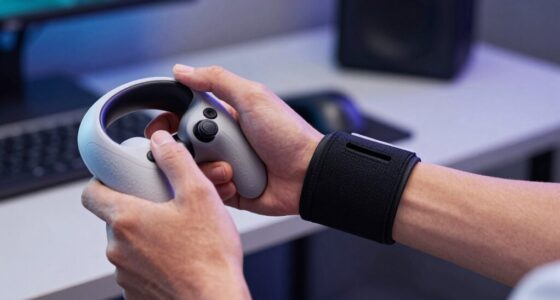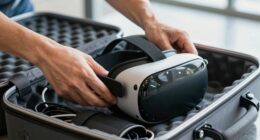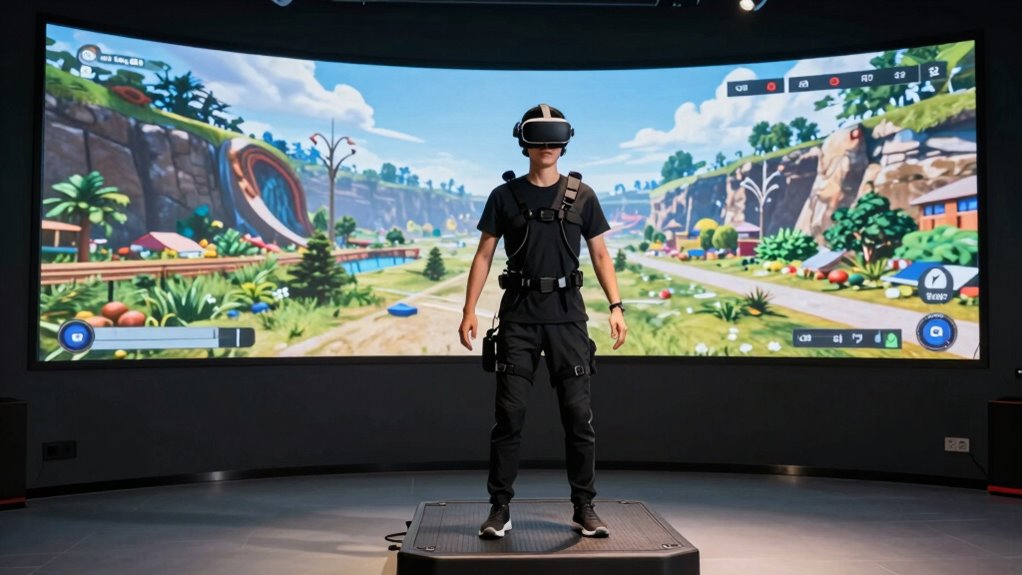

To build your ‘VR legs’ safely, start with short sessions and gradually increase their length over time, giving your body time to adapt. Use comfortable hardware and take regular breaks to prevent discomfort. Stay hydrated and practice breathing exercises if you feel nausea. Pay attention to your body signals and adjust as needed. With patience and consistent practice, you’ll improve your tolerance—continue exploring for more tips to make your VR experience smoother.
Key Takeaways
- Gradually increase VR session durations to allow your body to adapt safely.
- Use proper hardware fit and ergonomic adjustments to minimize physical discomfort.
- Incorporate regular breaks and sensory resets during sessions to prevent fatigue.
- Focus on stable virtual environments and practice breathing exercises for discomfort management.
- Be patient and consistent, gradually building your VR tolerance over time.
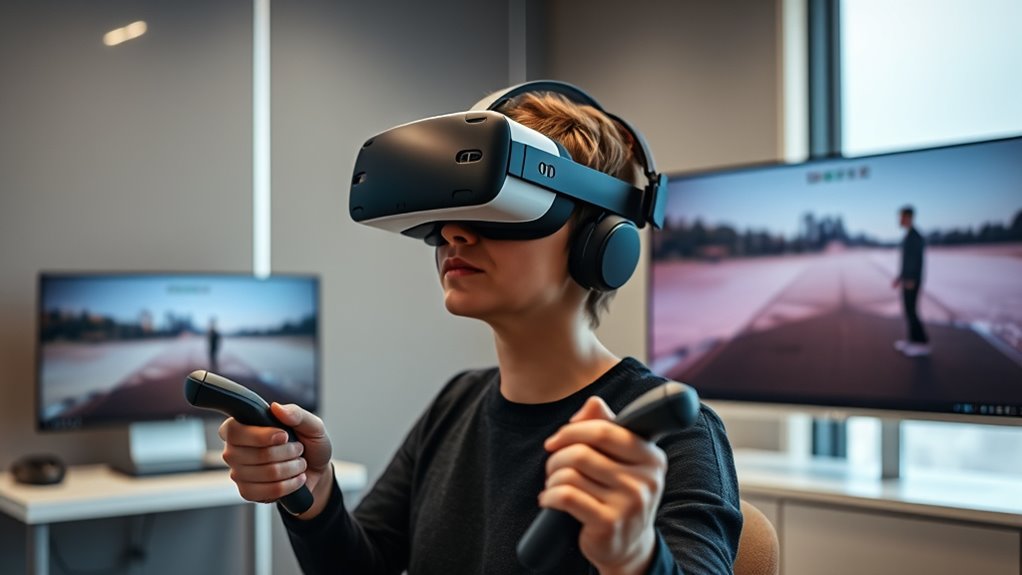
Virtual reality (VR) offers immersive experiences that can revolutionize training across industries, but many users encounter motion sickness that hampers their ability to fully benefit from it. If you’re new to VR or spend extended periods within virtual environments, developing what’s often called “VR legs” becomes essential. Building VR legs involves gradually increasing your tolerance to VR experiences, which hinges on effective virtual adaptation and discomfort management. You can’t expect to dive straight into long sessions and feel comfortable; instead, you’ll need a strategic approach that minimizes discomfort and enhances your ability to adapt.
To start, focus on virtual adaptation. This means progressively exposing yourself to VR environments, starting with short sessions and slowly increasing duration over time. By doing so, your brain and body learn to interpret the virtual stimuli without triggering nausea or dizziness. Consistency is key—regular exposure helps your sensory system recalibrate, reducing the severity of motion sickness symptoms. As you adapt, pay attention to how your body responds, and adjust your session length accordingly. If discomfort begins to build, take a break and lower the intensity or duration of your next experience. Incorporating proper hardware setup and ergonomic adjustments can significantly reduce physical strain and discomfort during VR sessions.
Discomfort management is equally essential. You can implement several practical strategies to ease symptoms during VR sessions. For instance, adjusting the VR headset to fit comfortably ensures minimal physical strain, preventing headaches or muscle tension that could exacerbate discomfort. Maintaining good ventilation and staying hydrated also help your body cope with VR immersion. If motion sickness strikes, breathing exercises or focusing on a fixed point within the virtual environment can help stabilize your senses. Additionally, choosing VR experiences with stable horizons or less intense motion can greatly reduce nausea, especially during early stages of training.
Another effective method is incorporating natural breaks into your VR sessions. Don’t push yourself to endure long, continuous experiences if your body isn’t ready. Instead, set timers and step out periodically, allowing your senses to reset. Over time, as your virtual adaptation improves, you’ll find it easier to handle longer sessions with less discomfort. Remember, patience is essential—building VR legs is a gradual process that demands consistent practice and attention to your body’s signals. With the right discomfort management techniques and a focus on virtual adaptation, you’ll increase your tolerance and enjoy VR training without the typical side effects. This approach will enable you to maximize the benefits of immersive training while reducing the risk of motion sickness, leading to a more effective and enjoyable virtual experience.
Frequently Asked Questions
Can VR Training Help With Existing Motion Sickness Issues?
Yes, VR training can help with existing motion sickness issues by promoting virtual adaptation. As you regularly practice in VR, your brain learns to better process sensory input, leading to symptom relief over time. By gradually exposing yourself to virtual environments, you build tolerance safely and effectively, reducing discomfort. Consistent training helps your body adapt, making future VR experiences more comfortable and less likely to trigger motion sickness.
How Long Does It Take to Build ‘Vr Legs’?
You can build ‘VR legs’ in about a few days to a week, depending on your adaptation timeline and discomfort thresholds. Think of it as “practice makes perfect” — the more you expose yourself gradually, the quicker you’ll adapt. Start with short sessions, listen to your body, and increase exposure gradually. Consistency and patience are key to overcoming initial discomfort and developing a comfortable VR experience.
Are There Age Restrictions for VR Motion Sickness Training?
Yes, there are age restrictions for VR motion sickness training, typically recommended for users aged 12 and older. To guarantee safety, follow guidelines that advise younger users to avoid VR or consult a healthcare professional first. Always prioritize safety guidelines, monitor for discomfort, and start with short sessions to build your tolerance gradually. This approach helps you develop ‘VR legs’ safely and minimizes motion sickness risks.
What Types of VR Content Are Best for Acclimation?
Think of VR exposure as watering a delicate plant—you want to start small and gradually increase. The best content for acclimation includes gentle, low-intensity experiences with smooth movements, like virtual walks or scenic tours. Focus on content customization to match your comfort level, slowly introducing more dynamic scenarios as your VR legs develop. This approach helps your body adapt safely while preventing overwhelming sensations.
Is There Any Medical Advice Before Starting VR Motion Sickness Training?
Before starting VR motion sickness training, you should seek medical advice, especially if you have underlying health issues like epilepsy, migraines, or balance disorders. Medical precautions and consultation recommendations help identify potential risks and guarantee safe participation. Always discuss your health history with a healthcare professional to determine if VR training is suitable for you. Taking these steps minimizes discomfort and helps you build ‘VR legs’ safely.
Conclusion
So, after all this talk about building your ‘VR legs,’ it’s almost amusing how we chase comfort in a world designed to disorient us. Ironically, the very technology meant to transport us can leave us feeling unsteady—yet with patience and proper training, you’ll master the art of staying grounded in a virtual chaos. Who knew that the secret to conquering VR sickness might just be embracing the discomfort? Sometimes, the journey to ease begins with a little chaos.