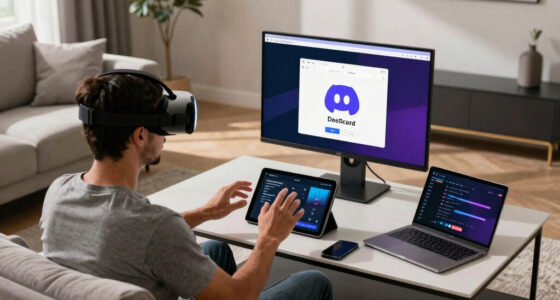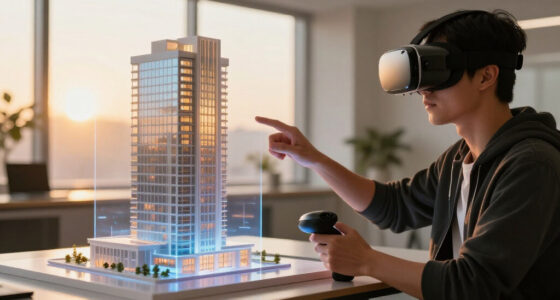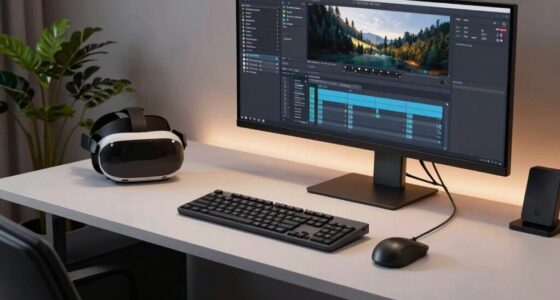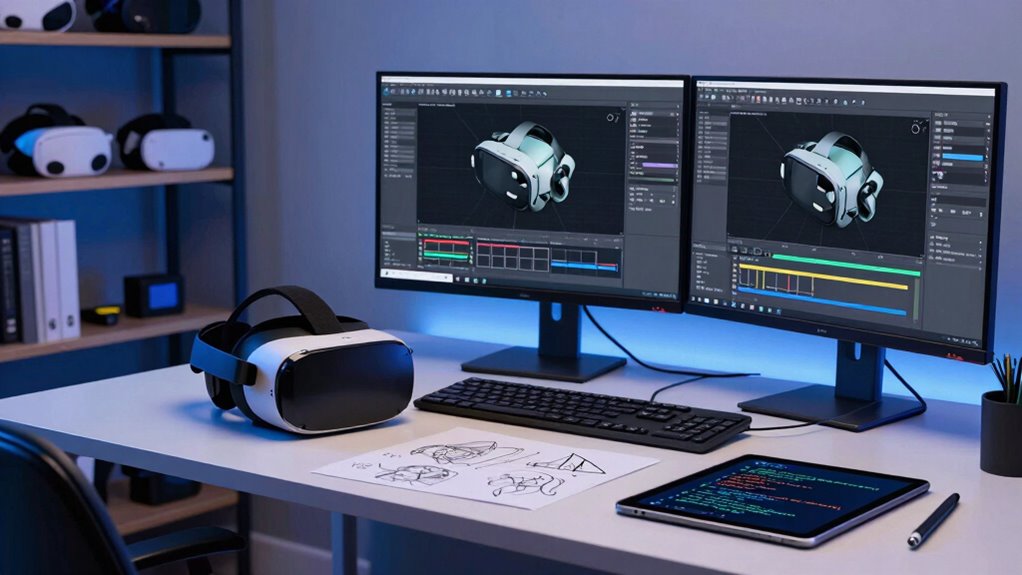
To build a cleaner VR creator workflow, start by organizing your hardware and tools for quick access, ensuring compatibility and efficiency. Incorporate automation for repetitive tasks, use version control, and keep assets well-structured to avoid clutter. Focus on enhancing immersion with spatial audio and haptic feedback to improve user experience. Regular testing and feedback help refine your work. Keep everything streamlined and stay updated—I’ll guide you through more tips to optimize your entire process.

Play games on Amazon Luna for your next adventure, included with Prime
- A rotating selection of games, no download needed
- Play on TV, laptop or phone
- Fast, free delivery for your gear, too
Key Takeaways
- Implement modular asset management and templates to streamline content reuse and reduce clutter.
- Automate repetitive tasks like importing assets and scene setup for faster development cycles.
- Use organized version control and collaboration platforms to enhance team coordination and maintain clean workflows.
- Incorporate real-time testing with diverse hardware to promptly identify and fix issues.
- Integrate spatial audio and haptic feedback early to improve immersion without complicating post-production.
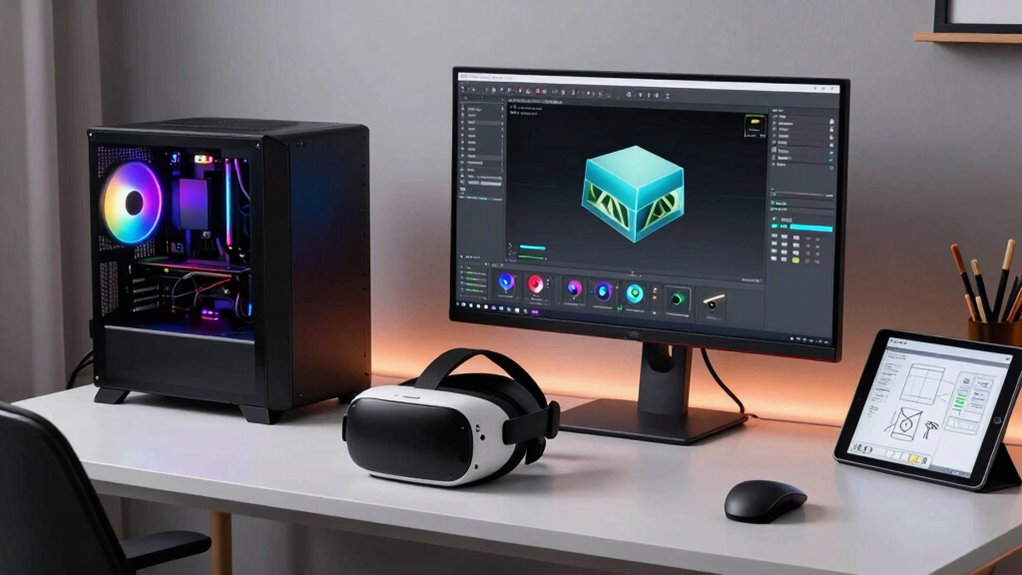
Virtual reality has transformed the way creators develop immersive experiences, but without a streamlined workflow, productivity can quickly suffer. To build a cleaner creator workflow around VR, you need to focus on integrating tools and processes that enhance efficiency while maintaining high-quality output. Start by organizing your hardware and software setup so everything is easily accessible and compatible. This means choosing VR headsets, controllers, and peripherals that work seamlessly together, reducing setup time and technical hiccups. When it comes to designing immersive environments, consider how haptic feedback can elevate user experience. Incorporate controllers with precise haptic feedback to give users tactile sensations, making virtual interactions feel more real and engaging. This not only improves the immersion but also streamlines the testing process, as you can quickly assess how users will perceive different interactions.
Integrate seamless hardware and haptic feedback to enhance immersion and streamline VR testing processes.
Spatial audio is another critical element that should be seamlessly integrated into your workflow. It creates a sense of depth and positioning, making environments more convincing. By using spatial audio tools during development, you can quickly identify how sound interacts with your virtual space, saving time during final testing. This helps you avoid reworking scenes later, which can be time-consuming and disruptive. Make sure your audio setup supports real-time adjustments so you can iterate and refine sound placement on the fly, rather than waiting for lengthy renderings or external processing. Additionally, leveraging smart appliances like advanced audio systems can further streamline your sound workflows by enabling easier control and adjustments. Incorporating automation tools can also help optimize repetitive tasks and improve overall efficiency. Implementing version control is essential for managing changes and collaborating smoothly with team members across different locations. Using collaborative platforms ensures seamless communication and project management, reducing delays and misunderstandings.
Efficiency also depends heavily on your content creation pipeline. Use modular assets and templates so you can reuse elements across projects, reducing redundant work. Automate repetitive tasks whenever possible, such as importing assets or setting up scenes. Integrating asset management systems can further streamline your workflow by keeping everything organized and easily accessible. Collaborate with your team using cloud-based platforms that sync changes instantly, avoiding version control issues or duplicated efforts. Keep your project files organized with clear naming conventions and structured folders, making it easier to locate and update assets as needed. Regularly updating your workflow with the latest tools and techniques can also sustain ongoing productivity improvements.
Finally, prioritize testing and feedback within your workflow. Regularly test your VR experiences on different hardware to identify issues early, and incorporate user feedback to refine interactions. Streamlining your review process minimizes back-and-forth and accelerates progress. By focusing on integrating intuitive tools like haptic feedback and spatial audio, maintaining organized assets, and automating repetitive tasks, you create a cleaner, more productive VR creation environment. This approach allows you to focus more on creativity and less on technical hurdles, ultimately producing immersive experiences more efficiently and with greater impact.
Products Worth Considering

Bose SoundLink Flex Bluetooth Speaker (2nd Gen) – Portable Outdoor Speaker with Hi‑Fi Audio, Waterproof and Dustproof, USB‑C, Up to 12 Hours

Bose QuietComfort Headphones (2nd Gen), Wireless Over-Ear Noise-Cancelling Headphones, Hazelnut Taupe

Bose QuietComfort Ultra Headphones (2nd Gen), Wireless Bluetooth Noise-Cancelling Over-Ear Headphones, Black
As an affiliate, we earn on qualifying purchases.
Frequently Asked Questions
What Are the Best VR Tools for Content Creation?
You should explore VR tools like Unreal Engine and Unity for creating immersive virtual environments, which are essential for engaging content. Use tools like Tilt Brush and Quill for artistic design, and consider platforms like Oculus Medium for sculpting. These tools help improve your content by streamlining workflows and enhancing virtual environments. Focusing on content optimization ensures your VR projects are both visually appealing and efficient, making your creative process smoother.
How Do I Optimize VR Hardware for Workflow Efficiency?
Think of your VR hardware as a finely tuned orchestra; each instrument must be perfectly calibrated for harmony. You optimize workflow efficiency by establishing an ergonomic setup that reduces fatigue and discomfort, ensuring long sessions don’t hinder creativity. Regular hardware calibration keeps the visuals sharp and tracking accurate. By maintaining these aspects, your VR experience becomes seamless, letting you focus on creating without interruptions, much like a conductor guiding a flawless performance.
What Safety Precautions Should I Take During VR Creation?
You should prioritize maintaining ergonomic posture to prevent discomfort during VR creation. Make sure your workspace is clear of obstacles to avoid trips or falls, and take regular breaks to prevent eye strain. Adjust the headset properly for comfort, and use anti-reflective screens or lighting to reduce eye fatigue. Stay aware of your surroundings, and listen to your body’s signals to stay safe and productive during extended VR sessions.
How Can I Collaborate Remotely Using VR?
Ever wondered how you can team up with others in a virtual space? You can facilitate remote collaboration by using VR for virtual brainstorming sessions, allowing real-time idea sharing. Share your VR environment with collaborators, giving them control or input, and use communication tools integrated into the VR platform. This way, you can work together seamlessly, regardless of physical distance, making remote collaboration efficient and engaging in your VR projects.
What Are Common Challenges in VR Creator Workflows?
You often face workflow bottlenecks and creative blockages in VR creation. Technical issues, like hardware limitations or software crashes, slow down progress. Balancing quality with efficiency can be tough, leading to burnout. Additionally, collaborating remotely may cause miscommunication, further hindering your workflow. To overcome these challenges, streamline your processes, use reliable tools, and establish clear communication channels. Regular breaks and brainstorming sessions can help keep your creativity flowing smoothly.
Conclusion
By streamlining your VR creator workflow, you’ll find it’s like tuning a finely crafted instrument—everything works in harmony. Simplify your process, stay organized, and embrace the tools that boost your efficiency. When you create with clarity and purpose, your projects will flow smoother than a well-oiled machine. Keep experimenting, stay curious, and enjoy the journey—because building in VR should feel as exciting as exploring a new universe.