
To prevent slip, fog, and pain during VR fitness with glasses, make sure your headset fits snugly but comfortably, using adjustable straps or spacers to reduce pressure. Use anti-fog wipes or sprays on your glasses and keep them clean to improve visibility. Look for headsets designed with larger eye boxes and glasses compatibility to minimize discomfort. By doing so, you’ll enjoy a smoother, comfortable workout experience—and discovering additional tips can help you get even more from your sessions.
Key Takeaways
- Choose VR headsets with larger eye boxes and glasses-friendly designs for a comfortable, slip-free fit.
- Use anti-fog lens wipes, sprays, or accessories to prevent fogging on glasses during workouts.
- Adjust head straps and use spacers or nose guards to reduce pressure and prevent glasses from slipping.
- Opt for headsets with customizable fit features to minimize pressure and eye strain.
- Keep glasses clean and ensure proper headset fit to enhance comfort and visibility during VR fitness sessions.
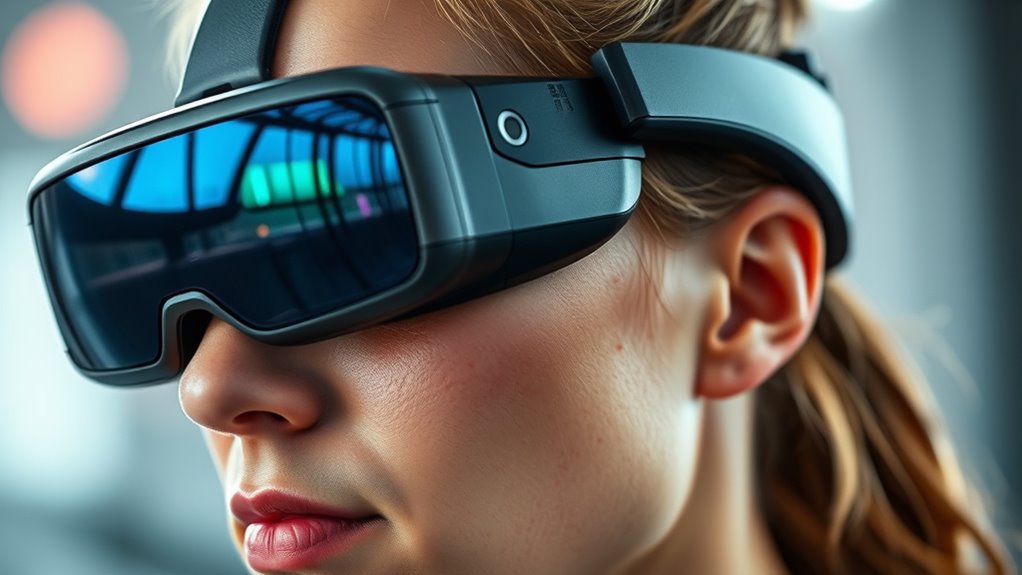
Virtual reality fitness has become more accessible, even for those who wear glasses. If you’re someone who enjoys staying active with VR but worries about discomfort or compatibility issues, you’re not alone. Many VR enthusiasts find that wearing glasses during workouts can cause problems like foggy lenses, slipping headsets, or eye strain. Fortunately, manufacturers are increasingly designing equipment with eye comfort and equipment compatibility in mind. This means you can enjoy immersive VR workouts without sacrificing comfort or risking damage to your glasses.
VR fitness is now more accessible for glasses wearers, with designs prioritizing comfort and compatibility.
When it comes to eye comfort, the key is ensuring that your VR headset fits properly without pressing too tightly on your glasses or causing discomfort around your temples and nose. Look for headsets that offer adjustable straps and enough space inside to comfortably accommodate your glasses. Some models come with built-in glasses spacers or adjustable lenses that help reduce pressure on your frames, which minimizes the risk of pain or headaches during extended sessions. Proper eye comfort isn’t just about avoiding discomfort; it also helps prevent eye strain and fatigue, allowing you to stay focused and engaged for longer periods. Enhanced comfort features in newer VR headsets further improve the experience for glasses wearers.
Equipment compatibility is another critical aspect. Not all VR headsets are designed with glasses wearers in mind, so it’s crucial to choose models that explicitly mention compatibility with glasses or offer features that make wearing glasses easier. For instance, some headsets have larger eye boxes, meaning they can accommodate glasses more comfortably without pressing directly against your lenses. Others include removable face padding or customizable nose guards to improve fit and prevent light leaks that can cause fogging or distraction. Before purchasing, check if the headset’s specifications mention compatibility with glasses or if users have shared reviews indicating a good fit for glasses wearers.
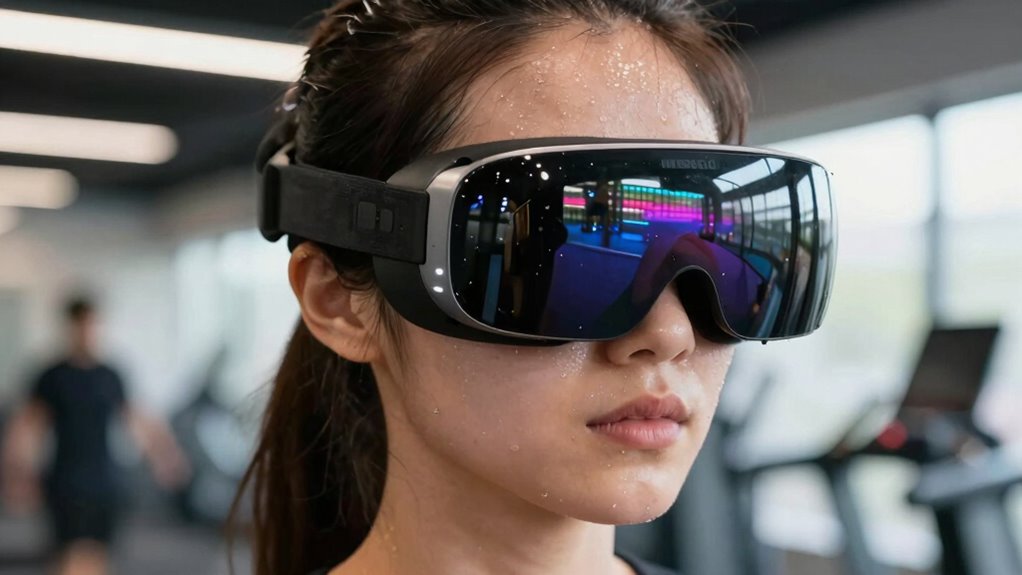
Additionally, the use of anti-fog accessories or lens wipes can greatly improve your experience. Fogging is a common issue when wearing glasses during VR workouts, especially in warm environments or during intense activity. Investing in anti-fog spray or pads designed for VR lenses can help keep your view clear and prevent frustration. Ensuring your glasses are clean and properly fitted also contributes to better eye comfort and equipment compatibility.
Frequently Asked Questions
Can VR Glasses Cause Long-Term Eye Damage?
VR glasses can cause long-term eye damage, but it’s unlikely if you use them correctly. You might experience eye strain and vision fatigue after extended use, which can be uncomfortable but typically temporary. To protect your eyes, take regular breaks, adjust the fit for comfort, and follow manufacturer guidelines. If you notice persistent discomfort or vision issues, consult an eye specialist to prevent any potential long-term harm.
How Do I Clean VR Glasses to Prevent Fogging?
You should regularly clean your VR glasses with a soft, lint-free cloth and use anti fog solutions on the lenses. Apply lens cleaning solutions specifically designed for optics, avoiding harsh chemicals that can damage the lenses. Before each use, gently wipe the lenses to prevent fog buildup. Additionally, make certain your glasses fit properly to minimize warm air from escaping and causing fog, keeping your VR experience clear and comfortable.
Are There Specific VR Exercises for Glasses Wearers?
Think of your glasses as your VR fitness partners—they need tailored exercises. You should look for VR workouts designed with lens compatibility in mind, ensuring comfort and clear visuals. Modify exercises to avoid rapid head movements that cause discomfort or fogging. Focus on low-impact routines like seated yoga or stretching, which protect your glasses while still giving you a good workout. Adaptation is key to making VR fitness work for glasses wearers.
What Are the Best VR Glasses for Prescription Lenses?
The best VR glasses for prescription lenses offer excellent prescription compatibility and lens customization options. You want headsets like Oculus Quest 2 or HTC Vive Pro that allow you to insert your own prescription lenses or have adjustable IPD settings. These features guarantee a snug fit and clear vision, reducing discomfort during workouts. Always verify the device’s compatibility with your specific prescription to maximize comfort and performance during VR fitness sessions.
How Do I Adjust VR Headset Comfort for Glasses?
Getting comfortable with your VR headset is a breeze if you don’t let it slip through your fingers. First, adjust the strap fit to guarantee it’s snug but not tight. Then, explore foam padding options—swap them out for thicker or softer ones to reduce pressure on your glasses and face. A perfect fit means fewer foggy lenses and less discomfort, so take your time to fine-tune for maximum comfort.
Conclusion
So, while VR fitness with glasses can transform your workouts into immersive adventures, don’t forget the challenges—slips, fog, and discomfort. It’s a balancing act, much like steering a virtual world while staying grounded in reality. With the right precautions, you can enjoy the thrill of VR without risking your comfort or safety. Embrace the experience, but remember, a little preparation goes a long way in turning virtual into victorious.