
Some VR upgrades focus more on convenience because they prioritize your comfort, ease of use, and accessibility. Features like lighter frames, adjustable straps, and simplified controls make it easier for you to enjoy longer sessions without fatigue or frustration. These improvements create a more enjoyable and inclusive experience, encouraging frequent use. If you want to explore how these comfort-oriented upgrades shape your VR experience even further, there’s more to discover just ahead.
Key Takeaways
- Ergonomic enhancements focus on user comfort and ease of use, reducing fatigue and physical strain during extended sessions.
- Software compatibility updates improve seamless integration and stability, enhancing overall user experience without boosting raw performance.
- Usability improvements like intuitive interfaces and controls make VR systems more accessible, prioritizing convenience over technical power.
- Comfort-focused upgrades ensure better fit and adjustability, encouraging longer use and reducing distractions, thus enhancing immersion.
- Convenience upgrades aim to create a safer, user-friendly environment, making VR more approachable regardless of hardware performance gains.
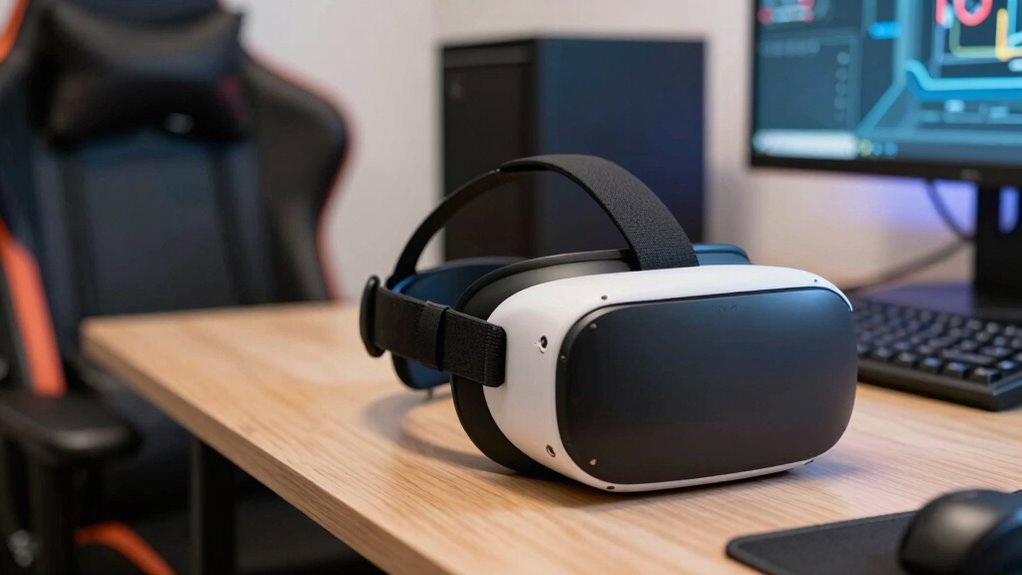
Have you ever wondered whether upgrading your VR setup should prioritize convenience or raw performance? It’s a common dilemma, especially when new models flood the market with flashy specs and cutting-edge hardware. Often, upgrades that focus on convenience seem to make your experience smoother and more accessible, even if they don’t considerably boost performance metrics like graphics fidelity or processing power. This is because many of these improvements are centered around ergonomic design and software compatibility, which directly affect how easily and comfortably you can use your VR system day-to-day.
Upgrades focused on convenience enhance comfort and usability without necessarily boosting raw performance.
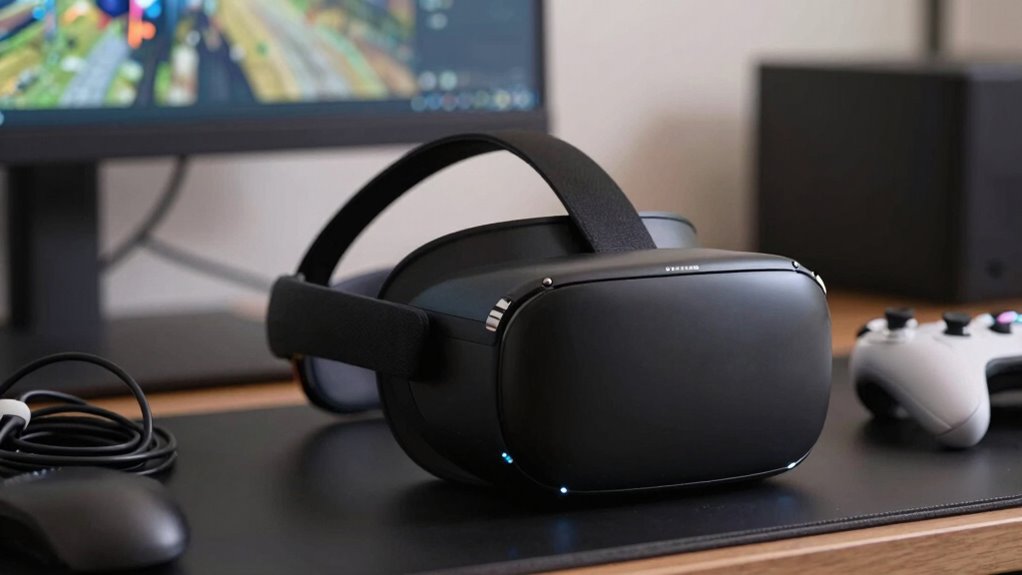
When an upgrade emphasizes ergonomic design, it’s about making your VR experience more comfortable and less fatiguing. For instance, a headset with a lighter frame, adjustable straps, and better weight distribution can reduce strain during long play sessions. These modifications might not increase your system’s raw power but can drastically improve your overall experience by allowing you to wear the headset longer without discomfort. Better ergonomics also mean easier adjustments, so you can quickly fit the device to your head, ensuring ideal visual clarity and immersion without fiddling with uncomfortable straps or awkward positioning. This focus on comfort makes your VR sessions more enjoyable and less of a chore, especially if you’re someone who spends hours exploring virtual worlds. Additionally, hardware ergonomics can help prevent fatigue and discomfort, which are common barriers to prolonged VR use. Incorporating ergonomic considerations can also reduce the risk of strain injuries, making VR a safer activity for frequent users. Furthermore, human factors research plays a crucial role in designing these ergonomic features, ensuring they cater to a broad range of users and body types. A well-designed ergonomic headset can also enhance your overall sense of immersion, as discomfort and distractions are minimized.
Software compatibility is another key factor that often takes precedence in convenience-focused upgrades. Newer headsets or peripherals that are compatible with a wider range of software and platforms streamline your setup process and reduce technical issues. For example, an upgrade might include firmware improvements that enable seamless integration with popular VR applications or better support for multi-platform use. This means fewer crashes, less troubleshooting, and more time spent immersed in your virtual environment. Compatibility updates also ensure that your hardware stays relevant longer, reducing the need for frequent, costly upgrades just to keep up with the latest software. In this way, software compatibility enhances convenience by making your entire VR ecosystem more reliable and easier to operate, without necessarily pushing the boundaries of raw performance.
Additionally, focusing on user experience through intuitive interfaces and simplified controls can greatly improve how accessible and enjoyable your VR sessions are. In the end, these convenience-oriented upgrades might not turn your system into a powerhouse capable of the highest-end graphics or fastest frame rates, but they notably improve how you interact with and enjoy your VR experience. When you prioritize ergonomic design and software compatibility, you create a more user-friendly environment where comfort, ease of use, and reliability take center stage. That’s often enough to make your VR sessions more immersive and enjoyable, proving that sometimes, the best upgrades are those that make your system more accessible rather than just more powerful.
VR headset with ergonomic design
As an affiliate, we earn on qualifying purchases.
As an affiliate, we earn on qualifying purchases.
Frequently Asked Questions
How Do VR Upgrades Affect Long-Term User Comfort?
VR upgrades enhance your long-term user comfort by focusing on ergonomic design, reducing strain and fatigue during extended use. Improved user interfaces make navigation smoother and more intuitive, preventing frustration. These upgrades guarantee you can wear your headset longer without discomfort, making your experience more enjoyable. As a result, you’ll experience less physical stress, encouraging prolonged use and increasing overall satisfaction with your VR system over time.
Are There Cost Differences Between Convenience-Focused and Performance-Focused VR Upgrades?
Yes, convenience-focused VR upgrades often cost less, offering better cost efficiency. These upgrades, like improved controllers or easier setup features, are usually more accessible because they don’t require expensive hardware overhauls. Performance-focused upgrades, such as high-end graphics cards or advanced sensors, tend to be pricier and less accessible for casual users. So, if you prioritize affordability and ease of use, convenience upgrades are a smarter choice.
Do Convenience Upgrades Impact VR Device Compatibility With Existing Hardware?
Convenience upgrades can impact your VR device’s hardware compatibility and accessory integration. They often introduce new features or connectors that may not seamlessly work with your existing hardware setup. You might need additional adapters or updates to guarantee everything functions smoothly. It’s crucial to check compatibility details before upgrading, so you avoid any issues with accessory integration or hardware compatibility that could limit your VR experience.
Can Convenience Upgrades Improve Social or Multiplayer VR Experiences?
Can convenience upgrades truly enhance your social and multiplayer VR experiences? Absolutely. They streamline setup, reduce lag, and improve headset comfort, making social interactions more natural and immersive. When multiplayer dynamics become smoother and less frustrating, you’re more likely to engage longer and connect deeply with others. Upgrades that focus on ease of use and reliability considerably boost your ability to enjoy social VR, turning virtual meetups into more seamless, engaging events.
How Do Convenience Upgrades Influence the Overall Lifespan of VR Equipment?
Convenience upgrades like improved battery life and ergonomic design can substantially extend the lifespan of your VR equipment. Longer battery life means you won’t need to replace batteries or upgrade devices as often, while ergonomic improvements reduce strain and wear on components. These upgrades encourage you to use your VR headset more regularly and comfortably, ultimately delaying the need for replacement and ensuring your device stays functional and enjoyable for years.
lightweight VR headset adjustable straps
As an affiliate, we earn on qualifying purchases.
As an affiliate, we earn on qualifying purchases.
Conclusion
Ultimately, it’s clear that many VR upgrades prioritize convenience because they directly enhance your daily experience, making setup and use smoother. While some improvements boost performance, they often require more effort and investment, with less immediate payoff. Think of it like upgrading your phone’s battery versus its processor—you’ll notice the convenience first. So, if you want quick, tangible benefits, focusing on convenience upgrades might just be the smarter move for your VR adventures.
As an affiliate, we earn on qualifying purchases.
VR headsets with software compatibility
As an affiliate, we earn on qualifying purchases.
As an affiliate, we earn on qualifying purchases.