
TL;DR
An XDA Developers writer reports using PETG filament for a range of practical household 3D prints, from cable clips and network brackets to garden accessories and replacement parts. The account is personal rather than a controlled test: PETG’s durability and heat tolerance are cited as benefits, while moisture absorption by unused filament can cause printing problems.
An XDA Developers writer says a roll of PETG filament has become a regular material for household 3D prints, including cable organizers, mounting brackets, garden accessories and replacement parts. The Oct. 21 account describes one person’s experience rather than a product test, but it offers a practical look at why makers may choose PETG over standard PLA for everyday items—and the moisture-related care the filament can require.
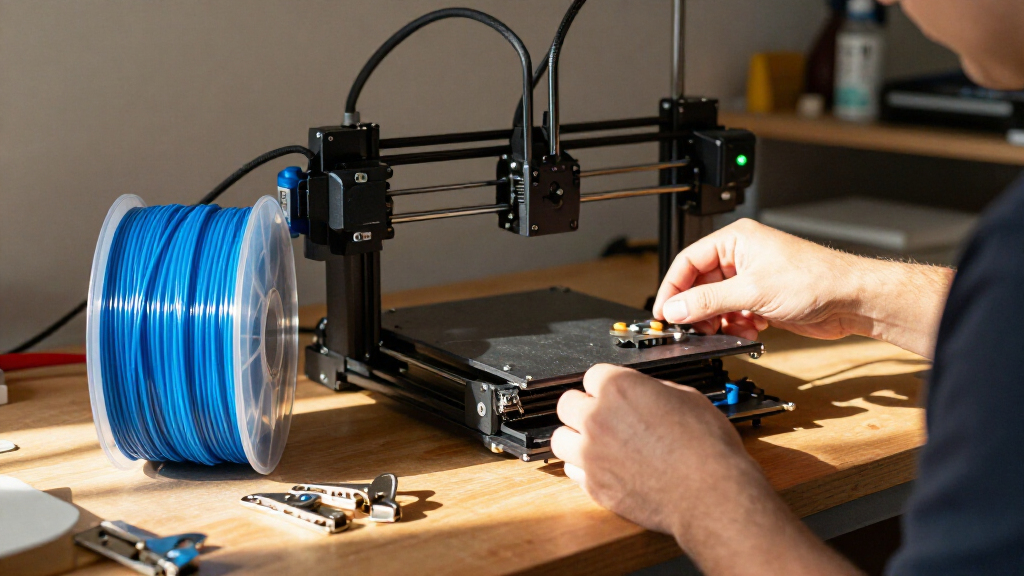
The writer says they turned to PETG after shifting from decorative models to functional prints. They describe the material as having better impact resistance and heat tolerance than regular PLA, as well as resistance to water, oils and common chemicals once printed. In their experience, those properties have made it useful for items exposed to handling, moisture or warmth around the home.
Examples from the writer’s home lab include desk-edge cable clips, under-desk trays, brackets for network switches and wireless access points, and clips inside PCs and servers. They also report printing drive caddies for network-attached storage systems and a custom power-supply shroud. The writer says the brackets have held up for months, but provides no test results or measurements to independently establish how the prints perform.
Outside the lab, the writer lists jar organizers, bag-sealing accessories, bathroom racks and phone mounts, along with garden hose splitters, pot trays and plant labels. PETG has also been used for small replacement components, including a latch on a Raspberry Pi 5 and custom vacuum-cleaner hoses. These are examples from a single household, not recommendations for every use or device.
Where PETG Fits Around the Home
The account highlights how accessible 3D printing can extend beyond display models: a printer and suitable filament can help make custom organizers and hard-to-find replacement pieces. That may appeal to people trying to tidy workspaces, adapt equipment to their needs or replace a small part without sourcing a standard component.
Material choice matters because a print’s intended environment can affect whether it remains useful. The writer’s experience suggests PETG can be a practical option for some items that face routine handling, moisture or moderate heat. It does not establish that any particular printed design is safe for every load, temperature or application; users still need to account for printer settings, part geometry and the conditions where an item will be used.
The article also draws a distinction between the finished print and the filament spool. While the writer describes printed PETG items as resistant to moisture, they say the filament absorbs moisture from the air. That can affect print quality, making storage and drying relevant even when the finished object is intended for a damp setting.
As an affiliate, we earn on qualifying purchases.
From PLA Models to Practical Prints
The writer says an early lesson in material choice came after a PLA model was left in direct sunlight and was found deformed the next day. They later experimented with different filaments, using TPU for flexible or wearable parts and PETG for many utility prints. The article presents those choices as personal practice, not a universal ranking of 3D-printing materials.
PETG is described as a middle-ground choice for the writer’s household projects: more suited than regular PLA, in their view, to parts that face stress or warmth, while still being affordable. The reported uses span cable management, computer hardware, bathroom accessories and gardening tools. The article does not provide filament brands, printer models, detailed settings, prices or measurements, so readers cannot use it as a direct comparison between particular products.
Food-related use is one area the writer avoids. Although they print organizers and bag-sealing accessories, they say they are wary of using PETG filament for food containers, including variants marketed as safe. The account does not set out a food-safety assessment; it records the writer’s own caution.
“PETG is durable enough for most functional prints in my house.”
— XDA Developers writer
household 3D printed replacement parts
As an affiliate, we earn on qualifying purchases.
As an affiliate, we earn on qualifying purchases.
Limits of One Maker’s Experience
The article is a personal account and does not include controlled strength, heat or chemical-resistance tests. It does not specify the PETG formulation, printer settings, part designs or exact conditions for the reported projects. Claims that particular prints held up are therefore the writer’s observations, not independently verified performance findings.
It is also unclear how long most of the listed parts have been in use. The writer says some network brackets have lasted for months, but gives no comparable timeline for other household items. The account does not establish safe load limits, suitability for high temperatures, or whether a printed component is appropriate for a safety-critical repair. Food-contact suitability is not assessed; the writer says they avoid PETG food containers.
3D printed cable clips and organizers
As an affiliate, we earn on qualifying purchases.
As an affiliate, we earn on qualifying purchases.
Storage and Use Need Care
The article gives no product launch, new testing program or follow-up date. Its practical next step for readers is to match filament and print design to the intended use, then protect unused PETG from damp air. The writer says small everyday objects often use about 10 to 75 grams of filament, so a spool may be opened and used in several shorter print jobs rather than one large project.
To manage moisture in their humid location, the writer uses a filament dryer and desiccant packets. Anyone following that approach would still need to consult the filament and printer manufacturers’ guidance for suitable drying and storage conditions. Whether a PETG part will work for a specific repair depends on its design and operating environment; the article does not provide a universal specification.
As an affiliate, we earn on qualifying purchases.
Key Questions
What does the XDA Developers writer use PETG for?
The writer lists cable clips, under-desk trays, network-equipment brackets, PC wire clips, storage caddies, bathroom accessories, garden items and replacement parts. These are examples from one person’s projects, not tested recommendations for every household.
Why does the writer prefer PETG for many functional prints?
The writer cites PETG’s impact resistance, heat tolerance compared with regular PLA, and resistance to water, oils and common chemicals as reasons for using it on practical items. The article does not provide comparative test data.
What problem can affect PETG filament?
The writer says PETG filament is hygroscopic, meaning it can absorb moisture from the air. They report that moisture can contribute to excessive stringing and use a filament dryer and desiccant packets to store opened spools.
Does the article recommend PETG for food containers?
No. The writer says they are wary of using PETG for food containers, including variants described as safe. The account does not provide a food-contact safety assessment.
Source: XDA Developers