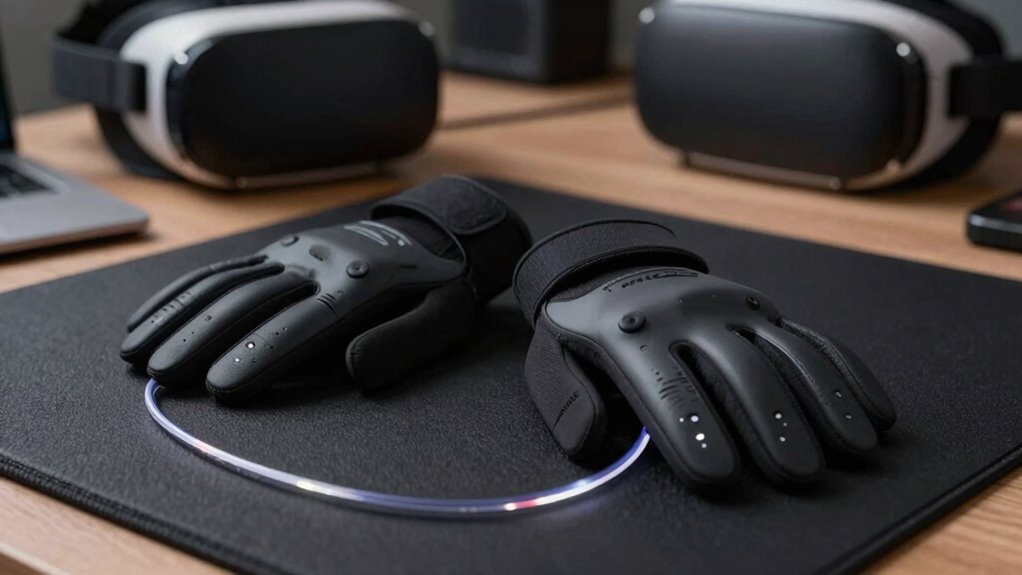

Haptic gloves are still a niche upgrade for most VR users because they’re often bulky, stiff, and expensive, making prolonged comfort a challenge. Many find them complicated to set up and incompatible with popular VR systems and games, limiting their usefulness. Additionally, current technology struggles with latency, realistic feedback, and broad software support. As improvements happen, they may become more accessible—so if you want to understand the hurdles and future prospects, keep exploring.

Get VR and gaming gear delivered free — and shop member deals
- Fast, free delivery on millions of items
- Access to Prime Big Deal Days deals on October 6–7
- Prime Video, Amazon Music and more included
Key Takeaways
- High costs and limited perceived benefits deter mass adoption of haptic gloves.
- Comfort issues and complex setup discourage casual or prolonged use.
- Technological limitations like latency and inconsistent feedback reduce immersion quality.
- Compatibility and software support are limited, restricting device integration with most VR systems.
- Ongoing development means users prefer to wait for more refined, affordable, and user-friendly versions.

Haptic gloves for VR are revolutionizing the way you interact with virtual environments by providing tactile feedback that mimics real-world sensations. They aim to bridge the gap between digital and physical experiences, making actions like gripping objects or feeling textures more immersive. At the core of these devices is haptic glove design, which involves complex mechanisms to deliver VR tactile feedback that feels authentic. However, despite their potential, haptic gloves remain a niche upgrade for most VR users. Several factors limit their widespread adoption.
First, the current haptic glove design often sacrifices comfort and usability. Many models are bulky, stiff, or heavy, making prolonged use uncomfortable. If a glove isn’t comfortable, you’ll be less inclined to wear it during extended gaming or training sessions. Additionally, these gloves often require calibration and fine-tuning to ensure accurate VR tactile feedback, which can be cumbersome and time-consuming. This complexity discourages casual users who prefer simple, plug-and-play solutions over intricate setups.
Comfort and usability issues hinder widespread adoption of current haptic gloves for VR.
Cost is another considerable barrier. High-quality haptic gloves with advanced VR tactile feedback can cost hundreds or even thousands of dollars. For most consumers, that’s a steep investment for a niche feature that might not markedly enhance their overall VR experience. Many users see their current setups as sufficient for gaming or entertainment, so they’re hesitant to upgrade to expensive accessories with uncertain benefits. Moreover, the development of haptic feedback technology is ongoing, and many users are waiting for continued advancements before investing.
Furthermore, the technology still faces limitations in latency and resolution. The VR tactile feedback provided by current gloves isn’t always perfectly synchronized with visual cues, leading to a disconnect that can break immersion. When sensations feel delayed or inconsistent, it becomes obvious that haptic gloves are still a developing technology. This can frustrate users who expect seamless and realistic interactions in VR. Improving haptic feedback quality is crucial for making these devices more convincing and enjoyable. As research progresses, there is hope that future iterations will offer more comfortable designs that better suit prolonged use.
Another issue is compatibility. Not all haptic gloves work with every VR system or game. Developers must optimize their software to support these devices, and many titles don’t yet incorporate haptic feedback features. Until broader compatibility and software support become standard, most users won’t see the full potential of these gloves. Additionally, as the technology evolves, some users may prefer to wait for newer, more refined versions before making a purchase.
As an affiliate, we earn on qualifying purchases.
Frequently Asked Questions
How Durable Are Current Haptic Glove Materials?
Current haptic glove materials generally have decent wear resistance but aren’t completely immune to material degradation over time. You might notice some loss of tactile feedback or flexibility after extensive use. While manufacturers aim to improve durability, many gloves still face challenges with long-term wear resistance, especially in high-intensity VR sessions. So, expect some degradation, and consider this when investing in haptic gloves for regular or heavy use.
Can Haptic Gloves Improve Multiplayer VR Experiences?
Haptic gloves can markedly enhance multiplayer immersion by providing realistic tactile feedback, making social interactions feel more genuine. You’ll experience a heightened sense of presence, as gestures and touches become more natural and engaging. While they improve social interaction and create a more connected multiplayer environment, current limitations in durability and cost mean not everyone can access these benefits yet. Still, they hold great potential for transforming shared VR experiences.
Are Haptic Gloves Compatible With All VR Headsets?
Haptic gloves aren’t compatible with all VR headsets yet. Many models focus on gesture recognition, but compatibility varies, often requiring specific hardware or software. You might find some gloves work seamlessly with certain headsets, yet others don’t support your device. Price affordability also impacts accessibility, as high costs limit widespread adoption. So, before purchasing, check if the gloves are compatible with your VR headset and consider whether the investment aligns with your budget.
What Is the Average Lifespan of a Pair of Haptic Gloves?
Ever wondered how long your haptic gloves will last? On average, a pair provides about 1 to 2 years of reliable use, depending on factors like haptic feedback intensity and glove ergonomics. Regular wear and tear, especially in the sensors and actuators, can shorten their lifespan. To maximize longevity, choose gloves with quality construction and proper care. Are you ready to invest in durability?
Do Haptic Gloves Require Frequent Software Updates?
Haptic gloves do require software updates to stay compatible with new VR platforms and improve user interface features. You’ll need to regularly update the software to guarantee smooth integration, fix bugs, and add functionalities. These updates help maintain software compatibility, but they can sometimes be frequent or require technical know-how. Staying current with updates ensures your gloves work effectively, enhancing your overall VR experience.
As an affiliate, we earn on qualifying purchases.
Conclusion
While haptic gloves promise a more immersive VR experience, they’re still a niche upgrade for most users. The technology remains costly and sometimes clunky, making it hard to justify the investment. Until these gloves become more affordable and user-friendly, they’ll continue to be a tool for enthusiasts rather than everyday gamers. Sometimes, you have to wait for the dust to settle before diving into the deep end of innovation.
affordable VR haptic feedback gloves
As an affiliate, we earn on qualifying purchases.
As an affiliate, we earn on qualifying purchases.
As an affiliate, we earn on qualifying purchases.
Halloween Picks
halloween
As an affiliate, we earn on qualifying purchases.