When you buy a VR headset, know that costs don’t stop there. You’ll likely need extra controllers, sensors, or gloves to boost immersion, which can quickly add up. Subscription fees for games and updates also become ongoing expenses. Plus, hardware upgrades and dedicated space for movement increase costs over time. These hidden expenses can surprise new owners, but understanding them now will help you plan. Keep going to uncover more about what you might face.
Key Takeaways
- Additional accessories like controllers and sensors can significantly increase overall VR setup costs.
- Subscription fees for platforms and content updates add ongoing expenses beyond initial purchase.
- Upgrading hardware and creating dedicated space for VR can lead to substantial, unforeseen costs.
- Continuous spending on new content, accessories, and hardware is common as VR technology evolves.
- Planning for hidden costs ensures a sustainable VR experience and prevents unexpected financial surprises.
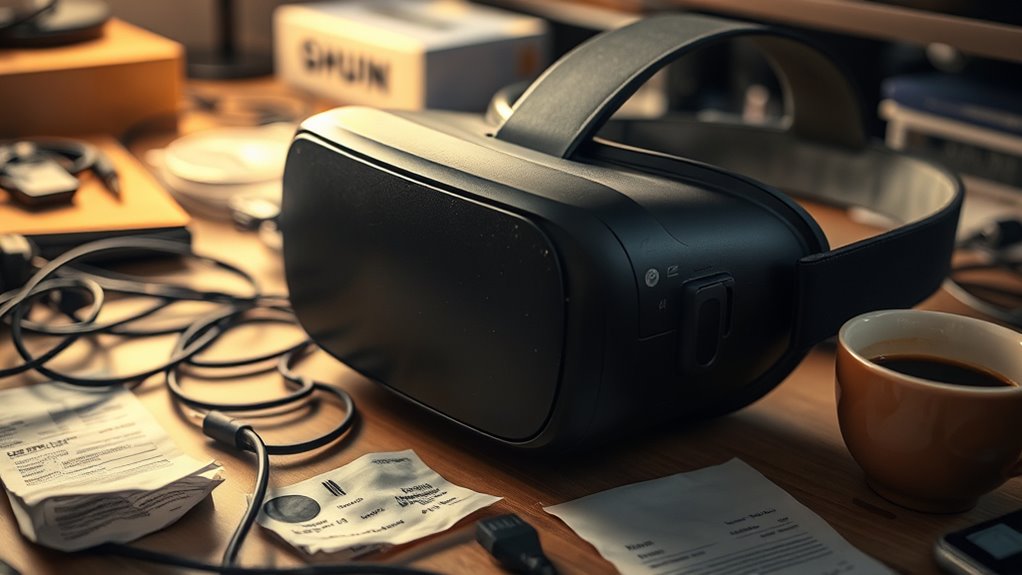
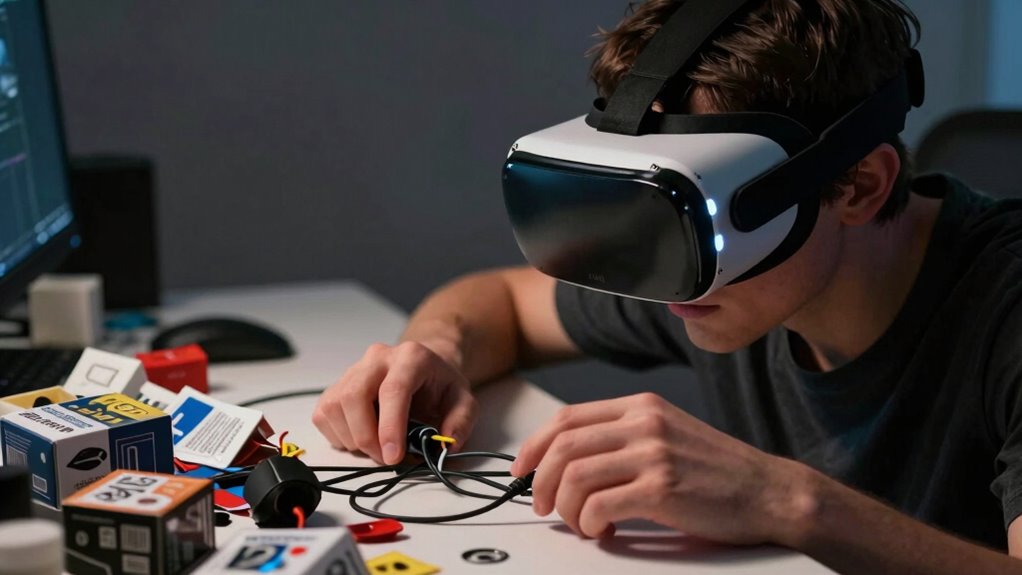
Have you ever contemplated what lies beneath the shiny surface of virtual reality? When you first get into VR, it’s easy to focus on the immersive worlds and exciting gameplay. But behind the scenes, there are hidden costs that can catch you off guard. One of the most overlooked expenses is costly accessories. While a headset might seem like the main investment, you’ll soon discover that additional gear enhances your experience but comes with a hefty price tag. Things like motion controllers, specialized gloves, or even external sensors can quickly add up. These accessories are often marketed as optional, but to truly maximize your immersion, many VR enthusiasts find themselves purchasing more equipment. It’s tempting to think you’ll get by with just the basic setup, but the reality is, the more you invest, the more you’ll want to improve your experience, and that means spending more money.
Alongside costly accessories, software subscriptions also pose significant ongoing expenses. Many VR platforms now operate on a subscription model, offering access to a library of games, exclusive content, or cloud-based features. These subscriptions aren’t cheap, and they can quickly become a recurring monthly expense. While some users may initially see VR as a one-time purchase, the reality is that maintaining access to new and popular titles often requires continuous financial commitment. If you’re not careful, those monthly fees can add up to a substantial sum over time, making VR more expensive than it initially seemed. It’s easy to underestimate how much you’ll spend on these subscriptions, especially since new titles and updates are constantly released, tempting you to stay subscribed for the latest content. Additionally, the need for compatible hardware updates can further increase costs over time.
Beyond accessories and subscriptions, there are other costs to consider, such as upgrading your hardware to keep up with the latest VR technology or investing in a dedicated space to move freely. These expenses can quickly escalate, especially if you want the most realistic and seamless experience possible. Many newcomers are surprised to learn that VR isn’t just a one-and-done purchase; it’s an evolving investment. You might start with a modest setup, but as your interest deepens, so will your spending. The key is to be aware of these hidden costs from the start, so you can plan your budget accordingly. Recognizing that VR is an ongoing expense rather than a one-time buy helps you enjoy the experience without financial surprises down the line. Being aware of hidden costs can help you better prepare for a more sustainable VR journey.
Frequently Asked Questions
Are There Ongoing Subscription Fees for VR Content?
Yes, you may face ongoing subscription fees for VR content. Many VR platforms require subscriptions for access to exclusive content or regular updates, which are part of VR content licensing agreements. Additionally, some developers charge content ownership fees if you want to retain certain experiences or assets long-term. Keep in mind these costs can add up over time, so consider them when budgeting for your VR setup.
What Are the Long-Term Maintenance Costs for VR Hardware?
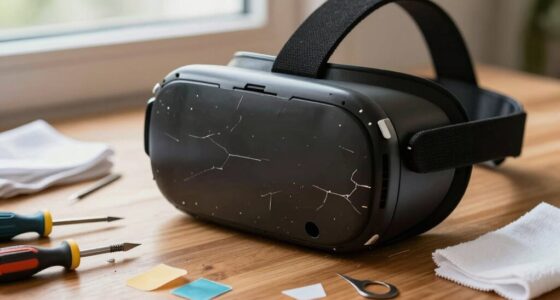
Picture your VR headset as a finely tuned machine that needs regular care. Long-term maintenance costs include replacing parts, updating software, and ensuring hardware longevity. You’ll benefit from warranty coverage, but after it expires, repairs can add up. Keep your device in good shape by following manufacturer guidelines, and budget for occasional upgrades or repairs to avoid unexpected expenses down the line.
How Much Should I Budget for VR Software Updates?
You should budget around $200 to $500 annually for VR software updates, including VR calibration and user training. Regular updates guarantee your hardware runs smoothly and stays compatible with new features. Training helps users adapt to changes, reducing downtime. Keep in mind, costs may vary based on the complexity of your setup and the frequency of updates, so plan for ongoing expenses to maximize your VR experience.
Do VR Headsets Require Regular Repairs or Replacements?
Many believe VR hardware needs frequent repairs, but durability varies by brand. You’re less likely to need regular replacements if you choose reputable models and handle them with care. Keep in mind, some VR ecosystems operate on content subscription models, which can add ongoing costs. Regular cleaning and proper storage can extend your headset’s lifespan, reducing the need for repairs or replacements over time.
Are There Hidden Costs Related to VR Safety Accessories?
Yes, there are hidden costs related to VR safety accessories. You’ll need safety gear like wrist straps or face guards to prevent injuries. Additionally, consider space requirements; you might need to clear or upgrade your area to avoid accidents. These costs accumulate over time, so plan accordingly. Investing in proper safety accessories and adequate space ensures a safer, more enjoyable VR experience without unexpected expenses.
Conclusion
As you delve into VR, remember there’s more than meets the eye. The costs extend beyond the initial purchase—think ongoing upgrades, potential discomfort, and hidden maintenance fees. Don’t be fooled into believing it’s a one-time investment; VR’s true price lies in the unseen sacrifices and continuous expenses. Recognize this truth now, so you’re not blindsided later. Embrace the full reality of VR—only then can you truly enjoy its immersive promise without regret.