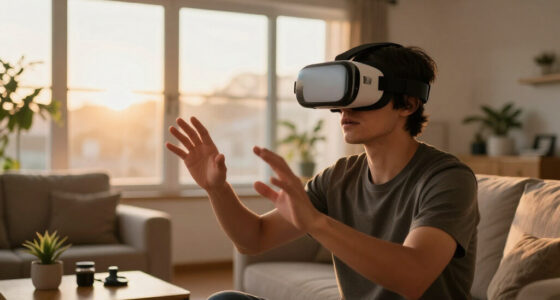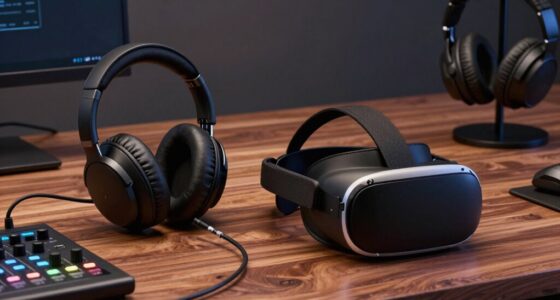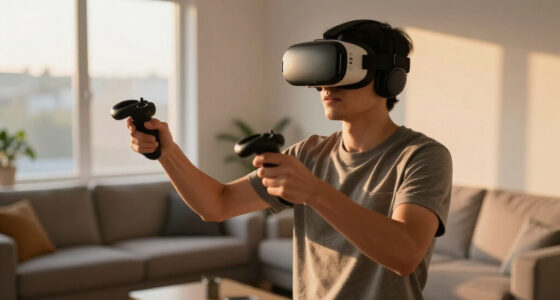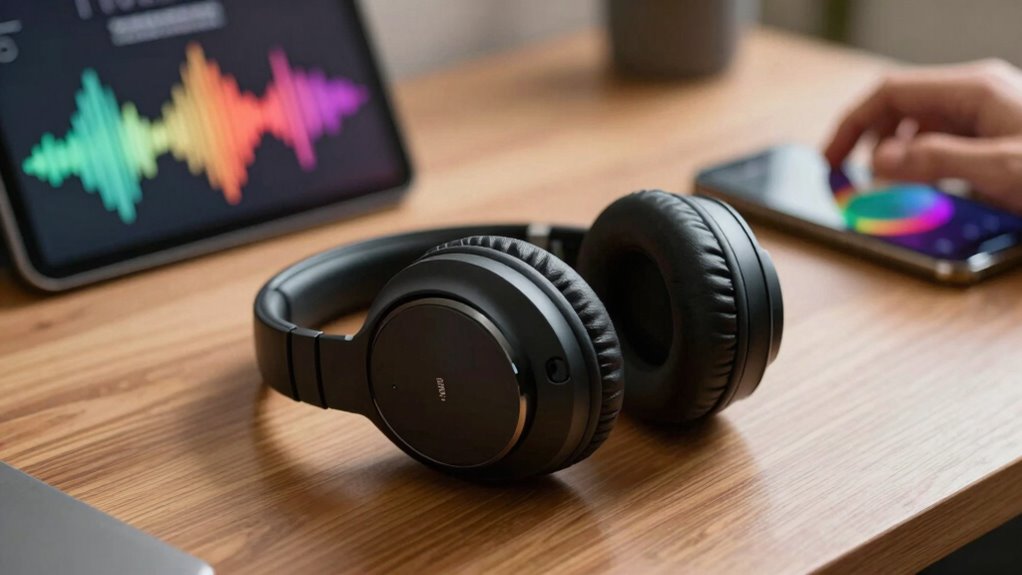

Spatial audio can feel impressive because it creates a realistic 3D environment that surrounds you, making virtual scenes more immersive and engaging. However, if the effects are too intense or poorly balanced, they can overwhelm your senses or obscure important sounds like dialogue. Your experience also depends on how well the system is calibrated and your personal sensitivity. Keep exploring, and you’ll discover ways to enjoy the full potential of spatial audio without feeling overwhelmed.

Play games on Amazon Luna for your next adventure, included with Prime
- A rotating selection of games, no download needed
- Play on TV, laptop or phone
- Fast, free delivery for your gear, too
Key Takeaways
- Precise positioning of sounds enhances immersion, making virtual environments feel more real and engaging.
- Overly intense or unbalanced ambient effects can overwhelm or obscure important audio cues.
- Improper calibration or poor implementation may cause discomfort or reduce overall sound quality.
- Personal preferences and sensitivity influence whether spatial audio feels immersive or distracting.
- Technological improvements aim to optimize sound balance and reduce sensory overload for better experiences.
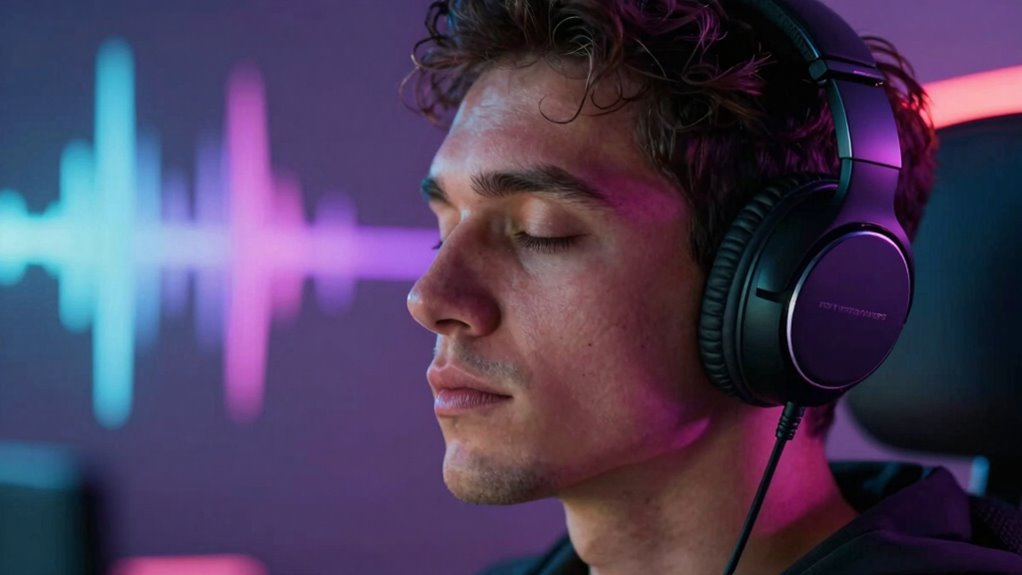
Spatial audio has become a game-changer in how we experience sound, immersing you in a three-dimensional environment that feels remarkably real. It creates a sense of space, allowing ambient effects to envelop you from all directions. When done well, it enhances user immersion, making you feel as if you’re truly inside the scene or environment. Whether you’re playing a game, watching a movie, or listening to music, spatial audio can heighten the sensory experience by positioning sounds precisely around you, adding depth and realism that traditional stereo can’t match.
However, this immersive quality can sometimes be overwhelming or distracting. If the ambient effects are too intense or poorly balanced, they can drown out important sounds or make it difficult to focus. For example, in a game, constant environmental noise might obscure critical cues or dialogue, pulling you out of the experience rather than drawing you in. When the spatial cues are inconsistent or exaggerated, your brain struggles to interpret the environment, leading to discomfort or fatigue. This is especially true if you’re not used to such detailed soundscapes. Your mind might work harder to distinguish between background ambient effects and primary sounds, which can be mentally exhausting over time.
The level of user immersion also plays a role in whether spatial audio feels impressive or distracting. If you’re genuinely engaged, the sense of being surrounded by sound can elevate your experience to a new level. You might notice subtle ambient effects that enrich the environment, making virtual worlds seem more alive. But if the spatial audio is poorly calibrated or if the ambient effects are overly prominent, it can cause sensory overload. You might find yourself distracted by the constant movement or positioning of sounds, which pulls your attention away from the main content. In some cases, this distraction can diminish your overall enjoyment, especially if you prefer a more straightforward audio experience. Additionally, advancements in 3D audio technology promise more seamless integration, helping to reduce such issues in the future. Understanding the impact of calibration on spatial audio quality is crucial for achieving the ideal balance.
In the end, whether spatial audio impresses or distracts depends on how well it’s implemented and your personal preferences. When balanced correctly, it enhances user immersion and makes virtual environments feel more authentic. When overdone or poorly executed, it can become a source of distraction, pulling your focus away from what you’re supposed to be experiencing. As technology advances, you’ll likely see improvements that make spatial audio more seamless and intuitive, helping you enjoy its impressive qualities without the drawbacks.
spatial audio calibration headphones
As an affiliate, we earn on qualifying purchases.
As an affiliate, we earn on qualifying purchases.
Frequently Asked Questions
How Does Spatial Audio Differ From Traditional Stereo Sound?
Spatial audio differs from traditional stereo sound by creating a sense of depth perception, making you feel like sounds are coming from different directions and distances. You’re immersed in an experience that mimics real life, where sounds move around you naturally. Unlike stereo, which only offers two channels, spatial audio uses advanced technology to position sounds in a three-dimensional space, enhancing realism and immersion.
Can Spatial Audio Cause Motion Sickness or Discomfort?
Sure, spatial audio can cause motion sickness or discomfort, ironically because it enhances visual immersion. Instead of just hearing sounds, you feel like you’re inside the scene, which can lead to sensory overload. Your brain struggles to reconcile the 3D audio cues with your visual cues, triggering dizziness or nausea. So, while it’s impressive, this heightened realism can sometimes turn into a sensory overload that leaves you feeling unwell.
What Devices Support High-Quality Spatial Audio?
You can enjoy high-quality spatial audio on devices like Apple AirPods Pro, AirPods Max, and recent iPhone or iPad models, which support spatial fidelity for an immersive environment. Many Sony headphones, including the WH-1000XM5, and Sony Xperia smartphones also deliver excellent spatial audio. Additionally, gaming consoles like PlayStation 5 and some high-end soundbars provide immersive sound experiences, making them ideal for experiencing spatial audio’s full potential.
Does Spatial Audio Require Special Headphones or Speakers?
Spatial audio isn’t just a magical illusion; it does require specific hardware. You’ll need headphones compatible with spatial sound technology, such as those with built-in sensors or certain wireless models. For speakers, you should aim for those designed for immersive sound, often with multiple drivers and speaker placement optimized for 3D audio. Without the right headphone compatibility or speaker requirements, you won’t fully experience the layered, spatial effects that make this technology so mesmerizing.
How Does Ambient Noise Impact Spatial Audio Experience?
Ambient noise can considerably impact your spatial audio experience by creating environmental distractions that divert your listener focus. When background sounds are loud or unpredictable, they can make it harder to perceive the directional cues that give spatial audio its immersive quality. To enjoy the full effect, you might need a quieter environment or noise-canceling headphones, which help minimize environmental distractions and keep your focus on the audio’s 3D effects.
As an affiliate, we earn on qualifying purchases.
Conclusion
So, next time you’re dazzled by spatial audio, enjoy the illusion—just don’t forget it’s all a trick. That immersive soundscape can feel like magic, pulling you into another world, or it can become a distracting maze of echoes and misplaced voices. Ironically, what’s meant to elevate your listening experience might just pull you out of the moment. Embrace the illusion, but remember: sometimes, the simpler sound is the clearest.
As an affiliate, we earn on qualifying purchases.
personalized audio calibration device
As an affiliate, we earn on qualifying purchases.
As an affiliate, we earn on qualifying purchases.
Halloween Picks
halloween
As an affiliate, we earn on qualifying purchases.