TL;DR
Listen free for 30 days with Audible
Thousands of audiobooks and originals — cancel anytime.
Start your free trialAs an affiliate, we earn on qualifying purchases.
RayNeo iO is close to releasing smart glasses without cameras, addressing privacy issues linked to previous designs. However, new concerns about ‘conversation assistance’ features emerge, sparking debate over user privacy.
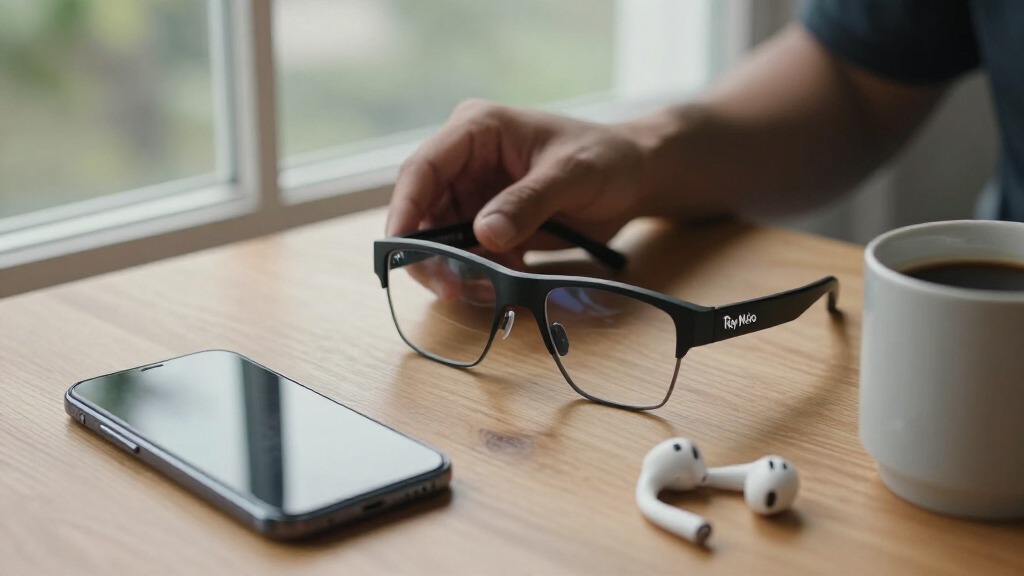
RayNeo iO is nearing the launch of its long-anticipated camera-free smart glasses, a development that could address longstanding privacy concerns associated with wearable devices. The company has reportedly refined its design to eliminate cameras entirely, focusing instead on alternative methods of augmented reality and interaction. However, new reports indicate that the glasses may include features involving ‘conversation assistance,’ raising questions about user privacy and data security.
According to recent reports, RayNeo iO has made significant progress toward releasing a version of its smart glasses that do not include built-in cameras, a step that could set a new standard for privacy-conscious wearable tech. The company’s previous models faced criticism over privacy invasion risks due to embedded cameras capable of recording surroundings. The new design reportedly relies on other sensors and displays, avoiding visual recording altogether.
However, sources suggest that the upcoming glasses might incorporate ‘conversation assistance’ features, which could involve constant audio monitoring or data collection to facilitate real-time interaction. While these features aim to improve usability, critics warn they could introduce new privacy vulnerabilities, especially if data is transmitted or stored remotely. The specifics of how these features will operate remain unclear, and the company has not yet provided detailed technical disclosures.
Industry analysts note that eliminating cameras addresses one of the primary privacy concerns with smart glasses, potentially making the device more acceptable to privacy-sensitive consumers. Nonetheless, the addition of conversation-based features could complicate this narrative, as users may be wary of devices listening in or recording conversations without clear consent.
RayNeo iO Might Finally Get Camera-less Smart Glasses Right
Removing the camera could resolve the most visible objection to smart glasses. But reported “conversation assistance” may replace an obvious privacy risk with a quieter one: continuous audio processing whose safeguards remain undisclosed.
One privacy problem disappears. Another takes its place.
Camera removal matters because bystanders can understand and react to visible recording. Audio assistance is harder to evaluate when activation, processing, retention, and consent rules are unknown.
No built-in camera
The reported model would rely on displays and alternative sensors instead of capturing visual surroundings, directly addressing surveillance anxiety associated with earlier designs.
Real-time assistance
Conversation assistance could provide contextual prompts, virtual-assistant functions, or interaction support while a discussion is happening.
Unclear audio handling
It is not yet clear whether speech stays on the device, reaches remote servers, creates transcripts, or remains available after the interaction ends.
Why camera-free helps
- Removes direct visual recording from everyday use.
- Reduces concern about covert images and video.
- Could improve acceptance in homes and public spaces.
- May influence privacy-conscious industry standards.
Why assistance worries
- Microphones may still capture people nearby.
- Cloud processing could expose sensitive speech.
- Bystanders may not know when analysis is active.
- Stored transcripts could become a new surveillance record.
How a spoken moment could become persistent data
This chain is a risk model, not a confirmed RayNeo iO architecture. Each stage needs a clear disclosure and a user-controlled safeguard.
Speech enters range
The wearer or a nearby person speaks while assistance is available.
Audio is processed
The glasses identify words, context, or intent locally or remotely.
A prompt appears
The system generates guidance, a reminder, or a suggested response.
Data may persist
Audio, transcripts, metadata, or inferred context could be retained.
must travel.
A credible system must account for everyone whose speech enters the device—not only the person who bought and configured the glasses.
Camera removal improves the picture, but does not complete it
The decisive question is whether conversation assistance is private by design or merely described as convenient.
| Privacy dimension | Earlier camera-equipped approach | Reported camera-less direction | What users still need |
|---|---|---|---|
| Visual recording | ✕Environment could be captured. | ✓Reportedly eliminated. | Official hardware confirmation. |
| Audio collection | ~Dependent on model and feature. | ~May support conversation assistance. | Activation and microphone rules. |
| Local processing | ~Not established here. | ~Not publicly detailed. | A local-first technical commitment. |
| Cloud transmission | ~Implementation dependent. | ~Still unclear. | Plain-language network disclosure. |
| Bystander awareness | ✕Camera presence may be ambiguous. | ~Audio activity may be invisible. | A clear recording or processing indicator. |
| User control | ~Varies by configuration. | ~Optional status is unknown. | A physical off switch and opt-in setup. |
✓ Reduced concern · ✕ Material concern · ~ Unknown or implementation dependent
Relative privacy pressure
Editorial risk assessment based on the reported concept and current disclosure gaps.
Trust position
Camera removal moves the product forward, while missing audio safeguards hold it below a privacy-ready threshold.
Four answers that would turn a clever concept into a trustworthy product
Marketing language will not be enough. RayNeo iO needs concrete technical commitments that users, regulators, and independent reviewers can verify.
Is the device truly camera-free?
RayNeo should confirm the complete sensor package and explain whether any optical sensor can reconstruct or retain environmental imagery.
When does listening begin?
Users need a visible activation state, a physical mute control, and an assurance that passive listening does not silently become collection.
Where does speech go?
The company should disclose whether audio leaves the glasses, which partners receive it, how it is secured, and when it is deleted.
How are bystanders protected?
Conversation assistance needs understandable signals, restricted retention, and safeguards for people who never agreed to participate.
Camera-less smart glasses could be the right direction. Glasses that quietly analyze every conversation are not.
Implications of Camera-Free Design and Conversation Features
The move toward camera-less smart glasses represents a notable shift in wearable technology, potentially easing privacy worries that have hindered adoption. If successful, RayNeo iO’s design could influence industry standards and regulatory approaches for privacy in augmented reality devices.
However, the integration of ‘conversation assistance’ features introduces complex privacy debates. These features could enable real-time interaction and contextual awareness but also risk unauthorized listening, data leaks, or misuse. The outcome could impact consumer trust, regulatory scrutiny, and the future landscape of smart wearable tech.
As an affiliate, we earn on qualifying purchases.
Background on RayNeo iO and Privacy Concerns
RayNeo iO has been developing augmented reality glasses since at least 2022, with initial models including cameras capable of recording the environment. These features drew criticism from privacy advocates and potential users concerned about surveillance and data security.
In response, the company has hinted at a shift toward more privacy-friendly designs, including the possibility of camera-less models. Industry trends show increasing consumer demand for privacy-conscious wearables, especially amid growing regulatory attention on data collection and surveillance. The debate over ‘conversation assistance’ features is part of broader discussions on how to balance usability with privacy in connected devices.
privacy-focused augmented reality glasses
As an affiliate, we earn on qualifying purchases.
As an affiliate, we earn on qualifying purchases.
What Specific Technologies and Privacy Safeguards Are Planned?
It remains unclear exactly how RayNeo iO plans to implement ‘conversation assistance’ features without compromising user privacy. Details about data handling, storage, and user control have not been publicly disclosed, and the extent of audio monitoring remains unconfirmed. Additionally, the timeline for the product’s release and whether these features will be standard or optional are still uncertain.
As an affiliate, we earn on qualifying purchases.
Expected Developments and Product Launch Timeline
RayNeo iO is expected to announce more detailed specifications and privacy safeguards in the coming months, possibly ahead of a commercial release. Industry insiders anticipate that the company will clarify how it addresses user privacy concerns, especially regarding ‘conversation assistance’ features. Regulatory reviews and user feedback will likely influence the final product design and feature set.
conversation assistance wearable devices
As an affiliate, we earn on qualifying purchases.
As an affiliate, we earn on qualifying purchases.
Key Questions
Will RayNeo iO’s new glasses truly be camera-free?
According to recent reports, the company is aiming to release a camera-less model, replacing visual recording with other sensors and displays. However, official confirmation and detailed specifications are still pending.
What are ‘conversation assistance’ features?
These features are believed to involve real-time audio processing to facilitate interaction, contextual awareness, or virtual assistant functions. The specifics and privacy safeguards are not yet fully disclosed.
Are there privacy risks with conversation assistance?
Yes, potential risks include unauthorized listening, data leaks, or misuse if audio data is transmitted or stored insecurely. Privacy advocates urge caution until clear safeguards are announced.
When might the new RayNeo iO glasses be available?
No official release date has been announced. Industry sources suggest a product launch could occur within the next year, pending further development and regulatory approval.
How does this development compare to previous RayNeo models?
The new approach aims to eliminate privacy concerns associated with cameras, unlike earlier models that included visual recording features. The addition of conversation assistance marks a new direction that may redefine user interaction.
Source: rss
NFL season / tailgating Picks
team gear
As an affiliate, we earn on qualifying purchases.