
TL;DR

Play games on Amazon Luna for your next adventure, included with Prime
- A rotating selection of games, no download needed
- Play on TV, laptop or phone
- Fast, free delivery for your gear, too
RayNeo’s iO Smart Glasses prioritize privacy with no cameras and emphasize audio features, aiming to boost productivity and assist users. This review evaluates their usability, comfort, and utility based on hands-on testing.
RayNeo has introduced the iO Smart Glasses, a camera-free device designed to enhance productivity and privacy through advanced audio features and AI integration. The glasses are lightweight, at only 33 grams, and aim to serve users seeking a discreet, privacy-conscious smart eyewear option. This review evaluates their real-world usability, comfort, and utility based on hands-on experience, helping potential buyers understand if these glasses are a worthwhile investment.
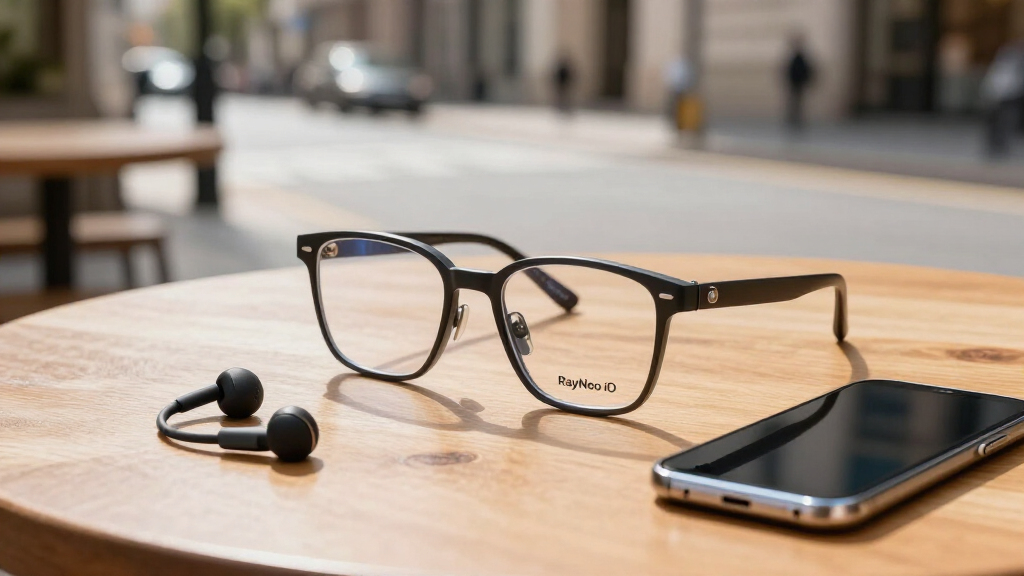
The RayNeo iO Smart Glasses feature a discreet design resembling regular glasses, with no cameras or speakers visible, which reduces privacy concerns. They include a monochrome green display powered by the Firefly Nano Optical Engine, with a 23.5° field of view and 97% transparency, making the display largely unobtrusive. For more on smart glasses technology, see this review. The device is equipped with four microphones, including a bone conduction mic, enabling voice control and live-captioning functionalities, especially useful for deaf or hard-of-hearing users.
In terms of specifications, the glasses weigh only 33 grams and include a 240mAh battery, offering up to 48 hours of typical usage and over 60 hours in standby modes. They support continuous translation and teleprompter functions for several hours, making them suitable for productivity tasks. The design emphasizes minimalism, with a thin frame, interaction crown, and no visible buttons, aiming for a sleek, unobtrusive aesthetic. However, user comfort during prolonged wear varies; despite their lightweight construction, some users report discomfort after extended use, particularly around the nose and ears.
RayNeo iO Smart Glasses: Audio Takes the Lead
RayNeo trades cameras for discretion. Its 33-gram iO Smart Glasses combine a subtle green display, a four-microphone system, voice control, captions, translation, and teleprompter tools—but comfort and real-world AI accuracy remain the decisive tests.
Regular-looking frames, unusually focused priorities
The iO is designed to disappear into everyday life. Its value proposition is not visual capture; it is private, glanceable assistance delivered through a minimalist frame.
Discreet by intent
No camera modules or conspicuous speaker hardware dominate the frame. A thin silhouette and interaction crown help the glasses resemble conventional eyewear.
Information, not immersion
The Firefly Nano Optical Engine produces a monochrome green display with a 23.5-degree field of view and 97% transparency.
Small 240mAh battery
RayNeo cites up to 48 hours of typical use and more than 60 hours in standby. Intensive translation and teleprompter use lasts several hours.
Captions at eye level
Live speech-to-text could be especially useful for deaf and hard-of-hearing users when conversations take place in controlled environments.
Prompts without a phone
Voice control, translation, captions, and teleprompter functions place short pieces of useful information directly in the wearer’s view.
Light, but not weightless
The 33-gram build feels impressively light at first. Longer sessions can still create pressure around the nose and ears for some wearers.
The microphone system is the real interface
Without cameras, contextual assistance begins with sound. The iO listens for speech, converts it into useful data, and presents compact output in the display.
Four inputs, one audio-first experience
The array includes a bone-conduction microphone, helping the glasses distinguish the wearer’s voice for commands and AI-assisted functions.
While impressively lightweight and discreet, prolonged wear can still cause discomfort around the nose and ears.Review finding · condensed
Traceability chain · from conversation to assistance
A different bargain from camera-first glasses
The iO gives up photography and video in exchange for a clearer privacy story. Its closest fit is the user who values assistance more than content capture.
| Capability | RayNeo iO | Camera-first eyewear | Practical implication |
|---|---|---|---|
| Photography and video | ✗Not available | ✓Common feature | The iO is not a capture device. |
| Privacy-conscious design | ✓Core priority | ~Depends on indicators | No lens means fewer recording concerns. |
| Live captions | ✓Featured use case | ~Model dependent | Potential accessibility advantage. |
| Translation | ✓Supported | ~Varies by platform | Useful for travel and multilingual work. |
| Visual immersion | ✗Not the objective | ~Usually limited | The display is designed for brief information. |
| Discreet everyday appearance | ✓Strong | ~Design dependent | The iO attracts relatively little attention. |
Comparison reflects product positioning, not a laboratory test across every competing model.
Strong first impressions meet unresolved questions
These directional scores summarize the review’s qualitative findings. They are editorial indicators rather than standardized laboratory measurements.
Live captions appear most dependable in quieter settings. Performance in noisy rooms, long-term durability, and sustained battery endurance require broader testing.
Noise resilience
Caption and translation accuracy may decline when multiple voices or loud surroundings compete for the microphone array.
All-day pressure
Nose and ear discomfort could become the practical limit before battery life does.
Software maturity
Firmware updates may improve AI accuracy, customization, and usability after launch.
Daily durability
Long-term frame resilience and reliability under routine wear are not yet established.
A promising audio-first concept with an unusually credible privacy position. Comfort and AI consistency keep it from becoming an automatic all-day recommendation.
Who should consider the RayNeo iO?
The strongest audience includes privacy-conscious professionals, speakers using teleprompter assistance, multilingual users, and people who may benefit from live captions. Buyers seeking photography, video recording, or immersive augmented reality should look elsewhere.
Key questions, answered
No. The RayNeo iO has no cameras and is deliberately focused on privacy and audio-driven assistance.
Early impressions are positive in quiet environments, but noisy settings remain a meaningful challenge to test.
Not for everyone. The frame is light, yet pressure around the nose and ears can emerge after several hours.
Voice control, live captions, translation, and teleprompter tools form the main productivity feature set.
Impact of Privacy-Focused Audio Smart Glasses
The RayNeo iO Smart Glasses represent a notable shift towards privacy-conscious wearable technology, emphasizing audio and AI-powered assistance rather than visual recording. For users concerned about privacy, these glasses offer a discreet alternative to camera-equipped smart eyewear, potentially expanding adoption among professionals, deaf users, and privacy advocates. Their focus on AI-driven features like live-captioning and translation could also influence the development of future smart glasses aimed at enhancing accessibility and productivity without compromising privacy.
As an affiliate, we earn on qualifying purchases.
Positioning in the Smart Glasses Market
RayNeo, a subsidiary of TCL, has been active in the smart glasses sector, with previous models like the X3 Pro offering high-quality displays but at a premium price. The iO model marks a strategic move to target users wary of camera-based devices, emphasizing privacy. The market for smart glasses has been expanding, with brands like Ray-Ban Meta and Even Realities offering camera-equipped options. The iO’s camera-free design and focus on audio features aim to differentiate it by addressing privacy concerns while providing AI-assisted functionalities, aligning with trends toward discreet, user-friendly wearable tech.
“While the glasses are impressively lightweight and discreet, prolonged wear can still cause discomfort around the nose and ears, which may limit all-day usability.”
— Review author
camera-free smart glasses for productivity
As an affiliate, we earn on qualifying purchases.
As an affiliate, we earn on qualifying purchases.
Unconfirmed Aspects of Long-Term Use and Utility
It remains unclear how the glasses perform over extended periods beyond initial impressions, especially regarding comfort, battery life in real-world scenarios, and the accuracy of AI features like live-captioning and translation in noisy environments. Additionally, the extent of user customization and durability under daily wear is still to be tested, and potential software updates could influence overall performance.
As an affiliate, we earn on qualifying purchases.
Future Updates and User Feedback Expectations
RayNeo is expected to release firmware updates to improve comfort and AI accuracy based on initial user feedback. Further reviews and user reports will clarify long-term usability, battery endurance, and real-world utility. The company may also expand software features, integrating more AI-driven assistance and possibly addressing current comfort limitations. Monitoring user experiences over the coming months will be key to assessing the device’s true value.
discreet smart glasses with voice control
As an affiliate, we earn on qualifying purchases.
As an affiliate, we earn on qualifying purchases.
Key Questions
Can the RayNeo iO Glasses be used for photography or video recording?
No, the RayNeo iO Smart Glasses do not include cameras, focusing instead on privacy and audio features.
How effective is the live-captioning feature for deaf users?
Early impressions suggest the live-captioning is generally accurate in quiet environments but may face challenges in noisy settings. Further testing is needed for comprehensive evaluation.
Are these glasses suitable for all-day wear?
While lightweight, some users report discomfort after several hours, particularly around the nose and ears, which could limit all-day use.
What kind of AI assistance do the glasses provide?
The glasses support voice control, live-captioning, translation, and teleprompter functions to assist with productivity and accessibility.
How does the design compare to other smart glasses?
The design is minimalist and discreet, resembling regular glasses, with no visible cameras or speakers, making it less conspicuous than camera-equipped models.
Source: The Ghost Howls
Halloween Picks
halloween
As an affiliate, we earn on qualifying purchases.