
TL;DR

Play games on Amazon Luna for your next adventure, included with Prime
- A rotating selection of games, no download needed
- Play on TV, laptop or phone
- Fast, free delivery for your gear, too
An XDA Developers article published Nov. 3 argues beginners planning to print functional parts should consider PETG as their default filament instead of PLA. The recommendation draws on the writer’s experience and cited material comparisons: PETG is more impact-tough and heat-resistant, but needs careful bed preparation and moisture control. It is an opinion, not a new industry standard or a claim that PETG is best for every print.
XDA Developers published a first-person recommendation on Nov. 3 urging new 3D-printing hobbyists to consider PETG instead of PLA as their default filament for functional parts. The writer says PETG better suits components exposed to impacts, sustained loads and warmer conditions, while acknowledging that it needs more tuning and careful handling than PLA.
The argument comes from the writer’s experience printing an outdoor, wall-mounted holder for an electric-vehicle charging connector. The part carries the cable’s weight, takes repeated impacts as the connector is docked and sits in afternoon heat. The writer says an earlier PLA version failed in that setting and that a PETG replacement better met the demands of the job. That account is personal experience, not a controlled comparison of the two specific prints.
The article also cites testing by Stefan Hermann of CNC Kitchen and comparisons from 3D-printer manufacturers. It reports that PLA generally has greater static tensile strength, at about 55–65 MPa, compared with PETG at about 45–55 MPa, and is stiffer in bending. PETG, however, is described as more impact-tough, with reported figures of roughly 8–12 kJ/m² versus PLA’s 2–4 kJ/m². The article says PETG’s greater elongation and layer adhesion can make it more suitable for parts that flex or take shocks.
Heat resistance is another part of the case. The article gives PLA’s glass-transition range as 55–60°C and PETG’s as 75–85°C, arguing that PETG is a better candidate for some warm or outdoor settings. Those figures describe material properties; they do not mean every PETG print is suitable for automotive use or prolonged exposure. The writer says PETG also requires more slicer and flow adjustments, a suitable build plate and slower cooling for good layer bonding.
PETG for functional prints with trade-offs
An XDA Developers writer recommends PETG for beginners making parts that face impact, flexing or heat. The advice is conditional, based on personal experience and cited material comparisons.
Choose by the part’s job
The comparison depends on what the print must withstand.
PETG takes shocks
The article describes PETG as more impact-tough and able to flex more before breaking.
PLA can be stronger
Cited comparisons give PLA higher static tensile strength and greater bending stiffness.
PETG handles more warmth
Its higher glass-transition range may suit some warm or outdoor settings; it is no guarantee for every part.
A real-world example
The writer’s outdoor charging-connector holder carried cable weight, took repeated impacts and sat in afternoon heat.
The writer says the earlier holder did not meet the demands of that setting.
The writer reports the replacement better suited the job. This was personal experience, not a controlled comparison.
PETG needs more care
Beginners should account for setup and handling before relying on a functional print.
- Use a textured or satin PEI sheet, or a suitable release layer.
- Adjust slicer and flow settings; use slower part cooling for layer bonding.
- Follow filament and printer guidance, then test a small part.
- Keep filament dry and store it sealed to reduce moisture-related stringing.
- Check the spool maker’s drying instructions.
- PLA remains simpler for many indoor prints and display models.
A Filament Choice for Working Parts
The recommendation matters most to people buying a printer to make replacement parts, brackets or holders, rather than display models. A print that looks sound can still deform in heat or break under repeated stress, so choosing material around the part’s job may prevent wasted time and failed components. PETG’s reported impact and heat characteristics make it a plausible option for some uses, but the article does not establish that it will outperform PLA in every design or printer setup.
For beginners, the trade-off is practical: PETG may offer better performance under certain loads, but it adds setup steps. A user who mainly prints figurines, calibration models or objects kept indoors may find PLA simpler. The article’s advice is conditional on wanting durable functional prints, not a universal replacement for PLA.
Products Worth Considering

Apple AirPods Pro 3 Wireless Earbuds with Active Noise Cancellation

LG UltraGear 32GX850A-B 32-inch 4K UHD Glossy OLED Gaming Monitor

Amazon Kindle Paperwhite (2024), 16 GB, 7-inch Display, Black
As an affiliate, we earn on qualifying purchases.
From Starter Spools to Functional Prints
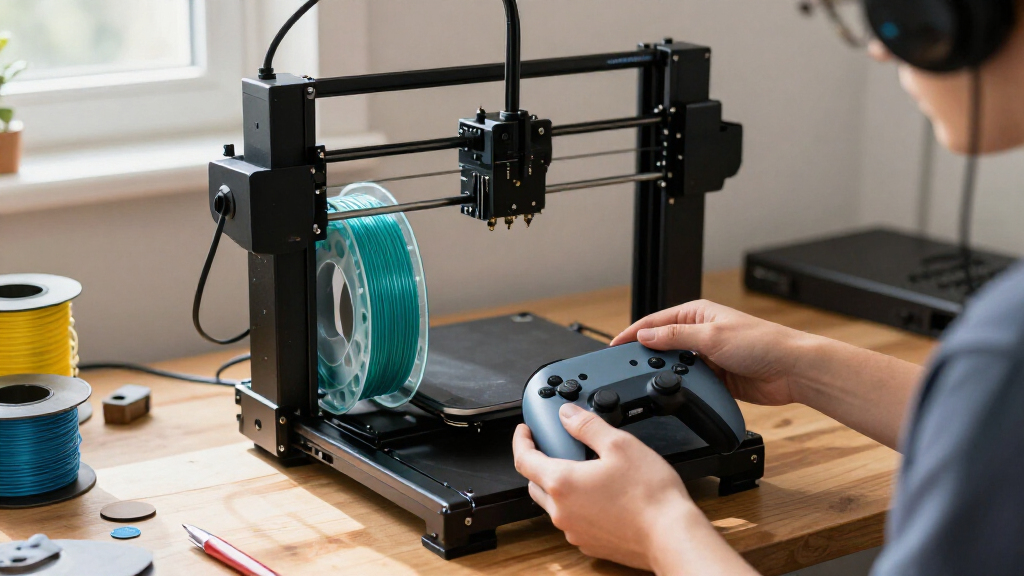
The writer describes starting with the small spool of black PLA commonly bundled with entry-level printers, using it for calibration cubes and a Benchy test boat. After turning to household and garage projects, the writer found PLA less suited to parts exposed to heat and sustained mechanical stress, and switched to PETG as the default for those jobs.
The article cautions that material strength is not one simple ranking. Tensile strength, stiffness, impact toughness and layer adhesion measure different behaviors, and a printed part’s results also depend on its design and printing conditions. Its central distinction is that PLA can be stronger in a static pull test while PETG may better tolerate impacts and flexing. The piece also points readers to guidance from Prusa and Bambu Lab on build surfaces and PETG release.
“I have since switched my default spool to glycol-modified polyethylene terephthalate (PETG) and finally got the durable, real-world output that justifies owning a desktop machine.”
— Chandraveer, XDA Developers writer
Where PETG’s Advantages Have Limits
The article does not provide a controlled, side-by-side test of the EV charging holder printed in PLA and PETG, nor does it specify enough about print settings and design to generalize from that failure. The cited material ranges are presented as comparisons, but results vary with filament formulation, printer settings, part geometry and layer orientation. The article’s figures should not be read as guarantees for a particular finished part.
PETG also has practical drawbacks. The writer says it absorbs moisture faster than PLA, which can contribute to stringing and foamy print surfaces. Drying and sealed storage are suggested, but the article’s drying guidance may not apply identically to every spool or dryer. PETG’s claimed outdoor suitability also does not mean every grade or print will withstand long-term UV exposure, weather or safety-critical loads. The piece does not establish PETG as appropriate for structural, electrical-safety or other high-risk components.
Match the Filament to the Print
The article offers no announced product, test series or follow-up milestone. Its practical next step for a beginner is to identify what a print must withstand, then choose material and settings accordingly. For PETG, the writer recommends a textured or satin PEI build sheet; bare smooth PEI and untempered glass can bond too strongly and risk surface damage. A thin release layer is suggested for some other surfaces.
The writer also advises printing PETG with a nozzle temperature of about 230–250°C, a slower part-cooling fan and dry filament. Anyone following the recommendation should check the filament maker’s instructions and their printer’s build-plate guidance, then test a small part before relying on it. PLA remains a reasonable choice for many simple indoor prints; the article’s recommendation is specifically aimed at beginners prioritizing functional parts.
Key Questions
Is the article saying PETG is stronger than PLA?
No. It reports that PLA generally has higher static tensile strength and bending stiffness, while PETG is more impact-tough and can flex more before breaking. Which material suits a part depends on the type of load and the print.
Why does the writer recommend PETG for functional prints?
The writer says PETG better handled an outdoor charging-cable holder that faced repeated impacts, cable weight and heat. That is a personal example; it is not proof that PETG is best for every functional part.
What should beginners watch out for when printing PETG?
PETG can bond too strongly to smooth PEI or untempered glass, so the article recommends a textured or satin plate or a suitable release layer. It also says PETG needs careful tuning and can string if the filament absorbs moisture.
Should a beginner stop using PLA?
No. The recommendation is to consider PETG when making parts that need to tolerate impacts, flexing or more heat. PLA remains useful for many indoor prints, including display objects and calibration models.
Source: XDA Developers