TL;DR

Play games on Amazon Luna for your next adventure, included with Prime
- A rotating selection of games, no download needed
- Play on TV, laptop or phone
- Fast, free delivery for your gear, too
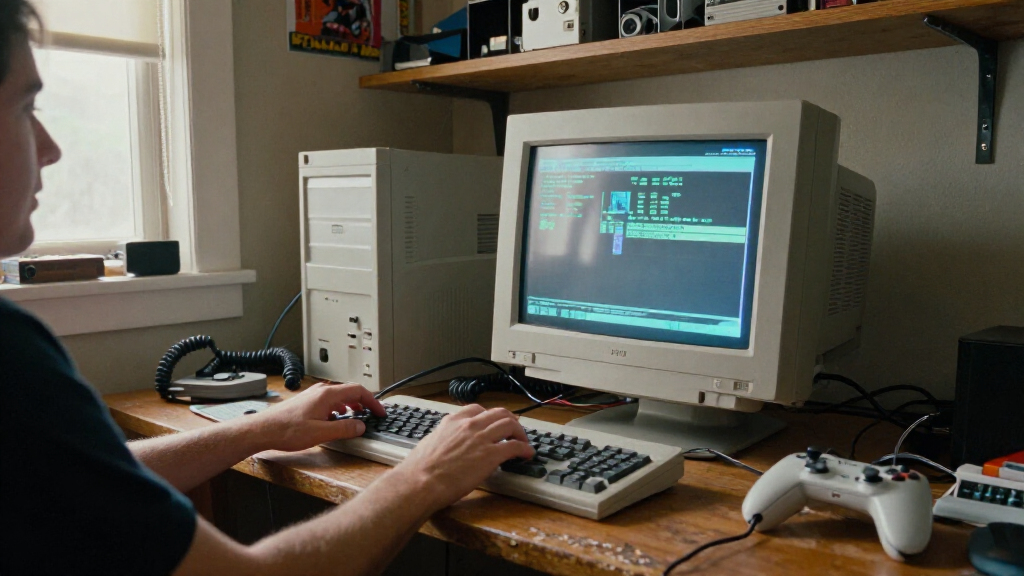
Technology YouTuber TrashBench recreated a facsimile of the first computer his parents bought him, in 1996. The project revisits the machine that helped spark his interest in computers and reflects his weariness with the current tech market and its focus on AI.
Technology YouTuber TrashBench recreated a facsimile of the first computer his parents bought him in 1996, revisiting the machine he says helped him fall in love with computers. The build is framed as a nostalgic response to his weariness with today’s tech market, which he sees as dominated by AI and difficulty finding hardware.
Tom’s Hardware reported that TrashBench looked back to the PC he used as a child, when he played The Need for Speed: Special Edition. The game was a PC-improved version of the first title in the Need for Speed series. The recreated system is described as a facsimile of that original computer; the available account does not give a full component list or establish that every part matches the 1996 machine.
TrashBench connects the computer to the start of his interest in technology. He recalled that the machine his parents bought him introduced him to computers, and the recreation returns to the period when using a PC and playing a game on it formed part of that experience. The project is presented as a personal retro build rather than as a claim that older hardware is a practical replacement for modern systems.
The stated motivation also reflects frustration with the present-day market. Tom’s Hardware describes concerns about the availability of memory, graphics cards and storage, limited new consumer hardware releases, and the pervasive presence of AI. Those points are part of the account of why TrashBench looked back; the report does not provide market data or quantify shortages, product releases or AI’s effect on hardware availability.
Retro computing · Creator story
A 1996 PC, Rebuilt for a Different Tech Era
Technology YouTuber TrashBench recreated a facsimile of the first computer his parents bought him. The build returns to the PC that helped spark his interest in computers—and reflects his weariness with today’s AI-focused tech market.
At a glance · The development
A personal return to PC gaming
The project links a current creator’s work to the machine that first drew him into the hobby. Its significance is rooted in a specific early experience—not a claim that older hardware can replace a modern PC.
A childhood computer
TrashBench recreated a facsimile of the first computer his parents bought him in 1996. The report does not identify its original make or model.
A game that stayed
He used the computer to play The Need for Speed: Special Edition, described as a PC-improved version of the first game in the series.
A look back amid frustration
TrashBench’s reported weariness with today’s tech market gives the retro build a present-day angle. Those concerns reflect his perspective.
The story in four steps
From first PC to recreated facsimile
The available account centers on personal history and the reason for revisiting it.
Family buys a PC
The first computer arrives in 1996.
Interest takes shape
Using the computer helps spark an interest in technology.
A game becomes part of it
The Need for Speed: Special Edition is part of the memory.
The PC is recreated
TrashBench builds a facsimile as a personal retro project.
Why revisit the machine?
Nostalgia meets a changing market
The build is presented as a personal technology story: TrashBench connects the 1996 computer with the beginning of his interest in computers. For retro-computing readers, it preserves an early experience that includes both a period machine and the game he remembers playing on it.
The report also describes his frustration with a present-day market he sees as dominated by AI and difficult hardware shopping. It mentions memory, graphics cards, and storage, alongside limited new consumer hardware releases.
These are reported concerns, not independently measured market findings. The account supplies no figures to quantify shortages, product releases, or AI’s effect on hardware availability.
What the report leaves open
Build details still unreported
The available account describes the project’s inspiration, but does not provide a technical breakdown of the recreated system.
Parts list: The recreated PC’s components are not specified.
Original model: The make, model, and specifications of the family computer are not given.
Matching approach: It is unclear which parts are period-correct, original, or modern substitutes.
Build record: Cost, timeline, completion date, and detailed video information are not included.
What would clarify the project?
More build information needed
A few concrete details could show how closely the facsimile follows the original and how the recreation came together.
A full parts list, an explanation of how TrashBench matched the 1996 system, and footage or documentation of the PC running The Need for Speed: Special Edition would help readers understand the build. No follow-up coverage or release date is confirmed in the available report.
Key questions
What we know—and what we don’t
Who recreated the 1996 PC?
Technology YouTuber TrashBench recreated a facsimile of the first computer his parents bought him.
Why this computer?
He associates it with discovering computers and developing an interest in them. He also described weariness with the current tech market.
What game did he play?
The Need for Speed: Special Edition, described by Tom’s Hardware as a PC-improved version of the original Need for Speed.
Are the recreated PC’s specifications known?
No. The reported details do not include a full parts list, exact original model, or how closely the facsimile matches the family computer.
Does the project prove hardware is hard to find?
No. Availability and AI concerns are presented as TrashBench’s perspective; the report includes no data to measure those claims.
What is the project’s central significance?
The recreation returns to the computer that helped turn a childhood experience into a lasting interest in technology.
A Personal Return to PC Gaming
The build matters primarily as a personal technology story: it ties a current creator’s work to the computer that first drew him into the hobby. For readers interested in retro computing, it also shows how a recreation can preserve a specific early PC experience—not just a period’s hardware, but the game and memories associated with it.
TrashBench’s stated frustration gives the project a present-day angle. His remarks reflect one creator’s view of a market shaped by AI and hardware concerns, but they do not establish that the entire industry has stopped releasing consumer products or that components are universally unavailable. The distinction matters: the news is the recreation and the motivation he gives for it, not independent proof of a market-wide shortage.
The account also illustrates how older computers can remain meaningful even when they are not being proposed as modern work machines. In this case, the 1996 PC represents the point at which a young player’s use of a computer became an interest in computers themselves. That personal connection is the project’s central significance.
retro PC build parts 1990s computer case
As an affiliate, we earn on qualifying purchases.
As an affiliate, we earn on qualifying purchases.
The 1996 PC Behind the Build
The recreated computer is linked to the first machine TrashBench’s parents bought him in 1996. He used it to play The Need for Speed: Special Edition, identified in the report as a PC-improved version of the original Need for Speed game. The account does not identify the original PC’s make and model, its specifications, or how closely the recreation reproduces its configuration.
Tom’s Hardware places the project against TrashBench’s dissatisfaction with the current tech market. Its description mentions memory, graphics cards and storage as difficult to obtain, few new consumer hardware releases, and AI’s widespread presence. These are the concerns reported as his motivation, not a detailed market survey. The article’s focus is the individual build and its connection to his early experience with computers.
Windows 98 retro gaming PC components
As an affiliate, we earn on qualifying purchases.
As an affiliate, we earn on qualifying purchases.
Build Details Still Unreported
The available account does not list the recreated PC’s components, identify its exact model, or explain which parts are original, period-correct or modern substitutes. It is also unclear how closely the facsimile matches the computer TrashBench’s family owned, or whether the build can run the game in the same configuration he remembers.
No completion date, cost, build timeline or detailed video information is provided here. The market concerns are attributed to TrashBench, but no figures or outside analysis are included to measure component availability, consumer hardware releases or AI’s role. Those points should not be treated as independently verified market findings.
The Need for Speed Special Edition PC game
As an affiliate, we earn on qualifying purchases.
As an affiliate, we earn on qualifying purchases.
More Build Information Needed
The next useful details would be a full parts list, an explanation of how TrashBench matched the 1996 system, and footage or documentation showing the recreated PC running The Need for Speed: Special Edition. The report provided does not specify whether further build coverage or a follow-up is planned, so no release date or next milestone can be confirmed.
Until those details are available, the confirmed development remains the nostalgia-driven recreation and TrashBench’s stated frustration with the current market. More technical information would clarify what the facsimile contains and how the project was carried out.
Source: Tom’s Hardware
PS/2 keyboard and serial mouse for vintage PC
As an affiliate, we earn on qualifying purchases.
As an affiliate, we earn on qualifying purchases.
Key Questions
Who recreated the 1996 PC?
Technology YouTuber TrashBench recreated a facsimile of the first computer his parents bought him.
Why did TrashBench choose this computer?
He associates the 1996 PC with discovering computers and developing an interest in them. He also described feeling weary of the current tech market.
What game did he play on the original machine?
He used it to play The Need for Speed: Special Edition, described by Tom’s Hardware as a PC-improved version of the first game in the series.
Are the recreated PC’s specifications known?
No full parts list or exact original system model is included in the reported details. How closely the facsimile matches the original is also not specified.
Does the build prove that modern PC hardware is hard to find?
No. The concerns about component availability and AI are presented as part of TrashBench’s perspective. The report does not include market data to independently measure those claims.
Source: Tom’s Hardware
Halloween Picks
halloween
As an affiliate, we earn on qualifying purchases.