TL;DR

Get VR and gaming gear delivered free — and shop member deals
- Fast, free delivery on millions of items
- Access to Prime Big Deal Days deals on October 6–7
- Prime Video, Amazon Music and more included
Rutgers School of Nursing–Camden has implemented virtual reality technology to transform clinical training. This innovation aims to improve student preparedness and patient safety, representing a major advancement in nursing education.
Rutgers School of Nursing–Camden has integrated virtual reality (VR) technology into its clinical training program, marking a major shift in how nursing students gain hands-on experience. The move aims to improve student preparedness and patient safety, and has been confirmed by the university.
The university has partnered with a VR technology provider to develop immersive simulation modules that replicate real-world clinical scenarios. Study: Can virtual reality replace hands-on medical training? These modules allow students to practice procedures and decision-making in a controlled, virtual environment. The initiative was launched earlier this year, with the first cohorts of students already participating in VR-based training sessions, according to Rutgers officials.
University representatives stated that the VR program is designed to supplement traditional clinical placements, providing additional practice opportunities that can be tailored to individual learning needs. The technology includes realistic 3D environments and interactive scenarios, aimed at enhancing critical thinking and technical skills. The program is currently being evaluated for its impact on student performance and confidence, with preliminary feedback indicating positive outcomes.
While the university confirms the deployment of VR in its curriculum, details about the full scope, cost, and future expansion plans are still being finalized and have not been publicly disclosed.
Revolutionizing Nursing Education with Virtual Reality
This development matters because it represents a significant advancement in nursing training, potentially leading to better-prepared nurses and improved patient safety. VR allows students to experience realistic clinical situations repeatedly without risk to patients, which could enhance learning outcomes. If successful, Rutgers’ approach may influence other nursing programs to adopt similar technologies, accelerating innovation in healthcare education.
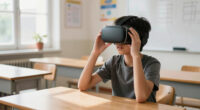
virtual reality nursing training simulator
As an affiliate, we earn on qualifying purchases.
As an affiliate, we earn on qualifying purchases.
Growing Adoption of VR in Healthcare Training
Over recent years, virtual reality has gained traction in healthcare training, with several institutions experimenting with immersive simulation for medical and nursing education. Prior to Rutgers, some programs have used VR for surgical training and emergency response scenarios, but widespread integration into nursing curricula remains limited. Rutgers’ initiative is among the first in the region to embed VR deeply into its core clinical training, signaling a broader shift toward digital learning tools in nursing education.
Historically, clinical training has relied heavily on in-person placements, which can be limited by resource constraints and patient availability. VR offers a scalable alternative that can complement traditional methods, providing consistent, risk-free practice environments for students.
“The integration of virtual reality into our curriculum is a transformative step that enhances our students’ clinical readiness and confidence.”
— Rutgers School of Nursing–Camden spokesperson
As an affiliate, we earn on qualifying purchases.
Unanswered Questions About VR Impact and Expansion
It is not yet clear how the long-term impact of VR training on clinical competence will be measured or compared to traditional methods. Details about the cost-effectiveness, scalability, and potential barriers to wider adoption remain under discussion. Additionally, the full scope of the program’s expansion across other campuses or health sciences programs has not been announced.
As an affiliate, we earn on qualifying purchases.
Next Steps for VR Integration at Rutgers Nursing
Rutgers plans to continue evaluating the VR program’s effectiveness through student performance metrics and feedback. The university may expand the use of VR modules to cover more complex clinical scenarios and integrate them more fully into the curriculum. Further research and collaboration with technology providers are expected to refine and enhance the system, with broader implementation potentially occurring in the next academic year.
immersive medical training modules
As an affiliate, we earn on qualifying purchases.
As an affiliate, we earn on qualifying purchases.
Key Questions
How does virtual reality improve nursing training?
VR provides immersive, realistic simulations that allow students to practice procedures and decision-making in a safe environment, enhancing skills and confidence before real-world clinical placements.
Is VR training replacing traditional clinical placements?
No, it is intended to supplement traditional placements, providing additional practice opportunities and reinforcing learning.
What types of scenarios are included in the VR modules?
Scenarios include emergency response, patient assessment, medication administration, and other critical nursing tasks, designed to mimic real clinical situations.
Will other nursing schools adopt similar VR programs?
It is not yet confirmed, but Rutgers’ initiative may influence other institutions to explore VR as a training tool, especially if positive outcomes are demonstrated.
What are the costs associated with implementing VR in nursing education?
Specific cost details have not been disclosed, but initial investments include hardware, software, and training, with ongoing maintenance and updates required.
Source: rss
Halloween Picks
halloween
As an affiliate, we earn on qualifying purchases.