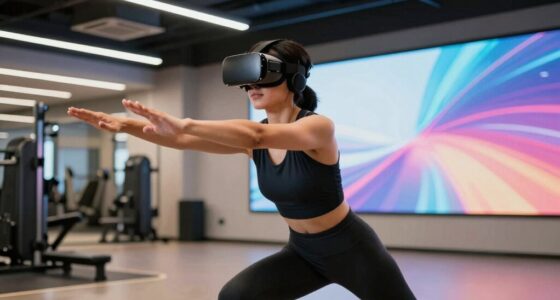
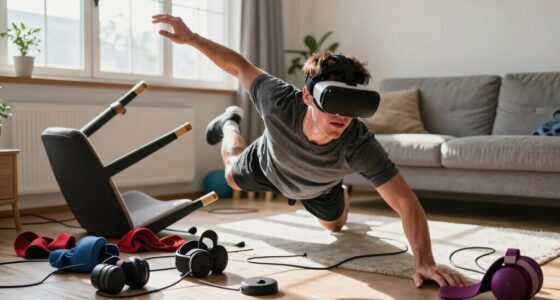
When you start your VR workout cold, your muscles stay stiff and less responsive, making exercises feel harder and increasing injury risk. A warm start gradually gets your muscles and joints ready, boosting blood flow and nervous system activation for smoother, more efficient movements. On days when you skip warming up, you’ll notice more fatigue and discomfort. Want to discover simple tips to make every session easier? Keep going to learn more.
Key Takeaways
- Warm starts activate muscles and joints, leading to smoother, more efficient movements during VR workouts.
- Cold starts cause stiffness and reduced responsiveness, making exercises feel more difficult and less effective.
- Proper hydration supports muscle function and prevents fatigue, especially when starting warm.
- Neglecting warm-up increases injury risk and causes muscles to stay stiff, impacting workout quality.
- Consistently warming up and hydrating enhances overall performance and reduces the perception of workout difficulty.

When starting your vehicle, choosing between a warm start and a cold start can considerably impact engine performance and longevity. The same principle applies to your VR workout. Some days, it feels harder to get going, almost like your body needs extra incentive. This is often linked to your pre workout routines and hydration strategies. If you skip warming up properly or neglect hydration, your performance can suffer, making your workout feel more strenuous than it should.
A warm start in your workout routine means giving your body time to gradually increase intensity. Just like letting an engine warm up before hitting the gas, starting with light cardio or dynamic stretching prepares your muscles and joints for more demanding exercises. Incorporating a thoughtful pre workout routine helps activate your nervous system, improve blood flow, and reduce the risk of injury. When you skip this step, your muscles are cold and stiff, which can make movement feel more difficult and increase fatigue early on. That sensation is similar to a cold engine struggling to run smoothly; your body needs that initial warm-up to perform efficiently.
Hydration strategies are equally essential. If you’re dehydrated before your VR session, your muscles won’t function at their best, and your stamina drops. Dehydration can cause cramps, dizziness, and a sluggish feeling, making your workout feel harder. Drinking water or electrolyte drinks before and during your session replenishes lost fluids and helps maintain blood volume, ensuring your muscles receive enough oxygen and nutrients. Proper hydration also supports mental clarity, which can be compromised if you’re running low on fluids. Think of hydration as the oil that keeps your engine running smoothly—without it, performance drops, and the risk of overheating increases. Additionally, understanding exercise physiology can help you optimize your warm-up and hydration routines for better results.
On the other hand, a cold start—skipping warm-up and neglecting hydration—can lead to a sluggish, inefficient workout. Your muscles remain stiff, joints may ache, and your energy levels decline faster. This can make even familiar exercises feel more challenging, just like a cold engine stalls or runs poorly. To avoid this, dedicate a few minutes to light activity and focus on your hydration strategies beforehand. This preparation primes your body to handle the demands of VR workouts, making each session smoother and more effective.
Ultimately, whether you’re starting your vehicle or your workout, the way you prepare sets the tone for performance. A warm start with proper pre workout routines and hydration strategies ensures you get the most out of your VR sessions, reducing fatigue and preventing injury. So, next time you gear up, remember—taking those extra moments to warm up and hydrate makes all the difference in how hard your workout feels.
Frequently Asked Questions
How Does Hydration Affect Warm and Cold Start Performance?
Your hydration levels and electrolyte balance directly impact your warm and cold start performance. If you’re well-hydrated, your muscles function better, reducing fatigue and improving stamina. Proper electrolytes help maintain nerve signaling and muscle contractions, making warm-up and initial workout phases smoother. Dehydration throws off this balance, making your VR workout feel harder, especially at the start. So, drink enough water and replenish electrolytes to optimize your performance from the get-go.
Can Diet Influence How My VR Workout Feels During Different Starts?
Your diet impacts how your VR workout feels during different starts, with studies showing that poor nutrition can reduce energy by up to 30%. The diet impact influences metabolic effects, affecting your stamina and focus. Eating balanced meals with carbs and protein boosts your energy levels, making warm and cold starts feel less challenging. So, what you eat directly shapes your workout experience, helping you perform better and feel more energized.
Do Different VR Headsets Impact Warm Vs Cold Start Experiences?
Yes, different VR headsets impact warm versus cold start experiences. You’ll notice that headsets with better ergonomics feel more comfortable during extended sessions, especially when starting cold. Additionally, higher display resolution can make visuals sharper, but it may also cause longer load times or initial lag. These factors influence how smooth your workout feels at each start, making some headsets feel more responsive or immersive depending on their design and display tech.
How Does Room Temperature Affect VR Workout Difficulty?
Imagine your body’s like a well-tuned engine, affected by the room’s thermal regulation and ambient humidity. When the room’s too hot or humid, it’s like running the engine in summer’s heat—your VR workout feels tougher. Cooler, drier air helps regulate your body temperature, making movements smoother. So, maintaining a comfortable room temperature and humidity level can make your VR exercises feel easier and more natural.
Are There Specific Warm-Up Routines for Optimal VR Performance?
You should start with dynamic stretching to loosen your muscles and improve flexibility. Incorporate breathing exercises to help you stay focused and reduce fatigue. Doing a few minutes of arm circles, leg swings, and deep breaths before your VR workout primes your body and mind for peak performance. This warm-up routine minimizes discomfort and helps you stay energized, making your VR session feel easier and more effective.
Conclusion
So, next time your VR workout feels tougher on certain days, remember it’s probably your warm-up or cold start at play. Some might think it doesn’t matter, but a proper warm-up can boost your performance and reduce injury risk. You might feel like skipping it saves time, but investing a few minutes can actually make your session feel easier and more effective. Embrace your warm-up—you’ll notice the difference in how you perform and enjoy your workout.