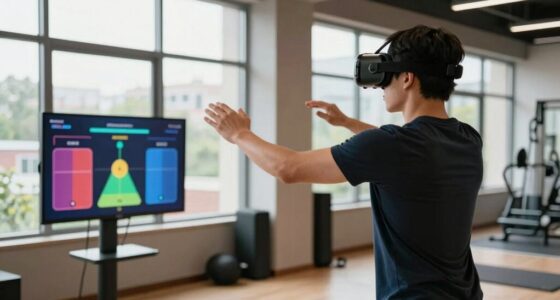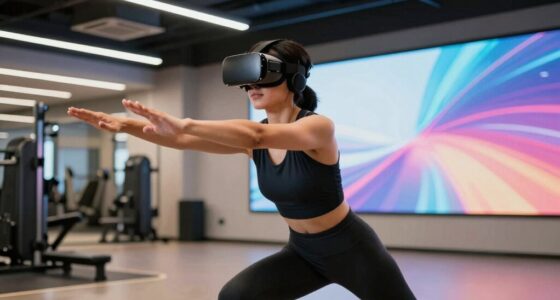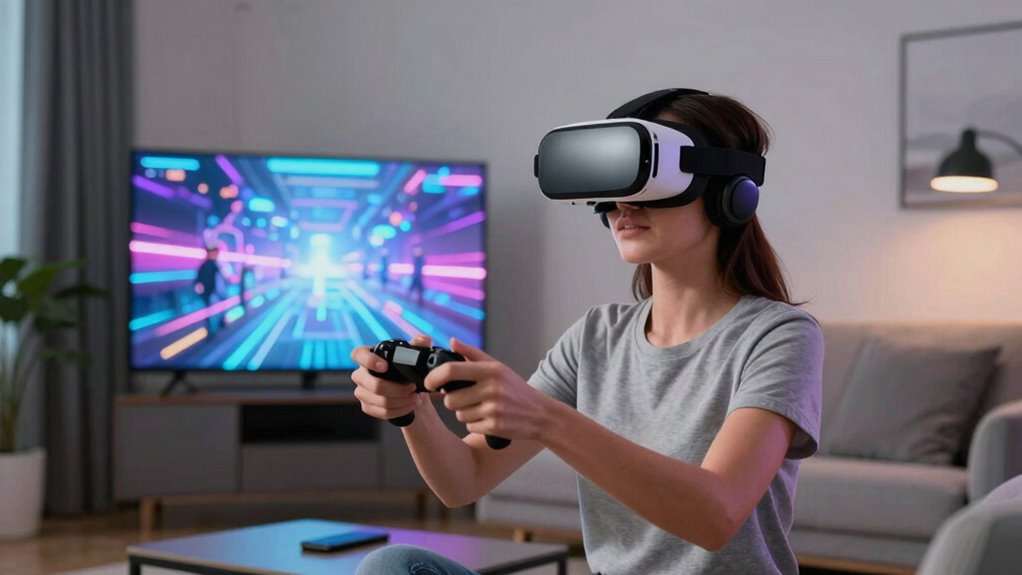

Many people think VR gaming burns way more calories than it does, but that’s a myth. While VR can get you moving and sometimes raise your heart rate temporarily, it usually doesn’t match traditional workouts for calorie burn. Built-in trackers often overestimate effort because they rely on simplified data. If you want to genuinely understand what VR can and can’t do for your fitness, keep exploring these misconceptions and facts.

Play games on Amazon Luna for your next adventure, included with Prime
- A rotating selection of games, no download needed
- Play on TV, laptop or phone
- Fast, free delivery for your gear, too
Key Takeaways
- VR can temporarily raise heart rate and encourage movement but rarely provides sustained high-intensity exercise.
- Built-in VR calorie trackers often overestimate calories burned due to simplified algorithms.
- Accurate measurement of effort requires a fitness tracker or heart rate monitor, not just VR data.
- VR should supplement traditional exercise; it isn’t a replacement for consistent, vigorous workouts.
- Perceived activity in VR is often inflated; actual calorie expenditure is generally lower than estimates suggest.

Many people believe that playing virtual reality (VR) games can burn significant calories, but is that really the case? The truth is, while VR can be a fun way to stay active, the exercise intensity it offers varies widely depending on the game and how you play. Some titles require quick movements, jumping, or dodging, which can elevate your heart rate temporarily. However, most VR experiences don’t consistently push your body to the level of traditional workouts like running or cycling. When it comes to calorie tracking, many players overestimate how many calories they burn during a VR session, often because of the immersive nature of the games that make you feel more active than you actually are.
The core issue lies in understanding exercise intensity. Exercise intensity refers to how hard your body works during activity, and it directly impacts calorie burn. While certain VR games can increase your heart rate, they rarely sustain high-intensity effort over extended periods. For example, a fast-paced boxing game might get your adrenaline going, but once you stop, your calorie expenditure decreases sharply. Conversely, sitting or lightly swinging controllers with minimal movement results in a much lower calorie burn, despite the perception of vigorous activity. This inconsistency makes it tricky to accurately gauge how many calories you’re truly burning during VR play.
Many VR platforms come with built-in calorie tracking features, which can be misleading. These tools often use simplified algorithms based on your weight, age, and estimated activity levels to provide a rough estimate. They typically assume a certain level of effort that may not reflect your actual exertion. As a result, you might see inflated numbers that suggest you’re burning hundreds of calories in a short session, but the actual effort involved might be far less. To get a better picture, it’s advisable to use a separate fitness tracker or heart rate monitor that measures real-time exertion more precisely. Additionally, understanding the role of technology in accurately tracking physical activity can help set more realistic fitness expectations.
VR calorie trackers often overestimate effort; use a fitness tracker for more accurate measurement.
In the end, VR can be a supplementary activity that encourages movement and helps break up sedentary routines. Still, it shouldn’t replace traditional exercise if your goal is significant calorie burning or weight management. While some games might give you a modest workout, don’t rely solely on VR for your fitness goals. Instead, combine it with other forms of physical activity, track your effort using reliable devices, and set realistic expectations about the calories you’re likely to burn. VR can be a fun addition, but understanding its limitations is key to making the most of your physical activity efforts.
As an affiliate, we earn on qualifying purchases.
Frequently Asked Questions
Can VR Workouts Replace Traditional Exercise Routines?
VR workouts can complement traditional routines but shouldn’t fully replace them. The gamification benefits keep you motivated and engaged, making exercise more enjoyable. Plus, social engagement features let you work out with friends virtually, adding a fun, competitive edge. However, VR alone may not provide the same extensive benefits as traditional exercise, such as strength training and outdoor activity. Use VR as a supplement, not a complete replacement.
How Accurate Are VR Calorie Estimates?
You might think VR calorie estimates are spot-on, but don’t be fooled. The data accuracy varies widely depending on the device and software, and many factors influence the numbers—your intensity, movement, and even the game’s algorithms. While VR can give you a rough idea of calorie burn, it’s not precise enough to rely on for exact tracking. Keep that in mind as you push through your virtual workouts.
What Factors Influence Calorie Burn in VR Activities?
You influence calorie burn in VR activities through factors like motion tracking accuracy, intensity of movement, and your engagement level. Precise motion tracking helps the system better estimate calorie expenditure, but actual burns vary based on how vigorously you move. The more energetic and dynamic your actions, the higher your calorie estimation. Keep in mind, VR calorie estimates are approximate and depend on your activity’s intensity and how well the system tracks your movements.
Are There Health Risks Associated With Intense VR Exercise?
Yes, intense VR exercise can pose health risks like motion sickness and eye strain. You might experience dizziness, nausea, or headaches if you’re sensitive to rapid movements or prolonged use. To reduce risks, take regular breaks, adjust the headset for comfort, and make sure your environment is well-lit. Listening to your body helps prevent discomfort, so stop if you start feeling unwell during your VR workout.
How Can VR Be Integrated Into a Balanced Fitness Plan?
Like a modern-day Athena guiding your fitness journey, you can incorporate VR into a balanced plan by combining virtual workouts with traditional exercise. Use virtual nutrition to track your progress and immersive motivation to stay engaged. Schedule regular VR sessions for cardio or strength, but also include rest days and outdoor activities. This approach guarantees you harness VR’s benefits without relying solely on it, maintaining overall health and well-being.
fitness tracker with calorie counter
As an affiliate, we earn on qualifying purchases.
As an affiliate, we earn on qualifying purchases.
Conclusion
Don’t fall for the myth that VR alone burns significant calories—you’ll burn more sitting on your couch! While VR can boost your activity levels, studies show it might only burn around 3 to 4 calories per minute, similar to walking slowly. So, while VR is great for fun and engagement, don’t rely on it for serious calorie burning. Use it as a supplement to a balanced workout, not a replacement.
accurate activity tracker for workouts
As an affiliate, we earn on qualifying purchases.
As an affiliate, we earn on qualifying purchases.
As an affiliate, we earn on qualifying purchases.
Halloween Picks
halloween
As an affiliate, we earn on qualifying purchases.