TL;DR

Play games on Amazon Luna for your next adventure, included with Prime
- A rotating selection of games, no download needed
- Play on TV, laptop or phone
- Fast, free delivery for your gear, too
Researchers have developed a virtual reality system that retrains the brain of amputees, significantly reducing phantom limb pain. The technology shows promise as a non-invasive treatment option, with ongoing studies confirming initial positive results.
Virtual reality technology is being used to retrain the brain of amputees, effectively reducing phantom limb pain, according to recent clinical trials. This development offers a potential non-invasive treatment for millions suffering from this condition, which has traditionally been difficult to manage.
Scientists and clinicians have developed a VR-based therapy that allows amputees to visualize and interact with a virtual limb, helping to retrain the brain. Early results from pilot studies indicate a significant decrease in phantom limb pain among participants, with some reporting relief after just a few sessions.
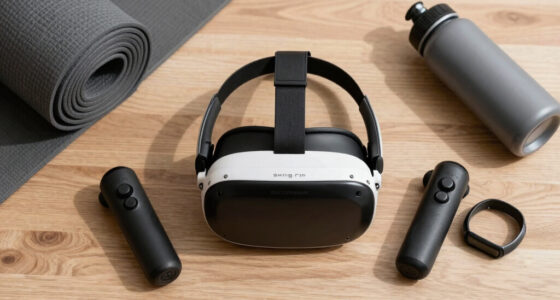
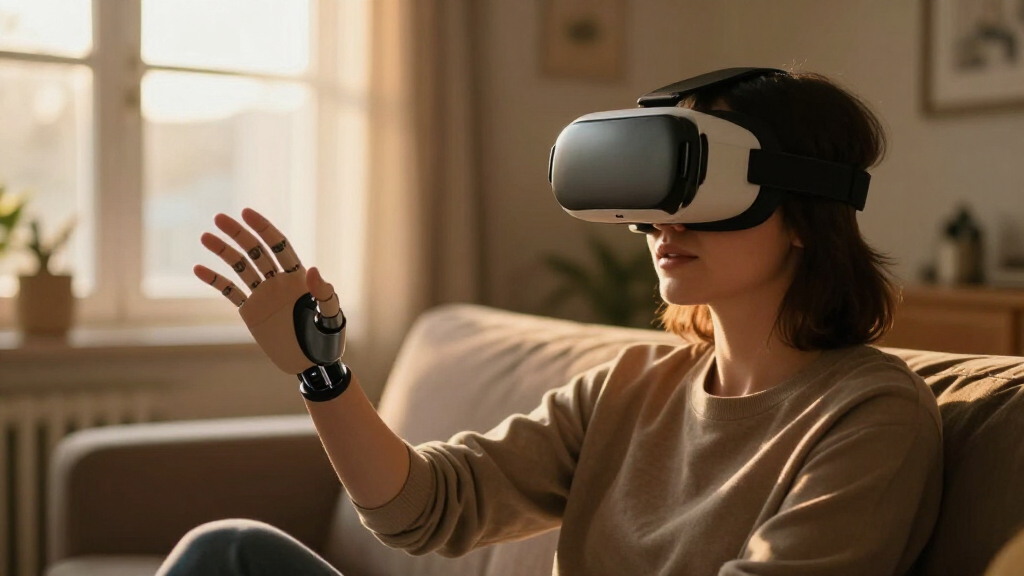
The technology involves a head-mounted display and motion sensors that track residual limb movements, enabling users to see a virtual representation of their missing limb moving in real time. This visual feedback appears to engage the brain’s plasticity, encouraging it to reorganize neural connections associated with pain perception.
Researchers from the University of California and other institutions are conducting ongoing trials with larger participant groups to confirm the efficacy and safety of this approach. The therapy is non-invasive and can be administered at clinics or remotely, making it accessible for widespread use.
Potential Breakthrough in Phantom Limb Pain Treatment
This VR technology could transform how phantom limb pain is managed, offering a non-invasive, drug-free alternative to current treatments such as medication and nerve blocks. If confirmed effective in larger trials, it could improve the quality of life for millions of amputees worldwide, reducing reliance on pain medications and associated side effects.
Moreover, the approach exemplifies how advances in neurotechnology and virtual reality can harness brain plasticity for therapeutic purposes, opening pathways for treating other neurological conditions involving maladaptive neural rewiring.
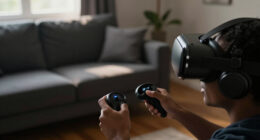
virtual reality therapy for phantom limb pain
As an affiliate, we earn on qualifying purchases.
As an affiliate, we earn on qualifying purchases.
Advances in VR and Neuroplasticity for Pain Management
Phantom limb pain affects up to 80% of amputees and has long been a challenging condition to treat effectively. Traditional methods include medications, mirror therapy, and nerve blocks, but these often provide limited relief. Recent research has focused on understanding the brain’s plasticity—the ability to reorganize neural pathways—in developing new treatments.
Virtual reality has been explored previously for pain distraction and rehabilitation, but recent innovations have enabled more targeted interventions aimed at retraining brain circuits involved in pain perception. The current development builds on this foundation, applying immersive VR to stimulate neural reorganization directly.
Initial studies published over the past two years have demonstrated promising results, with some patients experiencing sustained pain relief after multiple sessions, prompting further research and clinical trials.
“Our VR therapy leverages brain plasticity to help amputees rewire neural pathways associated with pain, offering hope for a non-invasive solution.”
— Dr. Emily Carter, lead researcher at UC San Francisco
VR headset for medical rehabilitation
As an affiliate, we earn on qualifying purchases.
As an affiliate, we earn on qualifying purchases.
Unconfirmed Long-Term Effectiveness and Scalability
While initial results are promising, it is not yet clear whether the pain relief observed will be sustained over the long term or how the therapy will perform in larger, more diverse patient populations. Researchers are still analyzing data from ongoing trials, and wider clinical adoption awaits further validation.
As an affiliate, we earn on qualifying purchases.
Next Steps in Clinical Trials and Technology Deployment
Researchers plan to expand their trials to include more participants across different demographics and to assess long-term outcomes. They are also working on refining the VR system for home use, which could make the therapy more accessible. Regulatory approval processes are expected to begin once larger trials confirm safety and efficacy.
As an affiliate, we earn on qualifying purchases.
Key Questions
How does the VR therapy reduce phantom limb pain?
The therapy uses visual feedback to engage brain plasticity, helping to rewire neural pathways involved in pain perception by allowing patients to see and move a virtual limb in real time.
Is this treatment available now?
Currently, it is in the experimental stage, with ongoing clinical trials. Widespread clinical use will depend on future trial results and regulatory approval.
Are there any risks associated with VR therapy for amputees?
So far, the therapy appears safe, with no significant adverse effects reported. However, further studies are needed to confirm safety over longer periods and in larger groups.
Can this VR system be used at home?
Researchers are working on developing home-compatible versions, but currently, the therapy requires supervised sessions at clinics or specialized centers.
How long does it take to see results?
Some patients report pain reduction after just a few sessions, typically within two to three weeks of regular therapy, but individual responses vary.
Source: rss
Halloween Picks
halloween
As an affiliate, we earn on qualifying purchases.