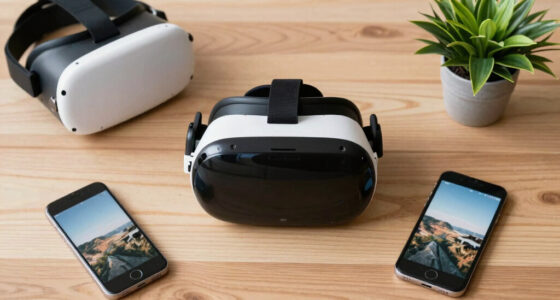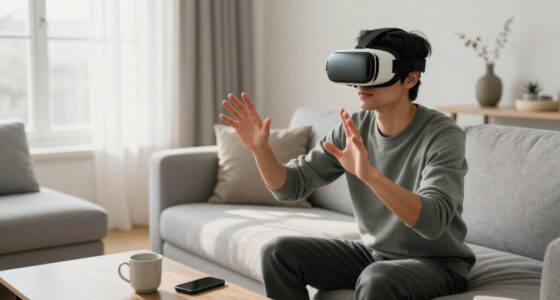
Your VR controller design greatly impacts how natural and immersive your experience feels. When a controller fits comfortably and is well-weighted, you won’t need to adjust your grip constantly, keeping you immersed. Precise responsiveness and calibration let your movements translate smoothly into virtual actions, enhancing realism. Haptic feedback adds tangible sensations, blurring the line between digital and physical. Thoughtful design elements create a seamless connection between you and the virtual environment. Keep exploring to discover more about optimizing your VR experience.

Play games on Amazon Luna for your next adventure, included with Prime
- A rotating selection of games, no download needed
- Play on TV, laptop or phone
- Fast, free delivery for your gear, too
Key Takeaways
- Ergonomic design reduces fatigue and enhances comfort, allowing for longer, more natural VR sessions.
- Responsiveness and calibration ensure accurate, fluid interactions that feel more natural and immersive.
- Haptic feedback adds tactile sensations, making virtual objects and interactions more believable.
- Intuitive button placement and natural movement alignment improve ease of use and interaction fluidity.
- Well-designed controllers foster emotional connection, increasing engagement and making virtual experiences feel more authentic.
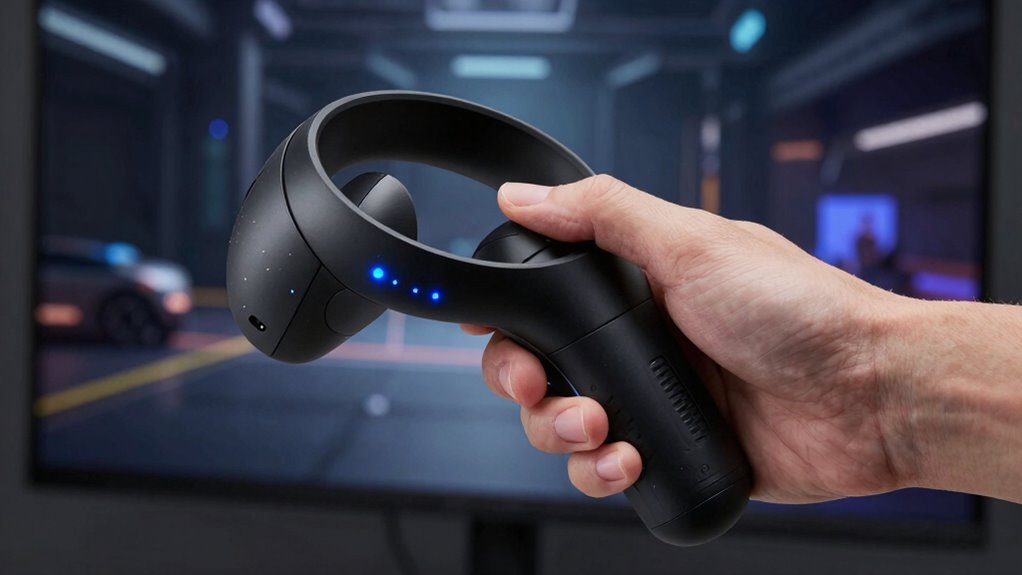
Designing controllers for virtual reality isn’t just about creating a device that looks good; it’s about crafting an intuitive tool that seamlessly enhances your VR experience. The way controllers are designed considerably impacts how immersed you feel during gameplay or virtual interactions. When you hold a well-designed VR controller, it should feel natural in your hand, making every gesture or movement intuitive. This is where ergonomic comfort comes into play. If a controller fits comfortably, you won’t have to fight against it or adjust your grip constantly. Instead, you can focus on the experience itself. Ergonomic design reduces fatigue during long sessions, ensuring that your hands don’t tire prematurely, which keeps your gameplay smooth and engaging. Additionally, haptic feedback plays a pivotal role in making interactions feel more realistic and engaging. Incorporating sensor technology further enhances the precision and responsiveness of controllers, making virtual interactions even more intuitive. Understanding the importance of ergonomic comfort helps designers optimize the shape and weight distribution of controllers to fit a wide range of hand sizes and shapes. Proper controller calibration also ensures that movements are accurately translated into the virtual environment, improving overall immersion.
A well-designed VR controller feels natural, reducing fatigue and enhancing immersive, seamless gameplay.
Effective controller design also considers user feedback to continually improve the feel and functionality based on player experiences, creating a more refined and satisfying device. Haptic feedback is another critical element that transforms the way VR feels. When controllers incorporate nuanced haptic responses, they deliver tactile sensations that mimic real-world touch. Imagine grabbing a virtual object, and feeling a slight resistance or vibration that corresponds to the weight or texture of that object. This sensory input makes the virtual environment feel more tangible and believable. Without effective haptic feedback, interactions can seem flat or disconnected, diminishing your sense of presence. When you can feel the virtual world through your controllers, it blurs the line between digital and physical, making the experience more immersive.
The combination of ergonomic comfort and precise haptic feedback creates a controller that feels almost like an extension of your body. You don’t have to think about how to hold or manipulate it; instead, your focus shifts entirely to what you’re doing in the virtual space. Good controller design minimizes extraneous movement and maximizes natural gestures, which enhances your interaction fluidity. For example, controllers with well-placed buttons and triggers allow for quick, accurate responses without awkward hand movements. When the hardware aligns with your natural hand movements and provides sensory cues, your interaction becomes more intuitive and satisfying.
Ultimately, how controllers are designed shapes the emotional and physical connection you have with VR. A thoughtfully designed controller with ergonomic comfort and advanced haptic feedback doesn’t just make your experience easier; it makes it more compelling and realistic. When the device responds in a way that feels authentic, you’re more likely to stay engaged and fully immersed in the virtual environment. Good design turns technology into a seamless extension of your body, making every virtual interaction feel natural and exciting.
As an affiliate, we earn on qualifying purchases.
Frequently Asked Questions
How Do Different Controller Shapes Affect User Comfort Over Extended Use?
Different controller shapes markedly impact your comfort during extended use by affecting ergonomic grip and weight distribution. An ergonomic grip fits naturally in your hand, reducing fatigue, while balanced weight distribution prevents strain on your wrists and arms. You’ll notice less discomfort and better control when the controller’s shape conforms to your hand’s natural contours, making long gaming sessions more enjoyable and less tiring.
What Materials Are Most Commonly Used in Next-Gen VR Controllers?
Next-gen VR controllers often use lightweight, durable materials like high-grade plastics and aluminum to balance ergonomic grip with material durability. You’ll notice a stark contrast: soft-touch rubber grips for comfort paired with sturdy metals that withstand intense gameplay. This combination guarantees your controllers feel natural in your hands yet are built to last, enhancing your immersive experience without sacrificing longevity or comfort during extended use.
How Does Haptic Feedback Influence Immersion in Virtual Environments?
Haptic feedback greatly enhances immersion by engaging your senses through tactile sensation, making virtual interactions feel real. It encourages sensory integration, so you can feel textures, impacts, or vibrations that match the virtual environment. This sensory connection deepens your emotional engagement, making experiences more believable and compelling. When your controller responds with precise haptic cues, it tricks your brain into perceiving virtual objects and actions as genuinely part of your physical world.
Are There Controllers Designed Specifically for Certain Types of VR Games?
You’ll find controllers designed specifically for different VR games, especially with ergonomic grip and aesthetic design. For shooter games, you might prefer controllers with precise trigger sensitivity, while puzzle or exploration titles often benefit from comfortable, intuitive designs. These specialized controllers enhance gameplay by matching the controller’s feel to the game’s demands, making your experience more immersive and natural. Developers truly tailor controllers to boost your comfort and performance in various VR genres.
How Do Button Placements Impact User Reaction Times During Gameplay?
Button placements directly influence your reaction times during gameplay by affecting how quickly you can access controls. An ergonomic grip guarantees your fingers naturally rest on buttons, reducing movement time. Tactile response enhances your ability to feel button presses, allowing quicker reactions without needing to look. When designers optimize these aspects, you experience smoother, more intuitive gameplay, making quick responses easier and more natural.
As an affiliate, we earn on qualifying purchases.
Conclusion
Ultimately, the way controllers are crafted profoundly shapes your virtual reality experience. When design delivers deliberate details, you feel more connected, confident, and captivated. Seamless sensations and swift feedback transform tedious tasks into thrilling adventures. By blending balance, buttons, and feedback, controllers create a compelling connection between you and the virtual world. So, as technology transforms, trust that thoughtful design drives your delight, making every moment more meaningful, memorable, and mighty in your immersive journey.
VR motion controllers with calibration
As an affiliate, we earn on qualifying purchases.
As an affiliate, we earn on qualifying purchases.
VR controllers for immersive experience
As an affiliate, we earn on qualifying purchases.
As an affiliate, we earn on qualifying purchases.
Fall Picks
fall essentials
As an affiliate, we earn on qualifying purchases.