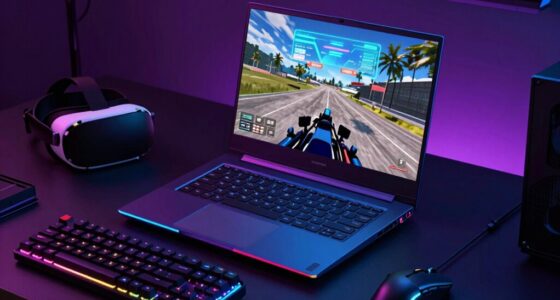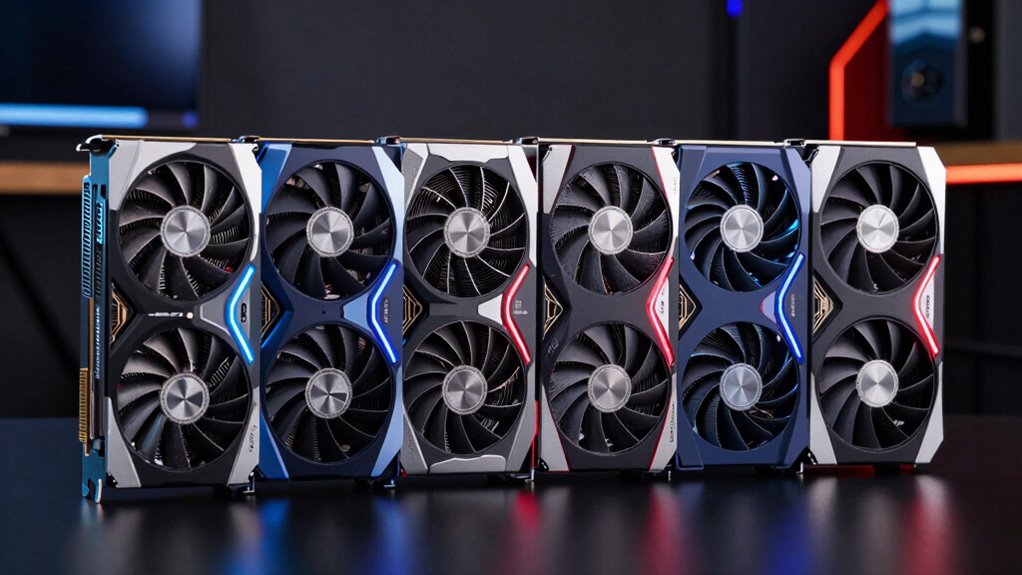

Finding a GPU capable of delivering solid VR performance without breaking the bank can be tricky. The MSI Gaming GeForce RTX 3050 Ventus 2X 6G OC stands out for its ray tracing and high-resolution support, making it ideal for immersive VR. The ASUS Dual RTX 3050 OC Edition offers a compact, cooling-efficient design suited for smaller builds, while the ASUS RTX 2060 Phoenix Fan Edition provides a slightly older but still capable option for VR enthusiasts on a tight budget. Each has tradeoffs—whether it’s limited VRAM, cooling concerns, or refurbished status—that impact their suitability for different users.
Prime for Young Adults — start your free trial
Fast free delivery, streaming and member deals for eligible 18–24 year olds.
Try it freeAs an affiliate, we earn on qualifying purchases.
Key Takeaways
- The MSI RTX 3050 offers the best balance of performance and features for VR on a budget but may run hot under load.
- The ASUS RTX 3050 OC is compact and efficient, ideal for small cases but with limited VRAM for future-proofing.
- The RTX 2060 provides robust performance for VR but may require a refurbished purchase, affecting warranty.
- Graphics cards with 6GB VRAM generally suffice for most VR titles but can struggle with future demanding games.
- Cooling and size are key considerations—dual-fan models tend to run cooler and fit better in smaller cases.
| MSI Gaming GeForce RTX 3050 Ventus 2X 6G OC Graphics Card |  | Best Overall for VR Performance on a Budget | Chipset: GeForce RTX 3050 | Boost Clock: 1492 MHz | Memory: 6GB GDDR6 | VIEW ON AMAZON | See Our Full Breakdown |
| ASUS Dual GeForce RTX 3050 6GB GDDR6 OC Edition Gaming Graphics Card |  | Best Compact and Cooling for Small Builds | GPU Clock Speed: 1500 MHz | Memory: 6GB GDDR6 | Video Output Interface: HDMI, DisplayPort | VIEW ON AMAZON | See Our Full Breakdown |
| ASUS GeForce RTX 2060 6GB Phoenix Fan Edition VR Ready Graphics Card |  | Best for VR Beginners and Older Builds | Graphics Coprocessor: NVIDIA GeForce RTX 2060 | Memory: 6GB GDDR6 | GPU Clock Speed: 1710 MHz | VIEW ON AMAZON | See Our Full Breakdown |
| MSI Gaming GeForce GTX 1660 Ti 6GB GDDR6 OC Graphics Card |  | Best for Entry-Level VR Gaming | GPU Model: GTX 1660 Ti Ventus XS 6G OC | Memory: 6GB GDDR6 | Memory Interface: 192-bit | VIEW ON AMAZON | See Our Full Breakdown |
| MSI GeForce GTX 1660 Super Ventus XS OC Graphics Card |  | Best for High-Resolution VR & Reliability | Graphics Coprocessor: NVIDIA GeForce GTX 1660 Ti | Memory: 6GB GDDR6 | GPU Clock Speed: 2 GHz | VIEW ON AMAZON | See Our Full Breakdown |
| gpu for vr on a budget pc build | Memory | GPU Clock Speed |
|---|---|---|
| MSI Gaming GeForce RTX 3050 Ve | 6GB GDDR6 | — |
| ASUS Dual GeForce RTX 3050 6GB | 6GB GDDR6 | 1500 MHz |
| ASUS GeForce RTX 2060 6GB Phoe | 6GB GDDR6 | 1710 MHz |
| MSI Gaming GeForce GTX 1660 Ti | 6GB GDDR6 | — |
| MSI GeForce GTX 1660 Super Ven | 6GB GDDR6 | 2 GHz |
More Details on Our Top Picks
MSI Gaming GeForce RTX 3050 Ventus 2X 6G OC Graphics Card
The MSI Ventus 2X OC stands out for offering high-performance ray tracing and AI capabilities with its RTX 3050 GPU. Its 6GB GDDR6 memory supports most VR titles at high settings, and its multiple outputs provide flexibility. Compared with the ASUS RTX 3050 OC, it has a slightly higher boost clock, which can improve frame rates in demanding VR scenarios. However, its dual-fan cooling setup might be strained during extended VR sessions, risking higher temperatures. This card is ideal for users who want a balance of performance and features but should be prepared for potential cooling adjustments in heavy use.
Pros:- Supports ray tracing and DLSS for enhanced VR visuals
- High boost clock of 1492 MHz boosts frame rates
- Multiple video outputs, including HDMI 2.1 and DisplayPort 1.4a
Cons:- Limited to 2 fans, which could affect cooling under load
- No RGB lighting or aesthetic features
- Requires a PCIe x16 slot, may be incompatible with very compact systems
Best for: Budget-conscious gamers seeking high VR performance with future-proofing features
Not ideal for: Users with very small cases or those concerned about thermal management
- Chipset:GeForce RTX 3050
- Boost Clock:1492 MHz
- Memory:6GB GDDR6
- Memory Interface:96-bit
- Video Memory Speed:14 Gbps
- Video Output:DisplayPort x 1 (v1.4a), HDMI 2.1a x 2
Our verdict“This GPU offers the best overall VR performance for a modest price, with some cooling considerations.”
ASUS Dual GeForce RTX 3050 6GB GDDR6 OC Edition Gaming Graphics Card
The ASUS Dual RTX 3050 OC Edition provides efficient cooling with dual Axial-tech fans and a compact 2-slot design, making it an excellent choice for cramped cases. Its 1500 MHz GPU clock and support for HDMI 2.1 and DisplayPort 1.4a enable high-resolution VR experiences. Compared to MSI’s version, this model emphasizes smaller size and quieter operation, but it shares the same 6GB VRAM limit, which could be restrictive for future titles. Its solid build quality and latest connectivity standards make it suitable for gamers with limited space.
Pros:- Compact size fits in small cases
- Dual Axial-tech fans improve cooling efficiency
- Supports DLSS 3, HDMI 2.1, and DisplayPort 1.4a
Cons:- Limited to 6GB VRAM, may bottleneck future VR titles
- No RGB lighting or aesthetic features
- Warranty length is standard, not extended
Best for: Small case builds needing a powerful yet space-efficient GPU
Not ideal for: Users wanting RGB aesthetics or higher VRAM capacity for future-proofing
- GPU Clock Speed:1500 MHz
- Memory:6GB GDDR6
- Video Output Interface:HDMI, DisplayPort
- Dimensions:7.9″L x 4.7″W
- Features:PCIe 4.0, DLSS 3, HDMI 2.1
Our verdict“A well-rounded choice for small builds that need capable VR support without extra bulk.”
ASUS GeForce RTX 2060 6GB Phoenix Fan Edition VR Ready Graphics Card
The ASUS RTX 2060 Phoenix Fan Edition is a VR-ready card based on Turing architecture with a 1710 MHz boost clock, making it capable of smooth VR experiences. Its 6GB of VRAM supports most titles today, but it’s an older model compared to the RTX 3050 options. The Phoenix double ball bearing fan offers durable cooling, though with only one fan, it may generate more heat and noise than dual-fan models, especially in intensive VR sessions. This card is suitable for those who want a reliable, tested option at a lower price point, often found refurbished.
Pros:- High clock speed for smooth VR gameplay
- Supports multiple monitor setups
- Durable Phoenix fan for long-term use
Cons:- Refurbished/renewed status may limit warranty
- Requires at least a 500W power supply
- Single fan may reduce cooling efficiency
Best for: Beginners or budget-conscious users wanting solid VR performance
Not ideal for: Those seeking the latest features or planning for high-fidelity future VR titles
- Graphics Coprocessor:NVIDIA GeForce RTX 2060
- Memory:6GB GDDR6
- GPU Clock Speed:1710 MHz
- Maximum Resolution:8192×4320
- Interface:PCI Express
Our verdict“A dependable, slightly older option that still handles VR well for budget builds but with some cooling limits.”
MSI Gaming GeForce GTX 1660 Ti 6GB GDDR6 OC Graphics Card
The MSI GTX 1660 Ti Ventus XS offers excellent performance for its price, supporting the latest DirectX 12 technology and VR readiness. Its dual fan cooling system helps keep temps low during extended sessions, making it a good choice for new VR users or those with limited budgets. While it lacks ray tracing like the RTX series, it still delivers smooth graphics for most VR titles. Compared to the RTX 3050 options, it’s less future-proof but more affordable and widely available.
Pros:- Supports DirectX 12 and VR
- Dual fan cooling for better thermal management
- Good value for entry-level VR gaming
Cons:- Older architecture, less future-proof
- No ray tracing or AI features
- Refurbished models may have limited warranty
Best for: Beginners or users on a strict budget wanting decent VR performance
Not ideal for: Those seeking ray tracing or higher VRAM for demanding future titles
- GPU Model:GTX 1660 Ti Ventus XS 6G OC
- Memory:6GB GDDR6
- Memory Interface:192-bit
- Cooling System:Dual Fan
- Supports:DirectX 12, VR
Our verdict“An affordable, reliable option for new VR users, with some limitations in advanced features.”
MSI GeForce GTX 1660 Super Ventus XS OC Graphics Card
The MSI GTX 1660 Super Ventus XS OC provides solid performance with 6GB GDDR6 memory, supporting 4K resolution and VR applications. Its dual-fan cooling system enhances heat dissipation, making it suitable for longer gaming sessions. While it’s a refurbished product, it often offers good value for users who need reliable performance without the latest features like ray tracing. Its higher maximum resolution support makes it a good pick for future-proofing within a budget.
Pros:- Supports high resolutions up to 4K
- Dual fans for better cooling
- Reliable performance with 6GB GDDR6
Cons:- Refurbished, may have limited warranty
- No ray tracing features
- Requires PCIe x16 slot, may not fit all systems
Best for: VR users seeking reliable performance at high resolutions
Not ideal for: Users wanting features like ray tracing or RGB aesthetics
- Graphics Coprocessor:NVIDIA GeForce GTX 1660 Ti
- Memory:6GB GDDR6
- GPU Clock Speed:2 GHz
- Display Maximum Resolution:7680×4320
- Item Dimensions:8″L x 1.7″W
Our verdict“A dependable choice for VR at high resolutions, with a focus on reliability and cooling.”

How We Picked
We selected GPUs based on their VR performance capabilities, price point in 2026, and compatibility with budget PC builds. We prioritized models with at least 6GB of VRAM, modern ray tracing features, and good cooling solutions, all while considering availability and user reviews. Refurbished options were included for affordability but noted for potential warranty limitations. Our goal was to identify options that balance performance, price, and reliability for VR gaming on a tight budget.
Factors to Consider When Choosing Gpu For Vr On A Budget Pc Build
Choosing the right GPU for a VR-focused budget build involves balancing performance, cooling, size, and future-proofing. VR demands higher frame rates and lower latency, so prioritizing a GPU with at least 6GB VRAM, support for modern connectivity, and decent cooling is essential. It’s also wise to consider the physical size of the card and whether your case can accommodate it, especially for smaller builds. The tradeoff often comes down to features like ray tracing and the latest AI enhancements versus cost and availability.
VR Performance Needs
For smooth VR experiences, look for GPUs with a boost clock of at least 1700 MHz and 6GB of VRAM. Ray tracing and DLSS support can enhance visuals but aren’t strictly necessary for playable VR. If you’re new or on a tight budget, prioritize proven models like the GTX 1660 Super or RTX 2060, which handle most VR titles well at 1080p and 1440p resolutions.
Size and Compatibility
Small cases require compact cards, such as the ASUS Dual RTX 3050 OC, which still offers good performance without occupying multiple slots. Always check the dimensions against your case’s available space. Dual-fan models typically run cooler, especially during prolonged VR sessions, but can be slightly larger than single-fan options.
Cooling and Noise
Effective cooling extends the lifespan of your GPU and ensures consistent performance. Dual-fan designs like MSI’s GTX 1660 Ti or MSI’s GTX 1660 Super usually provide better thermal management than single-fan models. Consider noise levels—more fans often mean quieter operation, but check reviews for real-world noise performance.
Future-Proofing and Features
While 6GB VRAM is enough now, future VR titles may demand more. Features like HDMI 2.1 and DisplayPort 1.4a support higher resolutions and refresh rates, which is advantageous for VR. However, cards with the latest AI and ray tracing features tend to cost more, so weigh their benefits against your budget.
Frequently Asked Questions
Is 6GB of VRAM enough for VR gaming in 2026?
For most current VR titles and resolutions up to 1440p, 6GB of VRAM remains sufficient. However, as VR games become more demanding, especially at higher resolutions like 4K, more VRAM may be needed in the future. For now, 6GB strikes a good balance between cost and performance, but consider a future upgrade if you plan on playing the newest titles for years to come.
Should I prioritize ray tracing features on a budget GPU?
Ray tracing can significantly enhance visual fidelity but often comes at a higher cost and performance impact. On a strict budget, it’s better to focus on a GPU with more VRAM and higher clock speeds for smooth VR. Ray tracing is nice to have, but not essential for a playable VR experience on a budget system.
Are refurbished GPUs a good choice for VR builds?
Refurbished GPUs can offer significant savings, making them attractive for budget builds, but they often come with limited warranties and higher risks of prior wear. If you choose a refurbished card, buy from reputable sources and check warranty terms carefully. They can be a good option if new cards are unavailable or too expensive, but weigh the potential for reduced longevity.
What are the main tradeoffs between RTX 3050 and GTX 1660 Super for VR?
The RTX 3050 provides better ray tracing, AI-driven features like DLSS, and slightly higher performance, making it more future-proof. The GTX 1660 Super, however, is more affordable and widely available, offering solid performance for current VR titles. The main tradeoff is that the GTX 1660 Super lacks ray tracing and AI features, limiting its longevity as VR demands evolve.
How important is cooling when choosing a budget GPU for VR?
Cooling is critical because VR sessions tend to be longer and more demanding on the GPU. Overheating can cause thermal throttling, reducing performance and potentially damaging the card over time. Dual-fan models or cards with efficient cooling designs are preferable, especially if you plan to use VR extensively or in warmer environments.
Conclusion
For casual VR users or those on a tight budget, the GTX 1660 Super or RTX 2060 offers reliable performance without breaking the bank. Enthusiasts who want better future-proofing and features like ray tracing should consider the RTX 3050 models, especially if they have small cases or space constraints. Budget builders aiming for a balance of size, cooling, and performance will find the ASUS Dual RTX 3050 OC a compelling choice, while those prioritizing long-term reliability might prefer the MSI GTX 1660 Super. Ultimately, each option has tradeoffs—consider your case size, expected VR load, and future plans when making your choice.
Fall yard work Picks
leaf blowers
As an affiliate, we earn on qualifying purchases.